


 Megtekintés
 Küldés
 Megosztás
 Részletek

 Letöltés
 Hasonló darabok
 X-ray felvétel
 Diavetítés
Fool's House

 Összes részlet megjelenítése
Kézzel készített olajfestmény reprodukció
Kézzel festett olajvastú vászon, az Ön által választott méretben és keretben, művészeink készítik meglévőre. ( Nyomat rendelése Kép letöltése)




P118B $10

P118H $10

P118W $10

P438Z $10

P508JH $12

P508YH $12

P805H $10

P805Z $10

P919BZ $10

P919G $10

P919XJ $10

P959ZH $10

P968JZ $12

W106C $8

W218G $10

W218JH $8

W218Y $10

W307PJ $10

W316G $10

W316PJ $8

W316Y $10

W398PJ $8

W4111J $10

W500HY $15

W500JH $15

W692G $12

W849H $8

W940BG $15

W953PJ $8




Válasszon előre meghatározott méreteink közül, amelyek megfelelnek a műalkotás eredeti arányainak.

Ön megadhat saját méreteket egy adott kerethez vagy térhez igazításhoz. Ha a kiválasztott méret nem egyezik az eredeti kép arányával, akkor a műalkotást levágjuk, vagy további kézzel festett elemekkel meghosszabbítjuk a festményt. A gyártás megkezdése előtt küldünk Önnek egy digitális előnézetet jóváhagyásra.
Kérjük, vegye figyelembe, hogy a képernyőn megjelenő előnézet nem tükrözi a tényleges vágást vagy kiterjesztést. Csak az előnézet fog pontosan mutatni a végső kompozíciót.
Bár egyedi méretek állnak rendelkezésre, javasoljuk, hogy válasszon egy méretet az előre meghatározott listából az eredeti arányok megőrzése érdekében.
A rendelést követően a ArtsDot.com csapata e-mailt küld az ügyfélnek az instrukciókért, és biztosít egy előnézeti képet (mockup).
Világszerte elérhető szállítás () 3-4 hét alatt a szokásos 5 hét helyett. (28 augusztus). A minőség nem kérdőjelezhető.

Ingyenes globális expressz szállítás

Prémium minőségű len vászon

Teljes körű szállítási biztosítás

Vámvisszatérítési Garancia

Hiteles színpontosság garancia

60 napos visszaküldési lehetőség (csak hibás termékek esetén)

100% pénzvisszatérítési garancia

Több darab vásárlása esetén kedvezmény
 Az üvegkeretes opció csak 110 cm alatti méretben érhető el

Fool's House
Reprodukciós technika
Reprodukció mérete
-


Összesített ár
$ 263
A Quiet Iconography: Exploring Jasper Johns' "Fool’s House"
The painting “Fool’s House” by Jasper Johns stands as a deceptively simple yet profoundly resonant emblem of the American artistic landscape during the mid-1950s. Presented in a striking palette of blue and white—a color scheme characteristic of Johns’ signature style—the artwork immediately draws the eye to its central motif: a broom leaning against a wall. This seemingly mundane object transcends mere depiction, embodying a complex interplay of visual language and conceptual exploration that firmly establishes Johns as a pioneer of Conceptual Art.Style and Technique – Embracing Minimalism
Johns' approach to painting is defined by an unwavering commitment to minimalism. Rejecting the expressive fervor of Abstract Expressionism—artists like Pollock and Rothko—he deliberately eschewed flamboyant brushstrokes and vibrant hues in favor of reductive forms and restrained color palettes. “Fool’s House” exemplifies this stylistic preference perfectly. The smooth, matte surface of the paint contributes to a sense of stillness and contemplation, prioritizing form over gesture. Johns meticulously renders the broom and wall with precise lines and subtle shading, demonstrating an unwavering attention to detail—a technique honed through years of experimentation and driven by a desire to distill visual experience into its purest essence.Historical Context – The Birth of Pop Art’s Influence
“Fool’s House” emerged during a pivotal moment in art history: the burgeoning influence of Pop Art. Artists like Warhol and Lichtenstein were actively challenging artistic conventions by appropriating imagery from popular culture—advertising billboards, comic strips, and everyday objects—transforming them into artworks that interrogated notions of authorship and originality. While Johns distanced himself from the overtly celebratory spirit of Pop Art, his work nonetheless absorbed elements of its conceptual framework. The deliberate selection of a commonplace item—the broom—served as a subversive gesture against the prevailing artistic dogma, questioning the hierarchy between “high” art and “low” culture.Symbolism – Beyond Representation
The symbolism embedded within "Fool’s House" is deliberately ambiguous yet powerfully suggestive. The broom itself has been interpreted in various ways: representing domesticity, labor, and perhaps even a yearning for stability amidst the turbulent anxieties of the Cold War era. Its placement against the wall reinforces this sense of confinement, hinting at an unspoken narrative about resilience and perseverance. Johns’ masterful use of color—the cool blues conveying serenity while simultaneously hinting at melancholy—further enhances the artwork's emotional depth. He avoids explicit statements or narratives, inviting viewers to engage in a dialogue with the image itself, prompting contemplation on themes of identity, memory, and the relationship between art and reality.Emotional Impact – A Meditation on Perception
Ultimately, “Fool’s House” succeeds in conveying a profound sense of emotional resonance despite its apparent simplicity. The artwork compels us to consider how perception shapes our understanding of the world around us—how seemingly insignificant objects can hold immense significance within the realm of artistic expression. It encourages viewers to linger upon the image, allowing its subtle nuances and understated beauty to permeate their consciousness. Like many of Johns’ works, “Fool’s House” transcends mere visual representation, becoming a conduit for introspection and contemplation—a testament to the enduring power of art to provoke thought and evoke feeling.Hasonló műalkotások


A művész életrajza
A Life Painted in Symbols: The World of Jasper Johns
Jasper Johns emerged as a pivotal figure in the landscape of American art, bridging the emotive intensity of Abstract Expressionism with the burgeoning Pop Art movement that would soon redefine artistic boundaries. Born in Augusta, Georgia, in 1930, his early life was marked by a sense of displacement following his parents’ divorce, an experience that perhaps subtly informed his later explorations of identity and belonging within the context of American iconography. His formative years unfolded across various schools before he briefly attended the University of South Carolina, but it wasn't until his move to New York City in 1949 that Johns truly began to forge his artistic path. A period of service during the Korean War further shaped his perspective, exposing him to a world far removed from the burgeoning art scene he was eager to embrace upon his return.Breaking with Abstraction: The Dawn of a New Visual Language
The post-war American art world was dominated by Abstract Expressionism—a style characterized by spontaneous gesture and deeply personal emotional expression. While initially influenced by this movement, Johns felt compelled to move beyond its purely non-representational approach. He sought a new visual language, one that incorporated recognizable imagery not as illustrations but as vehicles for deeper contemplation. This wasn’t simply about *depicting* the world; it was about questioning how we perceive and interpret symbols within it. Key influences guided his departure: Marcel Duchamp's radical readymades challenged conventional notions of art-making, demonstrating that ordinary objects could be elevated to the status of art through their presentation, while the emphasis on materiality in Abstract Expressionism informed Johns’ early techniques. However, it was the everyday objects and potent symbols of American culture—flags, targets, maps, numbers—that truly became central to his artistic vocabulary. He wasn’t interested in escaping representation; he wanted to dissect it, layer it with meaning, and ultimately reveal its inherent ambiguities. The influence of Robert Rauschenberg, a fellow artist and close friend, was also crucial during this period, fostering a collaborative spirit and pushing the boundaries of artistic experimentation.Iconic Images: Flags, Targets, and the Language of Symbols
Johns’ breakthrough works arrived in the mid-1950s, instantly establishing him as a force to be reckoned with. His paintings of flags, most notably *Flag* (1954–55), were not patriotic declarations but rather investigations into the very nature of representation. Rendered in a semi-abstract style, using encaustic—pigment mixed with hot wax—and collage techniques, these flags weren’t simply images; they were textured surfaces laden with symbolic weight. The *Flag* series wasn't just about the American flag; it was about the act of painting itself, the materiality of the canvas, and the relationship between image and reality. The target series, beginning in 1958, further explored this fascination with recognizable forms, questioning perception and meaning through the seemingly straightforward image of a bullseye. *Map* (1961), with its fragmented and layered depictions of the United States, delved into themes of geography, identity, and the complexities of national representation. Works like *False Start* (1959) demonstrated his experimentation with language and visual codes, creating complex compositions that challenged viewers to decipher their underlying meanings. Even *White Flag* (1955), a seemingly simple monochrome canvas, prompted profound questions about absence, surrender, and the very act of seeing. Johns often incorporated elements of chance and accident into his process, embracing the unpredictable nature of creation and allowing the materials themselves to contribute to the final outcome.A Legacy of Influence: Paving the Way for Pop Art and Beyond
Jasper Johns’ impact on the trajectory of modern art is undeniable. He played a crucial role in the transition from Abstract Expressionism to Pop Art, challenging the prevailing aesthetic norms and opening up new avenues for artistic exploration. By embracing recognizable imagery, he paved the way for artists like Andy Warhol and Roy Lichtenstein, who would further blur the lines between high art and popular culture. His close collaboration with Robert Rauschenberg was also profoundly influential, fostering a spirit of experimentation and pushing the boundaries of artistic practice. Johns’ work continues to resonate today, inspiring generations of artists to question assumptions, challenge conventions, and explore the power of symbols in shaping our understanding of the world. He remains an active artist, constantly evolving his approach and solidifying his position as one of the most important figures in 20th and 21st-century art.Recognition and Enduring Impact
Throughout his illustrious career, Jasper Johns has received numerous accolades, including a Golden Lion at the Venice Biennale in 1988, the National Medal of Arts in 1990, and the Presidential Medal of Freedom in 2011. His works are held in major museum collections worldwide—the Museum of Modern Art, the Whitney Museum of American Art, the Metropolitan Museum of Art in New York, and Tate Modern in London, to name just a few. He has been the subject of countless exhibitions, cementing his status as a master of modern art. Beyond his paintings, Johns’ contributions extend to sculpture and printmaking, demonstrating his versatility and unwavering commitment to artistic innovation. His enduring legacy lies not only in the iconic images he created but also in the profound questions he raised about the nature of representation, symbolism, and the very essence of what it means to be an artist in a rapidly changing world.
Jasper Johns
1930 - , Egyesült Államok
A művészről röviden
- Artistic Movement Or Style: Pop Art, Ekspreszionizmus
- Artists Or Movements Influenced By This Artist:
- Warhol
- Lichtenstein
- Artists Who Influenced This Artist: ['Duchamp']
- Date Of Birth: 1930. május 15.
- Full Name: Jasper Johns
- Nationality: Amerikai
- Notable Artworks:
- Flag
- Target
- Map
- Place Of Birth: Augusta, USA
Kapcsolódó cikkek

A kék árnyalatai: 10 ikonikus festmény a Slate Blue szín jegyében | ArtsDot.com
Fedezze fel a 10 legikonikusabb festményt, melyeket a Slate Blue szín ural! Monet, Renoir és más mesterek művei inspirálnak. Vászonképek eladás, otthon dekoráció tippek a ArtsDot.com-on. Explore the full collection online!

John Singer Sargent 25 Mesterműve: Elegancia és Portrék a ArtsDot Galériában
Fedezze fel John Singer Sargent 25 legikonikusabb művészeti alkotását! Portrék, impresszionista stílus és a fény játéka – inspirálódjon Sargent életrajzából és vászonképeiből. Művészeti reprodukciók otthonába a ArtsDot-on!

John Constable 25 Mesterműve: A Természet Lényege Vászonon – ArtsDot.com
Fedezze fel John Constable 25 legszebb művészeti alkotását! Ismerje meg a romantika ikonikus tájképeit, Dedham Vale szépségét és a természet lenyűgöző ábrázolásait. Vászonkép reprodukcióinkkal eleganciát csempészhet otthonába – ArtsDot.com

Serene Blue Backgrounds: Discover Soulful Art to Transform Your Space with Timeless Elegance
Transform your home with soulful blue art. From serene Monet impressions to modern textured sculptures, discover curated masterpieces designed to inspire calm. Explore expert art consultations and bespoke hand-painted reproductions to create your personal sanctuary.
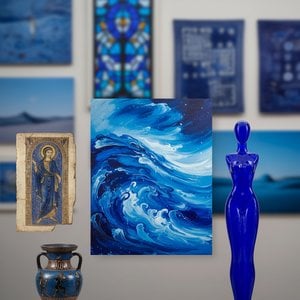
The Allure of Azure: Exploring the Symbolic & Aesthetic Depths of Blue in Art History
Explore the rich history of blue in art! Discover its symbolism, from ancient pigments to modern masterpieces by Kandinsky & Seurat. Uncover the psychological impact and cultural meanings behind this captivating hue.



