
 Oil On Canvas
- WallArt
- Dutch Golden Age
 1650
1650 47.0 x 59.0 cm
 Wallraf-Richartz Múzeum

The picture follows your choices: , .
A gyűjtemény leírása
Discover ‘Calm’ by Jan van de Cappelle – a serene 1650 Dutch Golden Age marine painting. Admire its light, detail & atmospheric perspective at the Wallraf-Richartz Museum.
 Összes részlet megjelenítése
A művész életrajza
Jan van de Cappelle (1626-1679) a holland aranykor mestere volt, aki békés tengeri és téli tájakat festett. Az égboltot tükröző nyugodt vizeiről ismert, művészetét ipari sikerrel ötvözve. Fedezze fel ritka alkotásait!
Kézzel készített olajfestmény reprodukció
Kézzel festett olajvastú vászon, az Ön által választott méretben és keretben, művészeink készítik meglévőre. ( Váltás nyomtatványra Áttérés digitális képre)
More about this painting
 Megtekintés
 Küldés
 Megosztás
 Részletek
 Útmutató

 Letöltés
 Hasonló darabok
 X-ray felvétel
 Diavetítés
 Q&A
Q&A Statisztika
Order your painting in four simple steps
Take your time. You can change any answer; the price in your order card follows each choice.
1 Step one of four
Which size would you like?
These sizes keep the proportions of the original painting. The drawing shows your choice on a wall, above a two-metre sofa.
Or give your own measurements
Válasszon előre meghatározott méreteink közül, amelyek megfelelnek a műalkotás eredeti arányainak.

Írja be a kívánt szélességet és magasságot, hogy illeszkedjen a keretéhez vagy a falához. Mivel ez kézzel festett alkotás, egy eltérő formájú méret esetén a művész akár festhet is valamivel többet a kép körül, vagy korolathat is belőle — az Ön döntésének megfelelően. A festés megkezdése előtt küldünk egy digitális tervezetet jóváhagyásra. Az oldalon látható kép nem tartalmazza a végeredményt — csak a tervezet mutatja meg a valódi eredményt.
2 Step two of four
How should it be prepared: rolled, stretched or framed?
The prices below are for the size you chose in step one.
Choose the edges of the stretched canvas
Choose your frame

White Ft1

Blurside Ft1

Extended Ft1

P118B Ft10

P118H Ft10

P118W Ft10

P438Z Ft10

P508JH Ft12

P508YH Ft12

P805H Ft10

P805Z Ft10

P919BZ Ft10

P919G Ft10

P919XJ Ft10

P959ZH Ft10

P968JZ Ft12

W106C Ft8

W218G Ft10

W218JH Ft8

W218Y Ft10

W307PJ Ft10

W316G Ft10

W316PJ Ft8

W316Y Ft10

W398PJ Ft8

W4111J Ft10

W500HY Ft15

W500JH Ft15

W692G Ft12

W849H Ft8

W940BG Ft15

W953PJ Ft8

H24-GOLD Ft30

H24-SILVER Ft30

H36-GOLD Ft45

H36-SILVER Ft45
Keretezett
Moulding: . Overall size with the frame: .
3 Step three of four
Would you like anything changed in the painting?
Most people answer no. Because each painting is made by hand, our artist can also adapt it for you.
After order, ArtsDot.com team will email client for instructions and provide a mockup preview
4 Step four of four
A few finishing options
All of them are optional. The answers already selected cost nothing extra.
Who paints it?
Világszerte elérhető szállítás () 3-4 hét alatt a szokásos 5 hét helyett. (29 október). A minőség nem kérdőjelezhető.
A nameplate, as in a museum?
A gravírozott bronztábla részletei
This elegant plaque features the artist's name and the title of the artwork, finely engraved for a timeless presentation.
It is made from bronze with a refined, elegant finish. The text is precisely laser-engraved for a sharp and permanent result. Measuring 9x2 cm, the plaque is compact yet easy to read. It's built to be durable and scratch-resistant, offering a professional, museum-quality look. Mounting is simple thanks to the included adhesive backing.
Átlátszó akril tábla részletei
The plaque includes essential engraved details such as the artist's name, the title of the artwork, the date it was created, the type of media used-like oil on canvas or watercolor-a brief description of the piece, and a QR code that links to the complete artwork information.
It is crafted from clear acrylic, offering a sleek, modern appearance. The text is UV-engraved in black to ensure strong visual contrast. With a size of 10x15 cm, it ensures optimal readability. It comes equipped with two metal hooks for secure wall mounting. The plaque is designed to be weather-resistant, making it suitable for various environments, and it includes interactive features that work seamlessly with smartphone scanning.
Fekete akril tábla részletei
This elegant plaque includes engraved information such as the artist's name, the title of the artwork, the date it was created, the type of media used (like oil on canvas or watercolor), a short description of the artwork, and a QR code for quick access to more information.
The plaque itself is made from refined black acrylic with a premium finish. The text is laser-engraved in white for high contrast and readability. Its size is 10x15 cm, designed to be easy to read. It comes with two metal hooks for professional mounting. The design is sleek and fits any interior style. It is also weather-resistant and durable, with built-in digital integration for mobile compatibility.
A protective varnish?
When do you need it?
✓ Check and order
Your painting, as you ordered it

Calm
Reprodukciós technika
Reprodukció mérete
-

Kiváló mesterművész
Nagyobb részletesség, finomság és bővített gyártási idő
-

Reprodukció keretezése
-
-
A bármely oldalsó méretét túlszálaló 105 cm (kb. 41 hüvelyk) meghaladó műalkotások vagy reprodukciók esetében a keret összeszerelhető készletként, szétszerelve kerül szállításra. Ez a módszer biztosítja a biztonságos szállítást, és megakadályozza a szállítás során fellépő sérüléseket.
Szakmész összeszerelést igényel – ez nem DIY (önösszeszerelhető) termék.
A készletet egy tapasztalt keretező szakembernek kell összeszerelnie és a vásznat feszítenie kell, fa ragasztó (nem tartalmazza a csomag), vásznfeszítő fogó és szorítók használatával, amelyek a ragasztó száradásáig a keretrészeket egymáshoz vuôngjba tartják. A helytelen összeszerelés vagy a nem egyenletes vásznfeszítés maradandó károsíthatja a műalkotást, és ez nem része a garanciánknak.
 A bármely oldalsó méretét túlszálaló 105 cm (kb. 41 hüvelyk) meghaladó műalkotások vagy reprodukciók esetében a keret összeszerelhető készletként, szétszerelve kerül szállításra. Ez a módszer biztosítja a biztonságos szállítást, és megakadályozza a szállítás során fellépő sérüléseket.
A készlet tartalmazza az összes tömörfa rudat, pontosan méretre vágva.
A mellékelt csavarokkal, valamint a sarokszerekhez szükséges faütő ragasztóval kell összeszerelnie (ez nem tartalmazható a csomagban), így a keretrendezőnek külön kell beszereznie.
A csomag nem tartalmazza a szükséges professzionális eszközöket: egy vászonfeszítőt és klipseket a rácsok vízszintes tartásához a ragasztó megszáradásáig.
Fontos:
A sarokcsatlakozásokhoz fánylagra van szükség, a keretrudakat szorítókapcsokkal kell rögzíteni, amíg a rag teljesen meg nem szárad, a kész keretre feszített vászonhoz pedig vászonfeszítő fogat szükséges. Ezek egyike sem található meg a készletben. Kérjük, rendelés előtt győződjön meg róla, hogy rendelkezik tapasztalt keretező szakemberrel.

Névtábla
-
-

Védőréteg (Lakk)
Fényes lakk (intenzívabb színek, védelem a fény és a nedvesség hatása ellen)
-

Műalkotásom egyedi igényre szabása
Példák a módosíthatóságra: az arc kicserélése az ügyfél fotójára; háziállat hozzáadása (pl. macska helyett kutya); rejtett üzenet elhelyezése a háttérben; a háttér tájainak vagy elemeinek megváltoztatása.
-

Sürgős
Világszerte szóló szállítás () mindössze 3-4 hét alatt, a szokásos 5 hét helyett. (29 október). A minőség nem kérdőjelezhető.
-
Express szállítás
Világszerte elérhető szállítás területre 5 héten belül. (5 november).
A szállítás díja tartalmazza
Összesített ár
Ft 84973
Az üvegkeretes opció csak 110 cm alatti méretben érhető el
Included with every order
- Ingyenes globális expressz szállítás
- Prémium minőségű len vászon
- Teljes körű szállítási biztosítás
- Vámvisszatérítési Garancia
- Hiteles színarányosság garancia
- 100 napos visszaküldési lehetőség (csak hibás termékek esetén)
- 100% pénzvisszatérítési garancia
- Több darab vásárlásakor kedvezmény


A Stillness Captured: Jan van de Cappelle’s “Calm”
Jan van de Cappelle's "Calm," painted in 1650, isn’t merely a depiction of a coastal scene; it’s an invitation to a profound moment of tranquility. Often overlooked amidst the dramatic seascapes favored by his contemporaries, this work reveals a quieter, more introspective side to the artist’s remarkable talent. It's a painting that speaks not just of the visual beauty of a Dutch waterway but also of a carefully cultivated state of mind – a stillness reflected in every brushstroke and subtle hue.
The scene unfolds along a broad, gently curving river, its surface rendered with an almost unsettling smoothness. The water is devoid of visible waves or currents, mirroring the overcast sky above with remarkable fidelity. This isn’t the turbulent drama of a storm; it's a deliberate choice by van de Cappelle to evoke a sense of profound peace and contemplation. The composition is remarkably balanced, drawing the eye across the canvas towards a solitary fisherman wading into the shallow water on the right side of the frame. He stands as a small, almost insignificant figure against the vastness of the landscape, yet his presence anchors the scene and invites us to share in this quiet moment.
The Language of Light and Shadow
Van de Cappelle’s mastery lies not just in capturing the visual appearance of the water but also in conveying its atmosphere through a masterful use of light and shadow. The painting is bathed in a diffused, almost ethereal light – neither bright nor dark, but rather a soft, muted glow that seems to emanate from within the canvas itself. This subtle illumination creates an incredible sense of depth and volume, as if we could step directly into the scene and feel the cool dampness of the air. The artist employs a technique known as *chiaroscuro*, skillfully contrasting areas of light with deep shadows to heighten the drama and create a three-dimensional effect.
Notice how the distant boats are rendered in paler, almost ghostly tones – a deliberate device by van de Cappelle to suggest their distance and the atmospheric haze that softens their outlines. The foreground elements, particularly the fisherman and the boats closest to the viewer, are painted with greater detail and richness of color, drawing our attention and anchoring us within the scene. The brushwork itself is remarkably smooth and blended, contributing to the overall sense of serenity and stillness.
A Window into 17th-Century Dutch Life
"Calm" offers a fascinating glimpse into the daily life of 17th-century Holland – a society deeply connected to its waterways. The presence of fishing boats, the solitary figure of the fisherman, and the overall atmosphere of quiet industry all speak to this reality. However, van de Cappelle doesn’t simply depict a snapshot of everyday life; he elevates it into something more profound. He captures not just *what* is happening but also *how* it feels – the sense of peace, contentment, and connection with nature that characterized so many Dutch lives during that era.
Interestingly, van de Cappelle’s background as a textile merchant profoundly influenced his artistic vision. His intimate knowledge of color, texture, and pattern—skills honed in the demanding world of dyeing fabrics—translated seamlessly into his paintings. He sought to create works that were not just visually appealing but also emotionally resonant, evoking feelings of tranquility and contemplation.
Symbolism and Emotional Resonance
Beyond its technical brilliance, “Calm” is imbued with a subtle sense of symbolism. The stillness of the water can be interpreted as a metaphor for inner peace – a state of mind free from turmoil and anxiety. The solitary fisherman represents humanity’s connection to nature, reminding us of our place within the larger world. And the overcast sky, rather than suggesting gloom, evokes a feeling of quiet contemplation and introspection.
Ultimately, “Calm” is a painting that invites us to slow down, breathe deeply, and appreciate the beauty of stillness. It’s a testament to van de Cappelle's extraordinary talent and his ability to capture not just the visual appearance of the world but also its profound emotional essence. A reproduction of this work offers a chance to bring this sense of serenity into any space, serving as a constant reminder of the importance of finding moments of peace in our own lives.
Kérdések és válaszok
Mikor és milyen anyagokból készült a "Calm"?
A "Calm" 1650-ben készült, a Oil On Canvas technikáját alkalmazva. Az anyag és a dátum leírja, hogy az eredeti mű hogyan és mikor készült.
Hol tekinthető meg az eredeti „Calm”, Jan Van De Cappelle alkotása?
A „Calm”, Jan Van De Cappelle alkotása eredeti darabja a Wallraf-Richartz Múzeum, Köln, Deutschland gyűjteményében található. A reprodukció lehetővé teszi, hogy a mű otthonában is megjelenjen.
Melyik szakaszába tartozik Jan Van De Cappelle pályájának a "Calm" (1650)?
A 1650 évszám a "Calm" alkotást Jan Van De Cappelle fejlődésének Mature Period szakaszába helyezi.
Hasonló műalkotások


Jan Van De Cappelle
1624 - 1679, Hollandia
A művész életrajza
A nyugalom tükre: Jan van de Cappelle élete és öröksége
Jan van de Cappelle egy egyedülálló, ragyogó alakként áll a holland aranykor panteonjában; olyan művész, akinek a művésztörténeti kanonban való jelenlétét a mély, meditatív csend határozza meg. Ellentétben számos kortársával, akik hatalmas mennyiségű munkát értek el, Cappelle életműve niezwyül kicsi maradt, mégis minden egyes darab rendkívüli különlegességgel büszkélkedhet. Ő nem csupán a tenger festője volt; jelentős világbeli státuszú ember, egy ipari titán, aki elválaszthatatlanul kapcsolódott Amsterdam gazdasági szívveréséhez. A textilipar sikeres alakjaként és kiváló ízlású gyűjtőként élete a kereskedelmi képesség és az művészi érzékenység egyedülálló kettőssége volt. A vagyon és a vízi látásmérséklet találkozása lehetővé tette számára, hogy olyan stílust dyrázzon fel, amely nem csupán ábrázolja a tengerparti világot, hanem megragadja annak lelkét is – egy olyan nyugalmat, amely egyszerre tükrözi a víz felszínét és a felette lévő végtelen eget.
Jan van de Cappelle 1624-ben született Amsterdamban, és egy szokatlan utat járt be a művészi mesterség felé. Miközben korabeli mesterei sokan a hivatalos céhes képzés szigorú tűzében válogtak, Cappelle nagy része öntanult volt, ami talán hozzájárult látásmódjának egyedülálló, tehermentes minőségéhez. Neveltetése mélyen árasztott bele az ipar technikai összetettségébe; apja, Franchoy van de Cappálló, jelentős mélyfestőüzemet működtetett, amely a karmaz festék gyártására specializálódott. Ez a környezet, amely precizitást és a szín, valamint a kémia intim ismeretét követelte, valószínűleg felbecsülhetetlen alapot nyújtott Jan számára későbbi fény- és légköri kísérleteihez. Bár Simon de Vlieger stilisztikai érzékiséseitől érinthetett, akinek kompozíciói bizonyos szerkezeti rokonságot mutatnak sajátjával, Cappelle munkássága végül túlmutatott a puszta hatáson, és elért a tiszta, atmoszférikus kegyelem állapotát.
A fény és az atmoszférikus perspektíva mesterificiuma
Jan van de Cappelle valódi zsenialitása abban rejlik, hogy képes megmanipulálni a levegő és a víz elemeit egy mély érzelmi mélység megteremtésére. Gyakran emlegetik Hollandia kiemelkedő tengerészfestőjeként a 17. században, egy olyan címként, amelyet az atmoszférikus perspektíva páratlan mesterévé váltásával szerzett. Technikai tudása leghírhedtebb megnyilvánulása abban van, ahogyan az égbolt alakzatait tükrözi a nyugodt, üvegyszerű víztartalmakra. Az olyan alkotásokban, mint a Hajók a kikötőben egy csendes tengeren, a néző nem csupán egy tengerészeti jelenetet lát, hanem egy felfüggesztett pillanatba hívják be. A fény finom gradációi és a felhők aprólékos ábrázolása hatalmas teret teremt, ahol a tenger és az égbolt határa gyönyörűen elmosódik.
Művészeti nyelve Willem van de Velde az öreg realizmusából merít inspirációt, mégis rendelkezik egy olyan lágysággal, amely egyedülálló neki. Ahol mások a tengeri csaták kaotikus energiájára vagy a vihar vadasságára összpontosítanának, Cappelle a mozgás utáni vagy annak váradalma során megtalálható csendet kereste. Kompozícióit gyakran jellemzik:
- A fény és az árnyék kölcsönhatása: Az azok pillanatainak megörökítése, amikor a napsütés áttör a felhőzeten, hogy megvilágítsa egyetlen hajót is.
- Tükröződő felületek: A víz használata tükörként a holland égbolt fenségének duplikálására, szimmetriát és békét teremtve.
- Atmoszféri árnyalatok: A köd, a pára és a tisztaság finom kezelése, amely tájait érezhető hőmérsékletet és páratartalmat kölcsönöz.
Történelmi jelentőség és maradandó hatás
Jan van de Cappelle történelmi jelentősége túlmutat vászói esztétikai szépségén. Ő képviseli a holland aranykor képességének csúcspontját, hogy megtalálja a kivételeset a hétköznapokban. Vitorlás hajóinak, folyami jeleneteinek és téli tájainak ábrázolásán keresztül dokumentálta egy olyan nemzet tengerészeti identitását, amely ekkor a globális kereskedelem központja volt. Még dinamikusabb műveiben is, mint például a Állami bárcsa, amelyet a hazai flottával üdvözölnek, megmarad egy zuglólagos rend és méltóság érzése, amely korának strukturált jólétét tükrözi.
Bár élete 1679-ben véget ért, hátrahagyva remekművek korlátozott gyűjteményét, tengerészfestészet műfajára gyakorolt hatása megmérhetetlen. Megtanította az utód generációknak, hogyan festenek nemcsak azt, ami látható, hanem azt is, ami érezhető – a levegő súlyát, a partা nyugalmát és a horizont csendes fenségét. Napjainkban alkotásai elengedhetetlen mérföldkőként szolgálnak mindenkinek, aki meg akarja érteni az ember, a természet és a fény közötti finom egyensúlyt, amely összeköti őket. Öröksége a nyugalomé, egy maradandó bizonyíték egy olyan művészre, aki a csendben megtalálta a végtelentet.
Kapcsolódó cikkek

A Hollandi Aranykor 10 Mesterműve: Festmények, Amelyek Megváltoztatták a Világot | ArtsDot.com
Fedezze fel a Hollandi Aranykor 10 legikonikusabb műalkotását! Rembrandt, Vermeer és más mesterek festményeinek történeteit olvassa el. Barokk stílus, klasszikus művészet – inspirálódjon otthon dekorációjához a ArtsDot.com-on! Fedezze fel a teljes gyűjteményt online.

Pieter de Hooch: Illuminating Dutch Domestic Life & Golden Age Charm
Explore the captivating world of Pieter de Hooch, a master of Dutch Golden Age painting. Discover his innovative use of light, intimate domestic scenes, and lasting influence on art history. Learn more at ArtsDot.
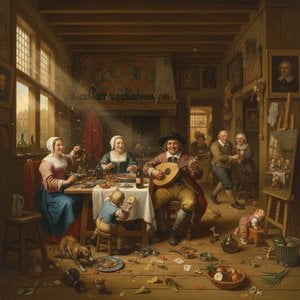
Jan Steen: A Master of Dutch Genre Painting & the Golden Age
Explore the life & art of Jan Steen, a leading Dutch Golden Age painter renowned for his humorous genre scenes & insightful social commentary. Discover his techniques, legacy, and collecting tips.