


A kép az Ön választásai alapján készült: , .
A gyűjtemény leírása
Discover Jacques-Louis David’s ‘Sappho & Phaon,’ a neoclassical masterpiece! Admire its dramatic composition, rich detail, & poignant portrayal of myth. A stunning example of 18th-century art.
 Összes részlet megjelenítése
A művész életrajza
David Jacques-Louis (1748–1825): A francia neoklasszikus festő, a forradalom és Napóleon korszakának ikonikus alakja. 'A Horatii Szövetsége' képe a hősiesen, erkölcsi szellemiségű művészetét mutatja be.
Kézzel készített olajfestmény reprodukció
Kézzel festett olajvastú vászon, az Ön által választott méretben és keretben, művészeink készítik meglévőre. ( Váltás nyomtatványra Áttérés digitális képre)
Több információ erről a festményről
 Megtekintés
 Küldés
 Megosztás
 Részletek
 Útmutató

 Letöltés
 Hasonló darabok
 X-ray felvétel
 Diavetítés
 Kérdések és válaszok
 Statisztika
Rendelje meg festményét négy egyszerű lépésben
Ne siessen! Bármely választ módosítható; az rendelési összesítőben megjelenő ár minden egyes döntésre reagál.
1 Az első lépés négyből
Melyik méretet szeretné?
Ezek a méretek megőrzik az eredeti festmény arányait. A rajz bemutatja a választott méretet egy falon, egy kétszáz centiméteres kanapé felett.
Vagy adja meg a saját méreteit
Válasszon előre meghatározott méreteink közül, amelyek megfelelnek a műalkotás eredeti arányainak.

Írja be a kívánt szélességet és magasságot, hogy illeszkedjen a keretéhez vagy a falához. Mivel ez kézzel festett alkotás, egy eltérő formájú méret esetén a művész akár festhet is valamivel többet a kép körül, vagy korolathat is belőle — az Ön döntésének megfelelően. A festés megkezdése előtt küldünk egy digitális tervezetet jóváhagyásra. Az oldalon látható kép nem tartalmazza a végeredményt — csak a tervezet mutatja meg a valódi eredményt.
2 A négy lépésből a második
Hogyan kívánja előkészíteni: feltekercselve, vászonra feszítve vagy keretezve?
Az alábbi árak az első lépésben választott méretre vonatkoznak.
Válaszd ki a feszített vászon széleit
Válassza ki a keretet

Fehér Ft1

Elmosódott szélek Ft1

Kiterjesztett Ft1

P118B Ft10

P118H Ft10

P118W Ft10

P438Z Ft10

P508JH Ft12

P508YH Ft12

P805H Ft10

P805Z Ft10

P919BZ Ft10

P919G Ft10

P919XJ Ft10

P959ZH Ft10

P968JZ Ft12

W106C Ft8

W218G Ft10

W218JH Ft8

W218Y Ft10

W307PJ Ft10

W316G Ft10

W316PJ Ft8

W316Y Ft10

W398PJ Ft8

W4111J Ft10

W500HY Ft15

W500JH Ft15

W692G Ft12

W849H Ft8

W940BG Ft15

W953PJ Ft8

H24-GOLD Ft30

H24-SILVER Ft30

H36-GOLD Ft45

H36-SILVER Ft45
Keretezett
Keretprofil: . A kerettel együtt vett teljes méret: .
3 A négy lépésből a harmadik
Szeretne változtatni valamit a festményen?
A legtöbb ember nemet mond erre. Mivel minden festmény kézzel készül, művészünk képes az Ön igényei szerint is átalakítani azt.
A megrendelést követően a ArtsDot.com csapat e-mailt küld a vásárlónak az instrukciókkal, és biztosítja a tervezeti előnézetet
4 A négy lépés közül a negyedik
Néhány felületfinisz
Mindegyik opcionális. A már kiválasztott válaszok nem jelentnek plusz költséget.
Ki festette?
Világszerte elérhető szállítás () 3-4 hét alatt a szokásos 5 hét helyett. (3 november). A minőség nem kérdőjelezhető.
Egy felirat, mint egy múzeumban?
A gravírozott bronztábla részletei
This elegant plaque features the artist's name and the title of the artwork, finely engraved for a timeless presentation.
It is made from bronze with a refined, elegant finish. The text is precisely laser-engraved for a sharp and permanent result. Measuring 9x2 cm, the plaque is compact yet easy to read. It's built to be durable and scratch-resistant, offering a professional, museum-quality look. Mounting is simple thanks to the included adhesive backing.
Átlátszó akril tábla részletei
The plaque includes essential engraved details such as the artist's name, the title of the artwork, the date it was created, the type of media used-like oil on canvas or watercolor-a brief description of the piece, and a QR code that links to the complete artwork information.
It is crafted from clear acrylic, offering a sleek, modern appearance. The text is UV-engraved in black to ensure strong visual contrast. With a size of 10x15 cm, it ensures optimal readability. It comes equipped with two metal hooks for secure wall mounting. The plaque is designed to be weather-resistant, making it suitable for various environments, and it includes interactive features that work seamlessly with smartphone scanning.
Fekete akril tábla részletei
This elegant plaque includes engraved information such as the artist's name, the title of the artwork, the date it was created, the type of media used (like oil on canvas or watercolor), a short description of the artwork, and a QR code for quick access to more information.
The plaque itself is made from refined black acrylic with a premium finish. The text is laser-engraved in white for high contrast and readability. Its size is 10x15 cm, designed to be easy to read. It comes with two metal hooks for professional mounting. The design is sleek and fits any interior style. It is also weather-resistant and durable, with built-in digital integration for mobile compatibility.
Egy védőréteg?
Mikor lenne szüksége rá?
✓ Ellenőrizés és rendelés
Az Ön által megrendelt festmény

Sappho and Phaon
Reprodukciós technika
Reprodukció mérete
-

Kiváló mesterművész
Nagyobb részletesség, finomság és bővített gyártási idő
-

Reprodukció keretezése
-
-
A bármely oldalsó méretét túlszálaló 105 cm (kb. 41 hüvelyk) meghaladó műalkotások vagy reprodukciók esetében a keret összeszerelhető készletként, szétszerelve kerül szállításra. Ez a módszer biztosítja a biztonságos szállítást, és megakadályozza a szállítás során fellépő sérüléseket.
Szakmész összeszerelést igényel – ez nem DIY (önösszeszerelhető) termék.
A készletet egy tapasztalt keretező szakembernek kell összeszerelnie és a vásznat feszítenie kell, fa ragasztó (nem tartalmazza a csomag), vásznfeszítő fogó és szorítók használatával, amelyek a ragasztó száradásáig a keretrészeket egymáshoz vuôngjba tartják. A helytelen összeszerelés vagy a nem egyenletes vásznfeszítés maradandó károsíthatja a műalkotást, és ez nem része a garanciánknak.
 A bármely oldalsó méretét túlszálaló 105 cm (kb. 41 hüvelyk) meghaladó műalkotások vagy reprodukciók esetében a keret összeszerelhető készletként, szétszerelve kerül szállításra. Ez a módszer biztosítja a biztonságos szállítást, és megakadályozza a szállítás során fellépő sérüléseket.
A készlet tartalmazza az összes tömörfa rudat, pontosan méretre vágva.
A mellékelt csavarokkal, valamint a sarokszerekhez szükséges faütő ragasztóval kell összeszerelnie (ez nem tartalmazható a csomagban), így a keretrendezőnek külön kell beszereznie.
A csomag nem tartalmazza a szükséges professzionális eszközöket: egy vászonfeszítőt és klipseket a rácsok vízszintes tartásához a ragasztó megszáradásáig.
Fontos:
A sarokcsatlakozásokhoz fánylagra van szükség, a keretrudakat szorítókapcsokkal kell rögzíteni, amíg a rag teljesen meg nem szárad, a kész keretre feszített vászonhoz pedig vászonfeszítő fogat szükséges. Ezek egyike sem található meg a készletben. Kérjük, rendelés előtt győződjön meg róla, hogy rendelkezik tapasztalt keretező szakemberrel.

Névtábla
-
-

Védőréteg (Lakk)
Fényes lakk (intenzívabb színek, védelem a fény és a nedvesség hatása ellen)
-

Műalkotásom egyedi igényre szabása
Példák a módosíthatóságra: az arc kicserélése az ügyfél fotójára; háziállat hozzáadása (pl. macska helyett kutya); rejtett üzenet elhelyezése a háttérben; a háttér tájainak vagy elemeinek megváltoztatása.
-

Sürgős
Világszerte szóló szállítás () mindössze 3-4 hét alatt, a szokásos 5 hét helyett. (3 november). A minőség nem kérdőjelezhető.
-
Express szállítás
Világszerte elérhető szállítás területre 5 héten belül. (10 november).
A szállítás díja tartalmazza
Összesített ár
Ft 102549
Az üvegkeretes opció csak 110 cm alatti méretben érhető el
Minden rendelés mellé tartalmazva
- Ingyenes globális expressz szállítás
- Prémium minőségű len vászon
- Teljes körű szállítási biztosítás
- Vámvisszatérítési Garancia
- Hiteles színarányosság garancia
- 100 napos visszaküldési lehetőség (csak hibás termékek esetén)
- 100% pénzvisszatérítési garancia
- Több darab vásárlásakor kedvezmény


Sappho and Phaon: A Neoclassical Tale of Passion and Desire
Jacques-Louis David’s “Sappho and Phaon” (1809) is a captivating neoclassical painting that transports viewers to a world of ancient myth, intense emotion, and dramatic storytelling. Commissioned by Prince Nikolai Yusupov, this masterpiece—the sole work by David housed in the Hermitage Museum—offers a compelling glimpse into the artist’s mastery of form, color, and narrative.Subject Matter: A Myth Retold
The painting depicts the legendary love story of Sappho, the renowned lyric poet from ancient Greece, and Phaon, the ferryman who captured her heart. David portrays a pivotal moment in their romance – a scene brimming with longing, vulnerability, and burgeoning passion. Sappho is seated, leaning back as Phaon tenderly supports her head, while Cupid attempts to rekindle the flame of love with his lyre. The composition draws directly from the classical tale, reimagined through David’s distinctive artistic lens.Style & Technique: Neoclassical Perfection
“Sappho and Phaon” exemplifies the hallmarks of neoclassical art. David meticulously crafts a scene characterized by order, balance, and idealized beauty. The figures are rendered with anatomical precision, reminiscent of classical sculpture. His technique showcases:- Smooth brushwork that creates a polished surface
- Masterful use of chiaroscuro – the dramatic contrast between light and shadow – to heighten emotional impact.
- A rich, vibrant color palette that enhances the opulence of the setting.
- Precise detailing in fabrics, architectural elements, and facial expressions.
Historical Context: From Revolution to Empire
David’s career spanned a tumultuous period in French history – from the fervor of the French Revolution to the rise of Napoleon. While this painting was created later in his life, after the revolutionary period, it still reflects his commitment to classical ideals as a means of conveying universal truths about human experience. The work's commission by a Russian prince also speaks to the international demand for David’s art and the enduring appeal of neoclassical aesthetics. It echoes earlier works like “The Loves of Paris and Helen,” demonstrating a continued fascination with mythological narratives.Symbolism & Interpretation
Beyond its surface beauty, "Sappho and Phaon" is rich in symbolic meaning:- Cupid’s presence represents the power of love and desire.
- The lyre symbolizes Sappho's poetic voice and artistic expression.
- The opulent interior suggests a world of luxury, sensuality, and refined taste.
- Phaon’s protective gesture embodies the tenderness and devotion within their relationship.
Emotional Impact & Aesthetic Appeal
“Sappho and Phaon” evokes a powerful emotional response. The painting's dramatic composition, combined with its exquisite detail and vibrant colors, creates an atmosphere of intense passion and vulnerability. It’s a work that invites contemplation on the complexities of love, desire, and the enduring power of myth. Its balanced composition and refined aesthetic make it a stunning focal point for any interior—from classic to contemporary—and a treasured addition to any art collection. The painting's timeless quality ensures its continued relevance and appeal for generations to come.Kérdések és válaszok
A „Sappho and Phaon” művészeti alkotás mentes a szerzői jogoktól?
A szerzői jogokkal kapcsolatban a "Sappho and Phaon" mű közösségi tulajdon – a szerzői jog lejártt.
Hogyan egyensúlyozza a fényt és a sötétséget a "Sappho and Phaon"?
A „Sappho and Phaon”, Jacques-Louis David alkotása fényerősége deep_shadow, luminanciája pedig Dark.
Hogyan tekinthetem meg előre a(z) „Sappho and Phaon”, Jacques-Louis David alkotása reprodukcióját?
A „Sappho and Phaon”, Jacques-Louis David alkotása előnézete megtekinthető a mű Előnézet oldalán.
Hasonló műalkotások


Jacques-Louis David
1748 - 1800, Franciaország
A művész életrajza
A Brushstroke Across Revolution: The Life and Art of Jacques-Louis David
Jacques-Louis David, born in Paris in 1748, was more than just a painter; he was a visual chronicler of an era defined by upheaval, idealism, and the relentless pursuit of new orders. His life mirrored the dramatic shifts unfolding across France – from the waning opulence of the Rococo to the austere clarity of Neoclassicism, and ultimately, through the tumultuous years of revolution and Napoleonic glory. A childhood marked by the early loss of his father and a facial impediment that initially hindered his speech seemed only to sharpen his observational skills and fuel an unwavering dedication to artistic mastery. Though initially apprenticed to François Boucher, David quickly found himself drawn to the more morally resonant work of Joseph-Marie Vien, whose emphasis on history painting and classical subjects resonated with a burgeoning sense of purpose within the young artist. His early attempts to win the prestigious Prix de Rome were fraught with frustration, yet these repeated setbacks only intensified his resolve, forging a relentless perfectionism that would characterize his entire career.The Birth of Neoclassical Drama
David’s artistic evolution wasn't merely a stylistic shift; it was a philosophical statement. He rejected the frivolous ornamentation and playful themes of the Rococo, embracing instead the clarity, order, and moral seriousness inherent in classical antiquity. This commitment was profoundly influenced by archaeological discoveries at Pompeii and Herculaneum, which unveiled a world of Roman art and architecture previously lost to time. These unearthed ruins ignited within him a profound respect for the rationalism and civic virtue of the ancient Romans – values he believed were desperately needed in his own era. His breakthrough came with “Oath of the Horatii” (1784), a painting that transcended mere artistic skill to become an emblem of civic virtue and patriotic sacrifice. The stark composition, dramatic lighting, and precise draftsmanship were revolutionary, signaling a decisive break from the past. It wasn’t simply *what* he painted but *how* – a deliberate construction designed to evoke powerful emotional responses and inspire contemplation on themes of duty, honor, and self-sacrifice. The figures are rendered with an almost sculptural quality, their bodies idealized according to classical principles, while the scene unfolds with a dramatic intensity that captures the viewer’s attention. This work didn't just announce a new style; it foreshadowed the ideological currents that would soon sweep across France.Revolution and Remembrance: Art as Political Weapon
As the French Revolution erupted in 1789, David was not merely an observer but an active participant. A fervent supporter of the revolutionary cause and a close associate of Maximilien Robespierre, he saw art as a powerful tool for shaping public opinion and immortalizing the ideals of the new republic. He believed that art could inspire virtue, promote civic engagement, and serve as a visual testament to the sacrifices made in the name of liberty. During this period, David’s paintings became potent symbols of revolutionary martyrdom and republican fervor. Perhaps his most iconic work from this era is “The Death of Marat” (1793), a hauntingly realistic depiction of the assassinated journalist, transformed into a secular saint. The painting's stark simplicity – the pale body, the makeshift desk, the poignant letter clutched in Marat’s hand – elevates the scene to a level of profound emotional resonance. David deliberately chose this subject matter, recognizing Marat’s role as a champion of the people and seeking to elevate him to the status of a revolutionary hero. He meticulously researched the details of Marat's death, striving for an unparalleled degree of realism that heightened the painting’s impact. Alongside “The Death of Marat,” David created other powerful images reflecting the revolution’s ideals, including "The Death of Socrates" and "The Lictors Bringing Brutus the Bodies of His Sons," each imbued with a solemn dignity and moral weight.From Revolution to Empire: Serving Napoleon
The fall of Robespierre marked another turning point in David's career. With remarkable adaptability, he navigated the shifting political landscape and aligned himself with Napoleon Bonaparte, becoming the First Consul’s official court painter. This new patronage ushered in a period of grand-scale commissions designed to glorify Napoleon’s victories and achievements. “Napoleon Crossing the Alps” (1801-1805) is perhaps the most famous example – a masterful piece of propaganda that presents Napoleon as a heroic, almost mythical figure conquering both nature and adversity. The painting's dramatic composition, dynamic lighting, and idealized portrayal of Napoleon capture the spirit of his military genius and ambition. David’s skill in depicting movement and emotion is particularly evident here, creating an image that transcends mere historical record to become a potent symbol of Napoleonic power. He continued to produce works celebrating Napoleon’s triumphs throughout his reign, including “The Coronation of Napoleon” (1807), an immense canvas capturing the opulence and grandeur of the imperial ceremony. During this time, David's palette subtly shifted, incorporating warmer Venetian colors while maintaining the precision and clarity that defined his style – a reflection of the imperial splendor he was tasked with portraying.Exile, Legacy, and Enduring Influence
The Bourbon Restoration in 1814 brought renewed peril for David, whose association with the fallen Napoleon made him a target of persecution. He chose exile in Brussels in 1816, where he continued to paint and teach until his death on December 29, 1825. Despite facing hardship and political opposition, David remained committed to his art, producing works that reflected his evolving philosophical perspectives. Even in exile, his influence remained profound. He trained numerous pupils, including Jean-Auguste-Dominique Ingres, who would become one of the most important neoclassical painters of the 19th century. David’s emphasis on draftsmanship, composition, and historical accuracy left an indelible mark on French art. His legacy extends beyond mere imitation; his expressive distortions of form and space even foreshadowed the innovations of later artists like Henri Matisse and Pablo Picasso. Jacques-Louis David was not simply a painter of his time; he *defined* it, capturing its spirit of revolution, ambition, and enduring ideals on canvas for generations to come.- Major Achievements: Established Neoclassicism as the dominant style in French painting.
- Historical Significance: Created iconic images that captured the spirit of the French Revolution and the Napoleonic era.
- Influence: Trained a generation of influential artists who carried on his legacy.


Kapcsolódó cikkek
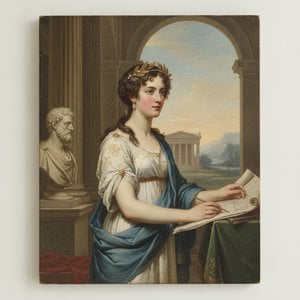
The Revival of Antiquity: Exploring Ideals of Beauty & Power in Neoclassical Portraiture
Explore the captivating world of Neoclassical portraiture! Discover the power & ideals behind masterpieces by David, Girodet & more. Expert analysis, custom reproductions & art appraisal at ArtsDot.

The Revival of Antiquity: Exploring the Neoclassical Movement & its Enduring Legacy
Explore the revival of classical art with our deep dive into Neoclassicism! Discover key artists like Jacques-Louis David, Enlightenment influences & lasting impact on art history. High-quality reproductions at ArtsDot.

The Revival of Antiquity: Exploring Neoclassical Art's Ideals & Enduring Legacy
Explore the revival of classical ideals in Neoclassical art! Discover Jacques-Louis David & the movement's impact on painting, sculpture & architecture. Expert insights & high-quality reproductions at ArtsDot.