


 Előnézet
 Megosztás
 Megosztás
 Részletek
 Útmutató

 Letöltés
 Hasonló darabok
 X-ray felvétel
 Diavetítés
 Statisztika
Összhatás


 Tovább olvasom
Kézzel készített olajfestmény reprodukció
Kézzel festett olajvastú vászon, az Ön által választott méretben és keretben, művészeink készítik meglévőre. ( Váltás nyomtatványra Áttérés digitális képre)




P118B Ft10

P118H Ft10

P118W Ft10

P438Z Ft10

P508JH Ft12

P508YH Ft12

P805H Ft10

P805Z Ft10

P919BZ Ft10

P919G Ft10

P919XJ Ft10

P959ZH Ft10

P968JZ Ft12

W106C Ft8

W218G Ft10

W218JH Ft8

W218Y Ft10

W307PJ Ft10

W316G Ft10

W316PJ Ft8

W316Y Ft10

W398PJ Ft8

W4111J Ft10

W500HY Ft15

W500JH Ft15

W692G Ft12

W849H Ft8

W940BG Ft15

W953PJ Ft8




Válasszon előre meghatározott méreteink közül, amelyek megfelelnek a műalkotás eredeti arányainak.

Írja be a kívánt szélességet és magasságot, hogy illeszkedjen a keretéhez vagy a falához. Mivel ez kézzel festett alkotás, egy eltérő formájú méret esetén a művész akár festhet is valamivel többet a kép körül, vagy korolathat is belőle — az Ön döntésének megfelelően. A festés megkezdése előtt küldünk egy digitális tervezetet jóváhagyásra. Az oldalon látható kép nem tartalmazza a végeredményt — csak a tervezet mutatja meg a valódi eredményt.
A rendelést követően a ArtsDot.com csapata e-mailt küld az ügyfélnek az instrukciókért, és biztosít egy előnézeti képet (mockup).
Világszerte elérhető szállítás () 3-4 hét alatt a szokásos 5 hét helyett. (24 október). A minőség nem kérdőjelezhető.

Ingyenes globális expressz szállítás

Prémium minőségű len vászon

Teljes körű szállítási biztosítás

Vámvisszatérítési Garancia

Tökéletes színarányosság garancia

100 napos visszaküldési garancia (csak gyártási hibás termékek esetén)

100% pénzvisszatérítési garancia

Több darab vásárlásakor kedvezmény
 Az üvegkeretes opció csak 110 cm alatti méretben érhető el

Összhatás
Reprodukciós technika
Reprodukció méretei
-


Összesített ár
Ft 84175
Jackson Pollock’s “Convergence”: A Revolution in Paint
Jackson Pollock’s *Convergence* isn't merely a painting; it’s an immersive journey into the heart of abstract expressionism, a visceral testament to the power of spontaneous creation and a pivotal work that fundamentally altered the course of 20th-century art. Created during a period of immense social and artistic upheaval following World War II, this monumental canvas embodies innovation, daringly rejecting traditional notions of representation in favor of an all-over composition—a boundless field where color and energy collide with breathtaking force. The painting invites viewers not to *look* at it, but to *experience* it, drawing them into a dynamic world sculpted by chance, gesture, and the sheer physicality of paint itself.Decoding the “Drip” Technique: A Radical Departure
At the core of *Convergence* lies Pollock’s revolutionary "drip painting" technique – a radical departure from established artistic practices. He abandoned brushes entirely, opting instead for sticks, hardened brushes, and even directly pouring paint cans onto an unprimed canvas laid flat on the floor. This wasn't simply about applying color; it was a deeply performative act, a dance with gravity and control. Pollock moved *around* and *over* the surface, allowing the flow of pigment to dictate its own trajectory. The resulting network of lines, drips, and splatters isn’t haphazard—it’s meticulously controlled chaos, a testament to his understanding of material properties and his willingness to embrace the unpredictable. As he famously stated, “I prefer to tack the canvas to the floor… I get better when I'm working on a large canvas.” This method transformed painting into an action, a process of physical engagement that prioritized the act of creation over the finished product.A Symphony of Color and Texture: Composition and Subject Matter
*Convergence* deliberately eschews recognizable subject matter. There are no figures, landscapes, or still lifes to anchor the eye. Instead, Pollock presents us with an “all-over” composition—a boundless field where every inch pulsates with activity. Layer upon layer of paint – a vibrant palette encompassing black, yellow, white, orange, blue, and red – interweave, creating a complex network of lines, shapes, and textures. The absence of a central focal point is deliberate; it’s designed to encourage the viewer's eye to wander freely, discovering new details within its intricate depths. This lack of structure fosters an immersive engagement, drawing us into the artwork’s expansive energy and inviting contemplation on the nature of perception itself.Historical Context: The Birth of a New American Voice
*Convergence* emerged during a period of profound cultural transformation in post-World War II America – a time when artists were actively rejecting European artistic traditions and forging their own distinct identities. Abstract Expressionism, with its emphasis on spontaneous gesture and emotional intensity, signaled a decisive shift away from representational art. Pollock’s work became emblematic of this movement, reflecting the anxieties, uncertainties, and burgeoning optimism of a nation grappling with the aftermath of war and the dawn of a new era. His willingness to challenge established conventions paved the way for future generations of artists to explore the limitless possibilities of abstract expressionism.Symbolic Resonance: Chaos, Energy, and the Subconscious
While *Convergence* resists literal interpretation, it’s impossible not to sense the underlying currents of emotion and experience within its chaotic surface. The interwoven lines and drips can be seen as representing the complexities of human consciousness—the interplay of order and chaos, reason and instinct. The vibrant colors evoke a range of emotions – from the fiery intensity of orange and red to the cool serenity of blue and white. Ultimately, *Convergence* invites us to project our own interpretations onto its surface, recognizing that art’s true power lies in its ability to resonate with each individual viewer on a deeply personal level.Gyakran Ismételt Kérdések
Melyik országból származik a Abstract Expressionism irányzat Összhatás című műve?
A Abstract Expressionism korszak alkotása, a "Összhatás", egy Egyesült Államok-ban született művész munkája.
Megrendelhető-e a "Összhatás" olajfestmény másolata?
A „Összhatás”, Jackson Pollock alkotása kézzel festett reprodukcióját közvetlenül a(z) Kézzel festett másolat oldalon is megrendelheti: kézzel festett olajfesték reprodukció lino vászonon, egyedi igény szerinti gyártással.
Hol tudom letölteni a(t) „Összhatás”, Jackson Pollock alkotása?
A „Összhatás”, Jackson Pollock alkotása képe letölthető a mű alkotásának Letöltés oldaláról: magas felbontású digitális kép letöltés.


A művész életrajza
Early Life and the Seeds of Innovation
Paul Jackson Pollock, born in Cody, Wyoming, in 1912, was a restless spirit from the outset. His early life was marked by frequent relocation as his father pursued work as a land surveyor across the vast landscapes of the American West. This itinerant existence instilled in young Pollock a deep connection to the natural world and an exposure to diverse cultures, particularly through encounters with Native American art during those surveying trips – impressions that would subtly permeate his artistic vision later in life. Though he never explicitly imitated Indigenous styles, the raw energy and spiritual resonance of these early experiences undoubtedly left their mark. Pollock’s formal artistic training began at the Manual Arts High School in Los Angeles, followed by studies at the Art Students League of New York under the tutelage of Thomas Hart Benton. Benton, a prominent figure in the Regionalist movement, emphasized rhythmic composition and narrative themes rooted in American life. While Pollock initially absorbed these lessons, his inherent inclination leaned toward more abstract explorations. He was also profoundly impacted by Mexican muralists like José Clemente Orozco, whose powerful depictions of social struggle resonated deeply with him. These early influences laid a foundation, but it was the burgeoning world of Surrealism that truly unlocked Pollock’s artistic potential.The Birth of Action Painting and a Revolutionary Technique
The 1930s saw Pollock experimenting with various techniques, seeking alternatives to traditional brushwork. He began pouring paint, exploring its fluidity and unpredictable nature. However, it was around 1947 that his artistic trajectory underwent a radical transformation. Abandoning the easel altogether, Pollock laid canvases directly on the floor, initiating what would become known as his “drip technique.” He then proceeded to drip, splash, and fling paint onto the canvas from above, orchestrating a dynamic dance between artist, medium, and surface. This wasn’t merely about applying paint; it was about embodying the act of creation itself. Pollock's canvases became arenas for physical expression, capturing the immediacy of his gestures and emotions. The resulting paintings are characterized by their “all-over” composition – a lack of central focus that invites the viewer to explore the entire surface as a unified field of energy. Intricate networks of lines and colors intertwine, creating a visual complexity that is both captivating and challenging. He employed unconventional tools—sticks, knives, even syringes—to manipulate the paint in unpredictable ways, further emphasizing the spontaneous nature of his process.- He mixed unconventional materials into the paint, such as sand and tar.
- His technique was a direct rejection of traditional brushwork and compositional rules.
Influence and Development
Pollock’s artistic journey wasn't solely defined by his groundbreaking drip technique. He drew inspiration from diverse sources, including the works of European modernists like Piet Mondrian and Wassily Kandinsky, as well as the vibrant murals of Mexican artists such as Diego Rivera. The influence of Surrealism is also evident in his early work, particularly his exploration of subconscious imagery and dreamlike landscapes. His time at the Art Students League under Thomas Hart Benton provided a crucial grounding in traditional painting techniques, which he later subverted to create his own unique style. His marriage to Lee Krasner was pivotal; she not only provided emotional support but also encouraged his artistic experimentation and helped him navigate the complexities of the New York art scene.Iconic Works and Lasting Legacy
Pollock’s most celebrated works—such as Number 1, 1950 (Lavender Mist), One: Number 31, 1950, Blue Poles: Number 11, 1952, and *Convergence*—are testaments to his revolutionary technique. These paintings are not simply images; they are records of a performance, imbued with the artist’s physical presence and emotional intensity. The dynamic energy that emanates from these canvases is palpable, drawing viewers into a world of pure abstraction. Key Works:- Lavender Mist (1950)
- One: Number 31 (1950)
- Blue Poles (1952)
- Convergence (1956)

Jackson Pollock
1912 - 1956 , Egyesült Államok
Gyors információk
- Artistic Movement Or Style: Absztrakt expresszionizmus
- Artists Or Movements Influenced By This Artist: ['Surrealizmus']
- Artists Who Influenced This Artist: ['Thomas Hart Benton']
- Date Of Birth: 1912. jan 28.
- Date Of Death: 1956. aug 11.
- Full Name: Paul Jackson Pollock
- Nationality: Amerikai
- Notable Artworks:
- Number 1, 1950
- Blue Poles
- Convergence
- Place Of Birth: Cody, Wyoming
Kapcsolódó cikkek

Absztrakt Expresszionizmus Mesterei: 10 alkotás, ami meghatározta a művészetet | ArtsDot.com
Fedezze fel a 10 legikonikusabb absztrakt expresszionista alkotást! Ismerje meg Jackson Pollock, Mark Rothko és más mesterek történetét. Művészeti reprodukciók prémium minőségben – ArtsDot.com.

Jacob Kainen: A Pioneer of American Color Field Painting & Abstract Expressionism
Explore the life & work of Jacob Kainen, a pivotal figure in American Abstract Expressionism and Color Field painting. Discover his journey from Social Realism to vibrant abstraction and lasting influence on 20th-century art.

Beyond Representation: Exploring the Emotional Landscape of Abstract Expressionism
Explore the profound emotional world of Abstract Expressionism with ArtsDot. Discover key artists like Pollock & Rothko, learn about collecting, and find museum-quality reproductions to inspire your space.
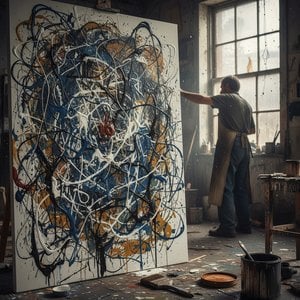
Paul Jackson Pollock: A Radical Departure – Exploring Abstract Expressionism's Pioneering Figure and His Enduring Legacy
Explore the revolutionary art of Jackson Pollock & Abstract Expressionism. Discover his iconic drip paintings, lasting impact, and considerations for collecting this pivotal American artist. Expert insights at ArtsDot.

Paul Jenkins: Abstraction, Color Field Painting & the Pursuit of Lyrical Expression
Explore the captivating world of Paul Jenkins, a pioneer of abstract expressionism & color field painting. Discover his unique ‘Phenomena’ series and investment potential for art collectors. Expert insights at ArtsDot.


