


A kép az Ön választásai alapján készült: , .
A gyűjtemény leírása
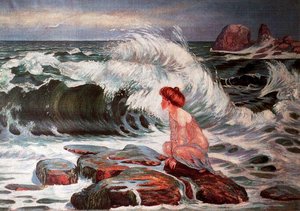
Howard Pyle’s ‘The Mermaid’ (1910) captures a romantic Art Nouveau scene of a human & mermaid. Watercolor beauty, mystical allure, and timeless charm – explore this captivating artwork.
A művész életrajza
Howard Pyle (1853-1911) amerikai illusztrátor és író, a romantikus tengerészkirályok és mesehősök ikonikus képeivel világszerte ismert. A Brandywine School alapítója, aki a történetmesélés művészetét új dimenzióba emelte.
 Összes részlet megjelenítése
Kézzel készített olajfestmény reprodukció
Kézzel festett olajvastú vászon, az Ön által választott méretben és keretben, művészeink készítik meglévőre. ( Váltás nyomtatványra Áttérés digitális képre)
Több információ erről a festményről
 Megtekintés
 Küldés
 Megosztás
 Részletek
 Útmutató

 Letöltés
 Hasonló darabok
 X-ray felvétel
 Diavetítés
 Kérdések és válaszok
 Statisztika
Rendelje meg festményét négy egyszerű lépésben
Ne siessen! Bármely választ módosítható; az rendelési összesítőben megjelenő ár minden egyes döntésre reagál.
1 Az első lépés négyből
Melyik méretet szeretné?
Ezek a méretek megőrzik az eredeti festmény arányait. A rajz bemutatja a választott méretet egy falon, egy kétszáz centiméteres kanapé felett.
Vagy adja meg a saját méreteit
Válasszon előre meghatározott méreteink közül, amelyek megfelelnek a műalkotás eredeti arányainak.

Írja be a kívánt szélességet és magasságot, hogy illeszkedjen a keretéhez vagy a falához. Mivel ez kézzel festett alkotás, egy eltérő formájú méret esetén a művész akár festhet is valamivel többet a kép körül, vagy korolathat is belőle — az Ön döntésének megfelelően. A festés megkezdése előtt küldünk egy digitális tervezetet jóváhagyásra. Az oldalon látható kép nem tartalmazza a végeredményt — csak a tervezet mutatja meg a valódi eredményt.
2 A négy lépésből a második
Hogyan kívánja előkészíteni: feltekercselve, vászonra feszítve vagy keretezve?
Az alábbi árak az első lépésben választott méretre vonatkoznak.
Válaszd ki a feszített vászon széleit
Válassza ki a keretet

Fehér Ft1

Elmosódott szélek Ft1

Kiterjesztett Ft1

P118B Ft10

P118H Ft10

P118W Ft10

P438Z Ft10

P508JH Ft12

P508YH Ft12

P805H Ft10

P805Z Ft10

P919BZ Ft10

P919G Ft10

P919XJ Ft10

P959ZH Ft10

P968JZ Ft12

W106C Ft8

W218G Ft10

W218JH Ft8

W218Y Ft10

W307PJ Ft10

W316G Ft10

W316PJ Ft8

W316Y Ft10

W398PJ Ft8

W4111J Ft10

W500HY Ft15

W500JH Ft15

W692G Ft12

W849H Ft8

W940BG Ft15

W953PJ Ft8

H24-GOLD Ft30

H24-SILVER Ft30

H36-GOLD Ft45

H36-SILVER Ft45
Keretezett
Keretprofil: . A kerettel együtt vett teljes méret: .
3 A négy lépésből a harmadik
Szeretne változtatni valamit a festményen?
A legtöbb ember nemet mond erre. Mivel minden festmény kézzel készül, művészünk képes az Ön igényei szerint is átalakítani azt.
A megrendelést követően a ArtsDot.com csapat e-mailt küld a vásárlónak az instrukciókkal, és biztosítja a tervezeti előnézetet
4 A négy lépés közül a negyedik
Néhány felületfinisz
Mindegyik opcionális. A már kiválasztott válaszok nem jelentnek plusz költséget.
Ki festette?
Világszerte elérhető szállítás () 3-4 hét alatt a szokásos 5 hét helyett. (4 november). A minőség nem kérdőjelezhető.
Egy felirat, mint egy múzeumban?
A gravírozott bronztábla részletei
This elegant plaque features the artist's name and the title of the artwork, finely engraved for a timeless presentation.
It is made from bronze with a refined, elegant finish. The text is precisely laser-engraved for a sharp and permanent result. Measuring 9x2 cm, the plaque is compact yet easy to read. It's built to be durable and scratch-resistant, offering a professional, museum-quality look. Mounting is simple thanks to the included adhesive backing.
Átlátszó akril tábla részletei
The plaque includes essential engraved details such as the artist's name, the title of the artwork, the date it was created, the type of media used-like oil on canvas or watercolor-a brief description of the piece, and a QR code that links to the complete artwork information.
It is crafted from clear acrylic, offering a sleek, modern appearance. The text is UV-engraved in black to ensure strong visual contrast. With a size of 10x15 cm, it ensures optimal readability. It comes equipped with two metal hooks for secure wall mounting. The plaque is designed to be weather-resistant, making it suitable for various environments, and it includes interactive features that work seamlessly with smartphone scanning.
Fekete akril tábla részletei
This elegant plaque includes engraved information such as the artist's name, the title of the artwork, the date it was created, the type of media used (like oil on canvas or watercolor), a short description of the artwork, and a QR code for quick access to more information.
The plaque itself is made from refined black acrylic with a premium finish. The text is laser-engraved in white for high contrast and readability. Its size is 10x15 cm, designed to be easy to read. It comes with two metal hooks for professional mounting. The design is sleek and fits any interior style. It is also weather-resistant and durable, with built-in digital integration for mobile compatibility.
Egy védőréteg?
Mikor lenne szüksége rá?
✓ Ellenőrizés és rendelés
Az Ön által megrendelt festmény

The Mermaid
Reprodukciós technika
Reprodukció mérete
-

Kiváló mesterművész
Nagyobb részletesség, finomság és bővített gyártási idő
-

Reprodukció keretezése
-
-
A bármely oldalsó méretét túlszálaló 105 cm (kb. 41 hüvelyk) meghaladó műalkotások vagy reprodukciók esetében a keret összeszerelhető készletként, szétszerelve kerül szállításra. Ez a módszer biztosítja a biztonságos szállítást, és megakadályozza a szállítás során fellépő sérüléseket.
Szakmész összeszerelést igényel – ez nem DIY (önösszeszerelhető) termék.
A készletet egy tapasztalt keretező szakembernek kell összeszerelnie és a vásznat feszítenie kell, fa ragasztó (nem tartalmazza a csomag), vásznfeszítő fogó és szorítók használatával, amelyek a ragasztó száradásáig a keretrészeket egymáshoz vuôngjba tartják. A helytelen összeszerelés vagy a nem egyenletes vásznfeszítés maradandó károsíthatja a műalkotást, és ez nem része a garanciánknak.
 A bármely oldalsó méretét túlszálaló 105 cm (kb. 41 hüvelyk) meghaladó műalkotások vagy reprodukciók esetében a keret összeszerelhető készletként, szétszerelve kerül szállításra. Ez a módszer biztosítja a biztonságos szállítást, és megakadályozza a szállítás során fellépő sérüléseket.
A készlet tartalmazza az összes tömörfa rudat, pontosan méretre vágva.
A mellékelt csavarokkal, valamint a sarokszerekhez szükséges faütő ragasztóval kell összeszerelnie (ez nem tartalmazható a csomagban), így a keretrendezőnek külön kell beszereznie.
A csomag nem tartalmazza a szükséges professzionális eszközöket: egy vászonfeszítőt és klipseket a rácsok vízszintes tartásához a ragasztó megszáradásáig.
Fontos:
A sarokcsatlakozásokhoz fánylagra van szükség, a keretrudakat szorítókapcsokkal kell rögzíteni, amíg a rag teljesen meg nem szárad, a kész keretre feszített vászonhoz pedig vászonfeszítő fogat szükséges. Ezek egyike sem található meg a készletben. Kérjük, rendelés előtt győződjön meg róla, hogy rendelkezik tapasztalt keretező szakemberrel.

Névtábla
-
-

Védőréteg (Lakk)
Fényes lakk (intenzívabb színek, védelem a fény és a nedvesség hatása ellen)
-

Műalkotásom egyedi igényre szabása
Példák a módosíthatóságra: az arc kicserélése az ügyfél fotójára; háziállat hozzáadása (pl. macska helyett kutya); rejtett üzenet elhelyezése a háttérben; a háttér tájainak vagy elemeinek megváltoztatása.
-

Sürgős
Világszerte szóló szállítás () mindössze 3-4 hét alatt, a szokásos 5 hét helyett. (4 november). A minőség nem kérdőjelezhető.
-
Express szállítás
Világszerte elérhető szállítás területre 5 héten belül. (11 november).
A szállítás díja tartalmazza
Összesített ár
Ft 85396
Az üvegkeretes opció csak 110 cm alatti méretben érhető el
Minden rendelés mellé tartalmazva
- Ingyenes globális expressz szállítás
- Prémium minőségű len vászon
- Teljes körű szállítási biztosítás
- Vámvisszatérítési Garancia
- Hiteles színarányosság garancia
- 100 napos visszaküldési lehetőség (csak hibás termékek esetén)
- 100% pénzvisszatérítési garancia
- Több darab vásárlásakor kedvezmény


Hasonló műalkotások




Howard Pyle
1853 - 1911, Egyesült Államok
A művész életrajza
A Pioneer of American Illustration: The Life and Legacy of Howard Pyle
Howard Pyle, born in Wilmington, Delaware, in 1853, stands as a monumental figure in the history of American illustration. More than simply an artist, he was a storyteller, educator, and innovator who fundamentally shaped the visual landscape of late 19th and early 20th-century America. His influence extends far beyond the pages of books and magazines; Pyle essentially *created* the romanticized image of pirates that continues to dominate our collective imagination today. From a young age, Pyle displayed an innate talent for both drawing and writing, nurtured by supportive parents who recognized his potential despite his somewhat indifferent attitude toward formal schooling. His artistic training was relatively brief—three years at the studio of F.A. van der Wielen in Philadelphia, supplemented by lessons at the Art Students League of New York—but it proved sufficient to launch a career that would redefine illustration as a serious art form. Early struggles in New York were overcome with encouragement from established artists like Edwin Austin Abbey and A.B. Frost, culminating in his first published spread in Harper’s Weekly in 1878, a moment that signaled the beginning of his ascent.The Brandywine School and a Generational Impact
Pyle's commitment to fostering artistic talent led him to teaching roles at the Drexel Institute of Art, Science, and Industry in 1894, and subsequently, to founding his own school, the Howard Pyle School of Illustration Art around 1900. This wasn’t merely a classroom; it was an immersive environment where students were instilled with Pyle's rigorous standards and unique approach to narrative illustration. The impact of this school—later dubbed the “Brandywine School” by scholar Henry C. Pitz, due to its concentration in the Brandywine region—is immeasurable. A remarkable roster of artists passed through his tutelage, including N.C. Wyeth, Frank Schoonover, Violet Oakley, and Jessie Willcox Smith, each going on to achieve significant recognition in their own right. Pyle’s teaching philosophy emphasized not just technical skill but also a deep understanding of history, literature, and the power of visual storytelling. He encouraged his students to research their subjects thoroughly, to immerse themselves in the atmosphere of the scenes they depicted, and to strive for authenticity even when portraying fantastical worlds. His home and studio in Wilmington, still standing today as a National Historic Landmark, served as the heart of this artistic community.Medieval Visions and Modern Mythmaking
Pyle’s artistic output was remarkably diverse, encompassing historical scenes, adventure stories, fairy tales, and—most famously—pirate imagery. He found particular inspiration in medieval European history and Arthurian legends, producing lavishly illustrated editions of *The Merry Adventures of Robin Hood* (1883) and a four-volume set on King Arthur that captivated readers with their romanticism and attention to detail. These works weren’t simply illustrations; they were immersive visual experiences that transported audiences to another time and place. However, it was his depictions of pirates that truly cemented his legacy. Prior to Pyle, the popular image of a pirate was largely undefined. He single-handedly crafted the now-iconic stereotype—the flamboyant attire, the eye patches, the swaggering poses—drawing inspiration from diverse sources like gypsy dress and historical costume books, but ultimately creating something entirely new and enduring. While historically inaccurate for practical seafaring life, Pyle’s pirates were undeniably *romantic*, embodying a spirit of adventure and rebellion that resonated with audiences then and continues to do so today. His influence can be seen in countless depictions of pirates in film, literature, and popular culture, from Errol Flynn's swashbuckling heroes to Johnny Depp's enigmatic Jack Sparrow.A Late Flourishing and Enduring Influence
In 1910, Pyle traveled to Florence, Italy, seeking to study mural painting and further refine his artistic skills. Sadly, this journey was cut short by a sudden kidney infection (Bright’s disease), leading to his death in 1911 at the age of 58. Despite his relatively early passing, Pyle left behind an extraordinary body of work that continues to inspire artists and captivate audiences today. His illustrations are celebrated for their dynamic compositions, rich colors, and masterful storytelling. He wasn’t merely illustrating stories; he was *creating* worlds, breathing life into characters, and shaping the visual language of adventure and fantasy. The Smithsonian American Art Museum recognizes Pyle as a pivotal figure whose work bridged the gap between fine art and popular illustration, elevating the latter to new heights of artistic expression. His legacy extends beyond his individual artworks; it lives on in the generations of artists he mentored and in the enduring power of the images he created—images that continue to shape our understanding of history, myth, and the boundless possibilities of imagination.Major Works & Recognition
- The Merry Adventures of Robin Hood (1883): A cornerstone of children’s literature, renowned for its vibrant illustrations and captivating retelling of the classic tale.
- Otto of the Silver Hand (1888): Pyle's first novel, showcasing his talent as both author and illustrator, set in a medieval European setting.
- The Pirate was a Picturesque Fellow (circa 1890): A defining image of the romanticized pirate archetype that continues to influence popular culture.
- The Story of King Arthur and His Knights (1903-1905): A comprehensive and beautifully illustrated retelling of the Arthurian legends.
- Mural Paintings: Including *The Battle of Nashville* at the Minnesota State Capitol, demonstrating his versatility in large-scale works.
Kapcsolódó cikkek
Ephemeral Visions: Exploring the Artistic Legacy & Nuances of Watercolor Painting
Explore the captivating world of watercolor painting! Discover its rich history, essential techniques, influential artists & collecting tips from art experts. A comprehensive guide for enthusiasts.

A festészet forradalma: 10 ikonikus akvarellművészeti remekmű, melyek örökre megváltoztatták a művészetet
Fedezze fel a 10 legikonikusabb akvarell festményt, melyek megváltoztatták a művészetet! Ismerje meg Turner, Monet és más mesterek történetét. Vásároljon prémium minőségű reprodukciókat a ArtsDot.com-on – inspiráló faliképek otthonába!

Ephemeral Visions: Exploring the History & Emotional Resonance of Watercolor Painting
Explore the captivating history of watercolor painting, from ancient techniques to modern masters like Kandinsky & Blake. Discover essential artists, collecting tips & the emotional power of this luminous medium. Expert insights for art enthusiasts.