


 Megtekintés
 Küldés
 Megosztás
 Részletek

 Letöltés
 Hasonló darabok
 X-ray felvétel
 Diavetítés
 Stats
StatsThe Drama
 Acrylic On Canvas
- WallArt
- Social Realism
 1860
1860 98.0 x 90.0 cm
 Neue Pinakothek
 Összes részlet megjelenítése
Giclée / Műnyomat
Múzeumi minőségű giclée vagy vászonnyomat, gyors gyártással és rugalmas finomítási lehetőségekkel. ( Kézzel festett másolat rendelése Switch to Digital Image)




P118B $10

P118H $10

P118W $10

P438Z $10

P508JH $12

P508YH $12

P805H $10

P805Z $10

P919BZ $10

P919G $10

P919XJ $10

P959ZH $10

P968JZ $12

W106C $8

W218G $10

W218JH $8

W218Y $10

W307PJ $10

W316G $10

W316PJ $8

W316Y $10

W398PJ $8

W4111J $10

W500HY $15

W500JH $15

W692G $12

W849H $8

W940BG $15

W953PJ $8




Válasszon előre meghatározott méreteink közül, amelyek megfelelnek a műalkotás eredeti arányainak.

Megadhat saját méreteket is egy konkrét kerethez vagy helyszínhez igazítva. Amennyiben a kiválasztott méret nem egyezik az eredeti kép arányokkal, a műalkotást le fogjuk vágni, vagy kiegészítjük a képet tükrözött vagy egyszínű szélekkel. A gyártás megkezdése előtt egy digitális tervezetet küldünk jóváhagyásra.
Kérjük, vegye figyelembe, hogy a képernyőn látható előnézet nem tükrözi a tényleges levágást vagy kiegészítést. Csak a tervezet mutatja pontosan a végső kompozíciót.
Bár az egyedi méretek is elérhetőek, az eredeti arányok megőrzése érdekében azt javasoljuk, hogy válasszon a előre meghatározott listából származó méretet.
Világszerte történő kiszállítás területére mindössze 2 hét alatt, a szokásos 4-5 hét helyett. (8 szeptember)

Ingyenes globális expressz szállítás

Prémium minőségű len vászon

Teljes körű szállítási biztosítás

Vámvisszatérítési Garancia

Hiteles színpontosság garancia

100 napos visszaküldési lehetőség (csak hibás termékek esetén)

100% pénzvisszatérítési garancia

Több darab vásárlása esetén kedvezmény
 Az üvegkeretes opció csak 110 cm alatti méretben érhető el

The Drama
Giclée / Műnyomat
Reprodukció mérete
-


Összesített ár
$ 62
A Stage of Emotion: Honoré Daumier’s “The Drama”
Honoré Daumier's "The Drama," painted in 1860, isn’t merely a depiction of a theatrical performance; it’s a visceral exploration of human interaction, power dynamics, and the very essence of spectacle. The painting immediately commands attention with its dynamic composition – a swirling vortex of figures caught in a moment of intense action, frozen mid-gesture as if plucked from the heart of a dramatic scene. It's a work that transcends simple illustration, becoming a potent commentary on social hierarchies and the performative nature of life itself.
Daumier’s style is instantly recognizable: a masterful blend of realism and expressive draftsmanship. He eschews idealized forms in favor of capturing the raw energy and emotional truth of his subjects. The figures are rendered with quick, confident brushstrokes, conveying a sense of immediacy and urgency. Notice how he utilizes chiaroscuro – the dramatic contrast between light and shadow – to heighten the theatricality of the scene, drawing our eyes to key moments of interaction and creating an atmosphere of suspense and intrigue. The palette is rich and earthy, dominated by browns, ochres, and deep reds, lending a sense of both drama and groundedness to the composition.
A Glimpse into 19th-Century Parisian Life
To fully appreciate “The Drama,” it’s crucial to understand its historical context. Painted during the tumultuous years following the French Revolution, Daumier was a keen observer of social and political life in Paris. He used his art as a powerful tool for satire and critique, exposing the corruption and hypocrisy he witnessed within the established order. This particular scene likely depicts a performance at the Théâtre Français, a prominent venue during that era, reflecting the vibrant yet often fraught cultural landscape of the city.
The painting’s subject matter – a man dramatically lifting a woman from the stage – speaks volumes about the power dynamics at play. The central figure, bathed in light, embodies authority and control, while the woman, caught mid-fall, represents vulnerability and perhaps even resistance. The surrounding figures, some watching with detached amusement, others actively participating in the performance, further underscore this complex interplay of roles and relationships. Daumier wasn’t simply documenting a theatrical event; he was dissecting the social rituals and power structures that shaped Parisian society.
Symbolism and Theatricality
Beyond its immediate narrative, “The Drama” is laden with symbolic meaning. The stage itself becomes a metaphor for life – a constructed space where roles are played, identities are performed, and power is asserted. The act of lifting the woman can be interpreted as both an act of dominance and a gesture of care (though the ambiguity leaves room for interpretation). The overall composition evokes the conventions of melodrama, with its heightened emotions, dramatic gestures, and focus on spectacle. Daumier was acutely aware of these theatrical tropes and skillfully employed them to convey his critical message.
The inclusion of a diverse audience – some observing passively, others actively engaged – highlights the role of spectatorship in shaping social reality. We are invited to consider our own position within this scene, questioning our complicity in the performance and reflecting on the power dynamics that govern our interactions with one another.
A Timeless Masterpiece: Reproduction Possibilities
“The Drama” remains a remarkably powerful and enduring work of art. Its dramatic intensity, evocative composition, and insightful social commentary continue to resonate with viewers today. Reproductions offer an accessible way to bring this masterpiece into your home or office, allowing you to experience its captivating beauty and thought-provoking themes firsthand. When selecting a reproduction, consider the quality of materials used – a fine art print on archival paper will ensure that the colors and details remain vibrant for years to come. This painting is more than just an image; it’s a window into a bygone era and a timeless meditation on the complexities of human experience.
Hasonló műalkotások


A művész életrajza
A Life Etched in Satire: The World of Honoré Daumier
Honoré-Victorin Daumier’s life unfolded against the backdrop of a rapidly changing France, a nation grappling with revolution and social upheaval. Born in Marseille in 1808, his early years were steeped in the traditions of his family—a lineage of glaziers and artisans—but his spirit yearned for something beyond the confines of his humble beginnings. His father, a poet who had experienced both success and disappointment in Paris, instilled in him a love for literature and a keen awareness of social injustices. This early exposure to the complexities of human experience would profoundly shape Daumier’s artistic vision. The family's move to Paris in 1814 provided young Honoré with access to the vibrant artistic scene of the capital, exposing him to the works of masters like Rubens and Titian through his mentor, Alexandre Lenoir—a painter who also nurtured a deep appreciation for classical sculpture. This foundation laid the groundwork for Daumier’s distinctive style, blending realism with expressive draftsmanship. However, it wasn't merely technical skill that defined him; it was an unwavering commitment to exposing hypocrisy and challenging authority through his art.The Sharpened Pen: Caricature and Social Commentary
Daumier’s career truly ignited in the tumultuous aftermath of the 1830 Revolution. This pivotal event, which dramatically reshaped French society and politics, provided him with a fertile ground for his burgeoning satirical talent. He quickly established himself as a master lithographer, initially contributing anonymously to various publications—most notably *Le Charivari*, a fiercely independent comic journal founded by Charles Philipon. It was within the pages of *Le Charivari* that Daumier’s genius truly blossomed. His caricatures weren't simply humorous illustrations; they were biting critiques of the bourgeoisie, the legal system, and the political establishment—a deliberate provocation aimed at exposing corruption and challenging the status quo. His unflinching portrayal of King Louis-Philippe, for example, led to his imprisonment in 1832 after a particularly pointed caricature was published. This act of defiance, rather than silencing him, solidified his commitment to using art as a weapon against injustice. The sheer volume of his output during this period is staggering—thousands of lithographs that served as both popular entertainment and potent political statements, capturing the spirit of dissent and offering a critical commentary on the societal ills of his time. The meticulous detail in his work, combined with a sharp wit and keen observation, made him a powerful voice for the marginalized and oppressed.Beyond Caricature: Painting and Sculptural Visions
While Daumier is overwhelmingly celebrated for his lithography, to reduce his artistic output solely to caricature would be a profound disservice. He was also a dedicated painter and sculptor, though recognition for these works came later in life. His paintings—often depicting scenes of everyday Parisian life—are imbued with a remarkable sense of realism and empathy. He didn’t shy away from portraying the hardships faced by ordinary people: the cramped conditions of third-class carriages, the backbreaking labor of laundresses, the self-importance of lawyers. These works are not idealized representations; they are unflinching depictions of poverty, struggle, and resilience. Daumier masterfully employed loose brushwork and dramatic lighting to convey emotion and atmosphere—techniques that foreshadowed some of the innovations later embraced by the Impressionists. Furthermore, his sculptural work, largely created in clay during his lifetime (many pieces remaining unbaked), reveals a similar commitment to capturing the human form with honesty and emotional depth. These sculptures, rediscovered after his death, demonstrate a remarkable talent for modeling and an ability to convey psychological complexity through physical gesture—a testament to his profound understanding of the human condition.A Lasting Legacy: Influence and Historical Significance
Honoré Daumier’s impact on art history is undeniable. He bridged the gap between Romanticism and Realism, laying the foundation for future generations of artists who sought to depict the world as it truly was—warts and all. His unflinching social commentary profoundly influenced artists like Gustave Courbet and Édouard Manet, both of whom were deeply affected by his willingness to challenge authority and expose injustice through art. Moreover, Daumier’s innovative use of lithography revolutionized printmaking, transforming it from a primarily decorative medium into a powerful tool for political satire and social critique. His work continues to resonate today, reminding us of the enduring power of art to challenge established norms, expose corruption, and bear witness to the human condition. The Musée d'Orsay in Paris houses a significant collection of his paintings and sculptures, offering visitors a unique opportunity to immerse themselves in the world he so vividly portrayed. His lithographs are widely accessible through collections like those found on ArtsDot, ensuring that his satirical genius continues to provoke thought and inspire dialogue—a legacy that extends far beyond the confines of the 19th century. Daumier wasn’t merely an artist; he was a chronicler of his time—a visual poet who used his talent to give voice to the voiceless and hold power accountable.Current Meta Description:
Honoré Daumier (1808-1879), the French master of realism & satire. Explore his powerful lithographs, paintings & sculptures critiquing 19th-century society and influencing modern art.Current Meta Keywords:
Honoré Daumier, Honore Daumier, French Realism, 19th Century Art, Political Satire, Lithography, Caricature, Parisian Life, Daumier Prints
Daumier Honore
1808 - 1879 , Franciaország
A művészről röviden
- Artistic Movement Or Style: Realizmus, Szatirikus
- Artists Or Movements Influenced By This Artist:
- Impressionizmus
- Modern művészet
- Artists Who Influenced This Artist:
- Alexandre Lenoir
- Jacques-Louis David
- Date Of Birth: 1808. Feb 26.
- Date Of Death: 1879. Feb 10.
- Full Name: Honoré-Victorin Daumier
- Nationality: Francia
- Notable Artworks:
- Rue Transnonain
- Les gens de justice
- Ecce Homo
- Place Of Birth: Marseille, Francia
Kapcsolódó cikkek

Reflecting Society's Shadows: Social Commentary in Art Through the Ages
Explore the powerful history of social commentary in art! Discover key artists like Hogarth & Daumier, movements from Realism to American Social Realism, and how art reflects—and challenges—society. Expert insights at ArtsDot.

Honoré Daumier: Social Commentary & Artistic Innovation in 19th-Century France
Explore the life & work of Honoré Daumier, a master of 19th-century French realism and satire. Discover his powerful lithographs, paintings, and sculptures critiquing society – and his lasting influence on modern art.

The Sharpest Wit: A Historical Exploration of Satire in Visual Culture
Explore the history of satire in art! From ancient masters like Aristophanes to Goya & Grosz, discover how artists use wit and critique to reflect—and challenge—society. Expert insights at ArtsDot.

John Leech: Satirical Visions of Victorian Society – A Comprehensive Examination of His Art & Influence
Explore the satirical world of John Leech, Victorian England's master caricaturist! Discover his iconic work for Punch magazine, illustrations with Dickens, and lasting impact on social commentary & art history. A comprehensive analysis.
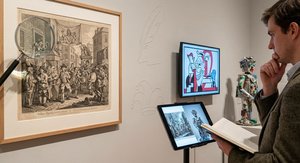
The Sharpest Wit: A Critical Exploration of Satire in Art History – From Hogarth to Contemporary Critique
Explore the history of satire in art! From Hogarth's London to contemporary critique, discover how artists use wit & visual power to reflect and challenge society. Expert insights at ArtsDot.
