
- Főoldal

- Olajfestmény reprodukció
- Gude, Hans Fredrik
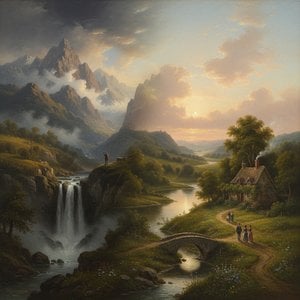
- Forest Landscape with Lake

 Nyomat vásárlása Kép letöltése
 Megosztás
 Megosztás
 Details
 Kedvencekhez ad

 Letöltés
 Hasonló alkotások
 X-Ray
X-Ray
 Diavetítés
Forest Landscape with Lake


Kézzel készített olajfestmény reprodukció
Kézzel festett olajvastú vászon, az Ön által választott méretben és keretben, művészeink készítik meglévőre.




































 Olvasson tovább
Válasszon előre meghatározott méreteink közül, amelyek megfelelnek a műalkotás eredeti arányainak.

Ön megadhat saját méreteket egy adott kerethez vagy térhez igazításhoz. Ha a kiválasztott méret nem egyezik az eredeti kép arányával, akkor a műalkotást levágjuk, vagy további kézzel festett elemekkel meghosszabbítjuk a festményt. A gyártás megkezdése előtt küldünk Önnek egy digitális előnézetet jóváhagyásra.
Kérjük, vegye figyelembe, hogy a képernyőn megjelenő előnézet nem tükrözi a tényleges vágást vagy kiterjesztést. Csak az előnézet fog pontosan mutatni a végső kompozíciót.
Bár egyedi méretek állnak rendelkezésre, javasoljuk, hogy válasszon egy méretet az előre meghatározott listából az eredeti arányok megőrzése érdekében.
A rendelést követően a ArtsDot.com csapata e-mailt küld az ügyfélnek az instrukciókért, és biztosít egy előnézeti képet (mockup).
Világszerte elérhető szállítás () 3-4 hét alatt a szokásos 5 hét helyett. (1 július). A minőség nem kérdőjelezhető.

Ingyenes globális expressz szállítás

Prémium minőségű len vászon

Teljes szállítási biztosítás

Vámvisszatérítési Garancia

Tökéletes színpontosság garancia

60 napos visszaküldési lehetőség (csak gyártási hibák esetén)

100%-os pénzvisszatérítési garancia

Kedvezmény több termény esetén
 Az üvegkeretes opció csak 110 cm alatti méretben érhető el

Forest Landscape with Lake
Reprodukciós technika
A reprodukció mérete
-


Összesített ár
-
Hasonló műalkotások


A művész életrajza
A Norwegian Visionary: The Life and Art of Hans Fredrik Gude
Born in Christiania (present-day Oslo) in 1825, Hans Fredrik Gude emerged as a pivotal figure in the blossoming of Norwegian National Romanticism. His lineage – his father, Ove Gude, was a respected lawyer and politician, and his mother, Marie Elisabeth Brandt, fostered an early appreciation for artistic expression – provided a nurturing environment for his burgeoning talent. From the tender age of twelve, young Hans received foundational training under Johannes Flintoe, a landscape painter who instilled in him the fundamentals of drawing and painting. This initial exposure ignited a lifelong passion that would see Gude not only capture the breathtaking beauty of Norway’s landscapes but also help define a national artistic identity. His formal education continued at the Royal School of Drawing in Christiania, where he honed his skills and began to explore the possibilities of landscape as a vehicle for emotional resonance.Early Influences and Düsseldorf's Shaping Hand
Gude’s early artistic development was profoundly shaped by several key influences. Initially, he studied with Johannes Flintoe, absorbing the traditional techniques of landscape painting prevalent in Norway at the time. However, it was his relocation to Düsseldorf, Germany, at the age of sixteen that proved transformative. Here, under the tutelage of Johann Wilhelm Schirmer, a leading figure in the Düsseldorf School of Painting, Gude encountered a radically different approach to art. The Düsseldorf School emphasized meticulous detail, realistic representation, and romantic interpretations of nature – techniques deeply rooted in academic tradition but also imbued with a powerful sense of observation and emotional intensity. Gude became completely immersed in this influential circle, refining his brushwork, mastering the use of light and shadow, and developing a distinctive style characterized by its precision and atmospheric depth. Notably, he forged a particularly close collaboration with Adolph Tidemand, whose expertise in figure painting complemented Gude’s mastery of landscape to create some of Norway's most iconic artistic works. Their joint efforts, such as “Bridal Procession on the Hardangerfjord” (1848), captured not only the stunning beauty of Norwegian scenery but also the spirit of national pride and romantic idealism that defined the era.The Art of *En Plein Air* and a Growing Vision
While initially adhering to the Düsseldorf School’s emphasis on precise detail, Gude gradually began to evolve his style, driven by a desire for more faithful depictions of nature and a growing sensitivity to atmospheric effects. He embraced the concept of *en plein air* painting – working directly from nature outdoors – recognizing its crucial role in capturing the fleeting nuances of light, color, and mood. This practice allowed him to move beyond mere representation and imbue his paintings with a deeper sense of immediacy and emotional resonance. He also experimented with watercolors and gouache later in life, seeking new ways to express his artistic vision and maintain a sense of freshness and innovation. Gude’s early works often featured idyllic, sun-drenched Norwegian landscapes, reflecting the romantic sensibilities prevalent at the time. However, as he matured as an artist, his subject matter expanded to include captivating seascapes and coastal scenes, adding another layer of complexity and beauty to his oeuvre.Landscapes of Norway: A National Identity
Throughout his career, Gude produced a vast body of work that celebrates the diverse landscapes of Norway – from the majestic fjords and towering mountains to the dense forests and tranquil lakes. His paintings are characterized by an extraordinary ability to capture the rugged beauty of his homeland, imbuing each scene with a sense of awe and tranquility. Notable works such as “View from Balestrand” (1845), “Fra Chiemsee” (1868), and “Hjemvendende hvalfangerskip i en norsk havn” (“Whaling Ship Returning to a Norwegian Port”) (1869) exemplify his meticulous attention to detail, atmospheric perspective, and masterful use of light. Gude’s artistic style is defined by a remarkable ability to convey the changing moods of nature – from the dramatic intensity of a storm to the serene beauty of a twilight scene – evoking feelings of both wonder and contemplation. His work became deeply intertwined with the burgeoning sense of Norwegian national identity, serving as a visual embodiment of the country's natural heritage and cultural values.Legacy and Recognition
Hans Fredrik Gude’s contribution to Norwegian art extends far beyond his individual paintings. He stands as a central figure in Norwegian National Romanticism, playing a crucial role in the development of a distinct national artistic identity. Through his teaching positions at the Academy of Art in Karlsruhe and later at the Berlin Academy of Art, he mentored three generations of artists, shaping their aesthetic sensibilities and fostering a deep appreciation for Norway’s natural heritage. Gude received numerous accolades throughout his career, including medals, honorary memberships in various art academies, and the Grand Cross of the Order of St. Olav – recognizing his significant contributions to the cultural life of Norway. His family also contributed to the artistic world; he was the father of painter Nils Gude, and his daughter Sigrid married German sculptor Otto Lessing. Though he passed away in Berlin in 1903, Hans Fredrik Gude’s legacy endures as a testament to his artistic vision, his dedication to teaching, and his profound love for the landscapes that inspired him. He remains a celebrated icon of Norwegian art, whose works continue to captivate audiences with their timeless beauty and evocative power.
Gude, Hans Fredrik
1825 - 1903 , Szerbia
Rövid tények
- Artistic Movement Or Style: Norvég Nemzeti Romantika
- Artists Or Movements Influenced By This Artist:
- Dahl
- Norvég Nemzeti Romantika
- Artists Who Influenced This Artist:
- Schirmer
- Achenbach
- Date Of Birth: 1825. március 13.
- Date Of Death: 1903. augusztus 17.
- Full Name: Hans Fredrik Gude
- Nationality: Norvég
- Notable Artworks:
- Hardangerfjord
- Balestrand nézete
- Whaling Ship
- Place Of Birth: Oslo, Norvégia
Kapcsolódó cikkek

A lágy színek mesterművei: 10 ikonikus festmény a művészetben és otthonában
Fedezze fel a 10 legikonikusabb festményt, melyek lágy színeikkel varázsolnak! Monet, Renoir és más mesterek művei inspirálnak. Vászonképek, faliképek otthonába – ArtsDot.com kínálatából. Explore the full collection online!


Johan Christian Dahl: Pioneering Norwegian Romantic Landscape Painting
Explore the life & art of Johan Christian Dahl, Norway's first great Romantic painter. Discover his iconic landscapes, cultural impact, and lasting legacy with ArtsDot.

The Subdued Radiance of Pastel Palettes: Exploring Emotional Resonance in Art History
Explore the emotional power of pastel palettes in art history! Discover Impressionism, Post-Impressionism & color psychology insights. Find museum-quality reproductions at ArtsDot.
The Sublime and the Picturesque: Exploring Emotion & Nature in Romantic Landscape Painting
Explore the emotional power of Romantic landscape painting! Discover the sublime & picturesque aesthetics, key artists like Friedrich & Cole, and lasting influence on art history. Find your perfect piece at ArtsDot.

James Ward: A Study in British Romantic Landscape and Animal Painting
Explore the captivating world of James Ward (1769-1859), a master of British Romantic landscape & animal painting. Discover his iconic 'Gordale Scar' and exquisite portraits – a timeless art investment. Learn about his influences, style, and enduring legacy.

