

- 125.0 x 166.0 cm


A kép az Ön választásai alapján készült: , .
A gyűjtemény leírása
A tender German Renaissance scene of the Nativity by Hans Baldung featuring Mary, Joseph, and animals amidst a rustic setting, offering a profound spiritual connection for your collection.
 Összes részlet megjelenítése
A művész életrajza
Fedezd fel Hans Baldung Grien (1485-1545) német reneszánszi festőjét és nyomatkészítőt! Dürer hatása, varázslatos portréi, mitológiai motívumok – egyedi stílusú, szellemes alkotások a reformáció idején.
Kézzel készített olajfestmény reprodukció
Kézzel festett olajvastú vászon, az Ön által választott méretben és keretben, művészeink készítik meglévőre. ( Váltás nyomtatványra Áttérés digitális képre)
Több információ erről a festményről
 Megtekintés
 Küldés
 Megosztás
 Részletek
 Útmutató

 Letöltés
 Hasonló darabok
 X-ray felvétel
 Diavetítés
 Kérdések és válaszok
 Statisztika
Rendelje meg festményét négy egyszerű lépésben
Ne siessen! Bármely választ módosítható; az rendelési összesítőben megjelenő ár minden egyes döntésre reagál.
1 Az első lépés négyből
Melyik méretet szeretné?
Ezek a méretek megőrzik az eredeti festmény arányait. A rajz bemutatja a választott méretet egy falon, egy kétszáz centiméteres kanapé felett.
Vagy adja meg a saját méreteit
Válasszon előre meghatározott méreteink közül, amelyek megfelelnek a műalkotás eredeti arányainak.

Írja be a kívánt szélességet és magasságot, hogy illeszkedjen a keretéhez vagy a falához. Mivel ez kézzel festett alkotás, egy eltérő formájú méret esetén a művész akár festhet is valamivel többet a kép körül, vagy korolathat is belőle — az Ön döntésének megfelelően. A festés megkezdése előtt küldünk egy digitális tervezetet jóváhagyásra. Az oldalon látható kép nem tartalmazza a végeredményt — csak a tervezet mutatja meg a valódi eredményt.
2 A négy lépésből a második
Hogyan kívánja előkészíteni: feltekercselve, vászonra feszítve vagy keretezve?
Az alábbi árak az első lépésben választott méretre vonatkoznak.
Válaszd ki a feszített vászon széleit
Válassza ki a keretet

Fehér Ft1

Elmosódott szélek Ft1

Kiterjesztett Ft1

P118B Ft10

P118H Ft10

P118W Ft10

P438Z Ft10

P508JH Ft12

P508YH Ft12

P805H Ft10

P805Z Ft10

P919BZ Ft10

P919G Ft10

P919XJ Ft10

P959ZH Ft10

P968JZ Ft12

W106C Ft8

W218G Ft10

W218JH Ft8

W218Y Ft10

W307PJ Ft10

W316G Ft10

W316PJ Ft8

W316Y Ft10

W398PJ Ft8

W4111J Ft10

W500HY Ft15

W500JH Ft15

W692G Ft12

W849H Ft8

W940BG Ft15

W953PJ Ft8

H24-GOLD Ft30

H24-SILVER Ft30

H36-GOLD Ft45

H36-SILVER Ft45
Keretezett
Keretprofil: . A kerettel együtt vett teljes méret: .
3 A négy lépésből a harmadik
Szeretne változtatni valamit a festményen?
A legtöbb ember nemet mond erre. Mivel minden festmény kézzel készül, művészünk képes az Ön igényei szerint is átalakítani azt.
A megrendelést követően a ArtsDot.com csapat e-mailt küld a vásárlónak az instrukciókkal, és biztosítja a tervezeti előnézetet
4 A négy lépés közül a negyedik
Néhány felületfinisz
Mindegyik opcionális. A már kiválasztott válaszok nem jelentnek plusz költséget.
Ki festette?
Világszerte elérhető szállítás () 3-4 hét alatt a szokásos 5 hét helyett. (10 november). A minőség nem kérdőjelezhető.
Egy felirat, mint egy múzeumban?
A gravírozott bronztábla részletei
This elegant plaque features the artist's name and the title of the artwork, finely engraved for a timeless presentation.
It is made from bronze with a refined, elegant finish. The text is precisely laser-engraved for a sharp and permanent result. Measuring 9x2 cm, the plaque is compact yet easy to read. It's built to be durable and scratch-resistant, offering a professional, museum-quality look. Mounting is simple thanks to the included adhesive backing.
Átlátszó akril tábla részletei
The plaque includes essential engraved details such as the artist's name, the title of the artwork, the date it was created, the type of media used-like oil on canvas or watercolor-a brief description of the piece, and a QR code that links to the complete artwork information.
It is crafted from clear acrylic, offering a sleek, modern appearance. The text is UV-engraved in black to ensure strong visual contrast. With a size of 10x15 cm, it ensures optimal readability. It comes equipped with two metal hooks for secure wall mounting. The plaque is designed to be weather-resistant, making it suitable for various environments, and it includes interactive features that work seamlessly with smartphone scanning.
Fekete akril tábla részletei
This elegant plaque includes engraved information such as the artist's name, the title of the artwork, the date it was created, the type of media used (like oil on canvas or watercolor), a short description of the artwork, and a QR code for quick access to more information.
The plaque itself is made from refined black acrylic with a premium finish. The text is laser-engraved in white for high contrast and readability. Its size is 10x15 cm, designed to be easy to read. It comes with two metal hooks for professional mounting. The design is sleek and fits any interior style. It is also weather-resistant and durable, with built-in digital integration for mobile compatibility.
Egy védőréteg?
Mikor lenne szüksége rá?
✓ Ellenőrizés és rendelés
Az Ön által megrendelt festmény

Nativity
Reprodukciós technika
Reprodukció mérete
-

Kiváló mesterművész
Nagyobb részletesség, finomság és bővített gyártási idő
-

Reprodukció keretezése
-
-
A bármely oldalsó méretét túlszálaló 105 cm (kb. 41 hüvelyk) meghaladó műalkotások vagy reprodukciók esetében a keret összeszerelhető készletként, szétszerelve kerül szállításra. Ez a módszer biztosítja a biztonságos szállítást, és megakadályozza a szállítás során fellépő sérüléseket.
Szakmész összeszerelést igényel – ez nem DIY (önösszeszerelhető) termék.
A készletet egy tapasztalt keretező szakembernek kell összeszerelnie és a vásznat feszítenie kell, fa ragasztó (nem tartalmazza a csomag), vásznfeszítő fogó és szorítók használatával, amelyek a ragasztó száradásáig a keretrészeket egymáshoz vuôngjba tartják. A helytelen összeszerelés vagy a nem egyenletes vásznfeszítés maradandó károsíthatja a műalkotást, és ez nem része a garanciánknak.
 A bármely oldalsó méretét túlszálaló 105 cm (kb. 41 hüvelyk) meghaladó műalkotások vagy reprodukciók esetében a keret összeszerelhető készletként, szétszerelve kerül szállításra. Ez a módszer biztosítja a biztonságos szállítást, és megakadályozza a szállítás során fellépő sérüléseket.
A készlet tartalmazza az összes tömörfa rudat, pontosan méretre vágva.
A mellékelt csavarokkal, valamint a sarokszerekhez szükséges faütő ragasztóval kell összeszerelnie (ez nem tartalmazható a csomagban), így a keretrendezőnek külön kell beszereznie.
A csomag nem tartalmazza a szükséges professzionális eszközöket: egy vászonfeszítőt és klipseket a rácsok vízszintes tartásához a ragasztó megszáradásáig.
Fontos:
A sarokcsatlakozásokhoz fánylagra van szükség, a keretrudakat szorítókapcsokkal kell rögzíteni, amíg a rag teljesen meg nem szárad, a kész keretre feszített vászonhoz pedig vászonfeszítő fogat szükséges. Ezek egyike sem található meg a készletben. Kérjük, rendelés előtt győződjön meg róla, hogy rendelkezik tapasztalt keretező szakemberrel.

Névtábla
-
-

Védőréteg (Lakk)
Fényes lakk (intenzívabb színek, védelem a fény és a nedvesség hatása ellen)
-

Műalkotásom egyedi igényre szabása
Példák a módosíthatóságra: az arc kicserélése az ügyfél fotójára; háziállat hozzáadása (pl. macska helyett kutya); rejtett üzenet elhelyezése a háttérben; a háttér tájainak vagy elemeinek megváltoztatása.
-

Sürgős
Világszerte szóló szállítás () mindössze 3-4 hét alatt, a szokásos 5 hét helyett. (10 november). A minőség nem kérdőjelezhető.
-
Express szállítás
Világszerte elérhető szállítás területre 5 héten belül. (17 november).
A szállítás díja tartalmazza
Összesített ár
Ft 85709
Az üvegkeretes opció csak 110 cm alatti méretben érhető el
Minden rendelés mellé tartalmazva
- Ingyenes globális expressz szállítás
- Prémium minőségű len vászon
- Teljes körű szállítási biztosítás
- Vámvisszatérítési Garancia
- Hiteles színarányosság garancia
- 100 napos visszaküldési lehetőség (csak hibás termékek esetén)
- 100% pénzvisszatérítési garancia
- Több darab vásárlásakor kedvezmény


A Divine Encounter in the German Renaissance
In the quiet, evocative depths of Hans Baldung’s Nativity, painted around 1510, we are invited into a moment of profound stillness and sacred intimacy. This masterpiece serves as a window into the soul of the German Renaissance, capturing the tender arrival of Christ with a level of detail that transcends mere religious iconography. The composition centers on the Virgin Mary, whose gentle strength is palpable as she cradles the infant Jesus. Beside her stands Joseph, a silent guardian in this holy tableau. The scene is not merely a depiction of a biblical event but an immersive atmosphere where the divine intersects with the earthly, rendered through Baldung’s masterful command of light and form.
The artist, often known as Hans Baldung Grien, brings a unique, almost enigmatic energy to this sacred subject. While many of his contemporaries focused on rigid, formal compositions, Baldung infuses this work with a sense of living, breathing reality. The presence of the surrounding figures—witnesses to the miracle—alongside a menagerie of animals creates a tapestry of life that feels both humble and monumental. A cow rests on the periphery, a horse stands near the center, and a small sheep huddles in the corner, each element contributing to a sense of cosmic harmony. Even the birds, one soaring above and another perched quietly, suggest that all of creation is in attendance at this celestial birth.
Symbolism and the Texture of Devotion
Every brushstroke in this work serves a narrative purpose, weaving together symbols of peace, humility, and the cycle of life. The brick wall in the background provides a grounded, architectural stability to the scene, contrasting with the ethereal nature of the holy family. This juxtaposition of the permanent, man-made structure against the fleeting, miraculous moment of birth invites the viewer to contemplate the eternal within the temporal. The inclusion of various animals is not merely decorative; it represents the universality of the Nativity, suggesting that the message of Christ extends to every living creature on earth.
For the discerning collector or interior designer, this painting offers more than just visual beauty; it provides a profound emotional anchor. The technique employed by Baldung—likely utilizing the rich, layered possibilities of oil on wood—allows for a subtle play of shadows and highlights that gives the figures a sculptural presence. This depth creates an incredible sense of movement within a static scene, making the artwork feel as though it is breathing alongside the viewer. It is a piece that demands contemplation, offering a sanctuary of peace in any curated space.
A Timeless Addition to the Sophisticated Collection
Owning a high-quality reproduction of this Nativity means bringing a piece of German art history into the modern home. The painting’s palette and composition are remarkably versatile, capable of anchoring a traditional gallery wall or serving as a soulful focal point in a contemporary, minimalist setting. Its ability to evoke feelings of warmth, reverence, and quietude makes it an ideal choice for those looking to infuse their environment with a sense of historical weight and spiritual grace.
As we look back at the legacy of Hans Baldung, we see an artist who could navigate the complexities of the Reformation era while maintaining a deep connection to the emotive power of religious art. This Nativity stands as a testament to his ability to blend the scholarly precision of his lineage with a raw, expressive passion. To display this work is to celebrate the enduring power of the human spirit and the timeless beauty of the Renaissance masters.
Kérdések és válaszok
Hol vásárolhatom meg „Nativity”, Baldung Grien alkotása digitális képét?
A "Nativity" elérhető magas felbontású digitális kép letöltése formátumban, amelyet közvetlenül a Digitális alkotás oldalon vásárolhat meg.
Milyen nyomtatási méretet és vízszességet javasol a „Nativity”, Baldung Grien alkotása?
A "Nativity" esetében a javasolt nyomtatási beállítás a Large méret és a Portrait orientáció.
Elérhető diaporáma a(z) „Nativity”, Baldung Grien alkotása alkotáshoz?
A „Nativity”, Baldung Grien alkotása diaporámaként tekinthető a mű Diaváltás oldalán.
Hasonló műalkotások


Baldung Grien
1485 - 1545, Németország
A művész életrajza
A Swabian Enigma: The Life and Early Influences of Hans Baldung Grien
Hans Baldung Grien, a name synonymous with both brilliance and unsettling beauty, emerged from the rolling hills of Bavaria in 1485. Born in Schwäbisch Gmünd, a small free city within the Holy Roman Empire, his early life was far removed from the grand artistic circles of Florence or Venice. Unlike many artists of his time who traced their lineage through university studies, Baldung’s family—a respected line of jurists serving the Bishopric of Strasbourg—saw no need for him to pursue academic paths. Instead, young Hans chose the brush and burin, embarking on a journey that would establish him as one of the most distinctive and enigmatic figures of the German Renaissance. This decision wasn't a rejection of his upbringing, but rather a redirection of intellectual curiosity – a characteristic that profoundly shaped his entire oeuvre. His initial training began around 1500 in the Upper Rhineland under an artist from Strasbourg, providing him with a solid foundation in draftsmanship and composition before he sought out more prominent masters to hone his craft. This early period instilled within him a deep understanding of artistic technique and visual storytelling, preparing him for the demanding environment of Nuremberg.Under Dürer’s Wing and Forging an Individual Style
The pivotal moment in Baldung's development arrived in 1503 when he became an apprentice to Albrecht Dürer in Nuremberg. This period proved extraordinarily formative, exposing him to Dürer’s meticulous detail, intellectual rigor, and innovative printmaking techniques – the very hallmarks of Dürer’s style. The two artists developed a close bond; Baldung even managed Dürer's workshop during his master’s sojourn to Venice. While deeply influenced by Dürer—evident in early works showcasing precise draftsmanship and Northern realism—Baldung quickly began to forge his own distinct artistic identity. He absorbed the lessons of the Renaissance masters, but infused them with a uniquely German sensibility – characterized by expressive color, imaginative compositions, and an increasingly unsettling psychological depth. This divergence from Dürer’s more classical approach became a defining feature of Baldung's mature style. His time in Venice, overseeing Dürer’s affairs, also exposed him to the burgeoning Italian Renaissance art scene, broadening his artistic horizons and subtly influencing his palette and compositional choices. He returned from Italy with a heightened sense of color and a willingness to experiment with spatial arrangements that set him apart from his contemporaries.A Master of Many Mediums: Themes and Techniques
Hans Baldung Grien was an artist of remarkable versatility, proficient in painting, printmaking—particularly woodcuts and engravings—drawing, tapestry design, and even stained glass work. His paintings often feature small-scale works brimming with puzzling allegories and mythological narratives, rendered with a vibrant palette and a distinctive sense of spatial ambiguity. He excelled at portraiture, capturing the likenesses of his patrons with both realism and psychological insight. However, it is perhaps for his woodcuts that Baldung is most widely recognized today. These prints are characterized by their dramatic compositions, intricate detail, and often macabre subject matter. A recurring theme throughout his work is a fascination with witchcraft, death, and the supernatural – a reflection of the anxieties and beliefs prevalent in 16th-century Germany. His depictions of witches are particularly striking, portraying them not as stereotypical hags but as complex, even alluring figures, embodying both fear and fascination. *The Bewitched Groom*, for example, is a chillingly evocative work that encapsulates this preoccupation with the darker side of human experience. Baldung’s technique in woodcut was masterful; he exploited the medium's capacity for stark contrasts and intricate detail to create images that were both visually arresting and psychologically unsettling.Reformation Currents and Lasting Legacy
Baldung’s career unfolded during a period of immense religious and political upheaval, marked by the rise of the Protestant Reformation. While not overtly aligned with any particular faction, his work often reflects the changing spiritual landscape of Germany. His monumental high altar for the city of Münster, completed in 1531, is a testament to this engagement, showcasing support for the reformation movement through its iconography and stylistic choices. In 1545, Baldung died in Strasbourg, leaving behind a body of work that continues to captivate and intrigue viewers today. His influence can be seen in the works of later German artists, and his unique blend of Renaissance technique, Northern expressionism, and allegorical complexity secures his place as a significant figure in art history. He remains an artist whose work invites contemplation, challenging us to confront the darker aspects of human nature and the mysteries of the unseen world. His exploration of themes like witchcraft and mortality continues to resonate with contemporary audiences, making him a timeless and compelling figure in the pantheon of Renaissance masters.Museums and Collections
Baldung’s works can be found in prominent museums across Europe and North America:- Gemäldegalerie Alte Meister, Dresden, Germany: This renowned museum houses a significant collection of European paintings from the 15th to the 18th centuries, providing valuable context for understanding Baldung’s artistic milieu.
- National Gallery of Art, Washington D.C.: The NGA holds several important woodcuts and drawings by Baldung, offering insights into his printmaking techniques and artistic process.
- The J. Paul Getty Museum, Los Angeles: Features works that showcase the breadth of Baldung’s talent.
- Kunstmuseum Basel, Switzerland: A museum with a rich collection spanning various periods, offering a broader understanding of Renaissance art in Europe.

Kapcsolódó cikkek

A Német Expresszionizmus 10 Mesterműve: Érzelmek és Forradalom a Falakon
Fedezze fel a Német Expresszionizmus 10 legikonikusabb műalkotását! Kirchner, Munch és más német mesterek érzelmi festményeinek történetét bemutatva. Vászonképek, faliképek otthonába – ArtsDot.com kínálata.
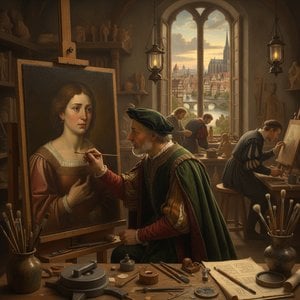
The Northern Awakening: Artistic Innovation & Cultural Transformation in the German Renaissance
Explore the artistic innovation of the German Renaissance! Discover Dürer, the Danube School & Reformation art. Learn about techniques, materials & lasting influence. Find museum-quality reproductions at ArtsDot.

Hans Baldung Grien: A Renaissance Master of Allegory, Innovation & the Grotesque
Explore the captivating world of Hans Baldung Grien, a Renaissance master renowned for his allegorical paintings, striking woodcuts & unique depictions of mythology and the grotesque. Discover his life, works & legacy with ArtsDot.