


A kép az Ön választásai alapján készült: , .
A gyűjtemény leírása
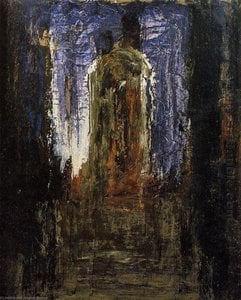
Gustave Moreau’s untitled (716) presents a captivating Symbolist portrait of a horned man wielding a sword, alongside figures in regal attire within a richly detailed, dreamlike scene. Explore this enigmatic artwork by the 19th-century French master and bring its beauty home.
 Összes részlet megjelenítése
A művész életrajza
Fedezd fel Gustave Moreau szimbolikus világát! A 19. századi francia festő, aki mitológiai és vallási témákkal alkotott, a képzelet és az álom mestere. Érdemes megnézni a 'Salomé táncol előtted Hérodé' művét!
Kézzel készített olajfestmény reprodukció
Kézzel festett olajvastú vászon, az Ön által választott méretben és keretben, művészeink készítik meglévőre. ( Váltás nyomtatványra Áttérés digitális képre)
Több információ erről a festményről
 Megtekintés
 Küldés
 Megosztás
 Részletek
 Útmutató

 Letöltés
 Hasonló darabok
 X-ray felvétel
 Diavetítés
 Kérdések és válaszok
 Statisztika
Rendelje meg festményét négy egyszerű lépésben
Ne siessen! Bármely választ módosítható; az rendelési összesítőben megjelenő ár minden egyes döntésre reagál.
1 Az első lépés négyből
Melyik méretet szeretné?
Ezek a méretek megőrzik az eredeti festmény arányait. A rajz bemutatja a választott méretet egy falon, egy kétszáz centiméteres kanapé felett.
Vagy adja meg a saját méreteit
Válasszon előre meghatározott méreteink közül, amelyek megfelelnek a műalkotás eredeti arányainak.

Írja be a kívánt szélességet és magasságot, hogy illeszkedjen a keretéhez vagy a falához. Mivel ez kézzel festett alkotás, egy eltérő formájú méret esetén a művész akár festhet is valamivel többet a kép körül, vagy korolathat is belőle — az Ön döntésének megfelelően. A festés megkezdése előtt küldünk egy digitális tervezetet jóváhagyásra. Az oldalon látható kép nem tartalmazza a végeredményt — csak a tervezet mutatja meg a valódi eredményt.
2 A négy lépésből a második
Hogyan kívánja előkészíteni: feltekercselve, vászonra feszítve vagy keretezve?
Az alábbi árak az első lépésben választott méretre vonatkoznak.
Válaszd ki a feszített vászon széleit
Válassza ki a keretet

Fehér Ft1

Elmosódott szélek Ft1

Kiterjesztett Ft1

P118B Ft10

P118H Ft10

P118W Ft10

P438Z Ft10

P508JH Ft12

P508YH Ft12

P805H Ft10

P805Z Ft10

P919BZ Ft10

P919G Ft10

P919XJ Ft10

P959ZH Ft10

P968JZ Ft12

W106C Ft8

W218G Ft10

W218JH Ft8

W218Y Ft10

W307PJ Ft10

W316G Ft10

W316PJ Ft8

W316Y Ft10

W398PJ Ft8

W4111J Ft10

W500HY Ft15

W500JH Ft15

W692G Ft12

W849H Ft8

W940BG Ft15

W953PJ Ft8

H24-GOLD Ft30

H24-SILVER Ft30

H36-GOLD Ft45

H36-SILVER Ft45
Keretezett
Keretprofil: . A kerettel együtt vett teljes méret: .
3 A négy lépésből a harmadik
Szeretne változtatni valamit a festményen?
A legtöbb ember nemet mond erre. Mivel minden festmény kézzel készül, művészünk képes az Ön igényei szerint is átalakítani azt.
A megrendelést követően a ArtsDot.com csapat e-mailt küld a vásárlónak az instrukciókkal, és biztosítja a tervezeti előnézetet
4 A négy lépés közül a negyedik
Néhány felületfinisz
Mindegyik opcionális. A már kiválasztott válaszok nem jelentnek plusz költséget.
Ki festette?
Világszerte elérhető szállítás () 3-4 hét alatt a szokásos 5 hét helyett. (5 november). A minőség nem kérdőjelezhető.
Egy felirat, mint egy múzeumban?
A gravírozott bronztábla részletei
This elegant plaque features the artist's name and the title of the artwork, finely engraved for a timeless presentation.
It is made from bronze with a refined, elegant finish. The text is precisely laser-engraved for a sharp and permanent result. Measuring 9x2 cm, the plaque is compact yet easy to read. It's built to be durable and scratch-resistant, offering a professional, museum-quality look. Mounting is simple thanks to the included adhesive backing.
Átlátszó akril tábla részletei
The plaque includes essential engraved details such as the artist's name, the title of the artwork, the date it was created, the type of media used-like oil on canvas or watercolor-a brief description of the piece, and a QR code that links to the complete artwork information.
It is crafted from clear acrylic, offering a sleek, modern appearance. The text is UV-engraved in black to ensure strong visual contrast. With a size of 10x15 cm, it ensures optimal readability. It comes equipped with two metal hooks for secure wall mounting. The plaque is designed to be weather-resistant, making it suitable for various environments, and it includes interactive features that work seamlessly with smartphone scanning.
Fekete akril tábla részletei
This elegant plaque includes engraved information such as the artist's name, the title of the artwork, the date it was created, the type of media used (like oil on canvas or watercolor), a short description of the artwork, and a QR code for quick access to more information.
The plaque itself is made from refined black acrylic with a premium finish. The text is laser-engraved in white for high contrast and readability. Its size is 10x15 cm, designed to be easy to read. It comes with two metal hooks for professional mounting. The design is sleek and fits any interior style. It is also weather-resistant and durable, with built-in digital integration for mobile compatibility.
Egy védőréteg?
Mikor lenne szüksége rá?
✓ Ellenőrizés és rendelés
Az Ön által megrendelt festmény

untitled (716)
Reprodukciós technika
Reprodukció mérete
-

Kiváló mesterművész
Nagyobb részletesség, finomság és bővített gyártási idő
-

Reprodukció keretezése
-
-
A bármely oldalsó méretét túlszálaló 105 cm (kb. 41 hüvelyk) meghaladó műalkotások vagy reprodukciók esetében a keret összeszerelhető készletként, szétszerelve kerül szállításra. Ez a módszer biztosítja a biztonságos szállítást, és megakadályozza a szállítás során fellépő sérüléseket.
Szakmész összeszerelést igényel – ez nem DIY (önösszeszerelhető) termék.
A készletet egy tapasztalt keretező szakembernek kell összeszerelnie és a vásznat feszítenie kell, fa ragasztó (nem tartalmazza a csomag), vásznfeszítő fogó és szorítók használatával, amelyek a ragasztó száradásáig a keretrészeket egymáshoz vuôngjba tartják. A helytelen összeszerelés vagy a nem egyenletes vásznfeszítés maradandó károsíthatja a műalkotást, és ez nem része a garanciánknak.
 A bármely oldalsó méretét túlszálaló 105 cm (kb. 41 hüvelyk) meghaladó műalkotások vagy reprodukciók esetében a keret összeszerelhető készletként, szétszerelve kerül szállításra. Ez a módszer biztosítja a biztonságos szállítást, és megakadályozza a szállítás során fellépő sérüléseket.
A készlet tartalmazza az összes tömörfa rudat, pontosan méretre vágva.
A mellékelt csavarokkal, valamint a sarokszerekhez szükséges faütő ragasztóval kell összeszerelnie (ez nem tartalmazható a csomagban), így a keretrendezőnek külön kell beszereznie.
A csomag nem tartalmazza a szükséges professzionális eszközöket: egy vászonfeszítőt és klipseket a rácsok vízszintes tartásához a ragasztó megszáradásáig.
Fontos:
A sarokcsatlakozásokhoz fánylagra van szükség, a keretrudakat szorítókapcsokkal kell rögzíteni, amíg a rag teljesen meg nem szárad, a kész keretre feszített vászonhoz pedig vászonfeszítő fogat szükséges. Ezek egyike sem található meg a készletben. Kérjük, rendelés előtt győződjön meg róla, hogy rendelkezik tapasztalt keretező szakemberrel.

Névtábla
-
-

Védőréteg (Lakk)
Fényes lakk (intenzívabb színek, védelem a fény és a nedvesség hatása ellen)
-

Műalkotásom egyedi igényre szabása
Példák a módosíthatóságra: az arc kicserélése az ügyfél fotójára; háziállat hozzáadása (pl. macska helyett kutya); rejtett üzenet elhelyezése a háttérben; a háttér tájainak vagy elemeinek megváltoztatása.
-

Sürgős
Világszerte szóló szállítás () mindössze 3-4 hét alatt, a szokásos 5 hét helyett. (5 november). A minőség nem kérdőjelezhető.
-
Express szállítás
Világszerte elérhető szállítás területre 5 héten belül. (12 november).
A szállítás díja tartalmazza
Összesített ár
Ft 85396
Az üvegkeretes opció csak 110 cm alatti méretben érhető el
Minden rendelés mellé tartalmazva
- Ingyenes globális expressz szállítás
- Prémium minőségű len vászon
- Teljes körű szállítási biztosítás
- Vámvisszatérítési Garancia
- Hiteles színarányosság garancia
- 100 napos visszaküldési lehetőség (csak hibás termékek esetén)
- 100% pénzvisszatérítési garancia
- Több darab vásárlásakor kedvezmény


Unveiling the Enigma: An Exploration of Moreau’s “Untitled (716)”
Gustave Moreau's "Untitled (716)" presents a profoundly unsettling and captivating vision, a quintessential example of the Symbolist movement’s fascination with the subconscious and the realms beyond rational understanding. Painted in 1898, just before his death, this portrait transcends mere representation; it is an immersion into a dreamscape populated by potent symbols and imbued with a palpable sense of unease. The subject, a man crowned with horns – a clear allusion to demonic or mythical figures – immediately commands attention, drawing the viewer into a world where the boundaries between reality and fantasy blur. Moreau’s masterful manipulation of color and form creates an atmosphere thick with mystery, inviting contemplation on themes of power, transgression, and the darker aspects of human nature.
A Symbolist Vision: Context and Influences
- The Rise of Symbolism: Moreau was a key figure in the burgeoning Symbolist movement, which arose as a reaction against the perceived superficiality of Realism and Impressionism. Symbolists sought to express inner emotions and spiritual truths through evocative imagery rather than objective observation.
- Mythological and Religious Sources: Moreau’s work is deeply rooted in classical mythology, religious iconography, and esoteric traditions. The horned figure echoes ancient depictions of demons and fallen angels, while the crown suggests a corrupted authority or a descent into darkness.
- Influence of Pre-Raphaelites: Like the Pre-Raphaelite Brotherhood, Moreau was interested in reviving medieval art and literature, particularly its symbolic richness. However, unlike the Pre-Raphaelites’ often romanticized depictions, Moreau's work is characterized by a darker, more unsettling tone.
Technical Mastery and Atmospheric Depth
Moreau’s technique is immediately recognizable – a deliberate layering of paint that creates an almost sculptural effect. He employed meticulous brushwork to build up textures and imbue the scene with a remarkable sense of depth. The yellowish hue dominating the background isn't merely a decorative choice; it contributes significantly to the painting's mood, evoking a feeling of decay, antiquity, and perhaps even spiritual corruption. The use of glazing techniques – applying thin layers of translucent paint over dried underlayers – allows light to penetrate deeply into the composition, enhancing the sense of volume and creating an ethereal glow around the central figure. The meticulous detail in the figures' clothing and the architectural elements further emphasizes Moreau’s commitment to a highly polished, almost jewel-like quality.
Decoding the Symbolism: Narrative and Interpretation
The composition itself is laden with symbolic meaning. The man holding the sword represents power, both destructive and potentially protective. His position beside another figure wearing a crown suggests a complex relationship of dominance and submission, or perhaps a struggle for control. The presence of two additional figures – one central and one to the right – adds further layers of ambiguity. These elements invite multiple interpretations, reflecting the Symbolist preoccupation with subjective experience and the inherent instability of meaning. Some scholars suggest connections to medieval bestiaries and alchemical symbolism, while others interpret the scene as a meditation on the duality of human nature—the conflict between good and evil within ourselves.
Emotional Resonance and Artistic Legacy
"Untitled (716)" remains a powerfully evocative work, capable of unsettling and captivating viewers even today. Moreau’s ability to translate psychological states into visual form is remarkable, creating an image that lingers in the mind long after viewing. This painting exemplifies Moreau's profound artistic vision and his enduring contribution to the Symbolist movement. A hand-painted reproduction offers a unique opportunity to experience the full impact of this enigmatic masterpiece, bringing its haunting beauty and symbolic depth into your own space.
Kérdések és válaszok
Milyen típusú műalkotás „untitled (716)”, Gustáv Moreau alkotása?
A „untitled (716)”, Gustáv Moreau alkotása művészeti alkotás a WallArt kategóriába tartozik. Ez a besorolás határozza meg az eredeti alkotás típusát.
Mi magyarázza a „untitled (716)”, Gustáv Moreau alkotása szerzői jogi helyzetét?
Gustáv Moreau alkotása, a "untitled (716)", közösségi tulajdon – a szerzői jog lejártt státuszban van. A szerzői jogi védelem a művész halálától számítod, Gustáv Moreau pedig 1898 évben hunyt meg.
Milyen méretben ajánlott a "untitled (716)" nyomtatása?
A "untitled (716)" alkotáshoz a Large nyomtatási méret ajánlott. Ugyanakkor ugyanazon arányokban elérhető egyéb méretű változat is.
Hasonló műalkotások




Gustáv Moreau
1826 - 1898, Francia
A művész életrajza
A Dream Weaver of Symbolism: The Life and Art of Gustave Moreau
Gustave Moreau, a name inextricably linked to the ethereal beauty and profound mysteries of Symbolist painting, emerged from 19th-century Paris as an artist utterly distinct in his vision. Born in 1826 into a comfortable bourgeois family—his father a respected architect and archivist—Moreau’s early life was steeped not just in material comfort, but also in a deep appreciation for art and intellectual curiosity. From a remarkably young age, he displayed a prodigious talent for drawing, nurtured initially through traditional academic training at the École des Beaux-Arts under the guidance of figures like François-Édouard Picot. However, Moreau’s artistic trajectory swiftly diverged from the prevailing Realist and Impressionist currents dominating his time; he possessed little interest in capturing fleeting moments or rendering objective reality. Instead, he was driven by a profound desire to unlock the hidden realms of myth, religion, and the intricate workings of the human psyche – translating these inner landscapes onto canvas through a meticulously detailed and intensely colored visual language. His artistic journey became an inward exploration, a process of distilling subjective emotions and spiritual yearnings into tangible forms, employing an obsessive attention to detail and a palette often rich with opulent hues.The Forge of Imagination: Influences and Artistic Development
Moreau’s artistic development wasn't forged in isolation; rather, it blossomed from a confluence of diverse influences. While consciously rejecting the dominant trends of his era, he drew inspiration from a remarkably broad range of sources. The dramatic use of color and exotic subject matter found in the works of Eugène Delacroix ignited within him a passionate fascination with narrative painting imbued with intense emotional resonance. He held Renaissance masters—Michelangelo and Leonardo da Vinci, in particular—in the highest esteem, deeply admiring their mastery of composition, anatomical precision, and their remarkable ability to penetrate the complexities of human psychology. Yet, Moreau’s genius lay not merely in imitation; he skillfully synthesized these influences – the dynamism of Delacroix, the anatomical rigor of the Renaissance giants – into something entirely new and uniquely his own. His pivotal journey to Italy during the 1850s proved transformative, immersing him completely within the art of antiquity and the Italian Renaissance. This experience provided a veritable treasure trove of motifs, stylistic cues, and artistic precedents that would subsequently populate his future works. Moreau meticulously copied Old Master paintings – not as mere reproductions, but as a deliberate process of absorbing their techniques, understanding their compositional strategies, and unlocking the secrets behind their enduring power. He sought to distill the essence of these masterpieces, translating them into his own distinctive visual vocabulary.A World of Symbols: Themes and Techniques
Moreau’s paintings are not simply illustrations of myths or biblical stories; they are complex allegories designed to provoke contemplation and invite multiple interpretations. He didn't approach narratives like those of Salome, Orpheus, Jupiter and Semele, or countless others, with a desire to retell them literally. Instead, he delved into their underlying psychological and spiritual truths – exploring themes of temptation, loss, redemption, beauty, and the eternal struggle between good and evil. His canvases are often teeming with symbolic imagery: serpents representing deceitful desires, jewels embodying earthly vanities, and figures embodying abstract concepts such as grief, longing, or divine grace. Moreau masterfully created an atmosphere of dreamlike enchantment through intricate detail, rich textures, and a frequently unsettling juxtaposition of light and shadow. His technique was characterized by a painstaking layering of paint—a deliberate process that built up surfaces shimmering with iridescent colors and evoking a profound sense of otherworldliness. The strategic use of gold leaf further amplified this effect, lending his works a Byzantine quality that underscored their spiritual dimension. Crucially, Moreau wasn’t primarily concerned with capturing realistic textures or perspectives; instead, he prioritized the expressive power of color and form to convey mood, emotion, and deeper meaning.Legacy and Influence: The Enduring Power of Symbolism
Though initially met with mixed reactions from the Parisian art establishment, Gustave Moreau gradually gained recognition as a central figure in the burgeoning Symbolist movement during the 1890s. Unlike some of his contemporaries who actively sought public acclaim, he remained largely reclusive, preferring to dedicate himself entirely to his artistic practice within the confines of his studio and home. However, his influence was undeniable. In 1893, he accepted a prestigious professorship at the École des Beaux-Arts, where he profoundly impacted generations of aspiring artists – including Henri Matisse and Georges Rouault – encouraging them to embrace imagination, symbolism, and individual expression, urging them to break free from conventional artistic constraints. Moreau’s legacy extends far beyond his own lifetime. His paintings continue to resonate with audiences today, offering glimpses into the hidden depths of the human soul and reminding us of the transformative power of art to transcend the boundaries of reality. The Musée Gustave Moreau, housed within his former studio and home in Paris, stands as a poignant testament to his enduring artistic vision—a sanctuary where visitors can immerse themselves fully in the captivating world of this extraordinary artist.Notable Works
- Salome Dancing before Herod: Perhaps his most iconic work, this painting exemplifies Moreau’s opulent style and his fascination with biblical narratives, capturing a moment of both beauty and impending doom.
- Jupiter and Semele: A dramatic depiction of the Greek myth, showcasing Moreau's exceptional skill in composition, color orchestration, and conveying a sense of overwhelming power.
- Orpheus: Several paintings by Moreau explore the myth of Orpheus, reflecting themes of loss, grief, artistic inspiration, and the bittersweet nature of beauty.
- The Apparition: Demonstrates his ability to create ethereal and otherworldly scenes, often imbued with a sense of mystery and melancholy.
- Desdemona: A poignant portrayal of Shakespeare’s tragic heroine, capturing her despair and vulnerability with remarkable sensitivity.


Kapcsolódó cikkek

Gustave Moreau: Symbolism's Enigmatic Visionary & Precursors of Modern Fantasy Art
Explore the captivating world of Gustave Moreau, the leading Symbolist painter. Discover his iconic masterpieces, influences, and lasting legacy. Expert analysis for collectors & art enthusiasts.
The Enduring Legacy of Printmaking: Techniques, Themes & Artistic Innovation Across Centuries
Explore the rich history of printmaking with ArtsDot. Discover techniques from intaglio to lithography, learn about collecting valuable prints & find museum-quality reproductions. Expert insights for art enthusiasts and collectors.

The Enduring Legacy of Fine Art Prints: Technique, History & Aesthetic Impact
Explore the rich history & techniques of fine art prints. Discover investment potential, assess authenticity, and learn how to preserve your collection with expert guidance. Trusted insights for discerning collectors.