

 Megtekintés
 Küldés
 Megosztás
 Részletek
 Útmutató

 Letöltés
 Hasonló darabok
 X-ray felvétel
 Diavetítés
 Kérdések és válaszok
 Statisztika
Martyre

 Összes részlet megjelenítése
Giclée / Műnyomat
Múzeumi minőségű giclée vagy vászonnyomat, gyors gyártással és rugalmas finomítási lehetőségekkel. ( Kézzel festett másolat rendelése Áttérés digitális képre)




P118B Ft10

P118H Ft10

P118W Ft10

P438Z Ft10

P508JH Ft12

P508YH Ft12

P805H Ft10

P805Z Ft10

P919BZ Ft10

P919G Ft10

P919XJ Ft10

P959ZH Ft10

P968JZ Ft12

W106C Ft8

W218G Ft10

W218JH Ft8

W218Y Ft10

W307PJ Ft10

W316G Ft10

W316PJ Ft8

W316Y Ft10

W398PJ Ft8

W4111J Ft10

W500HY Ft15

W500JH Ft15

W692G Ft12

W849H Ft8

W940BG Ft15

W953PJ Ft8




Válasszon előre meghatározott méreteink közül, amelyek megfelelnek a műalkotás eredeti arányainak.

Írja be a keretének vagy a falának megfelelő szélességet és magasságot. A nyomatot csak le lehet vágni, soha nem tehető nagyobbá, mint az eredeti kép, így egy eltérő alakú méretnél a kép egy része elveszik. Mielőtt bármit kinyatintanánk, küldünk egy digitális próbamodellt jóváhagyásra. Az oldalon látható kép nem tartalmazza a valós levágást — ezt csak a próbamodell mutatja meg.
Világszerte történő kiszállítás területére mindössze 2 hét alatt, a szokásos 4-5 hét helyett. (10 november)

Ingyenes globális expressz szállítás

Prémium minőségű len vászon

Teljes körű szállítási biztosítás

Vámvisszatérítési Garancia

Hiteles színarányosság garancia

100 napos visszaküldési lehetőség (csak hibás termékek esetén)

100% pénzvisszatérítési garancia

Több darab vásárlásakor kedvezmény
 Az üvegkeretes opció csak 110 cm alatti méretben érhető el

Martyre
Giclée / Műnyomat
Reprodukció mérete
-


Összesített ár
Ft 20590
Gustave Moreau’s “Martyre”: A Descent into Mythic Sorrow
Gustave Moreau's "Martyre," a painting shrouded in enigmatic beauty and profound melancholy, stands as a cornerstone of the Symbolist movement. Completed around 1876-78, this work transcends mere representation, plunging the viewer into a realm of myth, spirituality, and deeply personal emotion—a characteristic hallmark of Moreau’s artistic vision. The painting depicts a solitary figure, seemingly lost in contemplation, positioned before an ancient tree, its branches reaching skyward like supplicating arms. Two shadowy figures are subtly integrated into the background, adding layers of mystery and suggesting a narrative beyond the immediate scene. A dog, rendered with remarkable detail, rests at the base of the tree, perhaps symbolizing loyalty or the enduring presence of earthly concerns amidst spiritual turmoil.
Moreau’s artistic approach was profoundly influenced by his fascination with classical mythology, religious iconography, and the writings of esoteric thinkers. He wasn't interested in capturing a literal depiction of reality; instead, he sought to evoke mood, atmosphere, and psychological states through carefully chosen symbols and evocative color palettes. “Martyre” exemplifies this strategy perfectly. The muted tones—ochres, browns, and deep blues—create an atmosphere of twilight and introspection, while the stark lighting emphasizes the figure’s isolation and vulnerability. Moreau's meticulous attention to detail is evident in every brushstroke, from the texture of the tree bark to the folds of the figure’s garments – a testament to his rigorous training at the École des Beaux-Arts, yet ultimately a deliberate rejection of academic conventions.
The Figure and its Symbolism
The central figure, often interpreted as representing Saint Sebastian—a martyr associated with suffering and endurance—is rendered in profile, his back turned towards the viewer. This deliberate anonymity invites contemplation and encourages the observer to project their own emotions and experiences onto the scene. The posture of the figure – a slight stoop, hands clasped loosely – suggests a profound sadness or perhaps a quiet acceptance of fate. The tree itself is laden with symbolic weight; it can be seen as representing both life and death, strength and vulnerability, the connection between the earthly and the divine. Its ancient presence anchors the scene in time and tradition, while its branches reaching upwards suggest a yearning for transcendence.
The two figures in the background remain deliberately indistinct, their identities obscured by shadow. This ambiguity adds to the painting’s sense of mystery and invites speculation about their roles in the narrative. Some scholars believe they represent witnesses to Sebastian's suffering, while others interpret them as embodiments of temptation or despair. Moreau masterfully employs this technique of veiled symbolism—allowing the viewer to actively participate in constructing meaning—a core tenet of Symbolist art.
Moreau’s Symbolism and the Late 19th Century
“Martyre” was created during a period of significant artistic and intellectual ferment in Paris. The Symbolist movement, which emerged in the late 1880s, rejected the materialism and positivism of Realism and Impressionism, seeking instead to explore the realm of dreams, myths, and the subconscious mind. Moreau was a key figure in this movement, alongside artists like Odilon Redon and Edvard Munch. His work reflects the anxieties and uncertainties of the late 19th century—a time marked by rapid industrialization, social upheaval, and a growing sense of spiritual malaise.
Moreau’s fascination with religious iconography was particularly striking at this time, as traditional religious beliefs were being challenged by scientific advancements and secular ideologies. By reinterpreting biblical and mythological subjects through a Symbolist lens, Moreau sought to imbue them with new meaning and relevance for his audience. “Martyre” is not simply a depiction of Saint Sebastian’s martyrdom; it's an exploration of the human condition—a meditation on suffering, faith, and the search for spiritual solace.
Bringing "Martyre" into Your Space
ArtsDot offers meticulously crafted hand-painted reproductions of Gustave Moreau’s “Martyre,” allowing you to bring this extraordinary artwork into your home or office. Our skilled artists replicate Moreau's intricate details, rich colors, and evocative atmosphere with unparalleled precision. Whether you are an art collector, a design enthusiast, or simply someone who appreciates beauty and emotional depth, our reproductions provide a stunning way to experience the power of this iconic Symbolist masterpiece. Choose from a range of sizes and canvas materials to perfectly complement your space and create a truly captivating focal point.
To explore high-resolution images and learn more about our reproduction options for “Martyre,” please visit our website.
Kérdések és válaszok
Letölthető-e a(z) "Martyre"?
A "Martyre" letölthető változatként is elérhető: a mű Letöltés oldala magas felbontású digitális kép letöltése lehetőséget kínál.
Milyen nemzetiség áll a „Martyre” Symbolist Painting-ének hátterében?
A Symbolist Painting korszak alkotása, a "Martyre", egy Franciaország-ban született művész munkája.
Hogyan építhető be „Martyre”, Gustave Moreau alkotása a lakberendezésbe?
A „Martyre”, Gustave Moreau alkotása ajánlott Statement célokra, lehetőleg egy Living Room helyiségbe. A felhasználás módja és a tér kialakítása együtt segít eldönteni, hogy melyik reprodukció illik bele.
Hasonló műalkotások


Kapcsolódó cikkek

Art Nouveau Mesterek: A 10 Legikonikusabb Műalkotás, Amelyek Meghatározták a Stílust
Fedezze fel a 10 legikonikusabb Art Nouveau műalkotást! Ismerje meg Alphonse Mucha, Gustav Klimt és más mesterek történetét. Szecessziós festmények, plakátok és dekorációk – inspirálódjon otthona számára a ArtsDot.com-on!

Gustave Moreau: Symbolism's Enigmatic Visionary & Precursors of Modern Fantasy Art
Explore the captivating world of Gustave Moreau, the leading Symbolist painter. Discover his iconic masterpieces, influences, and lasting legacy. Expert analysis for collectors & art enthusiasts.
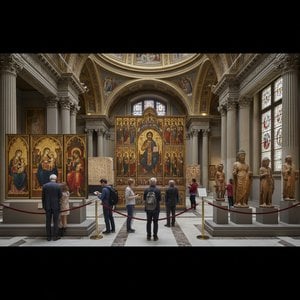
Sacred Narratives Embodied: A Comprehensive Exploration of Religious Iconography in Art History
Explore the rich history of religious iconography in art! Discover symbolism, movements & masterpieces from Byzantine to Renaissance periods. Expert insights for collectors and enthusiasts at ArtsDot.

Gustav Klimt 25 Mesterműve: A Szecesszió Aranykora – Vászonképek és Dekorációk
Fedezze fel Gustav Klimt 25 legpazarabb művészeti alkotását! A szecesszió aranykora, ikonikus portrék és szerelmesek története. Vászonképek, reprodukciók és inspiráció otthonába – ArtsDot.com.

Sacred Narratives on Canvas: Exploring Religious Painting Through History
Explore the rich history of religious painting with ArtsDot.com! Discover iconic artworks, symbolism & techniques from antiquity to the Renaissance. Enhance your art appreciation today.


