


 Megtekintés
 Küldés
 Megosztás
 Részletek
 Útmutató

 Letöltés
 Hasonló darabok
 X-ray felvétel
 Diavetítés
 Statisztika
Deposition
 Oil On Canvas
- WallArt
- High Renaissance
 1515
1515- Renaissance
 312.0 x 444.0 cm
 Összes részlet megjelenítése
Giclée / Műnyomat
Múzeumi minőségű giclée vagy vászonnyomat, gyors gyártással és rugalmas finomítási lehetőségekkel. ( Kézzel festett másolat rendelése Áttérés digitális képre)




P118B Ft10

P118H Ft10

P118W Ft10

P438Z Ft10

P508JH Ft12

P508YH Ft12

P805H Ft10

P805Z Ft10

P919BZ Ft10

P919G Ft10

P919XJ Ft10

P959ZH Ft10

P968JZ Ft12

W106C Ft8

W218G Ft10

W218JH Ft8

W218Y Ft10

W307PJ Ft10

W316G Ft10

W316PJ Ft8

W316Y Ft10

W398PJ Ft8

W4111J Ft10

W500HY Ft15

W500JH Ft15

W692G Ft12

W849H Ft8

W940BG Ft15

W953PJ Ft8




Válasszon előre meghatározott méreteink közül, amelyek megfelelnek a műalkotás eredeti arányainak.

Írja be a keretének vagy a falának megfelelő szélességet és magasságot. A nyomatot csak le lehet vágni, soha nem tehető nagyobbá, mint az eredeti kép, így egy eltérő alakú méretnél a kép egy része elveszik. Mielőtt bármit kinyatintanánk, küldünk egy digitális próbamodellt jóváhagyásra. Az oldalon látható kép nem tartalmazza a valós levágást — ezt csak a próbamodell mutatja meg.
Világszerte történő kiszállítás területére mindössze 2 hét alatt, a szokásos 4-5 hét helyett. (28 október)

Ingyenes globális expressz szállítás

Prémium minőségű len vászon

Teljes körű szállítási biztosítás

Vámvisszatérítési Garancia

Hiteles színarányosság garancia

100 napos visszaküldési lehetőség (csak hibás termékek esetén)

100% pénzvisszatérítési garancia

Több darab vásárlásakor kedvezmény
 Az üvegkeretes opció csak 110 cm alatti méretben érhető el

Deposition
Giclée / Műnyomat
Reprodukció mérete
-


Összesített ár
Ft 20058
A Masterpiece of Devotion: Giovanni Bellini’s Deposition
In the quiet, hallowed halls of the Gallerie dell'Accademia in Italy, there exists a window into the profound sorrow and divine grace of the High Renaissance. Giovanni Bellini’s Deposition, painted around 1515, is not merely a depiction of a biblical event; it is a visceral experience of grief, light, and spiritual transcendence. As one of the most significant works by the Venetian master, this monumental oil on canvas captures the precise moment when the weight of mortality meets the hope of eternal life. The scale of the work, measuring an imposing 312 x 444 cm, commands the room, drawing viewers into a sacred space where the boundaries between the earthly and the divine begin to blur.
The composition is a masterclass in Renaissance balance and emotional storytelling. At the heart of the drama lies the broken body of Jesus, surrounded by a constellation of mourners whose faces reflect a spectrum of human suffering. From the poignant presence of Mary Magdalene to the somber figures of John the Baptist and Peter, Bellini orchestrates a symphony of sorrow. Yet, even amidst the tragedy, there is a breathtaking sense of order. The artist utilizes a sophisticated interplay of light and shadow—a hallmark of the Venetian school—to guide the eye across the canvas. The soft, atmospheric glow illuminates the central figures, while the deeper shadows lend a sculptural weight to their forms, creating a tension that feels both physically present and spiritually resonant.
Symbolism and the Venetian Landscape
Beyond the immediate tragedy of the crucifixion, Bellini weaves a complex tapestry of symbolism that rewards the contemplative viewer. The landscape itself serves as more than just a backdrop; it is an active participant in the narrative. A rugged mountain range rises in the distance, providing a sense of eternal stability against the fleeting agony of the scene. To the left, a solitary boat rests upon the water, perhaps symbolizing the journey of the soul or the passage of time. Even the sky holds secrets, where two birds soar above the cross—a subtle, evocative nod to the ascension of the soul toward heaven.
The integration of nature and divinity is what makes this piece so captivating for collectors and decorators alike. The way Bellini uses color to define the atmosphere—the deep blues of the distant mountains and the warm, earthy tones of the foreground—creates a sense of depth that invites the eye to wander through the painting's many layers. For those seeking to bring a sense of historical grandeur and contemplative peace into an interior space, this work offers an unparalleled emotional anchor. It is a piece that does not just decorate a wall; it transforms an environment into a sanctuary of reflection.
An Enduring Legacy for the Discerning Collector
To possess a reproduction of Bellini’s Deposition is to hold a fragment of art history. As a pivotal figure who bridged the gap between Byzantine tradition and the humanistic innovations of the 16th century, Bellini’s influence can be felt in the works of every major Venetian successor. His ability to evoke powerful, wordless emotions through meticulous technique remains a benchmark of artistic excellence. For interior designers and art enthusiasts, finding a high-quality, hand-painted oil reproduction allows for the preservation of this magnificent aesthetic in modern settings.
Whether placed in a grand library, a formal dining hall, or a quiet study, a faithful reproduction of this masterpiece serves as a testament to the enduring power of the Renaissance spirit. It offers an opportunity to surround oneself with the technical mastery of the Venetian school—a legacy of light, color, and profound human emotion that continues to inspire awe centuries after its creation.
Kérdések és válaszok
Milyen közös tulajdonságokat oszt meg a "Deposition" Giovanni Bellini további alkotásaival?
Giovanni Bellini munkásságán belül a "Deposition" a High Renaissance stílus képét képviseli, a venetian renaissance style, high renaissance mastery, religious devotion themes, christian crucifixion narrative, mastery of light/shadow, key late-career work témakörével összefüggésben.
Milyen technikával és milyen stílusban készült a "Deposition"?
A "Deposition" alkotás Oil On Canvas technikával készült, a High Renaissance stílusban.
„Deposition”, Giovanni Bellini alkotása színei élénkek vagy fakók?
A „Deposition”, Giovanni Bellini alkotása színei Muted telítettséget és Monochromatic intenzitást mutatnak be.
Hasonló műalkotások


A művész életrajza
A Venetian Master: The Life and Legacy of Giovanni Bellini
Giovanni Bellini, a name synonymous with the blossoming Renaissance in Venice, stands as a pivotal figure bridging the gap between the traditions of Byzantine art and the innovative spirit that would define the 16th century. Born around 1430 – though some sources suggest 1433 – into a family deeply entrenched in the artistic world, Bellini’s journey was one of continuous evolution, marked by a profound sensitivity to color, light, and the burgeoning humanism of his era. The precise nature of his familial relationships has been debated; for years Jacopo Bellini was considered his father, but modern scholarship increasingly points towards Jacopo being Giovanni's elder half-brother, with Gentile Bellini as his nephew rather than sibling. Regardless of these intricacies, young Giovanni grew up immersed in a workshop brimming with creativity and technical expertise, absorbing the foundations of painting from an early age. His initial training likely involved the traditional tempera techniques favored at the time, but it was his innate talent for observation and emotional expression that would set him apart.Early Influences and Artistic Development
The artistic landscape of 15th-century Venice was a unique blend of influences. The city’s position as a major trading hub exposed its artists to diverse styles and ideas, while the Byzantine heritage continued to exert a strong pull. Bellini's early works reflect this duality. Initially, his style bore the mark of his father and brother, Gentile, with compositions often characterized by meticulous detail and a somewhat restrained emotional palette. However, even in these early pieces, hints of his future brilliance began to emerge – a delicate handling of light, a growing interest in naturalistic settings, and an ability to imbue religious figures with a palpable sense of human pathos. The influence of Andrea Mantegna, his brother-in-law, is also readily apparent during this period, particularly in the clarity of line and sculptural forms. Bellini’s early commissions often involved collaborative projects, such as his contributions to the Scuola di San Marco alongside Gentile and other prominent Venetian artists. These large-scale works provided invaluable experience and allowed him to hone his skills while working alongside some of the most talented painters of the day.Revolutionizing Venetian Painting: Color, Light, and Oil
Bellini’s true revolution lay in his embrace of oil paint. While not the inventor of the technique, he was among the first Venetian artists to fully exploit its potential. Unlike tempera, which dried quickly and demanded a precise, linear approach, oil paint allowed for greater blending, richer colors, and subtle gradations of tone. This newfound freedom enabled Bellini to create paintings with an unprecedented depth and luminosity. His use of color became increasingly sophisticated, moving away from the bright, often harsh hues of earlier Venetian painting towards a more nuanced and harmonious palette. He masterfully captured the effects of light and atmosphere, imbuing his landscapes with a sense of serenity and realism that was groundbreaking for its time. This mastery of oil paint not only transformed his own work but also laid the foundation for the distinctive style that would come to define the Venetian school – a style celebrated for its sensuousness, coloristic richness, and atmospheric perspective. His paintings began to radiate an inner glow, reflecting a spiritual depth that resonated with viewers.Mature Works and Lasting Influence
As Bellini matured, his artistic vision continued to evolve. His altarpieces, such as those created for the churches of San Zaccaria and Santa Corona, demonstrate his ability to create complex compositions filled with symbolic meaning and emotional resonance. The *Transfiguration*, now housed in the Capodimonte Museum in Naples, exemplifies his mature style – a serene spirit combined with ripened artistic powers. He also served as conservator of the paintings in Doge’s Palace, further solidifying his reputation as Venice's leading artist. His influence extended far beyond his own lifetime. He became a mentor to a generation of younger painters, including Giorgione and Titian, who would carry on his legacy and push the boundaries of Venetian art even further. These pupils absorbed Bellini’s techniques and aesthetic principles, adapting them to their own individual styles and contributing to the golden age of Venetian painting. Bellini's impact can be seen in the works of countless artists who followed, solidifying his place as a true master of the Renaissance. He died in Venice in 1516, leaving behind a body of work that continues to inspire awe and admiration centuries later.A Legacy Enduring Through Time
Giovanni Bellini’s significance extends beyond his technical innovations and artistic achievements. He captured the spirit of a changing world – a world grappling with new ideas about humanity, spirituality, and the relationship between art and nature. His paintings are not merely representations of religious scenes; they are profound meditations on faith, beauty, and the human condition. His ability to imbue his figures with dignity and grace, combined with his masterful use of color and light, created a visual language that resonated deeply with his contemporaries and continues to captivate audiences today. *Bellini’s legacy is not simply one of artistic brilliance; it is a testament to the power of art to transcend time and connect us to the enduring values of human experience.* From the serene beauty of his Madonnas to the dramatic intensity of his religious scenes, Bellini's work remains a cornerstone of Western art history.
Giovanni Bellini
1433 - 1516 , Olaszország
Rövid információk
- Artistic Movement Or Style: Veneziói iskola
- Artists Or Movements Influenced By This Artist:
- Giorgione
- Titian
- Artists Who Influenced This Artist:
- Jacopo Bellini
- Gentile Bellini
- Mantegna
- Date Of Birth: c. 1433
- Date Of Death: 1516
- Full Name: Giovanni Bellini
- Nationality: Olasz
- Notable Artworks:
- A transzfiguráció
- Szent Jézus a pusztában
- Place Of Birth: Velence, Olaszország
Kapcsolódó cikkek

Jacopo Palma il Giovane: A Venetian Master's Poetic Evolution
Explore the captivating world of Jacopo Palma il Giovane, a pivotal Venetian Renaissance master. Discover his unique style, influenced by Titian & Tintoretto, and learn about key works perfect for discerning collectors.

The Golden Light of Innovation: Exploring the Venetian Renaissance Art Movement (1430–1580)
Explore the Golden Age of Venetian art (1430–1580). Discover Giorgione, Titian & Tintoretto's techniques, the 'colorito' revolution, and lasting influence. Expert insights for collectors & enthusiasts.

Jacopo Tintoretto 25 Mesterműve: A Velencei Dráma és Fény Világa | ArtsDot
Fedezze fel Jacopo Tintoretto 25 legpárásabb műalkotását! A velencei reneszánsz drámája és a barokk fények világa. Vásároljon luxus minőségű reprodukciókat, inspirálja otthonát ArtsDot-on. Explore the full collection online!

Sacred Narratives on Canvas: Exploring Religious Painting Through History
Explore the rich history of religious painting with ArtsDot.com! Discover iconic artworks, symbolism & techniques from antiquity to the Renaissance. Enhance your art appreciation today.
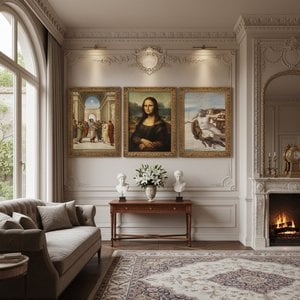
A Reneszánsz 10 Mesterműve: A Korábbiaknál Magasabb Színvonal a Fine Artban
Fedezze fel a Reneszánsz 10 legikonikusabb műalkotását! Leonardo da Vinci, Michelangelo és Raffaelo remekművei – történetük, technikájuk és örök szépségük. Museum-minőségű reprodukciók a ArtsDot.com oldalon. Böngéssze online kínálatunkat!


