


 Előnézet
 Megosztás
 Megosztás
 Részletek
 Útmutató

 Letöltés
 Hasonló darabok
 X-ray felvétel
 Diavetítés
 Statisztika
The Quack
 Oil On Canvas
- WallArt
- Baroque Dutch Painting
 1650
1650- Late Medieval
 112.0 x 87.0 cm
 Grohmann Museum
 Tovább olvasom
Kézzel készített olajfestmény reprodukció
Kézzel festett olajvastú vászon, az Ön által választott méretben és keretben, művészeink készítik meglévőre. ( Váltás nyomtatványra Áttérés digitális képre)




P118B $10

P118H $10

P118W $10

P438Z $10

P508JH $12

P508YH $12

P805H $10

P805Z $10

P919BZ $10

P919G $10

P919XJ $10

P959ZH $10

P968JZ $12

W106C $8

W218G $10

W218JH $8

W218Y $10

W307PJ $10

W316G $10

W316PJ $8

W316Y $10

W398PJ $8

W4111J $10

W500HY $15

W500JH $15

W692G $12

W849H $8

W940BG $15

W953PJ $8




Válasszon előre meghatározott méreteink közül, amelyek megfelelnek a műalkotás eredeti arányainak.

Ön megadhat saját méreteket egy adott kerethez vagy térhez igazításhoz. Ha a kiválasztott méret nem egyezik az eredeti kép arányával, akkor a műalkotást levágjuk, vagy további kézzel festett elemekkel meghosszabbítjuk a festményt. A gyártás megkezdése előtt küldünk Önnek egy digitális előnézetet jóváhagyásra.
Kérjük, vegye figyelembe, hogy a képernyőn megjelenő előnézet nem tükrözi a tényleges vágást vagy kiterjesztést. Csak az előnézet fog pontosan mutatni a végső kompozíciót.
Bár egyedi méretek állnak rendelkezésre, javasoljuk, hogy válasszon egy méretet az előre meghatározott listából az eredeti arányok megőrzése érdekében.
A rendelést követően a ArtsDot.com csapata e-mailt küld az ügyfélnek az instrukciókért, és biztosít egy előnézeti képet (mockup).
Világszerte elérhető szállítás () 3-4 hét alatt a szokásos 5 hét helyett. (22 szeptember). A minőség nem kérdőjelezhető.

Ingyenes globális expressz szállítás

Prémium minőségű len vászon

Teljes körű szállítási biztosítás

Vámvisszatérítési Garancia

Tökéletes színarányosság garancia

100 napos visszaküldési garancia (csak gyártási hibás termékek esetén)

100% pénzvisszatérítési garancia

Több darab vásárlásakor kedvezmény
 Az üvegkeretes opció csak 110 cm alatti méretben érhető el

The Quack
Reprodukciós technika
Reprodukció méretei
-


Összesített ár
$ 263
A Window into 17th-Century Deception: Gerrit Dou’s “The Quack”
Gerrit Dou's "The Quack," painted circa 1650, is more than just a depiction of a street scene; it’s a meticulously rendered observation of human vulnerability and the burgeoning skepticism that accompanied scientific advancements. Executed in stark black and white, a hallmark of Dou’s style, the painting captures a moment of intense engagement – or perhaps, carefully manufactured anticipation – surrounding an itinerant healer offering his wares in a bustling urban environment. The scene unfolds with a dramatic tension, born from the interplay of light and shadow that defines Dou's masterful use of chiaroscuro, a technique perfected during this period to create a sense of depth and realism.
- Subject Matter: The painting’s subject is rooted in the realities of 17th-century life – the prevalence of itinerant healers, often charlatans exploiting public anxieties about health and well-being.
- Historical Context: Dou's work reflects a period marked by increasing scientific inquiry and a growing distrust of traditional remedies. The rise of “charlatans” like those depicted here challenged established medical practices and highlighted the potential for deception within the burgeoning field of medicine.
Technical Brilliance and Trompe-l’œil Mastery
Dou's technical skill is immediately apparent in the incredibly detailed rendering of textures – from the worn fabric of the onlookers’ clothing to the polished sheen of the healer’s umbrella. His use of *trompe l'oeil*, a technique designed to create an illusion of three-dimensionality, is particularly striking. The open umbrella, seemingly suspended in mid-air, and the carefully positioned birds contribute significantly to this effect, drawing the viewer into the scene and blurring the lines between reality and representation. This meticulous attention to detail was characteristic of Dou’s work and cemented his reputation as one of the leading artists of the Dutch Golden Age.
- Chiaroscuro: The dramatic use of light and shadow, a signature element of Dou's style, intensifies the emotional impact of the scene.
- Trompe-l’œil: The illusionistic elements create a sense of depth and realism, enhancing the viewer’s engagement with the artwork.
Symbolism and Social Commentary
"The Quack" transcends a simple portrait of a street vendor; it offers a subtle commentary on societal attitudes towards knowledge, authority, and the pursuit of health. The assembled crowd, their expressions ranging from curiosity to cautious hope, embodies the public’s willingness to believe in miracle cures – a vulnerability that unscrupulous individuals readily exploited. The inclusion of the birds adds another layer of symbolism, perhaps representing fleeting illusions or deceptive promises. The reference to Theriac, an ancient and increasingly adulterated medicine, underscores the theme of false hope and the manipulation of belief. This painting serves as a poignant reminder of humanity’s enduring susceptibility to deception, a theme that resonates even today.
Dimensions & Acquisition
This hand-painted reproduction faithfully captures the essence of Dou's original masterpiece. Measuring 112 x 87 cm, it is ideally suited for a variety of interior design settings – from formal studies to contemporary living spaces. Its timeless subject matter and exquisite execution make "The Quack" a compelling addition to any art collection, offering both aesthetic pleasure and intellectual stimulation.
Hasonló műalkotások


A művész életrajza
Gerrit Dou (1613 - 1675)
Gerrit Dou was one of the most famous of all dutch painters until the beginning of the 19th century. He trained with Rembrandt, whose influence shows in his early works. His fame depended on his minutely painted scenes of everyday life, often represented in arched stone openings, like 'A Poulterer's Shop'; these are sometimes called 'niche' paintings. Trompe l’œil techniques were a hallmark of his style, creating illusions that blurred the boundaries between reality and artifice.Life
Gerrit Dou was born in Leiden on April 7, 1613, the son of Marytje Jansdr van Rosenburg and the glassmaker and engraver Douwe Jansz. According to Jan Jansz. Orlers (1570–1646), burgomaster of Leiden and author of a city chronicle in 1641, Dou evinced “a pleasure and desire toward painting” at a young age. He studied drawing under Bartholomeus Dolendo, and then trained in the stained-glass workshop of Pieter Couwenhorn. In February 1628, at the age of fourteen, his father sent him to study painting in the studio of Rembrandt (then aged about 21) who lived nearby. From Rembrandt, with whom he remained for about three years, he acquired his skill in colouring and in the more subtle effects of chiaroscuro, and his master's style is reflected in several of his earlier pictures, notably a self-portrait at the age of 22, around 1635–1638, in the Bridgewater Collection, and in the *Blind Tobit going to meet his Son*, at Wardour Castle. Dou’s workshop was initially located on Kort Rapenburg, where he resided until his death in 1675. He married Anna Maria van der Meer in 1649, and they had several children.Artistic Style and Specialization
Gerrit Dou's artistic style is characterized by its minute and elaborate treatment, often featuring genre scenes and trompe l’œil ‘niche’ paintings. His mastery of chiaroscuro—the dramatic interplay of light and shadow—is particularly notable, as seen in his candlelit night-scenes. He achieved this remarkable effect through a combination of techniques, including the use of concave lenses and convex mirrors to accurately reproduce the illumination of real objects. Dou's meticulous attention to detail extended beyond mere visual representation; he painstakingly crafted every brushstroke, striving for an unparalleled level of realism and expressive nuance. His work was admired by contemporaries and continues to captivate viewers today.Notable Works
Gerrit Dou produced over 200 paintings during his lifetime, many of which are housed in prominent museums across Europe. Among his most celebrated works include *The Astronomer by Candlelight*, a masterful depiction of scientific observation bathed in soft light; *A Poulterer’s Shop*, a stunning example of trompe l'œil that creates the illusion of depth and architectural grandeur; and *The Leiden Collection*, new york, which showcases Dou’s contribution to European art history. His influence extended beyond his own generation, inspiring subsequent artists and shaping the aesthetic sensibilities of the eighteenth century.Legacy
Gerrit Dou is considered one of the founders of the Leiden fijnschilderij—a movement that emphasized precision, subtlety, and polished realism in painting. He was a student of Rembrandt, whose artistic vision profoundly impacted Dou’s own approach to artmaking. His pupils included Frans van Mieris the Elder and Gabriel Metsu, who carried forward Dou's legacy into the next generation of Dutch painters. Gerrit Dou remains an enduring symbol of artistic excellence and innovation—a testament to the transformative power of observation and meticulous craftsmanship.
Gerrit Dou
1613 - 1675 , Holland
Gyors információk
- Artistic Movement Or Style: Fijnschilder
- Artists Or Movements Influenced By This Artist: ['Frans van Mieris öreg']
- Artists Who Influenced This Artist: ['Rembrandt van Rijn']
- Date Of Birth: Április 7., 1613.
- Date Of Death: Február 9., 1675.
- Full Name: Gerrit Dou
- Nationality: Hollandi
- Notable Artworks:
- Az astronomerák kandillal
- A Leiden gyűjteménye
- Place Of Birth: Leiden, Hollandia
Kapcsolódó cikkek
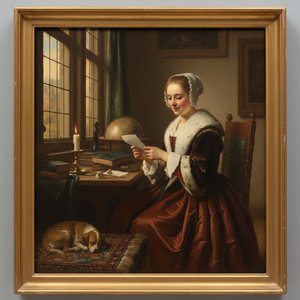
Gerrit Dou: Intimacy & Light in the Dutch Golden Age
Explore the exquisite world of Gerrit Dou, a master of Dutch Golden Age painting. Discover his intimate genre scenes, signature use of light, and lasting legacy. Learn about collecting Dou's works & their value.

Illuminating Innovation: Exploring the Dutch Golden Age of Painting
Explore the Dutch Golden Age of painting with ArtsDot. Discover Rembrandt, Vermeer & other Masters. Learn about key characteristics, iconic artworks, and lasting influence. Expert insights for collectors & enthusiasts.
Illuminating Realism: Exploring the Dutch Golden Age of Painting (1600-1700)
Explore the Dutch Golden Age of painting (1600-1700) with ArtsDot. Discover Rembrandt, Vermeer & other masters. Learn about techniques, history & find museum-quality reproductions.

Golden Age Reflections: Dutch Baroque Painting & Cultural Innovation
Explore the Dutch Golden Age of painting! Discover key artists like Vermeer & ter Borch, their innovative techniques, and the rich cultural context behind these Baroque masterpieces. Learn about collecting & appreciating this iconic art period.

A Hollandi Aranykor 10 Mesterműve: Festmények, Amelyek Megváltoztatták a Világot | ArtsDot.com
Fedezze fel a Hollandi Aranykor 10 legikonikusabb műalkotását! Rembrandt, Vermeer és más mesterek festményeinek történeteit olvassa el. Barokk stílus, klasszikus művészet – inspirálódjon otthon dekorációjához a ArtsDot.com-on! Fedezze fel a teljes gyűjteményt online.


