
 Oil On Canvas
- WallArt
- Baroque Dramatic Light
 109.0 x 139.0 cm
 Liechtenstein Museum

The picture follows your choices: , .
A gyűjtemény leírása
This stunning canvas print showcases Gerrit van Honthorst’s iconic painting ‘Saint Jerome,’ capturing the artist’s signature style of Baroque art. Executed in oil on canvas, it exemplifies his skill in portraying scholarly introspection and dramatic lighting. Measuring 109 x 139 cm and housed at the Liechtenstein Museum, Vienna, Austria, this piece embodies the grandeur and emotional depth charact
 Összes részlet megjelenítése
A művész életrajza
A Gerard van Honthorst a holland festő, aki a barokk stílusban, különösen a *tenebrism* technikával alkotott. A fény és árnyék mestersége, a biblikus képei és portréi világsühmek. Fedezze fel a holland művészet egyik legkiemelkedőbb alakját!
Kézzel készített olajfestmény reprodukció
Kézzel festett olajvastú vászon, az Ön által választott méretben és keretben, művészeink készítik meglévőre. ( Váltás nyomtatványra Áttérés digitális képre)
More about this painting
 Megtekintés
 Küldés
 Megosztás
 Részletek
 Útmutató

 Letöltés
 Hasonló darabok
 X-ray felvétel
 Diavetítés
 Q&A
Q&A Statisztika
Order your painting in four simple steps
Take your time. You can change any answer; the price in your order card follows each choice.
1 Step one of four
Which size would you like?
These sizes keep the proportions of the original painting. The drawing shows your choice on a wall, above a two-metre sofa.
Or give your own measurements
Válasszon előre meghatározott méreteink közül, amelyek megfelelnek a műalkotás eredeti arányainak.

Írja be a kívánt szélességet és magasságot, hogy illeszkedjen a keretéhez vagy a falához. Mivel ez kézzel festett alkotás, egy eltérő formájú méret esetén a művész akár festhet is valamivel többet a kép körül, vagy korolathat is belőle — az Ön döntésének megfelelően. A festés megkezdése előtt küldünk egy digitális tervezetet jóváhagyásra. Az oldalon látható kép nem tartalmazza a végeredményt — csak a tervezet mutatja meg a valódi eredményt.
2 Step two of four
How should it be prepared: rolled, stretched or framed?
The prices below are for the size you chose in step one.
Choose the edges of the stretched canvas
Choose your frame

White Ft1

Blurside Ft1

Extended Ft1

P118B Ft10

P118H Ft10

P118W Ft10

P438Z Ft10

P508JH Ft12

P508YH Ft12

P805H Ft10

P805Z Ft10

P919BZ Ft10

P919G Ft10

P919XJ Ft10

P959ZH Ft10

P968JZ Ft12

W106C Ft8

W218G Ft10

W218JH Ft8

W218Y Ft10

W307PJ Ft10

W316G Ft10

W316PJ Ft8

W316Y Ft10

W398PJ Ft8

W4111J Ft10

W500HY Ft15

W500JH Ft15

W692G Ft12

W849H Ft8

W940BG Ft15

W953PJ Ft8

H24-GOLD Ft30

H24-SILVER Ft30

H36-GOLD Ft45

H36-SILVER Ft45
Keretezett
Moulding: . Overall size with the frame: .
3 Step three of four
Would you like anything changed in the painting?
Most people answer no. Because each painting is made by hand, our artist can also adapt it for you.
After order, ArtsDot.com team will email client for instructions and provide a mockup preview
4 Step four of four
A few finishing options
All of them are optional. The answers already selected cost nothing extra.
Who paints it?
Világszerte elérhető szállítás () 3-4 hét alatt a szokásos 5 hét helyett. (29 október). A minőség nem kérdőjelezhető.
A nameplate, as in a museum?
A gravírozott bronztábla részletei
This elegant plaque features the artist's name and the title of the artwork, finely engraved for a timeless presentation.
It is made from bronze with a refined, elegant finish. The text is precisely laser-engraved for a sharp and permanent result. Measuring 9x2 cm, the plaque is compact yet easy to read. It's built to be durable and scratch-resistant, offering a professional, museum-quality look. Mounting is simple thanks to the included adhesive backing.
Átlátszó akril tábla részletei
The plaque includes essential engraved details such as the artist's name, the title of the artwork, the date it was created, the type of media used-like oil on canvas or watercolor-a brief description of the piece, and a QR code that links to the complete artwork information.
It is crafted from clear acrylic, offering a sleek, modern appearance. The text is UV-engraved in black to ensure strong visual contrast. With a size of 10x15 cm, it ensures optimal readability. It comes equipped with two metal hooks for secure wall mounting. The plaque is designed to be weather-resistant, making it suitable for various environments, and it includes interactive features that work seamlessly with smartphone scanning.
Fekete akril tábla részletei
This elegant plaque includes engraved information such as the artist's name, the title of the artwork, the date it was created, the type of media used (like oil on canvas or watercolor), a short description of the artwork, and a QR code for quick access to more information.
The plaque itself is made from refined black acrylic with a premium finish. The text is laser-engraved in white for high contrast and readability. Its size is 10x15 cm, designed to be easy to read. It comes with two metal hooks for professional mounting. The design is sleek and fits any interior style. It is also weather-resistant and durable, with built-in digital integration for mobile compatibility.
A protective varnish?
When do you need it?
✓ Check and order
Your painting, as you ordered it

St Jerome
Reprodukciós technika
Reprodukció mérete
-

Kiváló mesterművész
Nagyobb részletesség, finomság és bővített gyártási idő
-

Reprodukció keretezése
-
-
A bármely oldalsó méretét túlszálaló 105 cm (kb. 41 hüvelyk) meghaladó műalkotások vagy reprodukciók esetében a keret összeszerelhető készletként, szétszerelve kerül szállításra. Ez a módszer biztosítja a biztonságos szállítást, és megakadályozza a szállítás során fellépő sérüléseket.
Szakmész összeszerelést igényel – ez nem DIY (önösszeszerelhető) termék.
A készletet egy tapasztalt keretező szakembernek kell összeszerelnie és a vásznat feszítenie kell, fa ragasztó (nem tartalmazza a csomag), vásznfeszítő fogó és szorítók használatával, amelyek a ragasztó száradásáig a keretrészeket egymáshoz vuôngjba tartják. A helytelen összeszerelés vagy a nem egyenletes vásznfeszítés maradandó károsíthatja a műalkotást, és ez nem része a garanciánknak.
 A bármely oldalsó méretét túlszálaló 105 cm (kb. 41 hüvelyk) meghaladó műalkotások vagy reprodukciók esetében a keret összeszerelhető készletként, szétszerelve kerül szállításra. Ez a módszer biztosítja a biztonságos szállítást, és megakadályozza a szállítás során fellépő sérüléseket.
A készlet tartalmazza az összes tömörfa rudat, pontosan méretre vágva.
A mellékelt csavarokkal, valamint a sarokszerekhez szükséges faütő ragasztóval kell összeszerelnie (ez nem tartalmazható a csomagban), így a keretrendezőnek külön kell beszereznie.
A csomag nem tartalmazza a szükséges professzionális eszközöket: egy vászonfeszítőt és klipseket a rácsok vízszintes tartásához a ragasztó megszáradásáig.
Fontos:
A sarokcsatlakozásokhoz fánylagra van szükség, a keretrudakat szorítókapcsokkal kell rögzíteni, amíg a rag teljesen meg nem szárad, a kész keretre feszített vászonhoz pedig vászonfeszítő fogat szükséges. Ezek egyike sem található meg a készletben. Kérjük, rendelés előtt győződjön meg róla, hogy rendelkezik tapasztalt keretező szakemberrel.

Névtábla
-
-

Védőréteg (Lakk)
Fényes lakk (intenzívabb színek, védelem a fény és a nedvesség hatása ellen)
-

Műalkotásom egyedi igényre szabása
Példák a módosíthatóságra: az arc kicserélése az ügyfél fotójára; háziállat hozzáadása (pl. macska helyett kutya); rejtett üzenet elhelyezése a háttérben; a háttér tájainak vagy elemeinek megváltoztatása.
-

Sürgős
Világszerte szóló szállítás () mindössze 3-4 hét alatt, a szokásos 5 hét helyett. (29 október). A minőség nem kérdőjelezhető.
-
Express szállítás
Világszerte elérhető szállítás területre 5 héten belül. (5 november).
A szállítás díja tartalmazza
Összesített ár
Ft 84973
Az üvegkeretes opció csak 110 cm alatti méretben érhető el
Included with every order
- Ingyenes globális expressz szállítás
- Prémium minőségű len vászon
- Teljes körű szállítási biztosítás
- Vámvisszatérítési Garancia
- Hiteles színarányosság garancia
- 100 napos visszaküldési lehetőség (csak hibás termékek esetén)
- 100% pénzvisszatérítési garancia
- Több darab vásárlásakor kedvezmény


Saint Jerome by Gerrit van Honthorst: Illuminating the Dutch Golden Age with Caravaggism & Courtly Grace
The painting Saint Jerome by Gerard van Honthorst (Gerrit Van Honthorst) stands as a testament to the Baroque aesthetic, capturing not merely a depiction of biblical scripture but also an atmosphere steeped in contemplation and intellectual rigor. Executed in oil on canvas circa 1647-1650, this artwork resides within the Liechtenstein Museum’s collection in Vienna, Austria—a location that underscores its significance as a cornerstone of Dutch Baroque art history. Measuring approximately 109 x 139 cm, Van Honthorst's masterpiece distinguishes itself through masterful use of chiaroscuro – a technique pioneered by Caravaggio – transforming light and shadow into instruments of dramatic expression and psychological insight.- Subject Matter: The scene portrays Saint Jerome in his study, meticulously rendered against a dimly lit interior punctuated by the stark illumination emanating from a large mirror positioned to the left. This mirror serves not merely as an optical element but also as a symbolic device reflecting both the saint’s figure and the room itself—a motif frequently employed during the Baroque period to heighten visual impact and convey notions of duality and introspection.
- Style & Technique: Van Honthorst's signature style embodies Caravaggio’s influence, prioritizing dramatic realism achieved through tenebrism – a bold juxtaposition of intense light against deep darkness. The artist skillfully employs subtle modeling of light and shadow to sculpt the contours of Jerome’s robe and torso, creating an illusion of volume that draws the viewer’s gaze inward.
- Symbolism: Scattered throughout the composition are symbolic objects—a skull prominently displayed in Jerome's left hand—representing mortality and serving as a poignant reminder of human vulnerability. Alongside the skull rests a book open on his desk, symbolizing knowledge and spiritual contemplation. The inclusion of another skull positioned near the mirror reinforces this thematic preoccupation with death and decay.
- Historical Context: Produced during the Dutch Golden Age – a period characterized by unprecedented artistic flourishing—Saint Jerome reflects the intellectual currents of its time. Artists like Van Honthorst sought to elevate religious imagery beyond mere representation, aiming instead to evoke profound emotional responses and stimulate contemplation on existential themes.
- Emotional Impact: The painting’s subdued color palette—dominated by earthy tones—contributes to its melancholic mood, fostering a sense of solitude and introspection that aligns perfectly with Jerome's ascetic lifestyle. Van Honthorst’s meticulous attention to detail—evident in the textures of the robe, the reflections in the mirror, and the subtle modeling of light—further enhances the artwork’s immersive quality, transporting viewers into the contemplative space of Saint Jerome’s study.
Detailed Analysis: Caravaggism & Chiaroscuro Mastery
Gerard van Honthorst's masterful manipulation of chiaroscuro – derived directly from Caravaggio’s groundbreaking approach – elevates Saint Jerome beyond a simple portrait into an embodiment of Baroque dramatic idealism. The artist meticulously sculpts the figure with light, creating a palpable sense of volume and depth that draws the viewer’s eye toward Jerome’s central form. This technique isn't merely decorative; it serves as a conduit for conveying psychological states—the saint’s inner turmoil mirrored in the stark contrasts of light and shadow. The mirror reflects not only Jerome’s physical presence but also the room’s ambiance, amplifying the painting’s contemplative atmosphere and reinforcing its symbolic significance.Notable Comparisons & Artistic Influences
Saint Jerome stands alongside other seminal Baroque paintings—such as Rembrandt's *The Return of Susanna* and Rubens' *The Descent from Calvary*—as exemplifying the period's artistic conventions. Van Honthorst’s work shares a common thread with these masterpieces: an unwavering commitment to realism infused with expressive emotion. Like Caravaggio, he prioritized capturing the human condition with unflinching honesty, eschewing idealized representations in favor of portraying figures grappling with profound spiritual dilemmas.Provenance & Artistic Legacy
Currently housed at the Liechtenstein Museum, Saint Jerome’s journey through art history reflects the broader dissemination of Baroque ideals across Europe. Its meticulous execution and symbolic richness underscore Van Honthorst's enduring contribution to Dutch artistic heritage—a legacy that continues to inspire artists and collectors alike. The painting serves as a poignant reminder of the Baroque period’s fascination with introspection, mortality, and the pursuit of spiritual enlightenment.Kérdések és válaszok
Hogyan írható le „St Jerome”, Gerard van Honthorst alkotása hangulata?
„St Jerome”, Gerard van Honthorst alkotása művészeti alkotásának összhangulata Dramatic. Ez az érzet foglalja össze a mű általános atmoszféráját.
Milyen technikával készült a „St Jerome”, Gerard van Honthorst alkotása?
A „St Jerome”, Gerard van Honthorst alkotása technikája Oil On Canvas. A reprodukciók célja ezen technika megjelenítésének hiteles återadása.
Hogyan tekinthetem meg előre a(z) „St Jerome”, Gerard van Honthorst alkotása reprodukcióját?
A „St Jerome”, Gerard van Honthorst alkotása reprodukciójának megtekintéséhez nyissa meg a mű Előnézet oldalát.
Hasonló műalkotások


Gerard van Honthorst
1590 - 1656, Holland
A művész életrajza
A Master of Light and Shadow: The Life and Art of Gerard van Honthorst
Gerard van Honthorst emerged from Utrecht in 1592, a pivotal figure poised to illuminate the Dutch Golden Age with his dramatic artistry. Initially guided by his father, a decorative painter, young Gerard’s talent blossomed under the tutelage of Abraham Bloemaert, establishing a solid foundation in draftsmanship and composition. However, it was a transformative journey to Rome that irrevocably altered the course of his artistic development. There, amidst the fervent energy of the Italian Baroque, he encountered the groundbreaking work of Caravaggio – an encounter that would define his signature style and earn him the evocative nickname “Gherardo delle Notti,” or Gerard of the Nights. The dramatic use of *tenebrism*, a technique employing stark contrasts between light and dark, became Honthorst’s hallmark, imbuing his canvases with a palpable sense of drama and emotional intensity. He wasn't merely imitating Caravaggio; he was translating the Italian master’s innovations into a distinctly Dutch sensibility, focusing on intimate scenes illuminated by artificial light sources – candles, lamps, and fires – creating an atmosphere both realistic and deeply theatrical. This mastery over light wasn’t simply technical skill; it was a means of revealing character, of drawing the viewer into the emotional core of each scene.From Roman Acclaim to Dutch Mastery
Honthorst's time in Rome was marked by considerable success and patronage. He found favor amongst the city’s elite, including Vincenzo Giustiniani, for whom he created the powerful “Christ Before the High Priest,” a work that exemplifies his masterful command of light and shadow. This painting, now residing in London’s National Gallery, showcases not only his technical skill but also his ability to convey profound psychological depth within his figures. He further solidified his reputation by working for Cosimo II de' Medici, Grand Duke of Tuscany, demonstrating an adaptability and versatility that would serve him well throughout his career. Upon returning to Utrecht around 1620, Honthorst quickly established himself as a leading portrait painter in the Dutch Republic. His ability to capture not just physical likeness but also the character and social standing of his sitters made him highly sought after by wealthy merchants, nobles, and even royalty. He became president of the Guild of St. Luke in Utrecht in 1623, a testament to his growing influence within the artistic community. This period saw a flourishing of commissions, allowing Honthorst to refine his style and establish a distinctive voice within Dutch painting.A Courtly Artist: Commissions and Collaborations
The reach of Honthorst’s talent extended beyond the Netherlands. His work attracted the attention of Sir Dudley Carleton, who enthusiastically recommended him to prominent English aristocrats like the Earl of Arundel and Lord Dorchester. This led to commissions from Queen Elizabeth of Bohemia, sister of Charles I, who employed him as both a painter and drawing master for her children. These royal connections culminated in significant works such as the allegorical depiction of Charles and Henrietta Maria as Diana and Apollo, now housed at Hampton Court Palace. Honthorst’s willingness to collaborate with other artists also speaks to his open-mindedness and artistic generosity. He famously hosted Peter Paul Rubens during a visit to Utrecht, even painting him in a playful scene depicting Diogenes searching for an honest man – a testament to the mutual respect between these two Baroque giants. These collaborations weren’t simply about sharing workload; they were intellectual exchanges that enriched the artistic landscape.The Utrecht Caravaggisti and His Distinct Style
Honthorst was a key figure in the *Utrecht Caravaggisti* movement – a group of Dutch painters who embraced Caravaggio's dramatic realism and *tenebrism*. Alongside artists like Hendrick ter Brugghen and Dirck van Baburen, he helped to establish a distinctly Dutch interpretation of Italian Baroque style. His emphasis on genre scenes illuminated by artificial light, his masterful portraits, and his ability to convey emotional depth through skillful use of chiaroscuro left an indelible mark on the development of Dutch Golden Age painting. He wasn’t simply copying Caravaggio; he was distilling the essence of the Italian master's techniques and applying them to the specific context of the Dutch Republic. This resulted in a unique style characterized by its dramatic lighting, dynamic compositions, and psychological insight. The *Utrecht Caravaggisti* group shared a common interest in exploring themes of morality, faith, and human nature through a lens of intense emotion and theatricality.Legacy and Enduring Influence
Gerard van Honthorst’s influence resonated far beyond his lifetime. He was a pivotal figure in art history, bridging the gap between Italian Baroque painting and Dutch Golden Age artistry. His paintings continue to captivate audiences today, offering a glimpse into the dramatic world of 17th-century Europe. His ability to seamlessly blend Italian influences with Dutch sensibilities ensured his lasting legacy, inspiring generations of artists who followed. He died in Utrecht in 1656, leaving behind a body of work that continues to illuminate the artistic landscape and remind us of the power of light and shadow to reveal the human condition.
Kapcsolódó cikkek
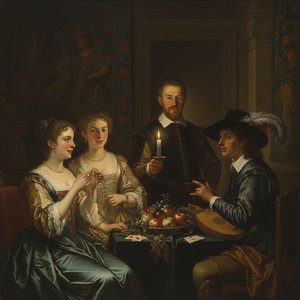
Gerard van Honthorst: Illuminating the Dutch Golden Age with Caravaggism & Courtly Grace
Explore the captivating world of Gerard van Honthorst, a Dutch Golden Age master renowned for his dramatic chiaroscuro & courtly portraits. Discover his life, art, and lasting influence on Baroque painting.

A Hollandi Barokk 10 Mesterműve: Festmények, Amelyek Megváltoztatták a Világot | ArtsDot
Fedezze fel a holland barokk 10 legikonikusabb műalkotását! Rembrandt, Vermeer és más mesterek festményeinek története, technikája és időtálló szépsége. Művészeti reprodukciók prémium minőségben – ArtsDot.com.

A Barokk Mesterek 10 Legikonikusabb Remekműve – ArtsDot.com
Fedezze fel a barokk művészet 10 legpártosabb remekművét! Caravaggio, Rembrandt és Vermeer alkotásainak története – ArtsDot.com kínálatában exkluzív reprodukciók és inspiráló dekorációs ötletek várják Önt. Nézze meg most!