


 Előnézet
 Megosztás
 Megosztás
 Részletek
 Útmutató

 Letöltés
 Hasonló darabok
 X-ray felvétel
 Diavetítés
 Statisztika
Concert on a Balcony
 Acrylic On Canvas
- WallArt
- Baroque
 1624
1624 168.0 x 178.0 cm
 Louvre
 Tovább olvasom
Kézzel készített olajfestmény reprodukció
Kézzel festett olajvastú vászon, az Ön által választott méretben és keretben, művészeink készítik meglévőre. ( Váltás nyomtatványra Áttérés digitális képre)




P118B Ft10

P118H Ft10

P118W Ft10

P438Z Ft10

P508JH Ft12

P508YH Ft12

P805H Ft10

P805Z Ft10

P919BZ Ft10

P919G Ft10

P919XJ Ft10

P959ZH Ft10

P968JZ Ft12

W106C Ft8

W218G Ft10

W218JH Ft8

W218Y Ft10

W307PJ Ft10

W316G Ft10

W316PJ Ft8

W316Y Ft10

W398PJ Ft8

W4111J Ft10

W500HY Ft15

W500JH Ft15

W692G Ft12

W849H Ft8

W940BG Ft15

W953PJ Ft8




Válasszon előre meghatározott méreteink közül, amelyek megfelelnek a műalkotás eredeti arányainak.

Írja be a kívánt szélességet és magasságot, hogy illeszkedjen a keretéhez vagy a falához. Mivel ez kézzel festett alkotás, egy eltérő formájú méret esetén a művész akár festhet is valamivel többet a kép körül, vagy korolathat is belőle — az Ön döntésének megfelelően. A festés megkezdése előtt küldünk egy digitális tervezetet jóváhagyásra. Az oldalon látható kép nem tartalmazza a végeredményt — csak a tervezet mutatja meg a valódi eredményt.
A rendelést követően a ArtsDot.com csapata e-mailt küld az ügyfélnek az instrukciókért, és biztosít egy előnézeti képet (mockup).
Világszerte elérhető szállítás () 3-4 hét alatt a szokásos 5 hét helyett. (19 október). A minőség nem kérdőjelezhető.

Ingyenes globális expressz szállítás

Prémium minőségű len vászon

Teljes körű szállítási biztosítás

Vámvisszatérítési Garancia

Tökéletes színarányosság garancia

100 napos visszaküldési garancia (csak gyártási hibás termékek esetén)

100% pénzvisszatérítési garancia

Több darab vásárlásakor kedvezmény
 Az üvegkeretes opció csak 110 cm alatti méretben érhető el

Concert on a Balcony
Reprodukciós technika
Reprodukció méretei
-


Összesített ár
Ft 83507
The Scene Unfolds: A Glimpse into 17th Century Life
Gerard van Honthorst’s “Concert on a Balcony,” painted in 1624, isn't merely a depiction of musicians; it’s a carefully constructed tableau vivant – a stage for observing human interaction and the subtle drama of everyday life. The painting transports us to a richly furnished interior, likely a wealthy household’s salon or perhaps a private entertainment space. The setting itself is crucial: a balcony overlooking a darkened street, suggesting an evening gathering, a moment of respite from the bustling city below. Notice how Honthorst masterfully uses light – not as a simple illumination, but as a powerful tool to shape our perception and draw attention to key elements within the scene. The warm glow emanating from candles casts long shadows, creating depth and intimacy while simultaneously highlighting the faces and instruments of the performers.
- The Musicians: A woman with a guitar, a violinist, and two singers – each rendered with remarkable detail, capturing their expressions and gestures.
- The Child: The presence of a young child, likely being held by one of the performers, adds an element of innocence and vulnerability to the scene, subtly contrasting with the more worldly activities unfolding around him.
- The Book: A book resting on the stage – a detail that hints at the possibility of a theatrical performance or perhaps a musical rehearsal, grounding the scene in a specific context.
Masterful Technique: Caravaggism and the Art of *Tenebrismo*
Honthorst’s style is deeply rooted in the innovations of Caravaggio, a movement known as *Caravaggism*. This Italian painter revolutionized art by employing what's called *tenebrismo*, a dramatic technique characterized by stark contrasts between light and dark. In “Concert on a Balcony,” this is immediately apparent. The foreground is bathed in a warm, almost theatrical light, while the background fades into deep shadow. This creates a powerful sense of depth and draws our eye to the central figures – the musicians engaged in their performance. Honthorst’s brushwork is loose and expressive, contributing to the painting's dynamic energy. He doesn’t meticulously render every detail; instead, he focuses on capturing the essence of the scene through color, light, and movement.
Color Palette:** The dominant colors are rich browns, reds, and golds, reflecting the opulence of the setting and the performers' attire. The use of deep blues and blacks in the background creates a sense of mystery and distance.Symbolism and Interpretation: More Than Just a Musical Gathering
Beyond its surface depiction of musicians playing music, “Concert on a Balcony” invites us to contemplate broader themes. The scene suggests a celebration of community, artistry, and the pleasures of social interaction. The balcony itself can be interpreted as a threshold – a space between private intimacy and public performance. It’s a place where individuals come together to share their talents and create moments of beauty. Some art historians have suggested that the painting also reflects the anxieties of the time, with the darkness representing uncertainty and the light symbolizing hope and prosperity. The inclusion of the child adds another layer of meaning, perhaps hinting at the future generation of artists and musicians.
A Timeless Appeal: Reproduction and Interior Design
Gerard van Honthorst’s “Concert on a Balcony” remains a captivating work of art due to its masterful composition, dramatic lighting, and evocative atmosphere. Reproductions offer an accessible way to bring this scene into your home or office, adding a touch of elegance and sophistication. When selecting a reproduction, consider the quality of the print and the framing – a rich, dark frame will best complement the painting’s chiaroscuro effect. This artwork is not just a visual representation; it's an invitation to step back in time and experience the vibrant energy of 17th-century life. Its timeless appeal makes it a perfect addition to any art collection or a striking focal point for interior design.
Gyakran Ismételt Kérdések
Milyen méretben ajánlott a "Concert on a Balcony" nyomtatása?
A „Concert on a Balcony”, Gerard van Honthorst alkotása ajánlott nyomtatási mérete: Medium.
Szabad-e jogilag másolni a(z) Louvre múzeum collectionsében található „Concert on a Balcony”, Gerard van Honthorst alkotása alkotást?
Az eredeti "Concert on a Balcony" mű a Louvre gyűjteményében található, a alkotás pedig a joghallgatói schützenesség körébe tartozik – a szerzői jog lejártt státuszú.
Milyen tónus felé hajlik a "Concert on a Balcony"?
A Amber to Saffron árnyalat áthatárolja a „Concert on a Balcony”, Gerard van Honthorst alkotása alkotást.
Hasonló műalkotások


A művész életrajza
A Master of Light and Shadow: The Life and Art of Gerard van Honthorst
Gerard van Honthorst emerged from Utrecht in 1592, a pivotal figure poised to illuminate the Dutch Golden Age with his dramatic artistry. Initially guided by his father, a decorative painter, young Gerard’s talent blossomed under the tutelage of Abraham Bloemaert, establishing a solid foundation in draftsmanship and composition. However, it was a transformative journey to Rome that irrevocably altered the course of his artistic development. There, amidst the fervent energy of the Italian Baroque, he encountered the groundbreaking work of Caravaggio – an encounter that would define his signature style and earn him the evocative nickname “Gherardo delle Notti,” or Gerard of the Nights. The dramatic use of *tenebrism*, a technique employing stark contrasts between light and dark, became Honthorst’s hallmark, imbuing his canvases with a palpable sense of drama and emotional intensity. He wasn't merely imitating Caravaggio; he was translating the Italian master’s innovations into a distinctly Dutch sensibility, focusing on intimate scenes illuminated by artificial light sources – candles, lamps, and fires – creating an atmosphere both realistic and deeply theatrical. This mastery over light wasn’t simply technical skill; it was a means of revealing character, of drawing the viewer into the emotional core of each scene.From Roman Acclaim to Dutch Mastery
Honthorst's time in Rome was marked by considerable success and patronage. He found favor amongst the city’s elite, including Vincenzo Giustiniani, for whom he created the powerful “Christ Before the High Priest,” a work that exemplifies his masterful command of light and shadow. This painting, now residing in London’s National Gallery, showcases not only his technical skill but also his ability to convey profound psychological depth within his figures. He further solidified his reputation by working for Cosimo II de' Medici, Grand Duke of Tuscany, demonstrating an adaptability and versatility that would serve him well throughout his career. Upon returning to Utrecht around 1620, Honthorst quickly established himself as a leading portrait painter in the Dutch Republic. His ability to capture not just physical likeness but also the character and social standing of his sitters made him highly sought after by wealthy merchants, nobles, and even royalty. He became president of the Guild of St. Luke in Utrecht in 1623, a testament to his growing influence within the artistic community. This period saw a flourishing of commissions, allowing Honthorst to refine his style and establish a distinctive voice within Dutch painting.A Courtly Artist: Commissions and Collaborations
The reach of Honthorst’s talent extended beyond the Netherlands. His work attracted the attention of Sir Dudley Carleton, who enthusiastically recommended him to prominent English aristocrats like the Earl of Arundel and Lord Dorchester. This led to commissions from Queen Elizabeth of Bohemia, sister of Charles I, who employed him as both a painter and drawing master for her children. These royal connections culminated in significant works such as the allegorical depiction of Charles and Henrietta Maria as Diana and Apollo, now housed at Hampton Court Palace. Honthorst’s willingness to collaborate with other artists also speaks to his open-mindedness and artistic generosity. He famously hosted Peter Paul Rubens during a visit to Utrecht, even painting him in a playful scene depicting Diogenes searching for an honest man – a testament to the mutual respect between these two Baroque giants. These collaborations weren’t simply about sharing workload; they were intellectual exchanges that enriched the artistic landscape.The Utrecht Caravaggisti and His Distinct Style
Honthorst was a key figure in the *Utrecht Caravaggisti* movement – a group of Dutch painters who embraced Caravaggio's dramatic realism and *tenebrism*. Alongside artists like Hendrick ter Brugghen and Dirck van Baburen, he helped to establish a distinctly Dutch interpretation of Italian Baroque style. His emphasis on genre scenes illuminated by artificial light, his masterful portraits, and his ability to convey emotional depth through skillful use of chiaroscuro left an indelible mark on the development of Dutch Golden Age painting. He wasn’t simply copying Caravaggio; he was distilling the essence of the Italian master's techniques and applying them to the specific context of the Dutch Republic. This resulted in a unique style characterized by its dramatic lighting, dynamic compositions, and psychological insight. The *Utrecht Caravaggisti* group shared a common interest in exploring themes of morality, faith, and human nature through a lens of intense emotion and theatricality.Legacy and Enduring Influence
Gerard van Honthorst’s influence resonated far beyond his lifetime. He was a pivotal figure in art history, bridging the gap between Italian Baroque painting and Dutch Golden Age artistry. His paintings continue to captivate audiences today, offering a glimpse into the dramatic world of 17th-century Europe. His ability to seamlessly blend Italian influences with Dutch sensibilities ensured his lasting legacy, inspiring generations of artists who followed. He died in Utrecht in 1656, leaving behind a body of work that continues to illuminate the artistic landscape and remind us of the power of light and shadow to reveal the human condition.
Gerard van Honthorst
1590 - 1656 , Holland
Gyors információk
- Artistic Movement Or Style: Barokk, Caravaggisti
- Artists Or Movements Influenced By This Artist: ['Utrecht Caravaggisti']
- Artists Who Influenced This Artist: ['Caravaggio']
- Date Of Birth: 1590. nov. 4.
- Date Of Death: 1656. ápr. 27.
- Full Name: Gerard van Honthorst
- Nationality: Hollandi
- Notable Artworks:
- Krisztus Kajafás előtt
- Diana és Apolló
- A fogorvos
- Place Of Birth: Utrecht, Holland
Kapcsolódó cikkek
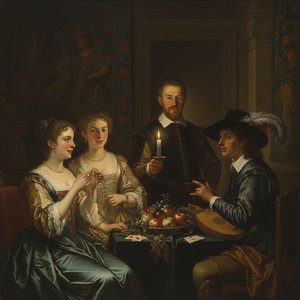
Gerard van Honthorst: Illuminating the Dutch Golden Age with Caravaggism & Courtly Grace
Explore the captivating world of Gerard van Honthorst, a Dutch Golden Age master renowned for his dramatic chiaroscuro & courtly portraits. Discover his life, art, and lasting influence on Baroque painting.

Sir Anthony van Dyck: Courtly Portraiture & the Shaping of Baroque Identity
Explore the life & legacy of Sir Anthony van Dyck, the leading court painter of his era. Discover his innovative portraiture, Baroque masterpieces, and investment potential for discerning collectors. Learn more at ArtsDot.
Harmonies on Canvas: Exploring the Visual Representation of Music in Art History
Explore the fascinating history of music's visual representation in art! From ancient symbolism to modern abstraction, discover how artists have captured sound and emotion on canvas. Expert insights & stunning examples.

Rembrandt legikonikusabb művei: 25 mestermű a vászonon – ArtsDot
Fedezze fel Rembrandt van Rijn 25 legikonikusabb művét! Barokk portrék, bibliai jelenetek és önarcképek a Holland aranykorból. Művészeti reprodukciók prémium minőségben – ArtsDot. Explore the full collection online!

A Barokk Mesterek 10 Legikonikusabb Remekműve – ArtsDot.com
Fedezze fel a barokk művészet 10 legpártosabb remekművét! Caravaggio, Rembrandt és Vermeer alkotásainak története – ArtsDot.com kínálatában exkluzív reprodukciók és inspiráló dekorációs ötletek várják Önt. Nézze meg most!
