


The picture follows your choices: , .
A gyűjtemény leírása
Georges Braque’s Analytical Cubism masterpiece captures quiet elegance with fragmented forms—a guitar, fruit bowls, and books—reflecting the intellectual debates of 1920s Paris. Explore this iconic artwork and bring modern art history into your home.
 Összes részlet megjelenítése
A művész életrajza
Georges Braque (1882-1963): A kubista és fauvista festőművész, aki Picasso-val együtt újította meg a képi világot. Fedezd fel a 'Házak L'Estaque'-ben című alkotását és a kolázisok világát!
Kézzel készített olajfestmény reprodukció
Kézzel festett olajvastú vászon, az Ön által választott méretben és keretben, művészeink készítik meglévőre. ( Váltás nyomtatványra Áttérés digitális képre)
Ez a műalkotás szerzői jogi védelem alatt áll
Az ezen az oldalon megjelenített műalkotások szerzői jogi védelem alatt állnak, ami azt jelenti, hogy törvényileg nem készíthetünk és nem adhatunk el belőlük pontos másolatokat. Ez a védelem olyan nemzetközi megállapodások alapján érvényesül, mint például a Berni Egyezmény és a nemzeti jogszabályok által, beleértve azokat is, amelyeket meghatározott Az USA szerzői jogi törvénye – 17. cím.
Mint tiszteletes és törvényes alternatívát, olyan egyedi, kézzel festett alkotásokat kínálunk, amelyek az eredetiből merítnek inspirációt. Tapasztalt és professzionális művészeink alaposan tanulmányozzák az eredeti stílusát, hangulatát és művészeti esszenciáját, hogy egy olyan új, egyedi alkotást hozzunk létre, amely ugyanazt az érzést kelti – miközben önálló, eredeti alkotásként létezik.
Ez a módszer teljes mértékben megfelel a szerzői jogi szabályozásnak, mivel nem tartalmazza a védett műalkotás másolását vagy duplikálását. Ehelyett ez egy kreatív újinterpretáció – egy új festmény, amely az eredetivel való összefüggései miatt hatással van rá, de nem az az.
More about this painting
 Megtekintés
 Küldés
 Megosztás
 Részletek
 Útmutató

 Letöltés
 Hasonló darabok
 X-ray felvétel
 Diavetítés
 Q&A
Q&A Statisztika
Order your painting in four simple steps
Take your time. You can change any answer; the price in your order card follows each choice.
1 Step one of four
Which size would you like?
These sizes keep the proportions of the original painting. The drawing shows your choice on a wall, above a two-metre sofa.
Or give your own measurements
Válasszon előre meghatározott méreteink közül, amelyek megfelelnek a műalkotás eredeti arányainak.

Írja be a kívánt szélességet és magasságot, hogy illeszkedjen a keretéhez vagy a falához. Mivel ez kézzel festett alkotás, egy eltérő formájú méret esetén a művész akár festhet is valamivel többet a kép körül, vagy korolathat is belőle — az Ön döntésének megfelelően. A festés megkezdése előtt küldünk egy digitális tervezetet jóváhagyásra. Az oldalon látható kép nem tartalmazza a végeredményt — csak a tervezet mutatja meg a valódi eredményt.
2 Step two of four
How should it be prepared: rolled, stretched or framed?
The prices below are for the size you chose in step one.
Choose the edges of the stretched canvas
Choose your frame

White Ft1

Blurside Ft1

Extended Ft1

P118B Ft10

P118H Ft10

P118W Ft10

P438Z Ft10

P508JH Ft12

P508YH Ft12

P805H Ft10

P805Z Ft10

P919BZ Ft10

P919G Ft10

P919XJ Ft10

P959ZH Ft10

P968JZ Ft12

W106C Ft8

W218G Ft10

W218JH Ft8

W218Y Ft10

W307PJ Ft10

W316G Ft10

W316PJ Ft8

W316Y Ft10

W398PJ Ft8

W4111J Ft10

W500HY Ft15

W500JH Ft15

W692G Ft12

W849H Ft8

W940BG Ft15

W953PJ Ft8

H24-GOLD Ft30

H24-SILVER Ft30

H36-GOLD Ft45

H36-SILVER Ft45
Keretezett
Moulding: . Overall size with the frame: .
3 Step three of four
Would you like anything changed in the painting?
Most people answer no. Because each painting is made by hand, our artist can also adapt it for you.
After order, ArtsDot.com team will email client for instructions and provide a mockup preview
4 Step four of four
A few finishing options
All of them are optional. The answers already selected cost nothing extra.
Who paints it?
Világszerte elérhető szállítás () 3-4 hét alatt a szokásos 5 hét helyett. (30 október). A minőség nem kérdőjelezhető.
A nameplate, as in a museum?
A gravírozott bronztábla részletei
This elegant plaque features the artist's name and the title of the artwork, finely engraved for a timeless presentation.
It is made from bronze with a refined, elegant finish. The text is precisely laser-engraved for a sharp and permanent result. Measuring 9x2 cm, the plaque is compact yet easy to read. It's built to be durable and scratch-resistant, offering a professional, museum-quality look. Mounting is simple thanks to the included adhesive backing.
Átlátszó akril tábla részletei
The plaque includes essential engraved details such as the artist's name, the title of the artwork, the date it was created, the type of media used-like oil on canvas or watercolor-a brief description of the piece, and a QR code that links to the complete artwork information.
It is crafted from clear acrylic, offering a sleek, modern appearance. The text is UV-engraved in black to ensure strong visual contrast. With a size of 10x15 cm, it ensures optimal readability. It comes equipped with two metal hooks for secure wall mounting. The plaque is designed to be weather-resistant, making it suitable for various environments, and it includes interactive features that work seamlessly with smartphone scanning.
Fekete akril tábla részletei
This elegant plaque includes engraved information such as the artist's name, the title of the artwork, the date it was created, the type of media used (like oil on canvas or watercolor), a short description of the artwork, and a QR code for quick access to more information.
The plaque itself is made from refined black acrylic with a premium finish. The text is laser-engraved in white for high contrast and readability. Its size is 10x15 cm, designed to be easy to read. It comes with two metal hooks for professional mounting. The design is sleek and fits any interior style. It is also weather-resistant and durable, with built-in digital integration for mobile compatibility.
A protective varnish?
When do you need it?
✓ Check and order
Your painting, as you ordered it

The Guéridon
Reprodukciós technika
Reprodukció mérete
-

Kiváló mesterművész
Nagyobb részletesség, finomság és bővített gyártási idő
-

Reprodukció keretezése
-
-
A bármely oldalsó méretét túlszálaló 105 cm (kb. 41 hüvelyk) meghaladó műalkotások vagy reprodukciók esetében a keret összeszerelhető készletként, szétszerelve kerül szállításra. Ez a módszer biztosítja a biztonságos szállítást, és megakadályozza a szállítás során fellépő sérüléseket.
Szakmész összeszerelést igényel – ez nem DIY (önösszeszerelhető) termék.
A készletet egy tapasztalt keretező szakembernek kell összeszerelnie és a vásznat feszítenie kell, fa ragasztó (nem tartalmazza a csomag), vásznfeszítő fogó és szorítók használatával, amelyek a ragasztó száradásáig a keretrészeket egymáshoz vuôngjba tartják. A helytelen összeszerelés vagy a nem egyenletes vásznfeszítés maradandó károsíthatja a műalkotást, és ez nem része a garanciánknak.
 A bármely oldalsó méretét túlszálaló 105 cm (kb. 41 hüvelyk) meghaladó műalkotások vagy reprodukciók esetében a keret összeszerelhető készletként, szétszerelve kerül szállításra. Ez a módszer biztosítja a biztonságos szállítást, és megakadályozza a szállítás során fellépő sérüléseket.
A készlet tartalmazza az összes tömörfa rudat, pontosan méretre vágva.
A mellékelt csavarokkal, valamint a sarokszerekhez szükséges faütő ragasztóval kell összeszerelnie (ez nem tartalmazható a csomagban), így a keretrendezőnek külön kell beszereznie.
A csomag nem tartalmazza a szükséges professzionális eszközöket: egy vászonfeszítőt és klipseket a rácsok vízszintes tartásához a ragasztó megszáradásáig.
Fontos:
A sarokcsatlakozásokhoz fánylagra van szükség, a keretrudakat szorítókapcsokkal kell rögzíteni, amíg a rag teljesen meg nem szárad, a kész keretre feszített vászonhoz pedig vászonfeszítő fogat szükséges. Ezek egyike sem található meg a készletben. Kérjük, rendelés előtt győződjön meg róla, hogy rendelkezik tapasztalt keretező szakemberrel.

Névtábla
-
-

Védőréteg (Lakk)
Fényes lakk (intenzívabb színek, védelem a fény és a nedvesség hatása ellen)
-

Műalkotásom egyedi igényre szabása
Példák a módosíthatóságra: az arc kicserélése az ügyfél fotójára; háziállat hozzáadása (pl. macska helyett kutya); rejtett üzenet elhelyezése a háttérben; a háttér tájainak vagy elemeinek megváltoztatása.
-

Sürgős
Világszerte szóló szállítás () mindössze 3-4 hét alatt, a szokásos 5 hét helyett. (30 október). A minőség nem kérdőjelezhető.
-
Express szállítás
Világszerte elérhető szállítás területre 5 héten belül. (6 november).
A szállítás díja tartalmazza
Összesített ár
Ft 85993
Az üvegkeretes opció csak 110 cm alatti méretben érhető el
Included with every order
- Ingyenes globális expressz szállítás
- Prémium minőségű len vászon
- Teljes körű szállítási biztosítás
- Vámvisszatérítési Garancia
- Hiteles színarányosság garancia
- 100 napos visszaküldési lehetőség (csak hibás termékek esetén)
- 100% pénzvisszatérítési garancia
- Több darab vásárlásakor kedvezmény


A Symphony of Fragments: Rediscovering Braque’s The Guéridon
In the quiet, contemplative realm of Georges Braque’s The Guéridon, the boundaries between reality and abstraction begin to dissolve into a mesmerizing dance of form. Painted in 1922, this masterpiece serves as a profound window into a period of reconstruction—not just for the artist’s personal style following the trauma of World War I, but for the very language of modern art itself. The scene centers upon a guéridon, that elegant, diminutive French side table, which acts as an anchor for a collection of everyday objects: a guitar, scattered books, and bowls brimming with fruit. Yet, through Braque’s visionary lens, these are not merely static items; they are transformed into a rhythmic arrangement of interlocking planes and geometric whispers.
To gaze upon this work is to experience the intellectual rigor of Analytical Cubism softened by a newfound Neoclassical grace. Braque does not seek to mirror the world with photographic precision; instead, he deconstructs it, inviting the viewer to perceive multiple viewpoints simultaneously. The composition is a masterclass in balance, where the heavy, earthy tones of ochre and umber provide a grounded, somber atmosphere that contrasts beautifully with the dynamic, fractured energy of the subject matter. For the discerning collector or interior designer, this painting offers a sophisticated focal point—a piece that commands attention through its structural complexity while maintaining an understated, tonal harmony that complements both contemporary and classical spaces.
The Tactile Soul of Cubism
What truly distinguishes The Guéridon is Braque’s revolutionary approach to texture and materiality. Moving beyond the flat surfaces of traditional oil painting, Braque famously experimented by mixing sand into his pigments. This technique imbues the canvas with a physical, tactile presence, simulating the grit of stone or the polished sheen of wood. As light interacts with these textured surfaces, the painting breathes, creating a sense of depth that transcends the two-dimensional plane. This marriage of technical innovation and sensory experience allows the viewer to almost feel the weight of the books and the smooth curve of the guitar’s body.
This tactile exploration is deeply symbolic of the era's broader fascination with simultaneity—the idea that an object can be understood through its various facets, textures, and temporal moments all at once. The muted palette does more than just evoke a sense of quietude; it directs the eye toward the structural rhythm of the composition, where cylinders, cones, and cubes intersect to create a new kind of visual truth. It is an invitation to slow down, to look past the surface, and to find beauty in the fragmented and the reconstructed.
An Enduring Legacy for Modern Interiors
For those seeking to infuse their surroundings with intellectual depth and artistic prestige, a high-quality reproduction of The Guéridon offers an unparalleled opportunity. This artwork is more than a decorative element; it is a conversation piece that bridges the gap between the radical avant-garde movements of the early 20th century and the refined aesthetics of modern luxury. Its ability to evoke a mood of "quiet solemnity" makes it an ideal companion for curated collections, providing a sense of historical weight and artistic sophistication.
Whether placed in a sunlit studio or a moody, minimalist study, the painting’s interplay of light and shadow provides a constant source of visual inspiration. Owning a piece that captures Braque’s unique ability to find elegance within fragmentation allows one to bring a fragment of art history into the intimate sphere of daily life. It remains a testament to the enduring power of Cubism—a reminder that even when the world appears broken into pieces, there is a profound, underlying harmony waiting to be rediscovered.
Kérdések és válaszok
Mennyire ismert a Georges Braque "The Guéridon" című alkotása?
A „The Guéridon”, Georges Braque alkotása népszerűségi szintje Iconic. Ez a besorolás azt tükrözi, mennyire ismert és elismert ez a mű.
Mely művészhez köthető a "The Guéridon"?
A „The Guéridon” műtémét Georges Braque alkotójának tulajdonítják.
Milyen más nevét vagy álneveit használ még Georges Braque?
Georges Braque a következő más néven is ismert: Braque.
Hasonló műalkotások



Georges Braque
1882 - 1963, Franciaország
A művész életrajza
Early Life and Artistic Foundations
Georges Braque, born in Argenteuil, France, in 1882, embarked on a path deeply intertwined with the evolving landscape of modern art. His upbringing within a family of house painters and decorators instilled in him not only a technical mastery of materials—a direct inheritance from his father and grandfather—but also an early appreciation for form and structure. This wasn’t merely a trade; it was a foundation, a grounding in the tangible world that would later inform his radical departures from traditional representation. Though initially following in his family's footsteps, working as a house painter, Braque’s inherent artistic inclinations soon asserted themselves, leading him to formal training at the École des Beaux-Arts in Le Havre, marking the beginning of his journey toward becoming one of the most influential painters of the 20th century. This academic grounding—a blend of practical craftsmanship and rigorous study—proved crucial as he later deconstructed and reimagined established artistic conventions.
Moving to Paris in 1902, Braque continued his studies at the Académie Humbert, immersing himself in the vibrant and increasingly experimental artistic milieu of the city. It was here that he encountered artists like Marie Laurencin and Francis Picabia, forging connections that would profoundly shape his early development—relationships built on shared ambition and a desire to push the boundaries of art. His initial works reflected the prevailing influences of Impressionism and Post-Impressionism, capturing fleeting moments of light and color with a sensitivity reminiscent of Monet and Renoir. However, a pivotal encounter in 1905 – specifically, his exposure to the bold colors and expressive freedom of Fauvism—ignited a new direction in his artistic exploration, a shift away from traditional representation towards a more subjective and emotionally charged approach.
The Embrace of Fauvism and the Dawn of Cubism
Braque’s adoption of Fauvist principles – characterized by intense, non-naturalistic color and emotional expression – is vividly exemplified in paintings like The Patience. This period saw him working alongside artists such as Henri Matisse and André Derain, experimenting with vibrant palettes—often jarringly bright and unconventional—and simplified forms designed to evoke a particular mood or feeling. It wasn’t merely imitation; Braque infused Fauvism with a unique sensibility, tempering the movement's unrestrained exuberance with a more restrained and analytical approach. He sought to capture not just what he *saw*, but what he *felt*—a deeply personal response to the world around him.
A turning point arrived in 1907 with his exposure to the retrospective exhibition of Paul Cézanne's work at the Autumn Salon. Cézanne’s emphasis on geometric forms, multiple perspectives, and a systematic approach to depicting objects profoundly impacted Braque, laying the groundwork for his groundbreaking collaboration with Pablo Picasso. Beginning in 1908, these two artistic titans embarked on a period of intense intellectual exchange—a true partnership of equals—that would give birth to Cubism—a revolutionary movement that shattered traditional notions of representation and fundamentally altered the course of modern art.
Together, Braque and Picasso developed Analytical Cubism, dissecting objects into fragmented geometric shapes and presenting multiple viewpoints simultaneously. Works like Houses at L'Estaque demonstrate this early phase, showcasing a radical departure from conventional perspective and a focus on the underlying structure of forms—reducing everything to its essential components. The palette became deliberately muted, emphasizing form over color, as they sought to represent the totality of an object’s presence rather than merely its appearance. This wasn't simply about depicting a scene; it was about exploring the *idea* of an object.
Innovation Through Fragmentation and Collage
The partnership between Braque and Picasso continued to push the boundaries of artistic expression, leading to the development of Synthetic Cubism around 1912. This phase saw the introduction of collage—the incorporation of real-world materials such as newspaper clippings, wallpaper, and textured fabrics into paintings – a radical departure from traditional painting techniques. This innovation challenged the established hierarchy between painting and sculpture, blurring the lines between art and life and reflecting a growing interest in the relationship between representation and reality. Braque’s pioneering use of *papier collé* (pasted paper) marked a significant turning point in his artistic evolution. He didn't just paint; he built upon the canvas, layering textures and fragments to create new visual experiences.
The influence of Cézanne remained strong throughout this period, particularly in Braque’s exploration of line and surface. He experimented with techniques like stenciling letters onto his canvases—a playful gesture that hinted at a broader engagement with language and communication – and meticulously rendered wood grain and marble to achieve great levels of dimension and tactile quality within his paintings. These details weren't merely decorative; they were integral to the overall composition, adding layers of complexity and meaning.
Later Years and Enduring Legacy
Following World War I, Braque’s style evolved beyond the strict confines of early Cubism, incorporating elements of classical composition and a renewed interest in still life. While retaining the geometric influences that had defined his earlier work, he developed a more nuanced and contemplative approach to painting—a shift towards greater serenity and harmony. His later landscapes and interiors are characterized by their evocative atmosphere and subtle harmonies of color, reflecting a deeper understanding of light and shadow.
Throughout his career, Georges Braque remained committed to exploring the fundamental principles of form, space, and representation. He continued to experiment with different materials and techniques, pushing the boundaries of artistic expression until his death in 1963. His influence on subsequent generations of artists is immeasurable—shaping the course of modern art and inspiring countless painters, sculptors, and collagists. Braque’s legacy extends beyond his individual artworks; he fundamentally altered our understanding of how we perceive and represent the world around us – a true pioneer who dared to challenge conventions and redefine the possibilities of painting.
Influences and Notable Works
- Influenced By: Henri Matisse, André Derain, Paul Cézanne
- Key Works: Houses at L'Estaque, The Patience, Violin and Palette, Mandola
- Impact on Art History: Revolutionized 20th-century art through Cubism; challenged traditional notions of perspective and representation.


Kapcsolódó cikkek

Georges Braque Mesterek: A 25 Leglenyűgözőbb Kép, Ami Megváltoztatta a Modern Festészetet
Fedezze fel Georges Braque 25 legikonikusabb műalkotását! Ismerje meg a kubizmus történetét, Picasso hatását és a francia művész lenyűgöző festményeit. Múzeumi minőségű reprodukciók és inspiráló dekorációs ötletek a ArtsDot.com-on.

Georges Braque: Pioneering Cubism & the Evolution of Modern Form
Explore the revolutionary art of Georges Braque, a pioneer of Cubism alongside Picasso. Discover his artistic evolution, key works, and lasting impact on modern art. A guide for discerning collectors.
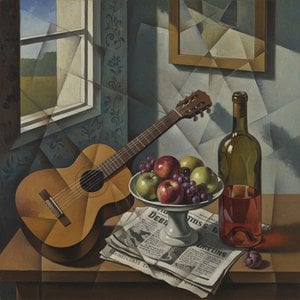
Deconstructing Reality: A Comprehensive Exploration of Cubist Still Life
Explore the revolutionary world of Cubist Still Life with ArtsDot. Discover Picasso & Braque's groundbreaking techniques, its philosophical roots, and lasting impact on modern art. Expert insights for collectors.