


A kép az Ön választásai alapján készült: , .
A gyűjtemény leírása
 Összes részlet megjelenítése
A művész életrajza
George Agnew Reid (1860-1947): Kanadai művész, aki a vidéki élet és a történetmesélés megformálása révén kształzta meg az ország művészeti identitását. Muralisták, portréfestők és oktatók.
Kézzel készített olajfestmény reprodukció
Kézzel festett olajvastú vászon, az Ön által választott méretben és keretben, művészeink készítik meglévőre. ( Váltás nyomtatványra Áttérés digitális képre)
Több információ erről a festményről
 Megtekintés
 Küldés
 Megosztás
 Részletek
 Útmutató

 Letöltés
 Hasonló darabok
 X-ray felvétel
 Diavetítés
 Kérdések és válaszok
 Statisztika
Rendelje meg festményét négy egyszerű lépésben
Ne siessen! Bármely választ módosítható; az rendelési összesítőben megjelenő ár minden egyes döntésre reagál.
1 Az első lépés négyből
Melyik méretet szeretné?
Ezek a méretek megőrzik az eredeti festmény arányait. A rajz bemutatja a választott méretet egy falon, egy kétszáz centiméteres kanapé felett.
Vagy adja meg a saját méreteit
Válasszon előre meghatározott méreteink közül, amelyek megfelelnek a műalkotás eredeti arányainak.

Írja be a kívánt szélességet és magasságot, hogy illeszkedjen a keretéhez vagy a falához. Mivel ez kézzel festett alkotás, egy eltérő formájú méret esetén a művész akár festhet is valamivel többet a kép körül, vagy korolathat is belőle — az Ön döntésének megfelelően. A festés megkezdése előtt küldünk egy digitális tervezetet jóváhagyásra. Az oldalon látható kép nem tartalmazza a végeredményt — csak a tervezet mutatja meg a valódi eredményt.
2 A négy lépésből a második
Hogyan kívánja előkészíteni: feltekercselve, vászonra feszítve vagy keretezve?
Az alábbi árak az első lépésben választott méretre vonatkoznak.
Válaszd ki a feszített vászon széleit
Válassza ki a keretet

Fehér Ft1

Elmosódott szélek Ft1

Kiterjesztett Ft1

P118B Ft10

P118H Ft10

P118W Ft10

P438Z Ft10

P508JH Ft12

P508YH Ft12

P805H Ft10

P805Z Ft10

P919BZ Ft10

P919G Ft10

P919XJ Ft10

P959ZH Ft10

P968JZ Ft12

W106C Ft8

W218G Ft10

W218JH Ft8

W218Y Ft10

W307PJ Ft10

W316G Ft10

W316PJ Ft8

W316Y Ft10

W398PJ Ft8

W4111J Ft10

W500HY Ft15

W500JH Ft15

W692G Ft12

W849H Ft8

W940BG Ft15

W953PJ Ft8

H24-GOLD Ft30

H24-SILVER Ft30

H36-GOLD Ft45

H36-SILVER Ft45
Keretezett
Keretprofil: . A kerettel együtt vett teljes méret: .
3 A négy lépésből a harmadik
Szeretne változtatni valamit a festményen?
A legtöbb ember nemet mond erre. Mivel minden festmény kézzel készül, művészünk képes az Ön igényei szerint is átalakítani azt.
A megrendelést követően a ArtsDot.com csapat e-mailt küld a vásárlónak az instrukciókkal, és biztosítja a tervezeti előnézetet
4 A négy lépés közül a negyedik
Néhány felületfinisz
Mindegyik opcionális. A már kiválasztott válaszok nem jelentnek plusz költséget.
Ki festette?
Világszerte elérhető szállítás () 3-4 hét alatt a szokásos 5 hét helyett. (11 november). A minőség nem kérdőjelezhető.
Egy felirat, mint egy múzeumban?
A gravírozott bronztábla részletei
This elegant plaque features the artist's name and the title of the artwork, finely engraved for a timeless presentation.
It is made from bronze with a refined, elegant finish. The text is precisely laser-engraved for a sharp and permanent result. Measuring 9x2 cm, the plaque is compact yet easy to read. It's built to be durable and scratch-resistant, offering a professional, museum-quality look. Mounting is simple thanks to the included adhesive backing.
Átlátszó akril tábla részletei
The plaque includes essential engraved details such as the artist's name, the title of the artwork, the date it was created, the type of media used-like oil on canvas or watercolor-a brief description of the piece, and a QR code that links to the complete artwork information.
It is crafted from clear acrylic, offering a sleek, modern appearance. The text is UV-engraved in black to ensure strong visual contrast. With a size of 10x15 cm, it ensures optimal readability. It comes equipped with two metal hooks for secure wall mounting. The plaque is designed to be weather-resistant, making it suitable for various environments, and it includes interactive features that work seamlessly with smartphone scanning.
Fekete akril tábla részletei
This elegant plaque includes engraved information such as the artist's name, the title of the artwork, the date it was created, the type of media used (like oil on canvas or watercolor), a short description of the artwork, and a QR code for quick access to more information.
The plaque itself is made from refined black acrylic with a premium finish. The text is laser-engraved in white for high contrast and readability. Its size is 10x15 cm, designed to be easy to read. It comes with two metal hooks for professional mounting. The design is sleek and fits any interior style. It is also weather-resistant and durable, with built-in digital integration for mobile compatibility.
Egy védőréteg?
Mikor lenne szüksége rá?
✓ Ellenőrizés és rendelés
Az Ön által megrendelt festmény

John MacRobin, MD
Reprodukciós technika
Reprodukció mérete
-

Kiváló mesterművész
Nagyobb részletesség, finomság és bővített gyártási idő
-

Reprodukció keretezése
-
-
A bármely oldalsó méretét túlszálaló 105 cm (kb. 41 hüvelyk) meghaladó műalkotások vagy reprodukciók esetében a keret összeszerelhető készletként, szétszerelve kerül szállításra. Ez a módszer biztosítja a biztonságos szállítást, és megakadályozza a szállítás során fellépő sérüléseket.
Szakmész összeszerelést igényel – ez nem DIY (önösszeszerelhető) termék.
A készletet egy tapasztalt keretező szakembernek kell összeszerelnie és a vásznat feszítenie kell, fa ragasztó (nem tartalmazza a csomag), vásznfeszítő fogó és szorítók használatával, amelyek a ragasztó száradásáig a keretrészeket egymáshoz vuôngjba tartják. A helytelen összeszerelés vagy a nem egyenletes vásznfeszítés maradandó károsíthatja a műalkotást, és ez nem része a garanciánknak.
 A bármely oldalsó méretét túlszálaló 105 cm (kb. 41 hüvelyk) meghaladó műalkotások vagy reprodukciók esetében a keret összeszerelhető készletként, szétszerelve kerül szállításra. Ez a módszer biztosítja a biztonságos szállítást, és megakadályozza a szállítás során fellépő sérüléseket.
A készlet tartalmazza az összes tömörfa rudat, pontosan méretre vágva.
A mellékelt csavarokkal, valamint a sarokszerekhez szükséges faütő ragasztóval kell összeszerelnie (ez nem tartalmazható a csomagban), így a keretrendezőnek külön kell beszereznie.
A csomag nem tartalmazza a szükséges professzionális eszközöket: egy vászonfeszítőt és klipseket a rácsok vízszintes tartásához a ragasztó megszáradásáig.
Fontos:
A sarokcsatlakozásokhoz fánylagra van szükség, a keretrudakat szorítókapcsokkal kell rögzíteni, amíg a rag teljesen meg nem szárad, a kész keretre feszített vászonhoz pedig vászonfeszítő fogat szükséges. Ezek egyike sem található meg a készletben. Kérjük, rendelés előtt győződjön meg róla, hogy rendelkezik tapasztalt keretező szakemberrel.

Névtábla
-
-

Védőréteg (Lakk)
Fényes lakk (intenzívabb színek, védelem a fény és a nedvesség hatása ellen)
-

Műalkotásom egyedi igényre szabása
Példák a módosíthatóságra: az arc kicserélése az ügyfél fotójára; háziállat hozzáadása (pl. macska helyett kutya); rejtett üzenet elhelyezése a háttérben; a háttér tájainak vagy elemeinek megváltoztatása.
-

Sürgős
Világszerte szóló szállítás () mindössze 3-4 hét alatt, a szokásos 5 hét helyett. (11 november). A minőség nem kérdőjelezhető.
-
Express szállítás
Világszerte elérhető szállítás területre 5 héten belül. (18 november).
A szállítás díja tartalmazza
Összesített ár
Ft 85957
Az üvegkeretes opció csak 110 cm alatti méretben érhető el
Minden rendelés mellé tartalmazva
- Ingyenes globális expressz szállítás
- Prémium minőségű len vászon
- Teljes körű szállítási biztosítás
- Vámvisszatérítési Garancia
- Hiteles színarányosság garancia
- 100 napos visszaküldési lehetőség (csak hibás termékek esetén)
- 100% pénzvisszatérítési garancia
- Több darab vásárlásakor kedvezmény


John MacRobin, MD: A Portrait of Dignified Reflection
George Reid’s “John MacRobin, MD” stands as a testament to the Victorian era's fascination with formal portraiture and its ability to convey profound emotion. Painted in 1877, this artwork captures John MacRobin, a Scottish physician practicing in Aberdeen, Scotland, with remarkable sensitivity and detail.
Reid’s artistic style leans heavily into Dutch Impressionism—a movement that prioritized capturing fleeting moments of light and color rather than striving for photographic realism. This influence is evident in the subdued palette of reds and browns dominating the canvas, creating a rich textural surface reminiscent of Rembrandt’s masterful use of chiaroscuro.
- Subject Matter: The portrait depicts MacRobin seated in a chair against a crimson wall, gazing intently outwards. His posture exudes composure and thoughtfulness, suggesting introspection and contemplation.
- Technique: Reid employed oil paint on canvas using layering techniques—a hallmark of Impressionism—to build up tonal variations and achieve luminous effects. Careful brushstrokes contribute to the painting’s palpable atmosphere.
- Historical Context: Aberdeen in 1877 was a thriving university town, fostering intellectual curiosity and artistic experimentation. Reid's work reflects this cultural milieu, aligning with broader trends toward psychological portraiture during the Victorian period.
The symbolism embedded within “John MacRobin, MD” extends beyond mere representation. The crimson wall serves as a visual anchor, grounding the figure in his surroundings while simultaneously symbolizing passion and vitality—contrasting subtly with MacRobin’s serene gaze.
More than just an image of a man, Reid's painting evokes a feeling of quiet dignity and contemplative awareness. It invites viewers to consider themes of intellectuality, responsibility, and the inner life – qualities valued during Victorian society. The artwork remains a captivating example of Impressionist artistry and a poignant glimpse into the character of a prominent Aberdeen physician.
George Reid: Influenced by Dutch Masters
Reid’s artistic vision was profoundly shaped by his exposure to the art world of Philadelphia, where he studied under Thomas Eakins—a celebrated realist painter who championed anatomical accuracy and meticulous observation. This formative experience instilled in Reid a respect for established techniques while simultaneously nurturing his desire to explore innovative approaches.
Eakins’s influence is palpable in Reid's commitment to capturing the human form with precision, mirroring Eakins’s dedication to portraying subjects with unflinching realism. However, Reid skillfully blended these influences with Impressionistic principles—particularly the pursuit of atmospheric effects—resulting in a distinctive artistic style.
- Philadelphia Academy: Reid's time at Philadelphia solidified his understanding of academic art traditions and provided invaluable experience in mastering observational skills.
- Eakins’s Impact: Eakins encouraged Reid to prioritize anatomical correctness alongside expressive brushwork—a balance that characterizes many of Reid’s landscapes and genre scenes.
Reid's artistic journey exemplifies the dynamic interplay between tradition and innovation, demonstrating how artists can draw inspiration from established masters while forging their own unique creative voice.
Aberdeen Landscapes: A Reflection of Victorian Sentiment
Beyond portraits, Reid’s oeuvre encompasses a series of evocative landscapes that capture the beauty of Scotland—particularly Aberdeen—during the Victorian era. These paintings are characterized by a lyrical quality and an emotional resonance that speaks to the period's preoccupation with nature and spirituality.
Reid skillfully employed color palettes reminiscent of Dutch Impressionists, prioritizing tonal harmonies and subtle gradations to convey mood and atmosphere. His brushstrokes are loose and expressive, capturing the fleeting effects of light on rolling hills and tranquil waterways—a hallmark of Victorian landscape painting.
- Scottish Inspiration: Reid’s landscapes celebrate Aberdeen's scenic grandeur—drawing inspiration from the region’s dramatic coastline and verdant countryside.
- Atmospheric Rendering: The artist meticulously rendered light and shadow, creating a sense of depth and realism that aligns with Impressionistic ideals.
These paintings are not merely depictions of places; they embody Victorian sensibilities—a yearning for beauty, contemplation, and connection to the natural world.
Symbolism in Reid’s Artistic Vision
Reid's artistic approach extended beyond mere visual representation. He deliberately incorporated symbolic elements into his compositions—reflecting Victorian intellectual currents and conveying deeper meanings beneath the surface of imagery.
Consider, for example, the recurring use of crimson hues throughout Reid’s paintings. Crimson symbolizes passion, vitality, and nobility—qualities that Reid wished to imbue his subjects with—particularly in portraits like “John MacRobin, MD.”
- Color Symbolism: Reid skillfully utilized color palettes to communicate emotional states and convey thematic ideas—a technique rooted in Victorian artistic conventions.
- Emotional Resonance: The artist’s deliberate choices of imagery and tonal harmonies contribute to the paintings' profound impact on viewers—eliciting feelings of serenity, contemplation, and appreciation for natural beauty.
Through his masterful artistry, George Reid succeeded in capturing not only the visual splendor of Victorian Scotland but also its underlying spiritual ethos.
Kérdések és válaszok
Hogyan építhető be „John MacRobin, MD”, George Reid alkotása a lakberendezésbe?
A "John MacRobin, MD" művet Accent célokra javasoljuk, a legalkalmasabb helyszín pedig egy Living Room.
Hogyan illeszkedik a "John MacRobin, MD" George Reid témáiba és stílusába?
George Reid munkásságán belül a "John MacRobin, MD" a Impressionism stílus képét képviseli, a harrisinfluence, scottishlandscape, nationalidentity, formalportraiture, dutchtradition témakörével összefüggésben.
Milyen méretű "John MacRobin, MD" ajánlott egy Living Room-hoz?
A Living Room helyiségbe a "John MacRobin, MD" alkotáshoz egy Large méretű nyomtatást javasoljuk.
Hasonló műalkotások


George Reid
1860 - 1947, Kanada
A művész életrajza
Early Life and Artistic Foundations
George Agnew Reid emerged from the fertile landscapes of rural Canada West, born in 1860 in Wingham, Ontario – a place that would forever shape his artistic vision. His beginnings weren’t steeped in formal training, but rather in the rhythms of farm life; a setting he'd later revisit with poignant detail and deep emotional resonance within his paintings. Initially hesitant about his son’s aspirations, Reid’s father eventually recognized and supported this burgeoning talent, granting him the opportunity to study at the Central Ontario School of Art in Toronto in 1879 under the guidance of Robert Harris. This foundational period instilled a respect for established techniques and representational art, yet it simultaneously ignited within Reid a desire to explore beyond mere imitation – a yearning to capture something more profound than simple representation. He sought further refinement at Philadelphia’s Pennsylvania Academy of the Fine Arts from 1882 to 1885, where he was profoundly influenced by Thomas Eakins – a master of realism and anatomical accuracy whose unwavering dedication to truthful depiction served as a guiding principle throughout Reid's career. Equally significant during this formative time was his meeting and subsequent marriage to Mary Hiester Reid, herself a gifted artist; their union forged a lifelong artistic partnership built on mutual respect and a shared creative spirit. Reid’s artistic journey then extended across the Atlantic, immersing himself in the vibrant art scenes of Paris at the Académies Julian and Colarossi, and undertaking focused study at the Prado Museum in Madrid between 1888-1889 – broadening his understanding of European masters and enriching his stylistic vocabulary.A Blossoming Style: Genre Painting and Narrative Depth
Upon returning to Canada, Reid’s artistic focus shifted away from portraiture towards genre painting – a style that allowed him to explore the narratives embedded within everyday life. This wasn't simply a change in subject matter; it represented a deepening of his artistic intent. He sought to capture not just appearances, but the very essence of human experience, translating the quiet dramas and poignant moments of rural Ontario into compelling visual stories. Works like *The Foreclosure of the Mortgage* (1893) stand as prime examples – a deeply moving depiction of rural hardship that powerfully conveyed the struggles faced by ordinary Canadians with remarkable sensitivity. Reid masterfully blended the precision he’d absorbed during his Parisian academic training with subtle Impressionistic touches – a delicate interplay of light and atmosphere that imbued his canvases with realism and emotional resonance. He wasn't merely recording scenes; he was interpreting them, imbuing them with a psychological depth that resonated deeply with viewers. His paintings became windows into the lives of ordinary Canadians, particularly those in rural Ontario, offering glimpses into their joys, sorrows, and enduring spirit. Reid possessed an exceptional ability to observe and capture the nuances of human emotion, translating these observations onto canvas with remarkable skill – creating works that were both aesthetically pleasing and profoundly meaningful.Career Highlights and Educational Leadership
Reid’s artistic achievements were paralleled by a distinguished career in art education and administration. His election to the Royal Canadian Academy of Arts in 1889 solidified his position within the burgeoning Canadian art community, recognizing his significant contributions and influence. However, perhaps his most enduring legacy lies in his role as Principal of the Central Ontario School of Art and Design (later OCAD University) from 1912 to 1918 – a period during which he spearheaded crucial reforms that transformed the institution into a leading center for artistic training in Canada. He passionately believed in the power of art education to nurture creativity and foster a vibrant cultural landscape, advocating for accessible and comprehensive instruction for all aspiring artists. Beyond his administrative duties, Reid continued to produce significant works, including murals and commissioned pieces for public buildings – most notably contributing to the decoration of Toronto’s third City Hall. His commitment extended beyond individual artistry; he actively championed the importance of beauty and good design in everyday life, believing that art should enrich all aspects of human experience.Notable Works
- Spynie Castle and Loch, Moray (1866): A captivating Scottish landscape painting showcasing dramatic light and detail – a testament to his early artistic explorations.
- Mrs Alexander Hay Moncur (1887): A stunning Victorian portrait exhibiting rich detail and luxurious elegance, demonstrating his mastery of formal portraiture.
- John Ritchie Findlay of Aberlour (1899): An academic realist portrait capturing wisdom and experience – a reflection of his ability to portray the complexities of human character.
- The Foreclosure of the Mortgage (1893): A poignant depiction of rural hardship, considered a landmark achievement in Canadian art and a powerful commentary on social realities.
Legacy and Lasting Influence
George Agnew Reid’s legacy extends far beyond his individual paintings; he was a catalyst for change within the Canadian art world – fostering a distinctly national artistic identity while simultaneously embracing international influences. His mentor, Thomas Eakins, instilled in him a commitment to realism and anatomical accuracy, while his time in Paris exposed him to the innovative techniques of Impressionism – elements that he skillfully integrated into his own unique style. He played a crucial role in establishing a visual language that reflected the Canadian experience, depicting Ontario landscapes and rural life with both sensitivity and authenticity. As an educator and administrator, Reid nurtured generations of Canadian artists, shaping the future of art education within the country. His artworks continue to be held in esteemed public and private collections across Canada – including the Art Gallery of Ontario and the National Gallery of Canada – a testament to their enduring artistic merit and historical significance. He died in 1947, leaving behind a body of work that continues to captivate and inspire, solidifying his place as one of Canada’s most important and influential artists. His ability to combine academic rigor with emotional depth created works that resonate with viewers on a profound level – reflecting the social realities of his time and offering enduring insights into the human condition.

Kapcsolódó cikkek
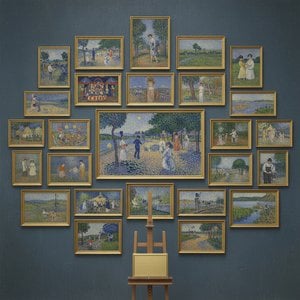
Georges Seurat 25 Mesterműve: A Pontillizmus Zsenialitása – ArtsDot.com
Fedezze fel Georges Seurat 25 legikonikusabb művét! Ismerje meg a pontillizmus zsenialitását, az impresszionizmus forradalmát és a színek lenyűgöző játékát. Prémium minőségű reprodukciók és inspiráló otthoni dekorációk a ArtsDot.com-on. Fedezze fel a teljes gyűjteményt online!

George Paul Chalmers: Rediscovering the Angus Rembrandt & Scottish Colourist Roots
Explore the captivating world of George Paul Chalmers (1833-1878), a pivotal Scottish painter. Discover his landscapes, portraits & connection to the Aesthetic Movement and Colourists. Learn about this 'Angus Rembrandt's' legacy with ArtsDot.

George Agnew Reid: A Canadian Impressionist's Pursuit of Light, Colour, and National Identity
Explore the life & work of George Agnew Reid, a pivotal figure in Canadian Impressionism. Discover his genre paintings, mural commissions, and lasting influence on art education & national identity. A comprehensive guide for collectors & enthusiasts.