

 Megtekintés
 Küldés
 Megosztás
 Részletek
 Útmutató

 Letöltés
 Hasonló darabok
 X-ray felvétel
 Diavetítés
 Kérdések és válaszok
 Statisztika
Wounded Amazon

- 65.0 x 76.0 cm


 Összes részlet megjelenítése
Giclée / Műnyomat
Múzeumi minőségű giclée vagy vászonnyomat, gyors gyártással és rugalmas finomítási lehetőségekkel. ( Kézzel festett másolat rendelése Áttérés digitális képre)




P118B Ft10

P118H Ft10

P118W Ft10

P438Z Ft10

P508JH Ft12

P508YH Ft12

P805H Ft10

P805Z Ft10

P919BZ Ft10

P919G Ft10

P919XJ Ft10

P959ZH Ft10

P968JZ Ft12

W106C Ft8

W218G Ft10

W218JH Ft8

W218Y Ft10

W307PJ Ft10

W316G Ft10

W316PJ Ft8

W316Y Ft10

W398PJ Ft8

W4111J Ft10

W500HY Ft15

W500JH Ft15

W692G Ft12

W849H Ft8

W940BG Ft15

W953PJ Ft8




Válasszon előre meghatározott méreteink közül, amelyek megfelelnek a műalkotás eredeti arányainak.

Írja be a keretének vagy a falának megfelelő szélességet és magasságot. A nyomatot csak le lehet vágni, soha nem tehető nagyobbá, mint az eredeti kép, így egy eltérő alakú méretnél a kép egy része elveszik. Mielőtt bármit kinyatintanánk, küldünk egy digitális próbamodellt jóváhagyásra. Az oldalon látható kép nem tartalmazza a valós levágást — ezt csak a próbamodell mutatja meg.
Világszerte történő kiszállítás területére mindössze 2 hét alatt, a szokásos 4-5 hét helyett. (4 november)

Ingyenes globális expressz szállítás

Prémium minőségű len vászon

Teljes körű szállítási biztosítás

Vámvisszatérítési Garancia

Hiteles színarányosság garancia

100 napos visszaküldési lehetőség (csak hibás termékek esetén)

100% pénzvisszatérítési garancia

Több darab vásárlásakor kedvezmény
 Az üvegkeretes opció csak 110 cm alatti méretben érhető el

Wounded Amazon
Giclée / Műnyomat
Reprodukció mérete
-


Összesített ár
Ft 20641
The Visceral Drama of Wounded Amazon
In the hauntingly evocative Wounded Amazon, created in 1904, Franz Ritter von Stuck invites us into a moment of profound vulnerability and raw conflict. The painting presents a nude female figure, an Amazon, captured in a state of intense distress. She is positioned kneeling upon the ground, her body bearing the mark of battle with a visible wound beneath her breast. As she shields herself from unseen threats, her arms are raised toward her face, conveying a sense of desperate defense. The composition is anchored by a striking, vibrant red circle that looms above her head, acting as a powerful, almost ominous focal point amidst the surrounding chaos.
The atmosphere of the work is thick with tension, achieved through an unsettling and dynamic composition. In the background, the struggle continues; an Amazon and a Centaur are locked in combat, while at the lower right, the presence of a dead Amazon adds to the scene's gravity. Stuck utilizes an impasto-like technique, applying oil paint in thick, expressive layers that lend a tactile, heavy texture to the canvas. This method, combined with uneven lighting and deep shadows, heightens the dramatic effect, drawing the viewer into this dreamlike, turbulent world of mythic suffering.
Technical Composition and Subject Matter
The artwork is characterized by its powerful use of color and form to communicate emotional states. The large red circle serves as a symbolic or destructive force, contrasting sharply with the organic, flowing shapes of the central figure. Lines move expressively across the canvas, creating a strong diagonal flow from the lower left toward the upper right, which contributes to the painting's sense of movement and instability.
The subject matter is deeply rooted in the themes of battle and vulnerability. The figure wears specific elements of protection, including a helmet and metallic protection on her lower legs, yet she remains otherwise naked, emphasizing her exposure to the violence around her. Through the layering of forms and a somewhat distorted perspective, Stuck creates a compressed, intense space where the boundaries between the central subject and the chaotic background blur, leaving the viewer immersed in the struggle.
Kérdések és válaszok
„Wounded Amazon”, Stuck alkotása egy világos vagy egy sötét tónusú alkotás?
A „Wounded Amazon”, Stuck alkotása rögzített értékei: shadow fényerő és Soft Shadow luminancia.
Mikor és milyen anyagokból készült a "Wounded Amazon"?
A „Wounded Amazon”, Stuck alkotása technikája Oil On Canvas, a mű alkotási éve pedig 1904.
Mely művészeti irányba és mely korszakba sorolható a „Wounded Amazon”, Stuck alkotása?
A „Wounded Amazon” a Symbolism irányzat alkotása, készítője pedig a 19. század korszakban tevékenykedett.


A művész életrajza
A Life Steeped in Myth and Symbol
Franz Ritter von Stuck, a name that echoes through the halls of German art history, was more than just an artist; he was a cultural phenomenon, a “Prince of Art” as he became known during his lifetime. Born in 1863 in Tettenweis, a small village nestled in the Bavarian countryside, Stuck’s journey from a young caricature artist to a revered figure representing the height of Symbolism is a tale brimming with talent, innovation, and an enduring fascination with the darker corners of human experience. Initially destined for a life following his father as a forester, a path dictated by rural tradition, young Franz discovered an undeniable artistic inclination—a burning desire to capture the world not just as it was, but as it *felt*. This early aptitude led him inexorably to Munich, first to the School of Applied Arts in 1878 and then to the Academy of Fine Arts from 1882-1884, where he became utterly captivated by Arnold Böcklin’s hauntingly beautiful mythological scenes—a formative influence that would profoundly shape his artistic vision. Stuck wasn't merely an imitator; he absorbed the melancholic beauty and symbolic depth of Böcklin’s work, transforming it into something uniquely his own, a potent blend of classical precision and dreamlike imagery.The Rise of a Symbolist Master
Stuck’s ascent to prominence was remarkably swift and dramatic. His breakthrough arrived in 1889 with *The Guardian of Paradise*, an arresting painting exhibited at the Munich Glass Palace. The work wasn't simply a display of technical skill; it announced a new artistic voice—one that boldly challenged established norms, blending classical precision with mythological subject matter and an undercurrent of Symbolist mystery. Critics were immediately captivated by its evocative power, awarding it a gold medal and catapulting Stuck to the forefront of the Munich art scene. He quickly became a central figure in challenging conservative constraints, co-founding the Munich Secession in 1892 alongside like-minded artists determined to break free from the stifling traditions of the academic establishment. This act of artistic rebellion was perfectly timed with his exploration into sculpture, debuting with *Athlete* (1892), a dynamic bronze figure that demonstrated an impressive versatility and foreshadowed his future success in three-dimensional form. However, it was *The Sin* (1893) – a visceral depiction of temptation and moral decay—that truly cemented his reputation as a master of Symbolist painting, captivating audiences with its dramatic intensity and profound psychological depth. This period marked the full flowering of Stuck’s unique style—a potent combination of sensuality, classical form, and symbolic resonance, reflecting both his artistic influences and his own complex inner world.Themes and Influences: A World of Desire and Myth
The artistic universe of Franz von Stuck is populated by recurring motifs that reveal his profound engagement with timeless themes. Mythology served as a constant source of inspiration, drawing from Greek, Roman, and biblical narratives which he reimagined with a distinctly personal flair. These weren’t mere retellings; they were explorations of the human condition filtered through the lens of ancient stories—stories imbued with primal desires, moral dilemmas, and the eternal struggle between good and evil. Equally prominent was his fascination with sensuality and the *femme fatale*, powerfully embodied in his numerous depictions of Salome – a figure representing desire, danger, and moral ambiguity. These paintings weren’t simply about physical beauty; they delved into the psychological complexities of female power and its potential for both allure and destruction. Stuck's work wasn't solely rooted in mythology or sensuality, however. He was deeply influenced by Pre-Raphaelites like Dante Gabriel Rossetti and Gustave Moreau, absorbing their emphasis on rich color, intricate detail, and symbolic imagery. Moreover, he acknowledged the impact of classical art—particularly the works of Michelangelo and Rubens—in shaping his meticulous technique, anatomical accuracy, and compositional rigor. He wasn't merely a follower; he synthesized these influences into something uniquely his own, creating a style that was both deeply rooted in tradition and strikingly modern.Major Works and Enduring Significance
Throughout his career, Franz von Stuck produced a remarkable body of work that continues to fascinate and inspire. Some of his most celebrated pieces include:- The Spring (1886): A vibrant depiction showcasing his early mastery of color and composition—a celebration of life and renewal.
- Dissonance (1893): An unsettling portrayal embodying emotional turmoil through a woman playing the violin – a poignant exploration of inner conflict.
- Salome (various versions): Perhaps his most iconic work, depicting the biblical story with striking sensuality and psychological depth—a powerful meditation on desire, power, and destruction.
- Athlete (1892): A dynamic bronze sculpture demonstrating his skill in three-dimensional form – a testament to his versatility as an artist.
Legacy and Influence
Franz von Stuck’s contribution to art history is undeniable. He played a pivotal role in shaping the Symbolist movement in Germany, bridging the gap between academic tradition and modern artistic experimentation. His work continues to captivate audiences with its dramatic intensity, mythological richness, and psychological depth. He remains a vital figure for understanding the transition from 19th-century historicism to the innovative spirit of the 20th century, an artist whose influence can still be felt in contemporary art today. He was also a respected teacher at the Munich Academy, nurturing the talents of future generations of artists and solidifying his legacy as a true visionary.
Stuck
1863 - 1928 , Németország
Rövid információk
- Artistic Movement Or Style: Szimbolizmus, Art Nouveau
- Artists Or Movements Influenced By This Artist:
- Paul Klee
- Secesszió
- Artists Who Influenced This Artist:
- Arnold Böcklin
- Corot
- Date Of Birth: 1863. Feb 23.
- Date Of Death: 1928. Aug 30.
- Full Name: Franz Ritter von Stuck
- Nationality: Német
- Notable Artworks:
- A Paradicsom őrze
- Salóme
- Bűn
- Sportoló
- Place Of Birth: Tettenweis, Németország
Kapcsolódó cikkek

Franz Marc: Expressionism, Spirituality & the Animal Symbolism of a Modern Master
Explore the profound world of Franz Marc's Expressionist paintings. Discover his spiritual connection to animals, innovative use of color, and lasting impact on modern art history. Learn more at ArtsDot.

A Német Expresszionizmus 10 Mesterműve: Érzelmek és Forradalom a Falakon
Fedezze fel a Német Expresszionizmus 10 legikonikusabb műalkotását! Kirchner, Munch és más német mesterek érzelmi festményeinek történetét bemutatva. Vászonképek, faliképek otthonába – ArtsDot.com kínálata.

The Raw Emotion of Expressionism: A Deep Dive into its History, Characteristics & Enduring Influence
Explore the raw emotion of Expressionism with ArtsDot. Discover its history, key artists like Kirchner & Munch, and lasting influence on modern art. Expert insights for collectors & enthusiasts.
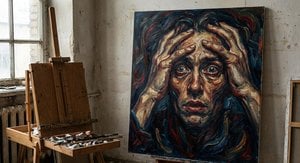
Figurative Expressionism: Emotional Intensity & Subjective Reality in 20th-Century Art
Explore the powerful world of Figurative Expressionism with ArtsDot. Discover key artists like Kirchner & Beckmann, understand its emotional depth, and learn how to collect this influential 20th-century art movement.

Franz von Stuck: Symbolism, Decadence & the Pursuit of Ideal Beauty
Explore the captivating world of Franz von Stuck, a leading Symbolist painter. Discover his mythological masterpieces, decadent themes, & investment potential. Expert analysis for discerning collectors.