


 Megosztás
 Megosztás
 Részletek
 Útmutató

 Letöltés
 Hasonló darabok
 Diavetítés
 Statisztika
Danaid (The spring)


 Tovább olvasom
Giclée / Műnyomat
Múzeumi minőségű giclée vagy vászonnyomat, gyors gyártással és rugalmas finomítási lehetőségekkel. ( Kézzel festett másolat vásárlása Áttérés digitális képre)




































Válasszon előre meghatározott méreteink közül, amelyek megfelelnek a műalkotás eredeti arányainak.

Megadhat saját méreteket is egy konkrét kerethez vagy helyszínhez igazítva. Amennyiben a kiválasztott méret nem egyezik az eredeti kép arányokkal, a műalkotást le fogjuk vágni, vagy kiegészítjük a képet tükrözött vagy egyszínű szélekkel. A gyártás megkezdése előtt egy digitális tervezetet küldünk jóváhagyásra.
Kérjük, vegye figyelembe, hogy a képernyőn látható előnézet nem tükrözi a tényleges levágást vagy kiegészítést. Csak a tervezet mutatja pontosan a végső kompozíciót.
Bár az egyedi méretek is elérhetőek, az eredeti arányok megőrzése érdekében azt javasoljuk, hogy válasszon a előre meghatározott listából származó méretet.
Világszerte történő kiszállítás területére mindössze 2 hét alatt, a szokásos 4-5 hét helyett. (24 szeptember)

Ingyenes globális expressz szállítás

Prémium minőségű len vászon

Teljes körű szállítási biztosítás

Vámvisszatérítési Garancia

Tökéletes színarányosság garancia

100 napos visszaküldési garancia (csak gyártási hibás termékek esetén)

100% pénzvisszatérítési garancia

Több darab vásárlásakor kedvezmény
 Az üvegkeretes opció csak 110 cm alatti méretben érhető el

Danaid (The spring)
Giclée / Műnyomat
Reprodukció méretei
-


Összesített ár
$ 62
The Burden of Eternal Task: Exploring Rodin's Danaid
To stand before a sculpture like Rodin’s Danaid (The spring) is to confront not merely marble or bronze, but the very weight of myth and unending sorrow. This piece draws its profound power from classical mythology, specifically embodying one of the Danaids—the daughters condemned by the gods for their murderous acts against their husbands. Their eternal punishment was a task of unimaginable tedium: filling bottomless vases with water until exhaustion claimed them. Rodin captures this narrative not through overt drama, but through an exquisite study of repose tinged with inescapable melancholy.
The composition itself is intensely focused, drawing the viewer into the intimate space surrounding the reclining figure. The way the musculature flows across the textured base suggests a body at rest, yet one whose spirit seems perpetually burdened by its fate. It is a masterclass in conveying internal struggle through external form.
Rodin's Mastery of Form and Emotion
François Auguste René Rodin was never content with mere representation; he sought to sculpt the soul itself. His technique, which often involved wrestling material—be it stone or bronze—into a state of near-life, is evident here. The surface texture, rough and tactile, invites the touch, suggesting the raw energy that underlies even moments of apparent stillness. Rodin’s genius lay in his ability to fuse high technical skill with an almost visceral emotional outpouring. This piece exemplifies that signature blend: the academic rigor of classical form meeting the passionate, modern expressionism of a tormented spirit.
For collectors and designers, this work offers unparalleled depth. It is not simply decorative; it is contemplative. The monochromatic palette, dominated by shades of beige and grey, allows the viewer’s imagination to supply the color—the color of memory, regret, or enduring strength.
Symbolism in Stone: Suffering and Resilience
The symbolism woven into the Danaid mythos speaks directly to universal human experiences: inescapable duty, unending labor, and the weight of inherited sin. The act of filling vases is a potent metaphor for repetitive suffering—the daily grind that can feel eternal. Rodin elevates this punishment into high art, transforming mythological condemnation into an object of profound aesthetic contemplation. It asks us to consider what constitutes true rest, and whether any burden, no matter how mythologically ordained, can ever truly be set down.
The presence of the partially visible figure in the background adds a layer of narrative complexity, suggesting an observer, a witness, or perhaps even another soul caught in the same timeless cycle. This layering prevents the piece from becoming static; it breathes with implied history.
Bringing Myth into Modern Spaces
Incorporating such a powerful piece into an interior setting is to curate an atmosphere of deep thought. For those seeking art that transcends mere ornamentation, this reproduction offers a focal point rich with intellectual and emotional resonance. Whether placed in a grand hall or a private study, the Danaid commands attention through its sheer narrative weight. It speaks to endurance, beauty found within struggle, and the enduring power of human myth.
Owning this piece is acquiring a dialogue with one of art history's greatest emotional conduits—a tangible echo of Rodin’s revolutionary spirit.
Hasonló műalkotások


A művész életrajza
François Auguste René Rodin: A Sculptor of Souls
François Auguste René Rodin, a name forever intertwined with the very essence of modern sculpture, emerged from 19th-century France as a revolutionary force—a sculptor who dared to breathe life and emotion into stone. Born in Paris on November 12, 1840, into modest beginnings, his artistic journey wasn’t initially paved with grand expectations; rather, it began with a series of humbling rejections from the prestigious École des Beaux-Arts. Yet, this early struggle proved to be a crucible, forging within him an unwavering determination and a unique vision that would ultimately reshape the landscape of sculpture. His formative years were spent honing his craft as a decorative stonemason, a practical apprenticeship that instilled in him a profound understanding of materials and form—a foundation upon which he would later build his groundbreaking innovations. A deeply personal tragedy – the untimely death of his beloved sister Marie – profoundly impacted Rodin’s artistic trajectory, leading to a period of introspection and ultimately fueling an intense desire to capture the raw, unfiltered emotions of the human experience. This emotional depth became a defining characteristic of his work, imbuing it with a palpable sense of vulnerability and authenticity rarely seen in previous generations of sculptors.Breaking with Tradition: A New Language in Stone
Rodin’s artistic philosophy represented a radical departure from the prevailing academic standards that dominated sculpture during his time. While formally trained in classical techniques—a necessary step for any aspiring artist—he resolutely rejected the idealized forms and narrative rigidity that characterized much of the art produced by the École des Beaux-Arts. Instead, he sought to capture the fleeting nuances of human emotion, the weight of thought, and the intricate complexities of the inner life. His early works, such as *The Age of Bronze* (1877), initially provoked considerable controversy among critics who found his figures too realistic, too devoid of the polished perfection expected in traditional sculpture. However, Rodin remained steadfastly committed to his artistic vision, driven by an unshakeable belief in the power of his own unique approach. He began to experiment with fragmented forms, rough surfaces, and dynamic compositions—elements that conveyed a sense of movement, psychological intensity, and profound emotional resonance. This innovative strategy challenged conventional notions of beauty and paved the way for a new era in sculptural expression, one where the human experience itself became the primary subject matter. His ability to model complex, turbulent surfaces with remarkable sensitivity allowed him to capture the play of light and shadow, creating sculptures that seemed to pulsate with life.Iconic Forms: The Thinker, The Kiss, and Beyond
Rodin’s legacy is indelibly marked by a series of iconic sculptures—works that continue to captivate audiences worldwide and serve as enduring symbols of human emotion and experience. *The Thinker* (1880-1882), originally conceived as part of the monumental *Gates of Hell*, quickly became an emblem of philosophical contemplation, its powerfully rendered form embodying the weight of human thought and existential questioning. The figure’s posture—a slumped shoulder, a furrowed brow, a hand resting thoughtfully on his chin—evokes a sense of profound introspection and intellectual struggle. *The Kiss* (1886-1898), a celebration of passionate love, is renowned for its sensual beauty and emotional intimacy—a depiction of two figures entwined in an embrace that seems to radiate with warmth and tenderness. And *The Burghers of Calais* (1884-1895), a monumental tribute to courage and sacrifice, stands as a testament to Rodin’s ability to convey profound human drama through sculptural form—a powerful depiction of six citizens of Calais who bravely faced certain death during the Hundred Years' War. These works weren’t merely representations of physical bodies; they were explorations of the human condition, imbued with psychological depth and emotional resonance. Notably, Rodin deliberately eschewed smooth surfaces and polished finishes, opting instead to leave visible traces of his hand—a conscious decision to emphasize the creative process itself and to acknowledge the artist's role in shaping the sculpture.The Influence of Paris and Beyond
Rodin’s artistic development was inextricably linked to the vibrant cultural landscape of 19th-century Paris. The city’s burgeoning artistic scene, fueled by innovation and a spirit of experimentation, provided fertile ground for Rodin’s creative explorations. He drew inspiration from a diverse range of sources—from classical sculpture and Renaissance art to Impressionist painting and Symbolist literature. His travels to Italy in 1876 proved particularly transformative, exposing him to the works of Michelangelo and other masters of the High Renaissance, whose dynamic compositions and expressive figures profoundly influenced his own artistic style. Back in Paris, Rodin’s work began to gain recognition, attracting both critical acclaim and public admiration. He was commissioned to create numerous sculptures for private patrons and public monuments—including *The Thinker*, which initially served as a central figure within the *Gates of Hell*—and his reputation steadily grew throughout Europe.A Lasting Legacy: Rodin’s Place in Art History
By the turn of the 20th century, Auguste Rodin had firmly established himself as one of the most celebrated sculptors of his time—a figure whose work profoundly influenced generations of artists to come. His sculptures are now housed in museums around the world, including the Musée Rodin in Paris—a dedicated space that celebrates his life’s work and provides a comprehensive overview of his artistic journey. Beyond his individual achievements, Rodin played a pivotal role in shaping the trajectory of modern sculpture, challenging traditional conventions and paving the way for new forms of expression. His emphasis on emotional intensity, psychological depth, and innovative use of form laid the groundwork for movements such as Expressionism and Cubism—demonstrating the enduring impact of his artistic vision. Rodin’s legacy is not merely one of artistic innovation; it's a testament to the power of art to connect us to our shared humanity—a reminder that even in the face of adversity, beauty and emotion can endure.
Rodin Ferenc
1840 - 1917 , Franciaország
Gyors információk
- Artistic Movement Or Style: Modern szobrászat
- Artists Or Movements Influenced By This Artist:
- Impressionizmus
- Modern szobrászat
- Artists Who Influenced This Artist:
- Michelangelo
- Caravaggio
- Date Of Birth: November 12, 1840
- Date Of Death: November 17, 1917
- Full Name: François Auguste René Rodin
- Nationality: Francia
- Notable Artworks:
- A Gondolat
- Az Ölelések
- Calais Városa
- Place Of Birth: Párizs, Franciaország
Kapcsolódó cikkek

Renoir Mesterek: A 25 Leglenyűgözőbb Kép a Francia Impresszionizmus Gyöngyszemeiből | ArtsDot
Fedezze fel Pierre-Auguste Renoir 25 legszebb művét! Ismerje meg az impresszionizmus gyöngyszemeit, a színek és fény játékát. Vásároljon exkluzív Renoir reprodukciókat otthonába a ArtsDot.com kínálatából – minőségi faliképek és inspiráló dekoráció.
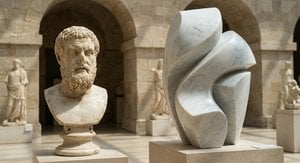
The Enduring Allure of Marble in Art History: From Classical Sculpture to Modern Abstraction
Explore the captivating history of marble sculpture from ancient Greece to modern art. Discover renowned artists like Canova & Michelangelo, carving techniques, and investment insights at ArtsDot.

François-Auguste Rodin: Revolutionizing Sculpture Through Emotion & Modernity
Explore the revolutionary world of Auguste Rodin, the founder of modern sculpture. Discover his iconic works like 'The Kiss' & 'The Thinker,' innovative techniques, and lasting impact on art history. A deep dive into emotion and realism.

The Enduring Form: Exploring Themes & Techniques in Sculpture Across Historical Periods
Explore the rich history of sculpture from ancient masterpieces to contemporary innovations. Discover key techniques, influential artists & investment potential for discerning art collectors.

A művészettörténet 10 legikonikusabb bronzszobra – ArtsDot.com
Fedezze fel a művészettörténet 10 legikonikusabb bronzszobrát! Ismerje meg Rodint, Michelangelót és más mestereket. Luxus minőségű nyomatok otthonába – ArtsDot.com.

