

 Megtekintés
 Küldés
 Megosztás
 Részletek
 Útmutató

 Letöltés
 Hasonló darabok
 X-ray felvétel
 Diavetítés
 Kérdések és válaszok
 Statisztika
Roses


 Összes részlet megjelenítése
Giclée / Műnyomat
Múzeumi minőségű giclée vagy vászonnyomat, gyors gyártással és rugalmas finomítási lehetőségekkel. ( Kézzel festett másolat rendelése Áttérés digitális képre)




P118B Ft10

P118H Ft10

P118W Ft10

P438Z Ft10

P508JH Ft12

P508YH Ft12

P805H Ft10

P805Z Ft10

P919BZ Ft10

P919G Ft10

P919XJ Ft10

P959ZH Ft10

P968JZ Ft12

W106C Ft8

W218G Ft10

W218JH Ft8

W218Y Ft10

W307PJ Ft10

W316G Ft10

W316PJ Ft8

W316Y Ft10

W398PJ Ft8

W4111J Ft10

W500HY Ft15

W500JH Ft15

W692G Ft12

W849H Ft8

W940BG Ft15

W953PJ Ft8




Válasszon előre meghatározott méreteink közül, amelyek megfelelnek a műalkotás eredeti arányainak.

Írja be a keretének vagy a falának megfelelő szélességet és magasságot. A nyomatot csak le lehet vágni, soha nem tehető nagyobbá, mint az eredeti kép, így egy eltérő alakú méretnél a kép egy része elveszik. Mielőtt bármit kinyatintanánk, küldünk egy digitális próbamodellt jóváhagyásra. Az oldalon látható kép nem tartalmazza a valós levágást — ezt csak a próbamodell mutatja meg.
Világszerte történő kiszállítás területére mindössze 2 hét alatt, a szokásos 4-5 hét helyett. (4 november)

Ingyenes globális expressz szállítás

Prémium minőségű len vászon

Teljes körű szállítási biztosítás

Vámvisszatérítési Garancia

Hiteles színarányosság garancia

100 napos visszaküldési lehetőség (csak hibás termékek esetén)

100% pénzvisszatérítési garancia

Több darab vásárlásakor kedvezmény
 Az üvegkeretes opció csak 110 cm alatti méretben érhető el

Roses
Giclée / Műnyomat
Reprodukció mérete
-


Összesített ár
Ft 20641
A Symphony of Petals: The Delicate Allure of Waldmüller’s Roses
In the quiet realm of still-life painting, few works capture the fleeting essence of beauty as poignantly as Ferdinand Georg Waldmüller’s Roses. This exquisite composition serves as a masterclass in the Biedermeier tradition, an era where the mundane was elevated to the magnificent through meticulous observation and a profound respect for nature. At first glance, the viewer is greeted by a lush bouquet of pink roses, their soft, velvety petals arranged with an effortless grace within a silver vase adorned with intricate leaf motifs. Yet, upon closer inspection, the painting reveals a deeper, more melancholic narrative; some blooms remain in the height of their glory, while others begin to wilt, their edges curling in a gentle surrender to time. This subtle interplay between vitality and decay creates a profound sense of realism, inviting the observer to contemplate the ephemeral nature of all living things.
The technical brilliance of Waldmüller is nowhere more evident than in his command of light and shadow. Drawing inspiration from the principles of luminism, the artist employs a soft, diffused light that seems to emanate from within the scene itself. This gentle illumination dances across the silver surface of the vase, highlighting its metallic sheen and the delicate textures of the floral arrangement. Through a masterful use of chiaroscuro, Waldmüller creates a remarkable sense of three-dimensionality, allowing the flowers to emerge from the shadows with a palpable volume. The background, featuring secondary vases and a subtle bowl, is rendered with enough detail to provide depth without distracting from the central protagonist: the roses. This careful balance ensures that every petal and leaf is imbued with a lifelike presence that feels almost tactile.
Historical Resonance and Symbolic Depth
To understand the soul of this piece, one must look toward the life of the artist himself. Born in Vienna in 1793, Waldmüller’s early experiences with loss and hardship instilled in him an awareness of life's precariousness—a theme that resonates deeply within these petals. As a leading figure of the Biedermeier period, his work moved away from the rigid, idealized doctrines of the Academy toward a commitment to realism and the study of nature. In this painting, the roses are not merely decorative objects; they are symbols of the cycle of existence. The vibrant pinks represent the peak of youth and passion, while the drooping, darkened edges of the older blooms serve as a memento mori, reminding us of the inevitable passage of time.
For the discerning collector or interior designer, this artwork offers more than just visual splendor; it provides an emotional anchor for a space. The painting’s ability to balance light and shadow makes it a versatile centerpiece, capable of adding a sense of classical elegance to a traditional study or a touch of organic warmth to a contemporary living area. It is a piece that rewards long periods of contemplation, offering new layers of meaning with every glance. Whether one is drawn to the technical mastery of its silver reflections or the poetic sadness of its wilting blossoms, Waldmüller’s Roses remains an enduring testament to the beauty found in the fleeting moments of our natural world.
Kérdések és válaszok
Milyen hangulat és érzelem ötvöződik a "Roses" alkotásban?
A "Roses" alkotásban egy Romantic hangulat kíséri egy Calm érzelmet.
A "Roses" jellemző arra, amit Ferdinand Georg Waldmüller általában alkotott?
A "Roses" a roses, still life, pink roses, silver vase, flowers, nature, floral bouquet ábrázol, míg Ferdinand Georg Waldmüller dokumentált témái a luminism influence, natural observation, biedermeier realism, detailed still life, nature's essence. A kettő összevetése megmutatja, hogyan kapcsolódik ez a mű a művész megszokott motívumaihoz.
Milyen szín vezeti a „Roses”, Ferdinand Georg Waldmüller alkotása kompozícióját?
A(z) "Roses" alkotásban leginkább a Brown (#951c41) szín tűnik ki. A domináns szín hasznos, amikor egy műalkotást össze kell egyeztetni egy belső térrel.
Hasonló műalkotások


A művész életrajza
Ferdinand Georg Waldmüller: A Biedermeier Master and Champion of Realism
Ferdinand Georg Waldmüller, born in Vienna on January 15, 1793, emerged as a pivotal figure within the Austrian art scene, particularly during the Biedermeier period. His life story is one interwoven with artistic innovation, institutional resistance, and an unwavering dedication to capturing the essence of everyday existence. The early years were marked by hardship following his father’s death, instilling in him a profound awareness of life's fragility—a sentiment that would later permeate his art. Despite these challenges, Waldmüller displayed remarkable talent for drawing and painting, leading to his enrollment at the Academy of Fine Arts Vienna in 1807. While his attendance was somewhat sporadic, reflecting perhaps a restless spirit chafing against rigid academic constraints, this period laid the foundation for his future artistic pursuits. Initially drawn to portraiture as a means of securing patronage, Waldmüller’s true passion lay in landscapes and genre scenes—vivid depictions of ordinary life that would ultimately define his legacy. These early explorations honed his observational skills and fostered a deep connection with the natural world, setting the stage for his distinctive style.A Career Defined by Realism and Confrontation
Waldmüller’s artistic journey was characterized by a dynamic tension between creative expression and institutional opposition. To supplement his income during his formative years, he worked as a set designer and continued to paint portraits, often traveling with his wife, the talented singer Katharina Weidner. This itinerant lifestyle exposed him to diverse environments, broadening his artistic horizons and enriching his understanding of human experience. By the 1820s, Waldmüller began developing a unique style—a steadfast commitment to realistically portraying everyday life, particularly in rural settings. He eschewed idealization or romanticism, instead striving to capture the world as it truly was, with all its beauty and imperfections. This dedication to realism garnered both admiration and criticism. Securing a professorship at the Academy of Fine Arts Vienna in 1819 marked a significant milestone, but his tenure proved contentious. Waldmüller passionately advocated for direct observation from nature—plein air painting—and openly challenged the academy’s emphasis on formulaic instruction and adherence to established conventions. His outspokenness resulted in repeated clashes with the artistic establishment, ultimately leading to his forced retirement in 1857. Frequent journeys to Italy, beginning in 1825, and the picturesque Salzkammergut region profoundly influenced his landscape painting, refining his ability to capture light, texture, and atmosphere with remarkable precision.The Everyday Elevated: Themes of Rural Life and Social Commentary
Waldmüller’s artistic output is remarkably diverse, encompassing portraits, landscapes, and genre scenes, yet a unifying thread connects these varied subjects: an acute engagement with the realities of 19th-century Austrian life. Works like Venetian Fruit Seller (1826), an early example of his genre painting style, demonstrate his skill in capturing fleeting moments of everyday existence. His self-portrait from 1828 reveals a keen understanding of human psychology and the nuances of character. Louise Mayer (1836) stands as a testament to his mastery of portraiture, while View of Ischl (1838) showcases his evolving landscape abilities. However, it was paintings like On All Souls' Day (1839), The Love Letter (1849), and Bathing Women (c. 1848–1849) that truly distinguished him. These works weren’t merely picturesque depictions of rural life; they were imbued with a socially critical perspective, subtly exposing the hardships faced by ordinary people—the impact of poverty, misfortune, and the complexities of family dynamics. He didn't shy away from portraying the less glamorous aspects of existence, offering a more honest and nuanced representation of society than was typically seen in academic art.A Lasting Legacy: Influence and Recognition
Ferdinand Georg Waldmüller is rightfully celebrated as one of Austria’s most significant painters of the Biedermeier era. His unwavering commitment to natural observation and plein air painting foreshadowed many of the artistic innovations that would characterize Impressionism decades later. He challenged conventional depictions of rural life, injecting a dose of realism and social commentary into a genre often dominated by idealized imagery. Despite facing criticism and setbacks throughout his career—including forced retirement from the Academy—Waldmüller’s work eventually gained international recognition, culminating in exhibitions at the World Exhibition in Paris (1855) and Buckingham Palace (1856), where he received accolades from Emperor Napoleon III and Queen Victoria respectively. He was knighted shortly before his death on August 23, 1865, in Hinterbrühl, a belated acknowledgment of his artistic contributions. Waldmüller’s legacy extends beyond his individual paintings; he influenced generations of artists with his detailed realism, his focus on everyday subjects, and his courageous willingness to challenge the status quo. He remains a pivotal figure in Austrian art history—a true pioneer who paved the way for new approaches to landscape and genre painting, leaving an indelible mark on the artistic landscape.
Ferdinand Georg Waldmüller
1793 - 1865 , Ausztria
Rövid információk
- Elhalálozás Dátuma: 1865. augusztus 23.
- Hangsúlyos Befolyásolók: ['Impressionizmus']
- Jelentős Művek:
- Velencei gyümölkvendátor
- Önképület
- Louise Mayer
- Ischli táj
- Mindenszentek napja
- A szerelmeslevél
- Fürdőző nők
- Művészeti Irányzat: Biedermeier, Realizmus
- Nemzetiség: Osztrák
- Születési Dátum: 1793. január 15.
- Születési Hely: Bécs, Ausztria
- Teljes Név: Ferdinand Georg Waldmüller
Kapcsolódó cikkek

Silent Narratives: Exploring the Enduring Appeal of Still Life Painting Across Centuries
Explore the rich history of still life painting with ArtsDot. Discover Dutch Masters, decode vanitas symbolism & learn about collecting timeless art. Expert insights and museum-quality reproductions.
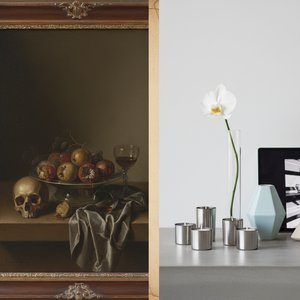
The Enduring Appeal of Still Life: A Historical & Contemporary Exploration
Explore the rich history & symbolism of still life painting with ArtsDot. Discover masterpieces from the Dutch Golden Age, learn about vanitas art, and find expert guidance for collecting timeless artworks.

A fényrózsaszín varázsa: 10 ikonikus festmény a művészettörténetből
Fedezze fel a 10 legikonikusabb festményt, melyeket a fényrózsaszín varázsa jellemez! Monet-tól Renoir-ig, ismerje meg a művészettörténet e gyönyörű árnyalatainak szerepét. Vászonképek és reprodukciók prémium minőségben – ArtsDot.com

A klasszikus természetélettől a kortárs absztrakcióig: A művészeti reprodukcióval emelt villák vendéglátótereinek stílusa
Említse meg luxusvillája vendéglátótereit klasszikus és kortárs művészeti reprodukciókkal! Szakértői tanácsadás, prémium minőségű képmásolatok. Fedezze fel a tökéletes stílust a ArtsDot-tal!

Clyfford Still's Abstract Expressionism: A Study of Color, Form & the Existential Landscape
Explore the profound world of Clyfford Still's Abstract Expressionism with ArtsDot. Discover his unique style, existential themes & investment potential. Expert analysis for discerning collectors.


