

 Megtekintés
 Küldés
 Megosztás
 Részletek
 Útmutató

 Letöltés
 Hasonló darabok
 X-ray felvétel
 Diavetítés
 Kérdések és válaszok
 Statisztika
Sunflowers


 Összes részlet megjelenítése
Giclée / Műnyomat
Múzeumi minőségű giclée vagy vászonnyomat, gyors gyártással és rugalmas finomítási lehetőségekkel. ( Kézzel festett másolat rendelése Áttérés digitális képre)




P118B Ft10

P118H Ft10

P118W Ft10

P438Z Ft10

P508JH Ft12

P508YH Ft12

P805H Ft10

P805Z Ft10

P919BZ Ft10

P919G Ft10

P919XJ Ft10

P959ZH Ft10

P968JZ Ft12

W106C Ft8

W218G Ft10

W218JH Ft8

W218Y Ft10

W307PJ Ft10

W316G Ft10

W316PJ Ft8

W316Y Ft10

W398PJ Ft8

W4111J Ft10

W500HY Ft15

W500JH Ft15

W692G Ft12

W849H Ft8

W940BG Ft15

W953PJ Ft8




Válasszon előre meghatározott méreteink közül, amelyek megfelelnek a műalkotás eredeti arányainak.

Írja be a keretének vagy a falának megfelelő szélességet és magasságot. A nyomatot csak le lehet vágni, soha nem tehető nagyobbá, mint az eredeti kép, így egy eltérő alakú méretnél a kép egy része elveszik. Mielőtt bármit kinyatintanánk, küldünk egy digitális próbamodellt jóváhagyásra. Az oldalon látható kép nem tartalmazza a valós levágást — ezt csak a próbamodell mutatja meg.
Világszerte történő kiszállítás területére mindössze 2 hét alatt, a szokásos 4-5 hét helyett. (13 november)

Ingyenes globális expressz szállítás

Prémium minőségű len vászon

Teljes körű szállítási biztosítás

Vámvisszatérítési Garancia

Hiteles színarányosság garancia

100 napos visszaküldési lehetőség (csak hibás termékek esetén)

100% pénzvisszatérítési garancia

Több darab vásárlásakor kedvezmény
 Az üvegkeretes opció csak 110 cm alatti méretben érhető el

Sunflowers
Giclée / Műnyomat
Reprodukció mérete
-


Összesített ár
Ft 20438
Identification of Sunflowers by Ernst Ludwig Kirchner
Ernst Ludwig Kirchner’s Sunflowers, executed around 1913, functions as an embodiment of the turbulent spirit of German Expressionism. The work captures a profound sense of unease and dynamism, moving beyond mere floral representation to reflect the psychological tensions of the era.
The composition centers on a cluster of sunflowers that lean precariously, suggesting a state of instability. Through a deliberate rejection of traditional perspective, Kirchner utilizes the subject to convey the raw essence of experience. The painting remains a significant example of the Die Brücke movement's commitment to expressing the anxieties of modern life.
Composition and Visual Elements
A cluster of sunflowers dominates the frame, arranged in a manner that feels both deliberate and unsettling. The flowers lean precariously against one another, creating a sense of instability within a tight composition. This arrangement avoids a singular focal point, instead directing the eye across the canvas through a somewhat chaotic distribution of forms.
The subject is set against a deep crimson background that provides a sharp contrast to the yellow petals. Diagonal blue stripes weave through this red field, adding a layer of structural complexity to the space. The lack of traditional perspective flattens the scene, emphasizing the immediate presence of the botanical forms against the saturated backdrop.
Technique and Artistic Style
The work is firmly rooted in the Expressionist movement, prioritizing subjective emotional intensity over the imitation of natural reality. Kirchner employs a flattened canvas surface, eschewing traditional perspective to create a sense of immediacy. This rejection of illusionistic depth forces the viewer to confront the two-dimensional reality of the medium.
The application of paint is direct and physical. Thick impasto brushstrokes create a palpable, tactile texture across the surface. Rather than blending colors to achieve smooth transitions, the artist places hues side-by-side. These unblended strokes sit in close proximity, creating a visual tension that mirrors the underlying psychological unrest of the composition.
Related Works by Ernst Ludwig Kirchner
Kirchner's output during the height of the Expressionist movement includes several significant pieces from 1913, such as Japanese and Street, Berlin. These works reflect the artist's engagement with the shifting social landscapes of the era. His later explorations into the human form and personal identity are evident in 1919 works like Self Portrait with Cat and Der Maler, Selbstporträt. These compositions often utilize thick impasto brushstrokes and a striking palette of red, yellow, and blue to convey psychological depth.
The artist's evolution continued through the 1920s and 1930s. In 1923, he produced Girl with Flowers, an etching on coated paper. His later period is represented by Portrait of Art Dealer Manfred Shames, painted in 1932. These diverse subjects—from urban street scenes to intimate portraits—demonstrate a consistent preoccupation with capturing the raw essence of experience through non-naturalistic color and fractured perspective.
Kérdések és válaszok
Mit ábrázol a "Sunflowers"?
„Sunflowers”, Ernst Ludwig Kirchner alkotása a következőket ábrázolja: sunflowers, expressionism, bold colors, texture, landscape, anxiety, distortion.
Hol függene jól a „Sunflowers”, Ernst Ludwig Kirchner alkotása reprodukciója?
A formátum (Portrait) és a javasolt helyiség (Restaurant) a „Sunflowers”, Ernst Ludwig Kirchner alkotása alkotáshoz tartozó két elhelyezési adat.
Milyen elhelyezés és milyen térhelyiség ajánlott a(z) „Sunflowers”, Ernst Ludwig Kirchner alkotása számára?
A "Sunflowers" művet Conversation célokra javasoljuk, a legalkalmasabb helyszín pedig egy Restaurant.
Hasonló műalkotások


Kapcsolódó cikkek
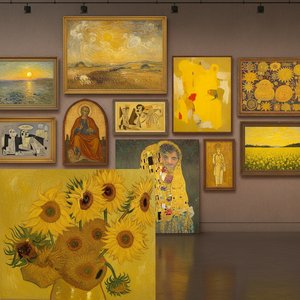
A 'króm sárga' tónusok 10 legikonikusabb mesterműve – Festmények, művészek és inspiráció otthonra
Fedezze fel a 'króm sárga' tónusok 10 leggyönyörűbb festményét! Van Gogh, Monet és más híres művészek remekművei inspiráló történetekkel. Múzeumminőségű reprodukciók otthonra – ArtsDot.com.

A Német Expresszionizmus 10 Mesterműve: Érzelmek és Forradalom a Falakon
Fedezze fel a Német Expresszionizmus 10 legikonikusabb műalkotását! Kirchner, Munch és más német mesterek érzelmi festményeinek történetét bemutatva. Vászonképek, faliképek otthonába – ArtsDot.com kínálata.

Roy Lichtenstein 25 Mesterműve: Pop Art ikonok a faladra | ArtsDot
Fedezze fel Roy Lichtenstein 25 legikonikusabb művét! Ismerje meg a pop art forradalmár festményeit, technikáit és inspirációit. Vászonképek, faliképek – magas minőségben a ArtsDot.com-on. Explore the full collection online!

Mark Rothko 25 Mesterműve: Érzelmek és Színek a Modern Művészetben | ArtsDot
Fedezze fel Mark Rothko 25 legikonikusabb művét! Ismerje meg az absztrakt expresszionizmus mesterének érzelmi világát, színeit és technikáit. Múzeumi minőségű reprodukciók a ArtsDot-on – inspirálja otthonát egyedi faliképekkel! Explore the full collection online.

Merész Művészet: 10 Klasszikus Kép, Amik Bátorítanak és Inspirálnak – ArtsDot.com
Fedezze fel a 10 legmerészebb műalkotást! Van Gogh, Munch és Picasso remekművei inspirálnak. Expresszionizmus, absztrakt festmények – online képkereső és minőségi reprodukciók a ArtsDot.com-on. Otthoni dekorációhoz vagy művészeti gyűjteményébe! Fedezze fel az összes mesterművet a ArtsDot.com oldal


