


 Előnézet
 Megosztás
 Megosztás
 Részletek
 Útmutató

 Letöltés
 Hasonló darabok
 X-ray felvétel
 Diavetítés
 Statisztika
Coffee Table


 Tovább olvasom
Giclée / Műnyomat
Múzeumi minőségű giclée vagy vászonnyomat, gyors gyártással és rugalmas finomítási lehetőségekkel. ( Kézzel festett másolat vásárlása Áttérés digitális képre)




P118B Ft10

P118H Ft10

P118W Ft10

P438Z Ft10

P508JH Ft12

P508YH Ft12

P805H Ft10

P805Z Ft10

P919BZ Ft10

P919G Ft10

P919XJ Ft10

P959ZH Ft10

P968JZ Ft12

W106C Ft8

W218G Ft10

W218JH Ft8

W218Y Ft10

W307PJ Ft10

W316G Ft10

W316PJ Ft8

W316Y Ft10

W398PJ Ft8

W4111J Ft10

W500HY Ft15

W500JH Ft15

W692G Ft12

W849H Ft8

W940BG Ft15

W953PJ Ft8




Válasszon előre meghatározott méreteink közül, amelyek megfelelnek a műalkotás eredeti arányainak.

Írja be a keretének vagy a falának megfelelő szélességet és magasságot. A nyomatot csak le lehet vágni, soha nem tehető nagyobbá, mint az eredeti kép, így egy eltérő alakú méretnél a kép egy része elveszik. Mielőtt bármit kinyatintanánk, küldünk egy digitális próbamodellt jóváhagyásra. Az oldalon látható kép nem tartalmazza a valós levágást — ezt csak a próbamodell mutatja meg.
Világszerte történő kiszállítás területére mindössze 2 hét alatt, a szokásos 4-5 hét helyett. (23 október)

Ingyenes globális expressz szállítás

Prémium minőségű len vászon

Teljes körű szállítási biztosítás

Vámvisszatérítési Garancia

Tökéletes színarányosság garancia

100 napos visszaküldési garancia (csak gyártási hibás termékek esetén)

100% pénzvisszatérítési garancia

Több darab vásárlásakor kedvezmény
 Az üvegkeretes opció csak 110 cm alatti méretben érhető el

Coffee Table
Giclée / Műnyomat
Reprodukció méretei
-


Összesített ár
Ft 19932
A Moment Frozen in Expressionist Color
Ernst Ludwig Kirchner’s “Coffee Table” is far more than a mere depiction of an interior scene; it is a distilled essence of the anxieties and profound complexities inherent in German Expressionism. Painted circa 1923, during a pivotal period when Kirchner had relocated to Davos alongside his wife, Erna Schilling, the artwork captures a snapshot of daily life infused with deep psychological resonance. The painting invites us into a modest restaurant setting, where a dining table is occupied by six individuals—including the artist himself and his wife—whose identities remain deliberately obscured. This ambiguity fosters a sense of quiet contemplation, allowing the viewer to peer into the unspoken dialogues and inner lives of these figures as they exist within a shared, yet deeply personal, moment.
The composition unfolds with a meticulous eye for detail that balances domestic intimacy with artistic tension. One can almost feel the weight of the atmosphere through the rendering of cups brimming with drink, plates laden with food, and cutlery arranged with purposeful precision. Yet, Kirchner’s true focus lies not in these tangible objects, but in the human presence itself. The figures are positioned in close proximity, their arrangement conveying a sense of closeness that is simultaneously interrupted by an underlying tension. This duality makes the piece particularly captivating for collectors who appreciate art that offers both aesthetic beauty and intellectual depth.
The Vibrancy of Technique and Style
Kirchner’s signature Expressionist style dominates every inch of the canvas, creating a textured surface that seems to vibrate with its own internal energy. His use of bold, rhythmic brushstrokes is characteristic of the movement, rejecting the polished perfection of academic idealism in favor of a raw, emotive truth. The color palette is masterfully balanced; while it favors earthy, grounded tones, these are punctuated by sudden, brilliant splashes of vibrant reds and yellows. This deliberate use of color mirrors the emotional intensity of the scene, transforming a simple meal into a luminous event that commands attention.
For interior designers and lovers of fine art, the technical brilliance of this piece offers incredible versatility. The painting’s ability to harmonize muted, sophisticated tones with energetic highlights allows it to serve as a powerful focal point in a variety of modern settings. Whether placed in a minimalist gallery-style room or a more textured, eclectic space, a high-quality reproduction of “Coffee Table” brings a sense of historical gravity and artistic vitality to any wall.
Historical Resonance and Symbolic Depth
To understand the emotional impact of this work, one must look toward the historical context of post-World War I Germany. The era was defined by a pervasive sense of disillusionment and a search for meaning amidst reconstruction. Kirchner and his contemporaries sought to confront uncomfortable truths about the human experience, using art as a vessel for expressing inner turmoil. Within this piece, the inclusion of a carved bench frame bearing a figural relief of a mother and child serves as a poignant symbol of maternal care and stability amidst the pervasive anxieties of the time. This motif aligns perfectly with the broader Expressionist exploration of familial bonds and the vulnerability of life.
Ultimately, “Coffee Table” is an invitation to join the conversation. It captures a moment of intimate familiarity and serene tranquility that, despite its underlying tension, remains profoundly inviting. For those seeking to adorn their homes with a piece that speaks of history, emotion, and the enduring beauty of the human spirit, this masterpiece stands as a timeless choice. Owning a reproduction of such a significant work allows one to bring a fragment of the German Expressionist soul into the contemporary living space, fostering an environment of constant inspiration and reflection.
Gyakran Ismételt Kérdések
Elérhető-e letöltés a(z) "Coffee Table" című alkotáshoz?
A „Coffee Table”, Ernst Ludwig Kirchner alkotása letölthető a mű Letöltés oldaláról, magas felbontású digitális kép letöltés formátumban.
Ki készítette a(t): "Coffee Table"?
A "Coffee Table" alkotója Ernst Ludwig Kirchner. A mű Ernst Ludwig Kirchner nevére van katalógusozva.
Milyen helyiségbe javasolt a „Coffee Table”, Ernst Ludwig Kirchner alkotása?
A „Coffee Table”, Ernst Ludwig Kirchner alkotása ajánlott egy Living Room számára. Ez a javaslat a mű témáján, színein és hangulatán alapul.
Hasonló műalkotások


A művész életrajza
A Life Forged in Expression: The World of Ernst Ludwig Kirchner
Ernst Ludwig Kirchner, a name inextricably linked to the raw emotional core of German Expressionism, emerged from a Germany poised on the cusp of profound transformation. His birth in Aschaffenburg, Bavaria, in 1880, wasn’t merely an arrival into the world; it was the beginning of a life deeply intertwined with artistic rebellion and personal struggle. The fragmented landscapes that shaped his early years – dictated by his father's profession as a paper scientist – instilled within him a persistent sense of displacement, a feeling that would become a recurring theme in his art. From Frankfurt to Perlen, and finally settling in Chemnitz, young Kirchner absorbed the anxieties simmering beneath the surface of a rapidly modernizing nation. Initially guided towards architecture at the Königliche Technische Hochschule in Dresden, it was the magnetic pull of painting – fueled by an admiration for masters like Albrecht Dürer and a growing disillusionment with academic conventions – that ultimately defined his artistic destiny. He found kinship with fellow revolutionaries – Fritz Bleyl, Karl Schmidt-Rottluff, and Erich Heckel – forging bonds that would irrevocably alter the course of 20th-century art.The Bridge Between Worlds: Die Brücke and Artistic Revolution
In 1905, Kirchner became a founding member of *Die Brücke* (“The Bridge”), an artistic collective dedicated to dismantling traditional aesthetic boundaries and forging a new path toward a more visceral, emotionally charged form of expression. This wasn’t simply a stylistic choice; it represented a fundamental philosophical stance. The group sought inspiration from sources often dismissed by the established art world – the primal artistry of Africa and Oceania, the intensely colored visions of Vincent van Gogh, and the haunting psychological depths explored by Edvard Munch. Rejecting the idealized beauty championed by academic painting, *Die Brücke* embraced distortion, jarring color palettes, and expressive brushwork to convey the anxieties and alienation inherent in modern life. Kirchner’s early works, born from this collaborative spirit, pulsed with a restless energy, reflecting the group's shared desire to break free from artistic constraints. The studio became a crucible for experimentation, a space where social norms were challenged alongside artistic conventions. The exploration of the human form, particularly the female nude, within both urban and natural settings, became a recurring motif, allowing Kirchner to investigate movement, emotion, and the complexities of modern existence.Defining a Style: Urban Anxieties and Bold Visions
Kirchner’s artistic style is immediately recognizable for its distinctive characteristics. He didn't treat color as a mere tool for accurate representation; instead, he wielded it with deliberate intensity to evoke powerful emotional responses – vibrant, often non-naturalistic hues that heightened the sense of unease or urgency within his compositions. His brushstrokes were energetic and visible, contributing to the overall feeling of immediacy and raw emotion. Figures and objects were frequently distorted or elongated, reflecting a subjective rather than objective reality. Kirchner’s paintings weren't simply depictions of scenes; they were profound explorations of the human psyche, capturing the psychological impact of modern urban life in early 20th-century Germany. Paintings like *The Street* (1908) are not merely representations of cityscapes; they are portraits of alienation, capturing the frenetic energy and emotional detachment experienced by individuals navigating a rapidly changing world. He didn’t shy away from portraying the darker aspects of modernity – the loneliness, the anonymity, the overwhelming sense of being swallowed by the sheer scale of urban existence. This unflinching gaze established him as a chronicler of his time, an artist who dared to confront the anxieties simmering beneath the surface of societal progress.Influences and Development: A Synthesis of Traditions
Kirchner’s artistic development was shaped by a complex interplay of influences. He initially admired the precision and clarity of Albrecht Dürer's work, seeking a connection to Germany’s rich artistic heritage. However, he quickly moved beyond academic conventions, embracing the bold color palettes and expressive distortions of Vincent van Gogh and the psychologically charged landscapes of Edvard Munch. Crucially, Kirchner found inspiration in non-European art – particularly the primitive sculptures of Africa and Oceania – which offered him a direct connection to primal emotions and spiritual energies. This fascination with “primitive” forms led him to experiment with woodcut printing, developing a distinctive technique characterized by bold lines and stark contrasts. The influence of *Die Brücke* itself was paramount; the group’s shared commitment to emotional expression and their rejection of traditional aesthetics fostered a dynamic creative environment where Kirchner's style continued to evolve.Tragedy and Legacy: A Lasting Impact
Kirchner’s life was tragically marked by personal struggles, culminating in his untimely death in 1938. The horrors of World War I triggered a severe mental breakdown, forcing him to retreat to Switzerland in search of solace. However, even in exile, he continued to create, his work reflecting the lingering trauma and isolation he experienced. The rise of Nazism brought further hardship; over 600 of his works were confiscated and branded as “degenerate” art – a devastating blow that underscored the political climate’s hostility towards modern artistic expression. Facing persecution and declining health, Kirchner tragically took his own life in Davos, Switzerland, in 1938. Despite this heartbreaking end, Ernst Ludwig Kirchner's legacy remains profoundly influential. He stands as a central figure of German Expressionism, inspiring generations of artists with his bold style, emotionally resonant depictions of modern life, and unwavering commitment to artistic truth. His work continues to be exhibited in major museums worldwide, serving as a powerful reminder of the enduring power of art to confront, challenge, and ultimately illuminate the human condition.- Influenced By: Albrecht Dürer, Vincent van Gogh, Edvard Munch, Primitive Art (African & Oceanic)
- Influenced: Kirchner’s work profoundly impacted subsequent generations of Expressionist and Modern artists. His exploration of psychological themes and his innovative use of color and form continue to inspire contemporary art practices.

Ernst Ludwig Kirchner
1880 - 1938 , Németország
Gyors információk
- Artistic Movement Or Style: Expressionizmus
- Artists Or Movements Influenced By This Artist:
- Die Brücke
- Modern művészet
- Artists Who Influenced This Artist:
- Albrecht Dürer
- Van Gogh
- Munch
- Date Of Birth: 1880. május 6.
- Date Of Death: 1938. június 15.
- Full Name: Ernst Ludwig Kirchner
- Nationality: Német
- Notable Artworks:
- A utca (1908)
- Szárazföldi táncos (1912)
- Önismeret (1910)
- Place Of Birth: Aschaffenburg, Németország
Kapcsolódó cikkek
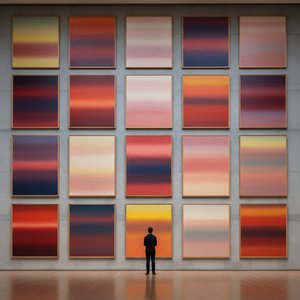
Mark Rothko 25 Mesterműve: Érzelmek és Színek a Modern Művészetben | ArtsDot
Fedezze fel Mark Rothko 25 legikonikusabb művét! Ismerje meg az absztrakt expresszionizmus mesterének érzelmi világát, színeit és technikáit. Múzeumi minőségű reprodukciók a ArtsDot-on – inspirálja otthonát egyedi faliképekkel! Explore the full collection online.

A 10 legikonikusabb festmény gombaszínekben – művészet otthonába a ArtsDot.com-mal
Fedezze fel a 10 legikonikusabb festményt, melyeket gombaszínek és barna árnyalatok dominálnak! Ismerje meg Van Gogh, Monet, Rembrandt műveit és inspirálódjon otthon dekorációjához. Museum-minőségű reprodukciók a ArtsDot.com-on!

A Német Expresszionizmus 10 Mesterműve: Érzelmek és Forradalom a Falakon
Fedezze fel a Német Expresszionizmus 10 legikonikusabb műalkotását! Kirchner, Munch és más német mesterek érzelmi festményeinek történetét bemutatva. Vászonképek, faliképek otthonába – ArtsDot.com kínálata.

Agyagbarna Mesterek: A 10 Legikonikusabb Festmény, melyeket a Föld Színei Domálnak
Fedezze fel a 10 legikonikusabb festményt, melyeket az agyagbarna és földszínek dominálnak! Rembrandt, Van Gogh és más mesterek művei inspiráló történetekkel. Múzeumi minőségű reprodukciók otthonába – ArtsDot.com.

A homokszínű mesterművek világa: 10 ikonikus festmény a ArtsDot kínálatában
Fedezze fel a 10 legikonikusabb homokszínű festményt! Monet, Van Gogh és más mesterek művei inspirálnak. Vászonképek, faliképek otthonába – ArtsDot.com kínálatából. Explore the full collection online!


