

 Megtekintés
 Küldés
 Megosztás
 Részletek
 Útmutató

 Letöltés
 Hasonló darabok
 X-ray felvétel
 Diavetítés
 Kérdések és válaszok
 Statisztika
Interior with Cityscape


 Összes részlet megjelenítése
Az ezen az oldalon megjelenített műalkotások szerzői jogi védelem alatt állnak, ami azt jelenti, hogy törvényileg nem készíthetünk és nem adhatunk el belőlük pontos másolatokat. Ez a védelem olyan nemzetközi megállapodások alapján érvényesül, mint például a Berni Egyezmény és a nemzeti jogszabályok által, beleértve azokat is, amelyeket meghatározott Az USA szerzői jogi törvénye – 17. cím.
Ez a módszer teljes mértékben megfelel a szerzői jogi szabályozásnak, mivel nem tartalmazza a védett műalkotás másolását vagy duplikálását. Ehelyett ez egy kreatív újinterpretáció – egy új festmény, amely az eredetivel való összefüggései miatt hatással van rá, de nem az az.
Giclée / Műnyomat
Múzeumi minőségű giclée vagy vászonnyomat, gyors gyártással és rugalmas finomítási lehetőségekkel. ( Kézzel festett másolat rendelése Áttérés digitális képre)




P118B Ft10

P118H Ft10

P118W Ft10

P438Z Ft10

P508JH Ft12

P508YH Ft12

P805H Ft10

P805Z Ft10

P919BZ Ft10

P919G Ft10

P919XJ Ft10

P959ZH Ft10

P968JZ Ft12

W106C Ft8

W218G Ft10

W218JH Ft8

W218Y Ft10

W307PJ Ft10

W316G Ft10

W316PJ Ft8

W316Y Ft10

W398PJ Ft8

W4111J Ft10

W500HY Ft15

W500JH Ft15

W692G Ft12

W849H Ft8

W940BG Ft15

W953PJ Ft8




Válasszon előre meghatározott méreteink közül, amelyek megfelelnek a műalkotás eredeti arányainak.

Írja be a keretének vagy a falának megfelelő szélességet és magasságot. A nyomatot csak le lehet vágni, soha nem tehető nagyobbá, mint az eredeti kép, így egy eltérő alakú méretnél a kép egy része elveszik. Mielőtt bármit kinyatintanánk, küldünk egy digitális próbamodellt jóváhagyásra. Az oldalon látható kép nem tartalmazza a valós levágást — ezt csak a próbamodell mutatja meg.
Világszerte történő kiszállítás területére mindössze 2 hét alatt, a szokásos 4-5 hét helyett. (9 november)

Ingyenes globális expressz szállítás

Prémium minőségű len vászon

Teljes körű szállítási biztosítás

Vámvisszatérítési Garancia

Hiteles színarányosság garancia

100 napos visszaküldési lehetőség (csak hibás termékek esetén)

100% pénzvisszatérítési garancia

Több darab vásárlásakor kedvezmény
 Az üvegkeretes opció csak 110 cm alatti méretben érhető el

Interior with Cityscape
Giclée / Műnyomat
Reprodukció mérete
-


Összesített ár
Ft 20531
A Moment Suspended in Time
In the quietude of Interior with Cityscape, Elmer Bischoff invites us into a sanctuary of stillness, where the frantic pace of the modern world dissolves into a singular, contemplative moment. The scene unfolds within a cozy, sun-dappled interior, centered around a woman seated at a dining table. She is lost in the pages of a book, her posture embodying a profound sense of tranquility that radiates throughout the canvas. Around her, the remnants of a shared or solitary meal—cups scattered across the surface and a lone bottle resting near the edge—suggest a narrative of recent activity now surrendered to silence. In the soft distance, the faint presence of another figure adds a layer of depth, hinting at the gentle pulse of life continuing just beyond the immediate focus of our gaze.
Bischoff’s mastery lies in his ability to weave the domestic with the expansive. Through the windows of this intimate setting, a glimpse of the cityscape emerges, bridging the gap between the private sanctuary of the home and the sprawling, rhythmic energy of the urban environment. This juxtaposition creates a beautiful tension; while the interior offers a refuge of peace, the distant city serves as a reminder of the world's vastness, making the quietude of the foreground feel all the more precious and intentional.
The Lyrical Language of Color and Form
As a pivotal figure in the post-World War II Bay Area school, Bischoff transitioned from the rigorous abstractions of his early career toward a more lyrical, figurative approach. In Interior with Cityscape, this evolution is palpable through his sophisticated use of color and light. The palette is dominated by a soothing harmony of blues and greens, which bathe the room in an atmosphere of calm and relaxation. These cool tones do not merely decorate the space; they define its emotional temperature, wrapping the subject in a soft, atmospheric veil that feels almost dreamlike.
The technique employed here is nothing short of evocative. Bischoff utilizes oil on canvas to create textures that feel both substantial and ethereal. His brushwork avoids harsh outlines, opting instead for a fluid integration of shapes that allows light to appear as if it is vibrating within the paint itself. For the discerning collector or interior designer, this painterly quality offers an incredible versatility; the artwork possesses enough structural presence to anchor a room, yet its soft edges and tranquil hues allow it to blend seamlessly into sophisticated, modern, or classical decor. It is a piece that does not demand attention through noise, but rather commands it through a quiet, irresistible grace.
An Invitation to Contemplation
Beyond the technical brilliance, this painting serves as an emotional anchor. It captures the essence of leisure and contemplation—a rare commodity in our contemporary era. To possess a reproduction of this work is to bring a piece of that stillness into one's own environment. The symbolism of the reading woman suggests a retreat into the intellect and the soul, making the painting an ideal centerpiece for spaces dedicated to thought, such as a library, a study, or a serene living area.
For those seeking to curate a collection that speaks to the human condition, Bischoff’s work offers a profound connection to the beauty of the everyday. Interior with Cityscape is more than a depiction of a room; it is an invitation to slow down, to breathe, and to find the extraordinary within the ordinary. It remains a timeless testament to the power of art to transform a physical space into an emotional landscape.
Kérdések és válaszok
„Interior with Cityscape”, Elmer Bischoff alkotása egy világos vagy egy sötét tónusú alkotás?
A megjelenő fényerő tekintetében a „Interior with Cityscape”, Elmer Bischoff alkotása művének shadow.
Hol találhatok egy útmutatót a(z) "Interior with Cityscape" alkotáshoz?
A "Interior with Cityscape" útmutatója a mű Útmutató oldala – egy kinyomtatható adatlap, amely bemutatja a művet a leírással, a szerzői megjegyzéssel és az azonosító táblázattal (művész, dátumok, technika, eredeti méret, gyűjtemény) együtt.
Hányan tekintik meg a(t): "Interior with Cityscape"?
A „Interior with Cityscape”, Elmer Bischoff alkotása Statisztikák oldala a nyilvános látogatási statisztikákat mutatja be: az alkotás havi látogatottságát, összehasonlításban a művész legnézettebb alkotásaival, valamint a látogatók származási helyét.
Hasonló műalkotások


A művész életrajza
The Lyrical Vision of Elmer Bischoff
In the vibrant, transformative landscape of the post-World War II American art scene, few voices captured the quiet intimacy of human existence as poignantly as Elmer Bischoff. Born in Berkeley, California, in 1916, Bischoff was a central figure in a movement that redefined the boundaries between abstraction and representation. His journey was one of profound evolution, moving from the sweeping, gestural energy of Abstract Expressionism toward a deeply emotive form of figurative painting. This transition did not represent a retreat from modernism, but rather a sophisticated synthesis—a way to infuse the raw power of abstract brushwork with the soulful weight of the human figure and domestic space.
Bischoff’s early life and education laid the foundation for his disciplined yet expressive approach. Growing up in Berkeley as the son of German and Swedish-Ecuadoran heritage, he entered the University of California, Berkeley, in 1934. It was during these formative years that he encountered the influential teacher Margaret Peterson, whose unwavering dedication to the ethical value of art left an indelible mark on his creative conscience. However, the trajectory of his life was irrevocably altered by the onset of global conflict. Serving as a lieutenant colonel in the intelligence services near Oxford, England, between 1941 and 1945, Bischoff experienced a world in upheaval, an experience that would later inform the contemplative and often melancholic stillness found in his mature works.
The Bay Area Figurative Movement
Upon returning to San Francisco after the war, Bischoff found himself immersed in an era of unprecedented artistic ebullience. The city had become a crucible for avant-garde experimentation, where he rubbed shoulders with titans such as Mark Rothko and Clyfford Still. This period was marked by a fascination with scale, color, and the visceral nature of paint. Yet, alongside his contemporaries David Park and Richard Diebenkorn, Bischoff began to lead a quiet revolution known as the Bay Area Figurative Movement. This movement sought to reclaim the subject matter of the world—the light hitting a window, the silhouette of a person, the geometry of a room—while retaining the vigorous, painterly language of abstraction.
His work during this era is characterized by a unique sense of atmosphere and light. Unlike the aggressive energy of New York School abstraction, Bischoff’s paintings often possess a lyrical, almost dreamlike quality. He mastered the art of using light to sculpt space, creating scenes that feel both physically present and emotionally distant. His compositions frequently feature:
- Atmospheric Depth: A masterful use of soft edges and diffused light to create a sense of hazy, nostalgic space.
- Emotional Resonance: Figures that are often solitary or caught in moments of quiet reflection, evoking themes of longing and introspection.
- Painterly Texture: A heavy, expressive application of paint that honors the physical process of creation while serving the figurative subject.
Legacy and Lasting Significance
As his career progressed, Bischoff’s recognition grew alongside his technical refinement. His election as an associate member of the National Academy of Design in 1973, followed by full membership in 1985, stands as a testament to his enduring impact on American art. His ability to bridge the gap between the chaotic energy of post-war abstraction and the timeless tradition of figurative storytelling allowed him to create a body of work that remains profoundly relatable to modern audiences.
Today, the legacy of Elmer Bischoff is preserved not only in prestigious collections like the Oakland Museum of California but also in the way we perceive the intersection of light and life. He taught us that the most profound truths are often found in the quietest moments—in the way a shadow falls across a room or the stillness of a figure lost in thought. His contribution to the American canon remains a vital chapter in the history of 20th-century painting, reminding us that even in an age of abstraction, the human spirit remains the ultimate subject.

Elmer Bischoff
1916 - 1991 , United States of America
Rövid információk
- Full Name: Elmer Nelson Bischoff
- Nationality: American
- Date Of Birth: 1916
- Date Of Death: 1991
- Place Of Birth: Berkeley, United States of America
- Notable Artworks:
- Untitled (646)
- Untitled (520)
- Untitled (980)
- Artistic Movement Or Style: Bay Area Figurative
- Artists Who Influenced This Artist: ['Margaret Peterson']
- Artists Or Movements Influenced By This Artist: ['Abstract Expressionism']
Kapcsolódó cikkek

Claude Monet 25 Mesterműve: A Fény és a Szín Zsenialitása – ArtsDot.com
Fedezze fel Claude Monet 25 legikonikusabb mesterművét! Ismerje meg az impresszionizmus zseniális festőjének történetét, a fény és szín varázsát. Vásároljon exkluzív reprodukciókat otthona dekorációjához a ArtsDot.com-on!

Verdant Visions: Exploring the Symbolism & Aesthetic Impact of Green in Art History
Explore the rich history & symbolism of green in art! Discover iconic paintings, techniques, and how to bring verdant harmony into your home with ArtsDot's expert guide.

A krómzöld festmények világa: 10 ikonikus műalkotás a lakberendezésben
Fedezze fel a krómzöld festmények lenyűgöző világát! 10 ikonikus műalkotás – Monet, Van Gogh és más mesterek kezeként. Inspirálódjon lakberendezéshez, és vásároljon minőségi reprodukciókat a ArtsDot.com-on.

A kék árnyalatai: 10 ikonikus festmény a Slate Blue szín jegyében | ArtsDot.com
Fedezze fel a 10 legikonikusabb festményt, melyeket a Slate Blue szín ural! Monet, Renoir és más mesterek művei inspirálnak. Vászonképek eladás, otthon dekoráció tippek a ArtsDot.com-on. Explore the full collection online!
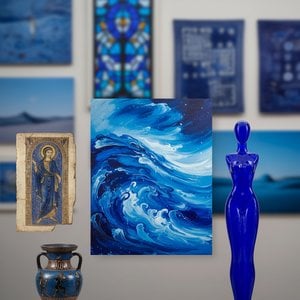
The Allure of Azure: Exploring the Symbolic & Aesthetic Depths of Blue in Art History
Explore the rich history of blue in art! Discover its symbolism, from ancient pigments to modern masterpieces by Kandinsky & Seurat. Uncover the psychological impact and cultural meanings behind this captivating hue.