- Főoldal

- Olajfestmény reprodukció
- Edward Hopper
- Tavaszi Napfény
 Nyomat vásárlása Kép letöltése
 Megosztás
 Megosztás
 Részletek
 Kedvencekhez ad

 Letöltés
 Hasonló alkotások
 X-ray felvétel
 Diavetítés
Tavaszi Napfény
 Olajfestmény vászonon
- Falfeldísz
- American Realism
 1943
1943- Modern kor
 74.0 x 112.0 cm
 Tovább olvasom
Kézzel készített olajfestmény reprodukció
Kézzel festett olajvastú vászon, az Ön által választott méretben és keretben, művészeink készítik meglévőre.




P118B $10

P118H $10

P118W $10

P438Z $10

P508JH $12

P508YH $12

P805H $10

P805Z $10

P919BZ $10

P919G $10

P919XJ $10

P959ZH $10

P968JZ $12

W106C $8

W218G $10

W218JH $8

W218Y $10

W307PJ $10

W316G $10

W316PJ $8

W316Y $10

W398PJ $8

W4111J $10

W500HY $15

W500JH $15

W692G $12

W849H $8

W940BG $15

W953PJ $8




Válasszon előre meghatározott méreteink közül, amelyek megfelelnek a műalkotás eredeti arányainak.

Ön megadhat saját méreteket egy adott kerethez vagy térhez igazításhoz. Ha a kiválasztott méret nem egyezik az eredeti kép arányával, akkor a műalkotást levágjuk, vagy további kézzel festett elemekkel meghosszabbítjuk a festményt. A gyártás megkezdése előtt küldünk Önnek egy digitális előnézetet jóváhagyásra.
Kérjük, vegye figyelembe, hogy a képernyőn megjelenő előnézet nem tükrözi a tényleges vágást vagy kiterjesztést. Csak az előnézet fog pontosan mutatni a végső kompozíciót.
Bár egyedi méretek állnak rendelkezésre, javasoljuk, hogy válasszon egy méretet az előre meghatározott listából az eredeti arányok megőrzése érdekében.
A rendelést követően a ArtsDot.com csapata e-mailt küld az ügyfélnek az instrukciókért, és biztosít egy előnézeti képet (mockup).
Világszerte elérhető szállítás () 3-4 hét alatt a szokásos 5 hét helyett. (2 július). A minőség nem kérdőjelezhető.

Ingyenes globális expressz szállítás

Prémium minőségű len vászon

Teljes szállítási biztosítás

Vámvisszatérítési Garancia

Tökéletes színpontosság garancia

60 napos visszaküldési lehetőség (csak gyártási hibák esetén)

100%-os pénzvisszatérítési garancia

Kedvezmény több termény esetén
 Az üvegkeretes opció csak 110 cm alatti méretben érhető el

Tavaszi Napfény
Reprodukciós technika
A reprodukció mérete
-


Összesített ár
-
A műalkotás leírása
Edward Hopper’s “Summertime”: A Moment Frozen in Urban Loneliness
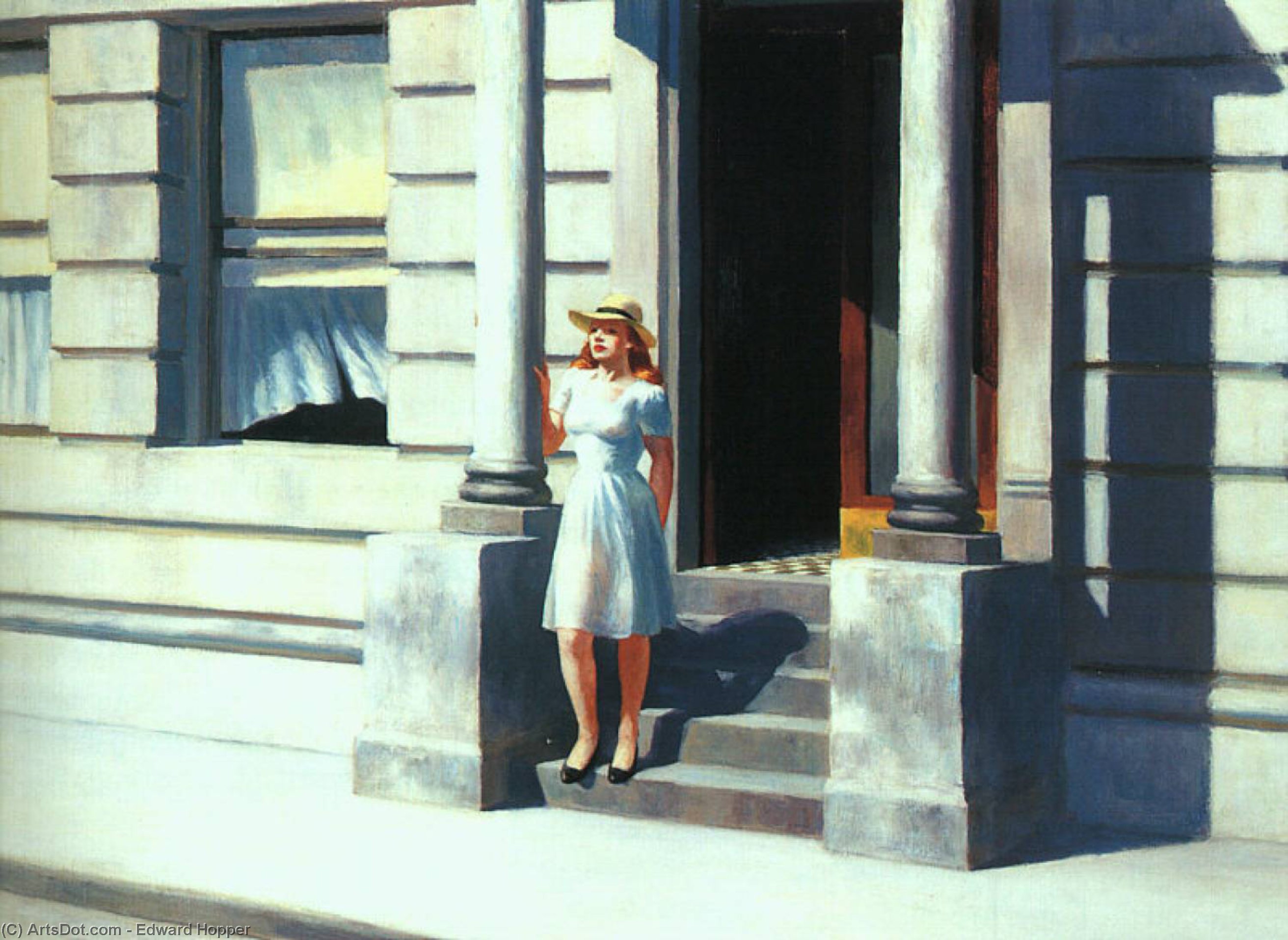
Edward Hopper's "Summertime," painted in 1943 during the tumultuous years of World War II, isn’t merely a depiction of a woman on steps; it’s a profound meditation on solitude, anticipation, and the quiet anxieties simmering beneath the surface of modern American life. This iconic work, instantly recognizable for its stark realism and haunting atmosphere, transcends simple representation, offering viewers an intimate glimpse into Hopper's masterful ability to capture the psychological landscape of his time. The painting immediately draws us in with a sense of stillness – a pregnant pause suspended within a bustling urban environment. It’s a scene both familiar and deeply unsettling, reflecting the anxieties and uncertainties that permeated the nation during wartime.A Study in Light, Form, and Restraint
Hopper's signature American Realist style is powerfully evident in "Summertime." He meticulously renders every detail – from the smooth texture of the concrete steps to the delicate folds of the woman’s dress – with a precision that borders on photographic. Yet, Hopper deliberately avoids overt emotional expression, opting instead for a restrained palette and a controlled application of oil paint. This restraint amplifies the painting's underlying tension; we are presented with a scene devoid of melodrama, forcing us to confront the quiet sadness at its core. The composition is strikingly geometric, dominated by strong vertical and horizontal lines that define the imposing classical building behind her. These rigid structures contrast sharply with the softer curves of the woman’s figure, drawing our eye directly to her as the focal point – a solitary observer seemingly lost in thought. Hopper masterfully uses light and shadow, casting long, dramatic shadows across the steps and highlighting the architectural details of the building, creating a palpable sense of atmosphere and depth.Decoding Symbolism: Anticipation and Societal Weight
The historical context surrounding "Summertime" is crucial to understanding its deeper meaning. Created during World War II, the painting subtly reflects the era’s mood of uncertainty and isolation. While not explicitly referencing the war, the themes of loneliness and alienation resonate powerfully with the anxieties experienced by many Americans at the time. The grand building behind the woman can be interpreted as a symbol of societal structures – perhaps expectations, obligations, or even the weight of conformity – while the woman herself represents an individual adrift within this framework. Her posture, poised yet withdrawn, suggests a moment of anticipation, a silent waiting for someone who may never arrive, or simply a quiet contemplation of her own place in the world. The light blue dress and straw hat hint at a fleeting summer joy, juxtaposed against the somber backdrop of wartime uncertainty.Technique and Artistic Mastery: A Controlled Palette
Hopper’s technical skill is undeniable. He employed oil paints on canvas with a smooth, controlled application, eschewing expressive brushstrokes in favor of clarity and precision. The deliberate flatness of the picture plane, characteristic of Hopper's style, further emphasizes the scene's psychological depth rather than its three-dimensional reality. The strategic use of light – particularly the way it illuminates the architectural details while simultaneously casting long shadows – creates a remarkable sense of atmosphere and drama. Notice how he uses color to subtly guide the viewer’s eye; the muted tones of the building contrast with the brighter hues of the woman's dress, reinforcing her as the central subject of the painting. The overall effect is one of quiet intensity, inviting viewers to linger and contemplate the unspoken emotions conveyed through this masterful composition.A Timeless Reflection on Modern Existence
“Summertime” remains a powerfully evocative work of art, continuing to resonate with audiences today. It’s a poignant reminder of the complexities of modern life – the isolation that can exist even in crowded cities, and the quiet moments of contemplation that shape our individual experiences. Hopper's ability to capture these subtle nuances is what makes "Summertime" such a compelling and enduring masterpiece. Its continued popularity speaks volumes about its universal themes and Hopper’s remarkable talent for portraying the human condition with honesty and grace.Hasonló műalkotások


A művész életrajza
A Solitude Observed: The Life and Art of Edward Hopper
Edward Hopper, a name inextricably linked to the quietude and subtle melancholy that permeated 20th-century American life, wasn’t simply a painter of scenes; he was a poet of light and shadow, a chronicler of modern isolation. Born in Nyack, New York, in 1882, to middle-class parents of Dutch ancestry, Hopper's early years provided a stable upbringing that nurtured his artistic inclinations. From childhood sketches meticulously dated and signed, it became evident that keen observation and an innate talent for drawing were central to his being. Though initially encouraged towards commercial illustration – a pragmatic suggestion from his parents – Hopper’s ambitions leaned toward fine art, leading him to the New York School of Art where he studied under William Merritt Chase and Robert Henri. These formative years instilled not only technical skill but also an appreciation for realism and a commitment to depicting the world as he saw it—unvarnished and honest. The writings of Ralph Waldo Emerson resonated deeply with Hopper, reinforcing his sense of individualism and acute observation – qualities that would become hallmarks of his artistic vision. Early travels to Paris exposed him to Impressionism, yet Hopper quickly diverged from its fleeting brushstrokes, forging a path uniquely his own.Finding His Voice: Realism and the American Scene
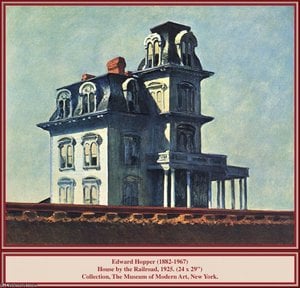
Hopper’s artistic journey wasn't immediate or effortless. He grappled with discovering his distinctive voice, experimenting with various styles before settling into the realism that would define his career. This wasn’t mere replication of reality; it was a distillation of its essence, stripping away extraneous detail to reveal underlying emotional truths. His paintings began to focus on everyday scenes – houses, diners, offices, hotel rooms – imbued with a sense of stillness and often, loneliness. He possessed an extraordinary ability to capture the psychological states of his subjects, hinting at narratives without explicitly stating them. The precise rendering of light and shadow became crucial, not merely as descriptive elements but as emotional cues, creating atmospheres that were both captivating and unsettling. House by the Railroad (1925), an early masterpiece, exemplifies this approach—a seemingly simple composition radiating a profound sense of isolation and mystery. Hopper’s printmaking, often overlooked, ran parallel to his painting, sharing similar themes and stylistic qualities, demonstrating his mastery across mediums. He wasn't interested in grand historical narratives or allegorical symbolism; he focused on the mundane, elevating it through careful observation and emotional resonance.Iconic Visions: Nighthawks and Beyond
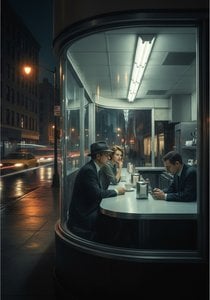
While Hopper’s career unfolded gradually, certain works catapulted him to widespread recognition. Nighthawks (1942), arguably his most famous painting, became an instant icon of American culture. The late-night diner scene, bathed in stark fluorescent light, perfectly encapsulates the alienation and anonymity of modern urban life. The figures within are lost in their own thoughts, disconnected from one another despite their proximity—a poignant commentary on the human condition. Gas (1940), with its striking portrayal of a roadside gas station, showcases Hopper’s fascination with American landscapes and the burgeoning automobile culture. Other notable works like *Automat*, *Office in a Small City*, and *Summertime* each offer unique insights into the complexities of 20th-century American society. These paintings weren't merely depictions of places; they were explorations of mood, psychology, and the subtle dramas unfolding within ordinary settings. His wife, Josephine Nivison Hopper, played a vital role not only as his lifelong companion but also as a frequent model, contributing significantly to the characterization of his female figures.Themes and Legacy: A Lasting Influence
Several recurring themes permeate Hopper’s oeuvre. Urban isolation is perhaps the most prominent—the sense of loneliness experienced by individuals even amidst crowds. He explored the American landscape, both rural and urban, often emphasizing its starkness and emptiness. His work delves into psychological realism, probing the inner lives of his subjects with a sensitivity that transcends mere representation. There’s also an undercurrent of nostalgia for a simpler past, juxtaposed with an acknowledgement of the complexities and anxieties of modern life. Hopper's influence on subsequent artists is undeniable. His unique style has inspired countless painters, including Pierre Sanford Ross, and continues to resonate with contemporary artists seeking to capture the essence of human experience. His paintings remain highly sought after by collectors and are exhibited in major museums worldwide, solidifying his place as a pivotal figure in American art history. More than just an artist, Edward Hopper was a visual philosopher, offering profound insights into the human condition through his masterful use of light, shadow, and composition.- His legacy lies not only in the beauty of his paintings but also in their enduring ability to provoke thought, evoke emotion, and remind us of the quiet solitude that often defines our lives.
- Hopper’s work continues to captivate audiences because it speaks to universal themes of loneliness, isolation, and the search for meaning in a rapidly changing world.
- His paintings have become iconic representations of American culture, often used to symbolize the anxieties and aspirations of the 20th century—and beyond.
- Hopper’s aesthetic has profoundly influenced filmmakers (like Alfred Hitchcock) and writers, inspiring countless works that explore similar themes of alienation and psychological tension.

Edward Hopper
1931 - 1967 , Egyesült Államok
Rövid tények
- Artistic Movement Or Style: Realista
- Artists Or Movements Influenced By This Artist: ['Pierre Sanford Ross']
- Artists Who Influenced This Artist:
- William Chase
- Robert Henri
- Date Of Birth: 1882. július 22.
- Date Of Death: 1967. május 15.
- Full Name: Edward Hopper
- Nationality: Amerikai
- Notable Artworks:
- Nighthawks
- House by the Railroad
- Gas
- Place Of Birth: Nyack, USA
Kapcsolódó cikkek

Urban Visions: A Historical & Artistic Exploration of the Cityscape in Painting
Explore the evolution of cityscape painting from historical maps to Impressionist masterpieces. Discover artists like Caillebotte, Utrillo & Matsumoto Shunsuke. Find museum-quality reproductions at ArtsDot.

John Sloan: Capturing the Soul of American Urban Life – A Realist Master
Explore the life & art of John Sloan, a key figure of American Realism and the Ashcan School. Discover his evocative NYC scenes, socialist influences, and lasting impact on modern art. Learn more at ArtsDot.
Edward Hopper: American Realism, Urban Isolation & the Poetics of Modern Loneliness
Explore the profound world of Edward Hopper's American realism. Discover the symbolism, themes & enduring legacy of this iconic artist – from 'Nighthawks' to his lesser-known masterpieces. Expert analysis and insights.

The Ashcan School: Realism, Urban Life & the Democratization of American Art
Explore the revolutionary Ashcan School! Discover how artists like Henri & Sloan challenged tradition with gritty realism, capturing urban life in early 20th-century America. Learn about their impact on American art history.

Az amerikai realizmus 10 ikonikus remekműve – festmények otthonra a ArtsDot kínálatából
Fedezze fel az amerikai realizmus 10 legikonikusabb remekművét! Ismerje meg Andrew Wyeth, Edward Hopper és más festők történetét. Múzeumi minőségű reprodukciók otthonra a ArtsDot kínálatából – inspiráló faliképek és dekorációk online.