


The picture follows your choices: , .
A gyűjtemény leírása
Delve into Edvard Munch's 'Melancholy, Laura': A poignant portrait capturing introspection and sorrow through vibrant colors & symbolic details. Explore the artist’s soul painting style.
 Összes részlet megjelenítése
A művész életrajza
Munch: A modern művész, aki a szorongást, a halált és az érzelmek viharát ábrázolta a festészetével. Fedezd fel a 'Sikoly' ikonikus alkotását és a norvég expresszionista géniuszát!
Kézzel készített olajfestmény reprodukció
Kézzel festett olajvastú vászon, az Ön által választott méretben és keretben, művészeink készítik meglévőre. ( Váltás nyomtatványra Áttérés digitális képre)
More about this painting
 Megtekintés
 Küldés
 Megosztás
 Részletek
 Útmutató

 Letöltés
 Hasonló darabok
 X-ray felvétel
 Diavetítés
 Q&A
Q&A Statisztika
Order your painting in four simple steps
Take your time. You can change any answer; the price in your order card follows each choice.
1 Step one of four
Which size would you like?
These sizes keep the proportions of the original painting. The drawing shows your choice on a wall, above a two-metre sofa.
Or give your own measurements
Válasszon előre meghatározott méreteink közül, amelyek megfelelnek a műalkotás eredeti arányainak.

Írja be a kívánt szélességet és magasságot, hogy illeszkedjen a keretéhez vagy a falához. Mivel ez kézzel festett alkotás, egy eltérő formájú méret esetén a művész akár festhet is valamivel többet a kép körül, vagy korolathat is belőle — az Ön döntésének megfelelően. A festés megkezdése előtt küldünk egy digitális tervezetet jóváhagyásra. Az oldalon látható kép nem tartalmazza a végeredményt — csak a tervezet mutatja meg a valódi eredményt.
2 Step two of four
How should it be prepared: rolled, stretched or framed?
The prices below are for the size you chose in step one.
Choose the edges of the stretched canvas
Choose your frame

White Ft1

Blurside Ft1

Extended Ft1

P118B Ft10

P118H Ft10

P118W Ft10

P438Z Ft10

P508JH Ft12

P508YH Ft12

P805H Ft10

P805Z Ft10

P919BZ Ft10

P919G Ft10

P919XJ Ft10

P959ZH Ft10

P968JZ Ft12

W106C Ft8

W218G Ft10

W218JH Ft8

W218Y Ft10

W307PJ Ft10

W316G Ft10

W316PJ Ft8

W316Y Ft10

W398PJ Ft8

W4111J Ft10

W500HY Ft15

W500JH Ft15

W692G Ft12

W849H Ft8

W940BG Ft15

W953PJ Ft8

H24-GOLD Ft30

H24-SILVER Ft30

H36-GOLD Ft45

H36-SILVER Ft45
Keretezett
Moulding: . Overall size with the frame: .
3 Step three of four
Would you like anything changed in the painting?
Most people answer no. Because each painting is made by hand, our artist can also adapt it for you.
After order, ArtsDot.com team will email client for instructions and provide a mockup preview
4 Step four of four
A few finishing options
All of them are optional. The answers already selected cost nothing extra.
Who paints it?
Világszerte elérhető szállítás () 3-4 hét alatt a szokásos 5 hét helyett. (29 október). A minőség nem kérdőjelezhető.
A nameplate, as in a museum?
A gravírozott bronztábla részletei
This elegant plaque features the artist's name and the title of the artwork, finely engraved for a timeless presentation.
It is made from bronze with a refined, elegant finish. The text is precisely laser-engraved for a sharp and permanent result. Measuring 9x2 cm, the plaque is compact yet easy to read. It's built to be durable and scratch-resistant, offering a professional, museum-quality look. Mounting is simple thanks to the included adhesive backing.
Átlátszó akril tábla részletei
The plaque includes essential engraved details such as the artist's name, the title of the artwork, the date it was created, the type of media used-like oil on canvas or watercolor-a brief description of the piece, and a QR code that links to the complete artwork information.
It is crafted from clear acrylic, offering a sleek, modern appearance. The text is UV-engraved in black to ensure strong visual contrast. With a size of 10x15 cm, it ensures optimal readability. It comes equipped with two metal hooks for secure wall mounting. The plaque is designed to be weather-resistant, making it suitable for various environments, and it includes interactive features that work seamlessly with smartphone scanning.
Fekete akril tábla részletei
This elegant plaque includes engraved information such as the artist's name, the title of the artwork, the date it was created, the type of media used (like oil on canvas or watercolor), a short description of the artwork, and a QR code for quick access to more information.
The plaque itself is made from refined black acrylic with a premium finish. The text is laser-engraved in white for high contrast and readability. Its size is 10x15 cm, designed to be easy to read. It comes with two metal hooks for professional mounting. The design is sleek and fits any interior style. It is also weather-resistant and durable, with built-in digital integration for mobile compatibility.
A protective varnish?
When do you need it?
✓ Check and order
Your painting, as you ordered it

Melancholy, Laura
Reprodukciós technika
Reprodukció mérete
-

Kiváló mesterművész
Nagyobb részletesség, finomság és bővített gyártási idő
-

Reprodukció keretezése
-
-
A bármely oldalsó méretét túlszálaló 105 cm (kb. 41 hüvelyk) meghaladó műalkotások vagy reprodukciók esetében a keret összeszerelhető készletként, szétszerelve kerül szállításra. Ez a módszer biztosítja a biztonságos szállítást, és megakadályozza a szállítás során fellépő sérüléseket.
Szakmész összeszerelést igényel – ez nem DIY (önösszeszerelhető) termék.
A készletet egy tapasztalt keretező szakembernek kell összeszerelnie és a vásznat feszítenie kell, fa ragasztó (nem tartalmazza a csomag), vásznfeszítő fogó és szorítók használatával, amelyek a ragasztó száradásáig a keretrészeket egymáshoz vuôngjba tartják. A helytelen összeszerelés vagy a nem egyenletes vásznfeszítés maradandó károsíthatja a műalkotást, és ez nem része a garanciánknak.
 A bármely oldalsó méretét túlszálaló 105 cm (kb. 41 hüvelyk) meghaladó műalkotások vagy reprodukciók esetében a keret összeszerelhető készletként, szétszerelve kerül szállításra. Ez a módszer biztosítja a biztonságos szállítást, és megakadályozza a szállítás során fellépő sérüléseket.
A készlet tartalmazza az összes tömörfa rudat, pontosan méretre vágva.
A mellékelt csavarokkal, valamint a sarokszerekhez szükséges faütő ragasztóval kell összeszerelnie (ez nem tartalmazható a csomagban), így a keretrendezőnek külön kell beszereznie.
A csomag nem tartalmazza a szükséges professzionális eszközöket: egy vászonfeszítőt és klipseket a rácsok vízszintes tartásához a ragasztó megszáradásáig.
Fontos:
A sarokcsatlakozásokhoz fánylagra van szükség, a keretrudakat szorítókapcsokkal kell rögzíteni, amíg a rag teljesen meg nem szárad, a kész keretre feszített vászonhoz pedig vászonfeszítő fogat szükséges. Ezek egyike sem található meg a készletben. Kérjük, rendelés előtt győződjön meg róla, hogy rendelkezik tapasztalt keretező szakemberrel.

Névtábla
-
-

Védőréteg (Lakk)
Fényes lakk (intenzívabb színek, védelem a fény és a nedvesség hatása ellen)
-

Műalkotásom egyedi igényre szabása
Példák a módosíthatóságra: az arc kicserélése az ügyfél fotójára; háziállat hozzáadása (pl. macska helyett kutya); rejtett üzenet elhelyezése a háttérben; a háttér tájainak vagy elemeinek megváltoztatása.
-

Sürgős
Világszerte szóló szállítás () mindössze 3-4 hét alatt, a szokásos 5 hét helyett. (29 október). A minőség nem kérdőjelezhető.
-
Express szállítás
Világszerte elérhető szállítás területre 5 héten belül. (5 november).
A szállítás díja tartalmazza
Összesített ár
Ft 84973
Az üvegkeretes opció csak 110 cm alatti méretben érhető el
Included with every order
- Ingyenes globális expressz szállítás
- Prémium minőségű len vászon
- Teljes körű szállítási biztosítás
- Vámvisszatérítési Garancia
- Hiteles színarányosság garancia
- 100 napos visszaküldési lehetőség (csak hibás termékek esetén)
- 100% pénzvisszatérítési garancia
- Több darab vásárlásakor kedvezmény


Melancholy, Laura: A Portrait of Introspection by Edvard Munch
Edvard Munch’s “Melancholy, Laura,” painted in 1899, is not merely a portrait; it's an intimate and profoundly moving exploration of the human psyche. This work, housed within the esteemed collection of the Munch Museum in Oslo, offers a rare glimpse into the artist’s deeply personal world – a realm saturated with emotion, memory, and the ever-present shadow of mortality. The painting captures a moment of quiet contemplation, inviting viewers to share in Laura’s internal landscape, a space defined by both vulnerability and a poignant sense of longing.
Munch's artistic journey was inextricably linked to his own tumultuous life experiences. Born in 1863 amidst illness and loss – the early deaths of his mother and sister profoundly shaping his worldview – he developed a unique style he termed ‘soul painting.’ This approach wasn’t about objective representation but rather the raw, unfiltered expression of inner turmoil. “Melancholy, Laura” exemplifies this perfectly; it's less a depiction of a physical scene and more an embodiment of a feeling, a carefully constructed atmosphere designed to evoke empathy and introspection.
The painting immediately draws the eye with its warm, enveloping color scheme dominated by rich oranges and browns. This palette isn’t simply decorative; it establishes an immediate sense of intimacy and warmth, creating a space where vulnerability feels safe. Laura sits bathed in this light, positioned before a window that serves as a crucial symbolic element. The window acts as a visual metaphor for the boundary between her inner world – a realm of profound emotion – and the external reality she observes. The potted plants flanking her table are particularly significant. They represent the duality inherent in life: growth alongside decay, beauty intertwined with sorrow. Their presence subtly underscores the painting’s central theme—the acceptance of both joy and melancholy as integral parts of the human experience.
Furthermore, Laura's scarf, draped around her neck, is a powerful symbol of protection and isolation. It suggests a desire to shield herself from the world, perhaps seeking solace in solitude. Munch’s masterful use of brushstrokes—loose, expressive, and almost frantic in places—contributes significantly to the painting’s emotional intensity. The lines are not clean or precise; they ripple and flow, mirroring the turbulent currents of Laura's thoughts and feelings. This technique is characteristic of Munch’s Expressionist style, prioritizing subjective experience over objective reality. The overall effect is one of profound resonance—a feeling that transcends mere visual representation and taps directly into our own capacity for empathy and understanding.
“Melancholy, Laura” stands as a testament to Edvard Munch's ability to capture the essence of human emotion with unparalleled depth and sensitivity. It’s an artwork that invites viewers not just to observe but to *feel*, prompting reflection on their own experiences of melancholy, introspection, and the complexities of the human heart. For those seeking a piece that transcends mere decoration and offers a profound connection to the artistic spirit, a high-quality reproduction of this iconic work is an invaluable addition to any collection.
Kérdések és válaszok
A „Melancholy, Laura” 1899-es dátuma Edvard Munch pályájának mely szakaszára tekintthető?
A "Melancholy, Laura", amely 1899 évben készült, Edvard Munch pályájának Mature Period szakaszába tartozik.
Erős fény-árnyék kontrasztot mutat-e a "Melancholy, Laura"?
A „Melancholy, Laura”, Edvard Munch alkotása kontrasztját Erőteljes kontrasztú teszi.
Megrendelhető-e a "Melancholy, Laura" olajfestmény kézzel festett másolata?
A „Melancholy, Laura”, Edvard Munch alkotása kézzel festett másolataival a ez a weboldal oldalon találkozhat, kézzel festett olajfesték reprodukció lino vászonon formában, melyet a(z) Kézzel festett másolat oldalon lehet megrendelni.
Hasonló műalkotások


Edvard Munch
1863 - 1944, Svédország
A művész életrajza
Egy árnyékba burkolt élet: Edvard Munch világa
Edvard Munch, 1863-ban született Norvégia szikár tájain, egy olyan művész volt, akinek munkássága a modern kor szorongásainak és érzelmi viharainak szinonimájává vált. Élete mélyen jegyezte a veszteség és az átható melankólia bélyegét, ami inspirálta rendkívül kifejező művészetét. Gyermekkora árnyékában állt édesanyja és nővére korai halála – mindketten tuberkulózis következtében –, melynek hatására kísérteties rögzöttség alakult ki a halandóság, a betegség és az emberi létezés törékenysége iránt. Ezek a tapasztalatok nem csupán életrajzi részletek voltak; művészeti látásmódjának központi elemeivé váltak, ami szüntelen kutatást eredményezett a félelem, a gyász és a vágy belső tájképében. Apja szigorú vallási meggyőződései és saját mentális betegségei tovább mélyítették azt a rémisztő érzést, ami áthatotta Munch világát, formálva nemcsak személyes életét, hanem festményeinek szimbolikus nyelvét is. Ő nem egyszerűen jeleneteket ábrázolt; belső állapotokat externalizált, pszichológiai szenvedést vizuális formába öntött.
Az expresszió génézise: Hatások és művészeti fejlődés
Munch művészi útja a Királyi Művészeti Iskolában (Kristiania, Oslo) kezdődött, de a bohémi körökkel való találkozása és Hans Jæger nihilista filozófiája gyújtotta igazán lángra kreatív tűzét. Jæger bátorította Munchot, hogy hagyja el a konvencionális akadémiai stílusokat, és merüljön el saját szubjektív élményeinek mélységeiben, egy olyan fogalommal, amit “lélekszimbolikának” nevezett. Ez a fordulópont jelentette Munch jellegzetes stílusának kezdetét – amely nyers érzelmekkel, torz formákkal és a naturalisztikus ábrázolás elutasításával jellemezhető. Párizsi utazásai az 1890-es években bevezették őt a virágzó posztimpresszionista mozgalomba, ahol Paul Gauguin, Vincent van Gogh és Henri de Toulouse-Lautrec művészeinek hatását szívta magába. A merész színek használata, kifejező ecsetvonások és pszichológiai intenzitás mélyen rezonált Munch saját művészeti törekvéseivel. Ő nem egyszerűen utánozta technikájukat; hanem egyedi módon szintétezte azokat – egy vizuális nyelvet, amely képes volt közvetíteni a legmélyebb és nyugtalanító emberi érzelmeket. Berlini időszaka is kulcsfontosságúvá vált, kapcsolatba hozva őt August Strindberg drámaíróval, akinek pszichológiai témák feltárása tovább ösztönözte Munch művészeti vizsgálatait.
Ikonikus látomások: Főbb alkotások és szimbolikus jelentésük
Munch életműve olyan képekkel népesül be, amelyek mélyen bevésődtek a kollektív tudatba. A Sikoly, talán leghíresebb műve, túllépi festmény státuszát, és az egzisztenciális szorongás univerzális szimbólumává válik. Az örvénylő, lángoló táj és a figura eltorzult arca egy ősi sikolyt testesít meg az univerzum közönyössége ellen. A Madonna, egy vitatott és mélyen személyes alkotás, nyugtalanító őszinteséggel tárja fel a szexualitás, az anyaság és a halandóság témáit. Ismétlődő motívumok, mint például A beteg gyermek – amely Sophie nővére elvesztéséből merít inspirációt – megható emlékeztetők Munch gyermekkori traumájára és a halál állandó jelenlétére. A Melankólia I & II, a mély szomorúság és elszigeteltség erőteljes ábrázolásai, olyan sérülékenységet mutatnak, amely egyaránt személyes és univerzálisan érthető. Ezek a művek nem egyszerűen a külső valóság reprezentációi; hanem az artista lelkébe nyíló ablakok, amelyek őszinte pillantást engednek be az emberi psziché legsötétebb sarkába. Munch nem szép képeket akart létrehozni; igazságot kereste – még akkor is, ha ez a valóság fájdalmas és nyugtalanító volt.
Tartós örökség: Történelmi jelentőség és maradandó hatás
Edvard Munch hozzájárulása a modern művészethez felbecsülhetetlen. A kifejezésművészet egyik alapvető alakjaként áll, utat nyitva azoknak az alkotóknak, akik a szubjektív érzelmeket helyezték előbbre az objektív reprezentációval szemben. Univerzális emberi tapasztalatok – szeretet, veszteség, szorongás és halál – őszinte feltárása ma is rezonál a közönséggel, megerősítve helyét a művészettörténet egyik legbefolyásosabb és tartós alakjaként. Munkássága mélyen hatott a következő generációk alkotóira, befolyásolva olyan irányzatokat, mint például a német expresszionizmus és azon túl. Merte szembenézni az emberi lét sötét oldalaival, megkérdőjelezve a szépség hagyományos fogalmait és a művészeti reprezentációt. Még híres elismeréseinek elérése után is – ami az oslói Munch Múzeum alapításával csúcsolódott ki – személyes élete turbulens maradt, mentális instabilitás és magány időszakaival tarkítva. Ennek ellenére folyamatosan alkotott, hagyva maga után egy olyan életművet, amely továbbra is provokál, kihívást jelent és inspirál. Munch öröksége nem csupán a festményekről szól; hanem az emberi létezés összetettségének szembenézésének bátorságáról és ezeknek a tapasztalatoknak olyan művészetté alakításáról, amely beszél a legmélyebb részeinkhez.


Kapcsolódó cikkek

Edvard Munch: Anxiety, Modernity & the Dawn of Expressionism
Explore the profound world of Edvard Munch, pioneer of Expressionism. Discover the origins of 'The Scream' & his haunting depictions of anxiety, mortality, and love. Expert analysis & high-quality reproductions at ArtsDot.

A Német Expresszionizmus 10 Mesterműve: Érzelmek és Forradalom a Falakon
Fedezze fel a Német Expresszionizmus 10 legikonikusabb műalkotását! Kirchner, Munch és más német mesterek érzelmi festményeinek történetét bemutatva. Vászonképek, faliképek otthonába – ArtsDot.com kínálata.
A kifejezésművészet 10 legikonikusabb remekműve – festmények otthonra a ArtsDot-tól
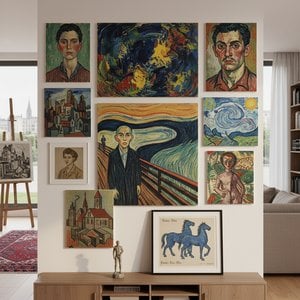
Fedezze fel a kifejezésművészet 10 legmeghatározóbb remekművét! Munch, Kirchner és Kandinsky alkotásainak története. Vászonképek otthonra – magas minőségű műalkotások a ArtsDot-tól. Explore the full collection online!