

- 47.0 x 36.0 cm


A kép az Ön választásai alapján készült: , .
A gyűjtemény leírása
Dante Gabriel Rossetti’s "Ellen Smith" (1867) captures a young woman's serene beauty with Pre-Raphaelite detail – explore the portrait's delicate lines, soft colors & evocative gaze.
 Összes részlet megjelenítése
A művész életrajza
Fedezd fel Rossetti világát! A prerafaeliták vezetője, aki szívmelodikus festményei és szimbolikus versei révén árasszik a szépséggel és a romantikával. Egy kulcsfontosságú figura az estételi és szimbolista művészetben.
Kézzel készített olajfestmény reprodukció
Kézzel festett olajvastú vászon, az Ön által választott méretben és keretben, művészeink készítik meglévőre. ( Váltás nyomtatványra Áttérés digitális képre)
Több információ erről a festményről
 Megtekintés
 Küldés
 Megosztás
 Részletek
 Útmutató

 Letöltés
 Hasonló darabok
 X-ray felvétel
 Diavetítés
 Kérdések és válaszok
 Statisztika
Rendelje meg festményét négy egyszerű lépésben
Ne siessen! Bármely választ módosítható; az rendelési összesítőben megjelenő ár minden egyes döntésre reagál.
1 Az első lépés négyből
Melyik méretet szeretné?
Ezek a méretek megőrzik az eredeti festmény arányait. A rajz bemutatja a választott méretet egy falon, egy kétszáz centiméteres kanapé felett.
Vagy adja meg a saját méreteit
Válasszon előre meghatározott méreteink közül, amelyek megfelelnek a műalkotás eredeti arányainak.

Írja be a kívánt szélességet és magasságot, hogy illeszkedjen a keretéhez vagy a falához. Mivel ez kézzel festett alkotás, egy eltérő formájú méret esetén a művész akár festhet is valamivel többet a kép körül, vagy korolathat is belőle — az Ön döntésének megfelelően. A festés megkezdése előtt küldünk egy digitális tervezetet jóváhagyásra. Az oldalon látható kép nem tartalmazza a végeredményt — csak a tervezet mutatja meg a valódi eredményt.
2 A négy lépésből a második
Hogyan kívánja előkészíteni: feltekercselve, vászonra feszítve vagy keretezve?
Az alábbi árak az első lépésben választott méretre vonatkoznak.
Válaszd ki a feszített vászon széleit
Válassza ki a keretet

Fehér Ft1

Elmosódott szélek Ft1

Kiterjesztett Ft1

P118B Ft10

P118H Ft10

P118W Ft10

P438Z Ft10

P508JH Ft12

P508YH Ft12

P805H Ft10

P805Z Ft10

P919BZ Ft10

P919G Ft10

P919XJ Ft10

P959ZH Ft10

P968JZ Ft12

W106C Ft8

W218G Ft10

W218JH Ft8

W218Y Ft10

W307PJ Ft10

W316G Ft10

W316PJ Ft8

W316Y Ft10

W398PJ Ft8

W4111J Ft10

W500HY Ft15

W500JH Ft15

W692G Ft12

W849H Ft8

W940BG Ft15

W953PJ Ft8

H24-GOLD Ft30

H24-SILVER Ft30

H36-GOLD Ft45

H36-SILVER Ft45
Keretezett
Keretprofil: . A kerettel együtt vett teljes méret: .
3 A négy lépésből a harmadik
Szeretne változtatni valamit a festményen?
A legtöbb ember nemet mond erre. Mivel minden festmény kézzel készül, művészünk képes az Ön igényei szerint is átalakítani azt.
A megrendelést követően a ArtsDot.com csapat e-mailt küld a vásárlónak az instrukciókkal, és biztosítja a tervezeti előnézetet
4 A négy lépés közül a negyedik
Néhány felületfinisz
Mindegyik opcionális. A már kiválasztott válaszok nem jelentnek plusz költséget.
Ki festette?
Világszerte elérhető szállítás () 3-4 hét alatt a szokásos 5 hét helyett. (4 november). A minőség nem kérdőjelezhető.
Egy felirat, mint egy múzeumban?
A gravírozott bronztábla részletei
This elegant plaque features the artist's name and the title of the artwork, finely engraved for a timeless presentation.
It is made from bronze with a refined, elegant finish. The text is precisely laser-engraved for a sharp and permanent result. Measuring 9x2 cm, the plaque is compact yet easy to read. It's built to be durable and scratch-resistant, offering a professional, museum-quality look. Mounting is simple thanks to the included adhesive backing.
Átlátszó akril tábla részletei
The plaque includes essential engraved details such as the artist's name, the title of the artwork, the date it was created, the type of media used-like oil on canvas or watercolor-a brief description of the piece, and a QR code that links to the complete artwork information.
It is crafted from clear acrylic, offering a sleek, modern appearance. The text is UV-engraved in black to ensure strong visual contrast. With a size of 10x15 cm, it ensures optimal readability. It comes equipped with two metal hooks for secure wall mounting. The plaque is designed to be weather-resistant, making it suitable for various environments, and it includes interactive features that work seamlessly with smartphone scanning.
Fekete akril tábla részletei
This elegant plaque includes engraved information such as the artist's name, the title of the artwork, the date it was created, the type of media used (like oil on canvas or watercolor), a short description of the artwork, and a QR code for quick access to more information.
The plaque itself is made from refined black acrylic with a premium finish. The text is laser-engraved in white for high contrast and readability. Its size is 10x15 cm, designed to be easy to read. It comes with two metal hooks for professional mounting. The design is sleek and fits any interior style. It is also weather-resistant and durable, with built-in digital integration for mobile compatibility.
Egy védőréteg?
Mikor lenne szüksége rá?
✓ Ellenőrizés és rendelés
Az Ön által megrendelt festmény

Ellen Smith
Reprodukciós technika
Reprodukció mérete
-

Kiváló mesterművész
Nagyobb részletesség, finomság és bővített gyártási idő
-

Reprodukció keretezése
-
-
A bármely oldalsó méretét túlszálaló 105 cm (kb. 41 hüvelyk) meghaladó műalkotások vagy reprodukciók esetében a keret összeszerelhető készletként, szétszerelve kerül szállításra. Ez a módszer biztosítja a biztonságos szállítást, és megakadályozza a szállítás során fellépő sérüléseket.
Szakmész összeszerelést igényel – ez nem DIY (önösszeszerelhető) termék.
A készletet egy tapasztalt keretező szakembernek kell összeszerelnie és a vásznat feszítenie kell, fa ragasztó (nem tartalmazza a csomag), vásznfeszítő fogó és szorítók használatával, amelyek a ragasztó száradásáig a keretrészeket egymáshoz vuôngjba tartják. A helytelen összeszerelés vagy a nem egyenletes vásznfeszítés maradandó károsíthatja a műalkotást, és ez nem része a garanciánknak.
 A bármely oldalsó méretét túlszálaló 105 cm (kb. 41 hüvelyk) meghaladó műalkotások vagy reprodukciók esetében a keret összeszerelhető készletként, szétszerelve kerül szállításra. Ez a módszer biztosítja a biztonságos szállítást, és megakadályozza a szállítás során fellépő sérüléseket.
A készlet tartalmazza az összes tömörfa rudat, pontosan méretre vágva.
A mellékelt csavarokkal, valamint a sarokszerekhez szükséges faütő ragasztóval kell összeszerelnie (ez nem tartalmazható a csomagban), így a keretrendezőnek külön kell beszereznie.
A csomag nem tartalmazza a szükséges professzionális eszközöket: egy vászonfeszítőt és klipseket a rácsok vízszintes tartásához a ragasztó megszáradásáig.
Fontos:
A sarokcsatlakozásokhoz fánylagra van szükség, a keretrudakat szorítókapcsokkal kell rögzíteni, amíg a rag teljesen meg nem szárad, a kész keretre feszített vászonhoz pedig vászonfeszítő fogat szükséges. Ezek egyike sem található meg a készletben. Kérjük, rendelés előtt győződjön meg róla, hogy rendelkezik tapasztalt keretező szakemberrel.

Névtábla
-
-

Védőréteg (Lakk)
Fényes lakk (intenzívabb színek, védelem a fény és a nedvesség hatása ellen)
-

Műalkotásom egyedi igényre szabása
Példák a módosíthatóságra: az arc kicserélése az ügyfél fotójára; háziállat hozzáadása (pl. macska helyett kutya); rejtett üzenet elhelyezése a háttérben; a háttér tájainak vagy elemeinek megváltoztatása.
-

Sürgős
Világszerte szóló szállítás () mindössze 3-4 hét alatt, a szokásos 5 hét helyett. (4 november). A minőség nem kérdőjelezhető.
-
Express szállítás
Világszerte elérhető szállítás területre 5 héten belül. (11 november).
A szállítás díja tartalmazza
Összesített ár
Ft 86168
Az üvegkeretes opció csak 110 cm alatti méretben érhető el
Minden rendelés mellé tartalmazva
- Ingyenes globális expressz szállítás
- Prémium minőségű len vászon
- Teljes körű szállítási biztosítás
- Vámvisszatérítési Garancia
- Hiteles színarányosság garancia
- 100 napos visszaküldési lehetőség (csak hibás termékek esetén)
- 100% pénzvisszatérítési garancia
- Több darab vásárlásakor kedvezmény


The Enigmatic Ellen Smith – A Study in Victorian Grace
Dante Gabriel Rossetti’s “Ellen Smith,” painted in 1867, isn't merely a portrait; it’s a carefully constructed distillation of Pre-Raphaelite ideals—a moment captured and imbued with an almost palpable sense of melancholy. The painting depicts a young woman, identified as Ellen Smith, rendered in chalk on paper, measuring a modest 47.6 x 36.8 cm. Rossetti, deeply immersed in the aesthetic currents of his time, sought to transcend simple representation, aiming instead to evoke emotion and capture an essence beyond the purely visual.
The composition is strikingly direct – a profile view that immediately draws the eye to Ellen’s face. Her gaze, subtly averted slightly to the right, suggests introspection, perhaps even a quiet sadness. This isn't a flamboyant display of beauty; rather, it’s a delicate unveiling of character, hinting at a depth beneath the surface. Rossetti masterfully employs soft, flowing lines, characteristic of the Pre-Raphaelite style, avoiding harsh outlines and instead relying on subtle gradations of color to define form. The background is deliberately muted, allowing Ellen's presence to dominate the canvas entirely – a deliberate choice that emphasizes her individuality.
A Palette of Subtle Sensuality
The painting’s color palette is remarkably restrained, dominated by warm, earthy tones—rich reds, deep browns, creamy beiges, and hints of grey. Rossetti skillfully blends these hues to create a sense of atmospheric depth and softness. Notice the delicate shading around her eyes and mouth, subtly suggesting the curve of her lips and the vulnerability in her gaze. The use of cooler greys and blues provides contrast, defining her features without disrupting the overall harmony. This careful orchestration of color contributes significantly to the painting’s evocative quality – it feels less like a photograph and more like a fleeting memory.
Technically, Rossetti likely employed pastel or charcoal as his medium, judging by the delicate layering of tones and the smooth blending achieved. The texture is remarkably soft, almost velvety, inviting the viewer to linger and appreciate the meticulous detail. The brushwork is incredibly subtle; it’s a testament to Rossetti's mastery of technique that such profound emotion can be conveyed through such understated means.
Symbolism and the Pre-Raphaelite Soul
“Ellen Smith” resonates deeply within the context of the Pre-Raphaelite Brotherhood’s artistic philosophy. The movement sought to revive medieval aesthetics, rejecting the artificiality of academic art in favor of a return to nature, beauty, and spiritual truth. The portrait isn't simply a likeness; it’s an exploration of feminine beauty imbued with a sense of melancholy—a common theme within Pre-Raphaelite works. The averted gaze, coupled with the subdued lighting, suggests a contemplative spirit, inviting viewers to project their own emotions onto the subject.
Interestingly, research reveals that Ellen Smith was a real woman, and the painting served as a preliminary study for a larger work, “A Christmas Carol.” The story of her life—a laundress whose face was brutally disfigured by a violent attacker – adds another layer of poignant complexity to the portrait. It’s a reminder that beauty can be fragile, and that even in the most ordinary lives, there can be profound stories waiting to be told.
A Timeless Masterpiece for Collectors
“Ellen Smith” is more than just a beautiful painting; it's a window into the artistic soul of Dante Gabriel Rossetti and the Pre-Raphaelite movement. Its delicate beauty, evocative symbolism, and masterful technique make it a prized possession for collectors and an inspiring addition to any art collection or interior space. Reproductions capture the essence of this remarkable work, allowing its quiet grace and poignant emotion to be appreciated by a wider audience.
Kérdések és válaszok
Milyen szín vezeti a „Ellen Smith”, Dante Gabriel Rossetti alkotása kompozícióját?
A „Ellen Smith”, Dante Gabriel Rossetti alkotása domináns színe a Rosy Brown (#c7b087).
Hol tekinthető meg a(z) "Ellen Smith" előnézete?
A „Ellen Smith”, Dante Gabriel Rossetti alkotása előnézete megtekinthető a mű Előnézet oldalán.
Ki a "Ellen Smith" szerzője, és mely művészeti irányból származik?
A "Ellen Smith" mögött Dante Gabriel Rossetti és a Pre-Raphaelite Brotherhood irányzat áll.
Hasonló műalkotások


Dante Gabriel Rossetti
1828 - 1882, Egyesült Királyság
A művész életrajza
A Life Immersed in Beauty: The World of Dante Gabriel Rossetti
Dante Gabriel Rossetti, born Gabriel Charles Dante Rossetti in 1828 London, was a figure profoundly shaped by the currents of his time—a Romantic spirit blossoming into the Victorian era. His lineage itself hinted at the artistic destiny that awaited him; his father, an Italian political refugee and scholar of Dante Alighieri, instilled within young Gabriel a deep reverence for literature and the arts. This early exposure, coupled with a mother who nurtured his intellectual curiosity, laid the foundation for a life dedicated to creative expression. Though initially considering a clerical career, Rossetti’s true calling lay in the realm of aesthetics—a path he would forge as a poet, illustrator, and, most notably, a painter whose works continue to captivate audiences today. His formative years were steeped in the literary giants of his age – Shakespeare, Dickens, Scott, Byron – all contributing to a rich imaginative landscape that would later define his artistic vision.The Pre-Raphaelite Rebellion and Artistic Awakening
Rossetti’s name is inextricably linked with the Pre-Raphaelite Brotherhood, a revolutionary movement he co-founded in 1848 alongside William Holman Hunt and John Everett Millais. This wasn't merely an artistic shift; it was a rebellion against the perceived artificiality of academic painting prevalent at the time. The Brotherhood sought to return to the detailed realism, vibrant colors, and spiritual intensity found in Italian and Flemish art *before* the High Renaissance – hence “Pre-Raphaelite.” This meant rejecting the idealized forms and conventional compositions favored by the Royal Academy, instead embracing a meticulous observation of nature and a commitment to truthful representation. Rossetti’s early works, such as *The Girlhood of Mary Virgin*, exemplify this dedication, showcasing an almost photographic level of detail alongside symbolic imagery drawn from religious texts. However, Rossetti's contribution extended beyond technical skill; he brought a distinctly literary sensibility to the group, often choosing subjects inspired by poetry and mythology. The Brotherhood’s manifesto wasn’t just about *how* to paint, but *what* to paint – focusing on themes of morality, spirituality, and beauty with an intensity that challenged Victorian sensibilities. The movement aimed to capture not just appearances, but also the underlying emotions and spiritual truths within each subject.Evolving Styles: Symbolism, Sensuality, and the Female Muse
As Rossetti’s career progressed, his artistic style underwent a fascinating evolution. While initially adhering to the strict tenets of Pre-Raphaelite realism, he gradually moved towards more symbolic and dreamlike imagery. His paintings became increasingly infused with sensuality, exploring themes of love, loss, and spiritual longing with an emotional depth that resonated deeply with audiences. This shift was partly influenced by his personal life, particularly his complex relationships with the women who served as his models and muses – Elizabeth Siddal, Fanny Cornforth, and Jane Morris. These women weren’t merely passive subjects; they embodied a particular aesthetic ideal for Rossetti—often depicted with flowing red hair, melancholic expressions, and an air of enigmatic beauty. Paintings like *Proserpine* are prime examples of this later style, showcasing his mastery of symbolism and his ability to evoke a sense of otherworldly allure. The rich colors, dramatic lighting, and evocative poses all contribute to the painting’s haunting atmosphere. He also began to seamlessly blend poetry and visual art, often writing sonnets to accompany his paintings, creating a unified artistic experience that engaged both the eye and the mind. *Behold the handmaid of the Lord! (The Annunciation)* is a testament to this integrated approach.Influences and Artistic Connections
Rossetti’s artistic development was profoundly shaped by a diverse range of influences. His father's deep connection to Dante Alighieri provided a constant source of inspiration, particularly in terms of themes of love, loss, and the afterlife. The poetry of John Keats and William Blake also played a significant role, imbuing his work with a sense of Romanticism and emotional intensity. He was deeply influenced by the Pre-Raphaelites’ fascination with medieval art and literature, drawing inspiration from works such as Dante's *Divine Comedy* and the legends of King Arthur. Furthermore, Rossetti maintained close relationships with other prominent artists and writers of his time, including William Morris and Edward Burne-Jones, who shared his aesthetic sensibilities and contributed to the vibrant artistic community of London. These connections fostered a dynamic exchange of ideas and influenced the development of his own unique style.Legacy and Lasting Influence
Dante Gabriel Rossetti’s impact on the art world extends far beyond his own lifetime. He was profoundly influenced by the poetry of John Keats and William Blake, as well as the Italian Renaissance masters, but he, in turn, became a major influence on subsequent generations of artists and writers. His work played a crucial role in the development of both the Aesthetic Movement and Symbolism, movements that emphasized beauty, emotion, and subjective experience above all else. Artists like William Morris and Edward Burne-Jones were deeply inspired by his aesthetic principles, incorporating them into their own distinctive styles. His emphasis on symbolism and emotional intensity also paved the way for later artistic explorations of the subconscious mind. Even today, his paintings continue to inspire artists and art lovers alike, cementing his place as one of the most important figures in 19th-century British art. He challenged conventional norms, embraced beauty in all its forms, and left behind a legacy that continues to resonate with those who seek meaning and emotion in art.A Revolutionary Spirit: Rossetti’s Historical Significance
Rossetti was more than just an artist; he was a cultural provocateur who dared to challenge the prevailing artistic conventions of his time. His emphasis on symbolism, emotion, and individual vision resonated with a generation seeking alternatives to Victorian realism. He helped pave the way for new forms of expression, encouraging artists to explore their inner worlds and embrace subjective experience. His work provides valuable insight into the cultural and intellectual currents of the 19th century—a period marked by rapid social change, scientific advancements, and a growing sense of spiritual uncertainty. Rossetti’s art reflects these anxieties and aspirations, offering a glimpse into the complex emotional landscape of his era. He remains an important figure in understanding not only the history of art but also the broader cultural context in which it was created. His enduring appeal lies in his ability to tap into universal themes of love, loss, beauty, and spirituality—themes that continue to resonate with audiences today.


Kapcsolódó cikkek

Sir John Everett Millais: Pre-Raphaelite Rebellion & Victorian Narrative Detail
Explore the revolutionary art of Sir John Everett Millais & the Pre-Raphaelite Brotherhood. Discover their radical realism, symbolic narratives, and lasting impact on Victorian aesthetics. A deep dive into 19th-century masterpieces.
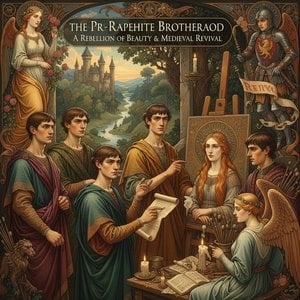
The Pre-Raphaelite Brotherhood: A Rebellion of Beauty & Medieval Revival
Explore the captivating world of the Pre-Raphaelite Brotherhood! Discover their rebellion against academic art, iconic masterpieces, and lasting influence on Victorian aesthetics. Learn about Rossetti, Burne-Jones & more.

Dante Gabriel Rossetti 25 Mesterműve: Szépség és Lelkiség a Vásznon – ArtsDot
Fedezze fel Dante Gabriel Rossetti 25 legszebb művészeti alkotását! Ismerje meg a prerafaeliták titkait, a viktoriánus festészet szépségét és a romantikus szimbolizmus mélységeit. Prémium minőségű art reprodukciók a ArtsDot-on – inspiráció otthonába!