


The picture follows your choices: , .
A gyűjtemény leírása
Claude Monet's 'Receding Waves', painted in 1883, captures the ethereal beauty of Normandy's coastline with shimmering brushstrokes and luminous colors – a masterpiece of Impressionism.
 Összes részlet megjelenítése
A művész életrajza
Fedezze fel Claude Monet világát, az impresszionizmus mesterét, aki ikonikus tájképein, mint a Vízililiomok és a Szénaszúnyogok, a múló fény és szín lenyűgöző pillanatait örökítette be.
Kézzel készített olajfestmény reprodukció
Kézzel festett olajvastú vászon, az Ön által választott méretben és keretben, művészeink készítik meglévőre. ( Váltás nyomtatványra Áttérés digitális képre)
More about this painting
 Megtekintés
 Küldés
 Megosztás
 Részletek
 Útmutató

 Letöltés
 Hasonló darabok
 X-ray felvétel
 Diavetítés
 Q&A
Q&A Statisztika
Order your painting in four simple steps
Take your time. You can change any answer; the price in your order card follows each choice.
1 Step one of four
Which size would you like?
These sizes keep the proportions of the original painting. The drawing shows your choice on a wall, above a two-metre sofa.
Or give your own measurements
Válasszon előre meghatározott méreteink közül, amelyek megfelelnek a műalkotás eredeti arányainak.

Írja be a kívánt szélességet és magasságot, hogy illeszkedjen a keretéhez vagy a falához. Mivel ez kézzel festett alkotás, egy eltérő formájú méret esetén a művész akár festhet is valamivel többet a kép körül, vagy korolathat is belőle — az Ön döntésének megfelelően. A festés megkezdése előtt küldünk egy digitális tervezetet jóváhagyásra. Az oldalon látható kép nem tartalmazza a végeredményt — csak a tervezet mutatja meg a valódi eredményt.
2 Step two of four
How should it be prepared: rolled, stretched or framed?
The prices below are for the size you chose in step one.
Choose the edges of the stretched canvas
Choose your frame

White Ft1

Blurside Ft1

Extended Ft1

P118B Ft10

P118H Ft10

P118W Ft10

P438Z Ft10

P508JH Ft12

P508YH Ft12

P805H Ft10

P805Z Ft10

P919BZ Ft10

P919G Ft10

P919XJ Ft10

P959ZH Ft10

P968JZ Ft12

W106C Ft8

W218G Ft10

W218JH Ft8

W218Y Ft10

W307PJ Ft10

W316G Ft10

W316PJ Ft8

W316Y Ft10

W398PJ Ft8

W4111J Ft10

W500HY Ft15

W500JH Ft15

W692G Ft12

W849H Ft8

W940BG Ft15

W953PJ Ft8

H24-GOLD Ft30

H24-SILVER Ft30

H36-GOLD Ft45

H36-SILVER Ft45
Keretezett
Moulding: . Overall size with the frame: .
3 Step three of four
Would you like anything changed in the painting?
Most people answer no. Because each painting is made by hand, our artist can also adapt it for you.
After order, ArtsDot.com team will email client for instructions and provide a mockup preview
4 Step four of four
A few finishing options
All of them are optional. The answers already selected cost nothing extra.
Who paints it?
Világszerte elérhető szállítás () 3-4 hét alatt a szokásos 5 hét helyett. (29 október). A minőség nem kérdőjelezhető.
A nameplate, as in a museum?
A gravírozott bronztábla részletei
This elegant plaque features the artist's name and the title of the artwork, finely engraved for a timeless presentation.
It is made from bronze with a refined, elegant finish. The text is precisely laser-engraved for a sharp and permanent result. Measuring 9x2 cm, the plaque is compact yet easy to read. It's built to be durable and scratch-resistant, offering a professional, museum-quality look. Mounting is simple thanks to the included adhesive backing.
Átlátszó akril tábla részletei
The plaque includes essential engraved details such as the artist's name, the title of the artwork, the date it was created, the type of media used-like oil on canvas or watercolor-a brief description of the piece, and a QR code that links to the complete artwork information.
It is crafted from clear acrylic, offering a sleek, modern appearance. The text is UV-engraved in black to ensure strong visual contrast. With a size of 10x15 cm, it ensures optimal readability. It comes equipped with two metal hooks for secure wall mounting. The plaque is designed to be weather-resistant, making it suitable for various environments, and it includes interactive features that work seamlessly with smartphone scanning.
Fekete akril tábla részletei
This elegant plaque includes engraved information such as the artist's name, the title of the artwork, the date it was created, the type of media used (like oil on canvas or watercolor), a short description of the artwork, and a QR code for quick access to more information.
The plaque itself is made from refined black acrylic with a premium finish. The text is laser-engraved in white for high contrast and readability. Its size is 10x15 cm, designed to be easy to read. It comes with two metal hooks for professional mounting. The design is sleek and fits any interior style. It is also weather-resistant and durable, with built-in digital integration for mobile compatibility.
A protective varnish?
When do you need it?
✓ Check and order
Your painting, as you ordered it

Receding Waves
Reprodukciós technika
Reprodukció mérete
-

Kiváló mesterművész
Nagyobb részletesség, finomság és bővített gyártási idő
-

Reprodukció keretezése
-
-
A bármely oldalsó méretét túlszálaló 105 cm (kb. 41 hüvelyk) meghaladó műalkotások vagy reprodukciók esetében a keret összeszerelhető készletként, szétszerelve kerül szállításra. Ez a módszer biztosítja a biztonságos szállítást, és megakadályozza a szállítás során fellépő sérüléseket.
Szakmész összeszerelést igényel – ez nem DIY (önösszeszerelhető) termék.
A készletet egy tapasztalt keretező szakembernek kell összeszerelnie és a vásznat feszítenie kell, fa ragasztó (nem tartalmazza a csomag), vásznfeszítő fogó és szorítók használatával, amelyek a ragasztó száradásáig a keretrészeket egymáshoz vuôngjba tartják. A helytelen összeszerelés vagy a nem egyenletes vásznfeszítés maradandó károsíthatja a műalkotást, és ez nem része a garanciánknak.
 A bármely oldalsó méretét túlszálaló 105 cm (kb. 41 hüvelyk) meghaladó műalkotások vagy reprodukciók esetében a keret összeszerelhető készletként, szétszerelve kerül szállításra. Ez a módszer biztosítja a biztonságos szállítást, és megakadályozza a szállítás során fellépő sérüléseket.
A készlet tartalmazza az összes tömörfa rudat, pontosan méretre vágva.
A mellékelt csavarokkal, valamint a sarokszerekhez szükséges faütő ragasztóval kell összeszerelnie (ez nem tartalmazható a csomagban), így a keretrendezőnek külön kell beszereznie.
A csomag nem tartalmazza a szükséges professzionális eszközöket: egy vászonfeszítőt és klipseket a rácsok vízszintes tartásához a ragasztó megszáradásáig.
Fontos:
A sarokcsatlakozásokhoz fánylagra van szükség, a keretrudakat szorítókapcsokkal kell rögzíteni, amíg a rag teljesen meg nem szárad, a kész keretre feszített vászonhoz pedig vászonfeszítő fogat szükséges. Ezek egyike sem található meg a készletben. Kérjük, rendelés előtt győződjön meg róla, hogy rendelkezik tapasztalt keretező szakemberrel.

Névtábla
-
-

Védőréteg (Lakk)
Fényes lakk (intenzívabb színek, védelem a fény és a nedvesség hatása ellen)
-

Műalkotásom egyedi igényre szabása
Példák a módosíthatóságra: az arc kicserélése az ügyfél fotójára; háziállat hozzáadása (pl. macska helyett kutya); rejtett üzenet elhelyezése a háttérben; a háttér tájainak vagy elemeinek megváltoztatása.
-

Sürgős
Világszerte szóló szállítás () mindössze 3-4 hét alatt, a szokásos 5 hét helyett. (29 október). A minőség nem kérdőjelezhető.
-
Express szállítás
Világszerte elérhető szállítás területre 5 héten belül. (5 november).
A szállítás díja tartalmazza
Összesített ár
Ft 84973
Az üvegkeretes opció csak 110 cm alatti méretben érhető el
Included with every order
- Ingyenes globális expressz szállítás
- Prémium minőségű len vászon
- Teljes körű szállítási biztosítás
- Vámvisszatérítési Garancia
- Hiteles színarányosság garancia
- 100 napos visszaküldési lehetőség (csak hibás termékek esetén)
- 100% pénzvisszatérítési garancia
- Több darab vásárlásakor kedvezmény


A Symphony of Light and Water: Claude Monet’s “Receding Waves”
Claude Monet's "Receding Waves," painted in 1883, isn’t merely a depiction of the ocean; it’s an immersion into a fleeting moment of sublime beauty. This Impressionistic masterpiece captures the essence of a coastal scene – the relentless push and pull of the tide, the dance of light on water, and the quiet majesty of a weathered cliff face – all rendered with a sensitivity that speaks to Monet’s profound connection with nature. The painting immediately draws the viewer in, inviting them to lose themselves within its hazy, atmospheric depths.
Monet’s technique is central to the work’s captivating quality. Executed in oil on canvas, “Receding Waves” exemplifies his signature Impressionistic style. He abandons precise detail and instead focuses on capturing the *impression* of light and color. Short, broken brushstrokes – a hallmark of his approach – create a shimmering effect across the water’s surface, mimicking the movement of the waves. These strokes aren’t blended smoothly; rather, they retain their individual character, contributing to the painting’s vibrant energy. The colors themselves are remarkably luminous, achieved through careful layering and an understanding of how light interacts with different surfaces. Notice particularly the subtle shifts in blue and green as the water recedes, creating a sense of depth and distance that is both realistic and dreamlike.
The Essence of *Plein Air* and Normandy’s Influence
“Receding Waves” was born from Monet’s dedication to plein air painting – working directly outdoors. This practice, championed by his mentor Eugène Boudin, allowed him to observe and record the ever-changing effects of light with unparalleled accuracy. The rugged coastline of Normandy, where Monet spent much of his life, provided a constant source of inspiration. The weathered cliffs, the turbulent sea, and the shifting skies all found their way onto his canvases. This connection to the natural world is palpable in the painting; it feels as though you could step right into the scene and feel the salty spray on your face.
The rocky cliff near the water’s edge isn’t simply a backdrop but an integral part of the composition. It provides a sense of stability and grounding amidst the fluidity of the waves, while also reflecting the light in a way that enhances the overall luminosity of the painting. The placement of this element subtly guides the viewer’s eye across the scene, leading them on a visual journey through the receding water.
A Moment Frozen in Time: Symbolism and Emotional Resonance
Beyond its technical brilliance, “Receding Waves” possesses a quiet emotional resonance. It evokes feelings of tranquility, serenity, and perhaps even a touch of melancholy. The vastness of the ocean, combined with the subtle shifts in color and light, creates a sense of awe and wonder. There’s an inherent beauty in the painting’s depiction of nature—a reminder of our own smallness within the grand scheme of things. The title itself, “Receding Waves,” subtly hints at themes of impermanence and the passage of time, mirroring the artist’s own fascination with capturing fleeting moments.
Monet's work during this period was deeply influenced by the burgeoning field of proto-Cubism, a movement that explored the fragmentation of form and the simultaneous representation of multiple viewpoints. While not overtly Cubist, “Receding Waves” demonstrates a similar interest in breaking down the subject into its constituent elements and presenting them in a way that captures their essence rather than simply replicating reality. It’s a testament to Monet’s innovative approach to painting and his ability to translate complex visual experiences onto canvas.
A Legacy of Light: Claude Monet and Beyond
Claude Monet, born Oscar-Claude Monet on November 14, 1840, in Paris, France, left an indelible mark on the history of art. His dedication to capturing light and color revolutionized painting, paving the way for modern Impressionism. His influence extends far beyond this single masterpiece; works like “The Seine at Port-Villez” (available for viewing at /art/list/?Filter=8XXRBV-Claude-Monet-The-Seine-at-Port-Villez) further demonstrate his mastery of capturing atmospheric effects and the beauty of everyday life. For those seeking to delve deeper into Monet’s artistic journey, a visit to the Staatliche Museen zu Berlin offers a comprehensive exploration of his life and work.
Photo Description: The painting is a beautiful representation of the ocean with waves crashing on the shore. The scene captures the essence of nature as the water recedes from the beach. The colors in the painting are vibrant and rich, creating an atmosphere that evokes feelings of tranquility and serenity. The image is a photo of the original painting by Claude Monet, which he titled "Receding Waves." It was painted in 1883 using oil on canvas as his medium, showcasing his impressionistic style. The painting features a rocky cliff near the water's edge, adding depth and complexity to the scene. In addition to the main elements of the ocean and the shore, there are several smaller details that contribute to the overall beauty of the painting. These include the presence of clouds in the sky, which add an element of dynamism to the scene. The rocks on the cliff also provide a sense of structure and stability amidst the natural chaos of the waves. Overall, this painting is a stunning representation of the ocean's power and beauty, capturing the essence of nature in all its glory. Size: Unknown Date: 1883 ARTIST INFORMATION: ================== Artist: Claude Monet Birth Year: 1840 Death Year: 1926 Birth City: Paris Birth Country: France Biography:A Life Immersed in Light: The World of Claude Monet
Oscar-Claude Monet, a name synonymous with Impressionism, wasn’t merely a painter of landscapes; he was a chronicler of fleeting moments, a poet of light and color. Born in Paris on November 14, 1840, his early life took an unexpected turn when his family relocated to Le Havre in Normandy, at the age of five. While initially destined for a commercial career by his father, Claude Adolphe Monet (1800–1871), young Claude’s innate artistic talent quickly surfaced, manifesting first in charcoal caricatures sold locally – a testament to both his skill and entrepreneurial spirit. However, it was his encounter with Eugène Boudin that proved pivotal. Boudin didn’t just teach Monet *how* to paint; he instilled within him the revolutionary idea of painting en plein air—directly from nature—a practice that would define his entire artistic journey.
Monet’s formal training began in Paris, briefly at the Académie Suisse, and under the academic history painter Charles Gleyre, where he was a classmate of Auguste Renoir. His early works include landscapes, seascapes, and portraits, but attracted little attention. A key early influence was Eugène Boudin, who introduced him to the concept of plein air painting. From 1883, Monet lived in Giverny, also in northern France, where he purchased a house and property and began a vast landscaping project, including a water-lily pond.
Monet’s ambition to document the French countryside led to a method of painting the same scene many times so as to capture the changing of light and the passing of the seasons. Among the best-known examples are his series of haystacks (1890–1891), paintings of Rouen Cathedral (1892–1894), and the paintings of water lilies in his garden in Giverny, which occupied him for the last 20 years of his life. Frequently exhibited and successful during his lifetime, Monet’s fame and popularity soared in the second half of the 20th century when he became one of the world’s most famous painters and a source of inspiration for a burgeoning group of artists.
Monet was raised in Le Havre, Normandy, and became interested in the outdoors and drawing from an early age. Although his mother, Louise-Justine Aubrée Monet (1805–1857), supported his ambitions to be a painter, his father, Claude-Adolphe, disapproved and wanted him to go into the family’s ship-chand
Kérdések és válaszok
Elérhető diákok számára egy „Receding Waves”, Claude Monet alkotása információs adatlap?
A „Receding Waves”, Claude Monet alkotása alkotáshoz elérhető egy Útmutató oldal: ez egy kinyomtatható információs lap a műről, amelyet diákok számára és tantervhez készült használatra terveztek.
Milyen hangulatot áraszt egy enteriőrben „Receding Waves”, Claude Monet alkotása?
A „Receding Waves”, Claude Monet alkotása Nyugodt hangulata tökéletesen illeszkedik a javasolt helyszínhez: egy Nappali.
Melyik évben készült a „Receding Waves”, Claude Monet alkotása?
A „Receding Waves”, Claude Monet alkotása alkotása 1883-ben készült.
Hasonló műalkotások


Claude Monet
1840 - 1926, Franciaország
A művész életrajza
Egy élet a fényben: Claude Monet világa
Oscar-Claude Monet, az impresszionizmus szinonimája, nem csupán tájképeket festett; egy múló pillanat krónikása volt, a fény és a szín költője. 1840. november 14-én Párizsban született, élete váratlan fordulatot vett, amikor öt éves korában családja Le Havre-ba, Normandiába költözött. Bár apja kereskedelmi pályát szánt neki, Claude természetes művészi tehetsége hamar felszínre került, először helyi üzletek számára készített szénrajzokban mutatkozott meg – ez a képessége és vállalkozó szelleme egyaránt bizonyította. Azonban Eugène Boudinnel való találkozása bizonyult sorsfordító pillanatnak. Boudin nem csupán tanította Monet-t *hogyan* kell festeni; belé nevelte a forradalmas gondolatot, hogy közvetlenül a természetből, plein air – szabadban – kell festeni, egy olyan gyakorlatot, amely az egész művészi pályáját meghatározta.
Monet formális képzése Párizsban kezdődött, röviden az Académie Suisse-ben, majd Charles Gleyre műtermében. Itt tartós barátságokat kötött Auguste Renoirral és más festőkkel is, egy olyan kötelék, amelyet közös művészi frusztrációk és a hagyományos akadémiai festészet korlátainak leküzdésének vágya épített fel. Korai munkái ugyan bizonyították technikai hozzáértését, de még nem rendelkeztek azzal a jellegzetes hangvétellel, amely hamarosan stílusát jellemezte majd. Ezt követően egy viharos időszak következett – a porosz–francia háború kényszerítette Monet-t Londonba menekülni, ahol elmerült angol tájképfestők, például J.M.W. Turner műveiben, átvéve azok atmoszférikus hatásait és innovatív színhasználatát.
Egy esztétikai forradalom születése
Franciaországba való visszatérése után Monet egy virágzó művészeti lázadás központi alakjává vált. Elégedetlen a Salon konzervatív szabványaival, csatlakozott más hasonló gondolkodású művészekhez független kiállítások szervezésében. Az 1874-es kiállítás mérföldkőnek bizonyult, nemcsak Monet számára, hanem az egész művészeti világ számára. Itt mutatták be “Impression, soleil levant” (Napkelte) című festményét – a Le Havre kikötőjének ködös ábrázolását hajnalban –, amelyből eredt a gúnyos “impresszionizmus” kifejezés. Azonban a név megmaradt, és egy olyan mozgalom jelvényévé vált, amely a jelenet szubjektív *benyomását* kereste, nem pedig annak pontos ábrázolását.
Monet jellegzetes stílusa ebben az időszakban virágzott: laza, jól látható ecsetvonások, élénk és gyakran keveretlen színek egymás mellé helyezése (a “tört szín” technikája), és a fény ephemerális tulajdonságainak rögzítésére tett szüntelen kísérletek. Kitartóan gyakorolta a plein air festészetet, gyorsan dolgozva, hogy rögzítse közvetlen benyomásait, mielőtt a változó körülmények megváltoztatnák a látványt. Ez az elkötelezettség nem csupán arról szólt, hogy ábrázolja, amit *látott*, hanem arról, hogyan *érezte* magát válaszul rá – egy radikális eltérés a művészeti konvencióktól.
Giverny: A fény és a tükröződés paradicsoma
1883-ban Monet letelepedett Givernyben, Párizstől északnyugatra, létrehozva egy otthont és kertet, amely egyaránt szentélye és legnagyobb inspirációforrása lett. Gondosan alakította át a területet egy bonyolult paradicsommá, egzotikus virágokkal, gyászfűzfákkal és leghíresebb – egy japán híd által ívelő vízililiom-tóval. Ez nem csupán díszkert volt; egy élő laboratórium, ahol Monet ellenőrzött körülmények között tanulmányozhatta a fény hatását a vízre, a lombozatra és a tükröződésekre.
Élete utolsó évtizedeit szinte kizárólag Givernyben található vízililiom-tó festésének szentelte. Elindította a monumentális Vízililiomok (Nymphéas) sorozatot, hatalmas vásznakat létrehozva, amelyek a tó felületét ábrázolták egy folyamatosan változó szín és fény szöveteként. Ezek nem csupán virágfestmények voltak; magával ragadó élmények, amelyeket úgy terveztek, hogy elmerítsék a nézőt a nyugodt szépség és az elmélkedő állapothoz vezető világban. A munkák mérete lélegzetelállító, túlmutatva a hagyományos festészet határain és előrevetítve az absztrakt expresszionizmust.
Öröksége: Tartós hatás a művészettörténetre
Claude Monet hatása a művészettörténetre felmérhetetlen. Ő nemcsak az impresszionizmus alapítója volt; gyökeresen megváltoztatta azt a módot, ahogyan az művészek érzékelték és ábrázolták a körülöttük lévő világot. A szubjektív élmény hangsúlyozása, a plein air festészet ölelése és innovatív technikái utat nyitottak a modern művészet absztrakció és nem-reprezentatív formák felfedezéséhez.
Monet jelentős kereskedelmi sikert ért el élete során – ami ritkaság volt az avantgárd művészek számára ebben az időszakban. Munkái továbbra is ámulatot keltenek és világszerte lenyűgözik a közönséget, megerősítve helyét a nyugati művészet egyik legfontosabb alakjaként. 1926. december 5-én halt meg, öröksége pedig átível az alkotók generációin keresztül és a művészet szerelmeseinek szívében él tovább. Mesterei gyűjteményeinek jelentős része található a párizsi Musée d'Orsay és a Musée Marmottan Monet falai között, biztosítva, hogy látása továbbra is megvilágítsa a világot.
Kulcsfontosságú művészeti technikák
- Plein Air festészet: Központi szerepet játszott fejlődésében, lehetővé téve a fény és az atmoszféra közvetlen megfigyelését.
- Tört szín: Kis mennyiségű tiszta színek egymás mellé helyezése optikai keveredés céljából.
- Sorozatfestészet: Ugyanazon tárgy ábrázolása különböző fényviszonyok és időjárási körülmények között – a fény erejének átalakító képességének bemutatása.


Kapcsolódó cikkek

Claude Monet 25 Mesterműve: A Fény és a Szín Zsenialitása – ArtsDot.com
Fedezze fel Claude Monet 25 legikonikusabb mesterművét! Ismerje meg az impresszionizmus zseniális festőjének történetét, a fény és szín varázsát. Vásároljon exkluzív reprodukciókat otthona dekorációjához a ArtsDot.com-on!

A 10 legikonikus impresszionista tájkép: művészeti remekművek otthonába | ArtsDot.com
Fedezze fel a 10 legikonikus impresszionista tájkép festményt! Monet, Renoir, Degas és más művészek remekművei. Vászonképek, faliképek otthonába – inspirálódjon ArtsDot.com-on! Explore the full collection online.
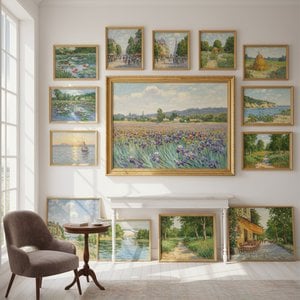
A 10 legikonikus impresszionista tájkép: Művészeti remekművek otthonába – ArtsDot.com
Fedezze fel a 10 legikonikus impresszionista tájkép festményt! Monet, Renoir és más mesterek alkotásainak története. Olajfestmények, vászonképek otthonába – ArtsDot.com kínálatából. Explore the full collection online!