


 Előnézet
 Megosztás
 Megosztás
 Részletek
 Útmutató

 Letöltés
 Hasonló darabok
 X-ray felvétel
 Diavetítés
 Statisztika
A paradicsomi öltény
 Akril vászonon
- Falfeliratok és faldekoráció
- French New Wave
 2003
2003 160.0 x 70.0 cm
 Postman Cheval Ideális Palotája
 Tovább olvasom
Giclée / Műnyomat
Múzeumi minőségű giclée vagy vászonnyomat, gyors gyártással és rugalmas finomítási lehetőségekkel. ( Kézzel festett másolat vásárlása Áttérés digitális képre)




P118B $10

P118H $10

P118W $10

P438Z $10

P508JH $12

P508YH $12

P805H $10

P805Z $10

P919BZ $10

P919G $10

P919XJ $10

P959ZH $10

P968JZ $12

W106C $8

W218G $10

W218JH $8

W218Y $10

W307PJ $10

W316G $10

W316PJ $8

W316Y $10

W398PJ $8

W4111J $10

W500HY $15

W500JH $15

W692G $12

W849H $8

W940BG $15

W953PJ $8




Válasszon előre meghatározott méreteink közül, amelyek megfelelnek a műalkotás eredeti arányainak.

Megadhat saját méreteket is egy konkrét kerethez vagy helyszínhez igazítva. Amennyiben a kiválasztott méret nem egyezik az eredeti kép arányokkal, a műalkotást le fogjuk vágni, vagy kiegészítjük a képet tükrözött vagy egyszínű szélekkel. A gyártás megkezdése előtt egy digitális tervezetet küldünk jóváhagyásra.
Kérjük, vegye figyelembe, hogy a képernyőn látható előnézet nem tükrözi a tényleges levágást vagy kiegészítést. Csak a tervezet mutatja pontosan a végső kompozíciót.
Bár az egyedi méretek is elérhetőek, az eredeti arányok megőrzése érdekében azt javasoljuk, hogy válasszon a előre meghatározott listából származó méretet.
Világszerte történő kiszállítás területére mindössze 2 hét alatt, a szokásos 4-5 hét helyett. (26 szeptember)

Ingyenes globális expressz szállítás

Prémium minőségű len vászon

Teljes körű szállítási biztosítás

Vámvisszatérítési Garancia

Tökéletes színarányosság garancia

100 napos visszaküldési garancia (csak gyártási hibás termékek esetén)

100% pénzvisszatérítési garancia

Több darab vásárlásakor kedvezmény
 Az üvegkeretes opció csak 110 cm alatti méretben érhető el

A paradicsomi öltény
Giclée / Műnyomat
Reprodukció méretei
-


Összesített ár
$ 62
A Singular Vision: Exploring “The Potato Costume” by Agnès Varda
Agnès Varda’s “The Potato Costume,” created in 2003, stands as a cornerstone of French New Wave cinema and photography—a movement that championed realism and challenged conventional cinematic narratives. More than just an image captured on film; it embodies a profound meditation on memory, identity, and the transformative power of seemingly mundane objects. Presented at the Venice Biennale that year, this artwork exemplifies Varda’s unwavering dedication to blending artistic expression with documentary observation – a stylistic hallmark that distinguishes her oeuvre from many contemporaries.Composition & Context: A Domestic Ritual
The photograph meticulously frames Varda herself in a potato costume crafted from resin—a deliberate choice reflecting the artist's enduring fascination with rural landscapes and the tactile qualities of everyday materials. Situated within a sparsely furnished room illuminated by diffused natural light, the setting mirrors the quiet contemplation characteristic of Varda’s artistic sensibility. The arrangement isn’t accidental; it establishes a visual dialogue between the viewer and the artwork itself, prompting reflection on themes of time, place, and personal history. Consider the subtle interplay of textures—the smooth walls contrasting with the rough surface of the resin costume—a deliberate tactic designed to engage the senses and heighten emotional resonance.Technique & Materiality: Documentary Precision Meets Artistic Gesture
Varda’s technique leans decisively toward documentary photography, prioritizing observation and capturing authentic moments without manipulative embellishment. Yet, “The Potato Costume” transcends mere documentation; it's an intentional staging intended to provoke contemplation and elevate the commonplace into something extraordinary. The resin costume—chosen for its durability and connection to the earth—represents more than just a visual element; it symbolizes resilience and transformation. Furthermore, the photograph’s perspective – one-point perspective – draws the eye inwards, mirroring Varda's focus on internal experience and psychological nuance. This careful consideration of material and technique underscores her commitment to conveying truthfulness while simultaneously stimulating artistic interpretation.Symbolism & Emotional Resonance: Humor Amidst Reflection
The seemingly incongruous form of the potato costume serves as a potent vehicle for communicating Varda’s artistic philosophy—a juxtaposition of humor with introspection that invites viewers to consider how we construct narratives about our lives and how objects can hold significant emotional weight. The inclusion of familiar domestic items – clothing, clocks, portraits – reinforces this idea; they subtly suggest a connection to memory and personal identity. Like many of Varda’s films, “The Potato Costume” encourages us to engage with the complexities of human existence with a gentle yet perceptive gaze—a testament to her ability to transform simple subjects into evocative symbols of artistic vision.A Legacy of Innovation: Varda's Influence on Cinema
Agnès Varda irrevocably altered the landscape of French cinema in the 1960s and beyond, establishing herself as a champion of “cinema vérité”—a filmmaking style rooted in realism and observation—and profoundly impacting subsequent generations of filmmakers. Her unwavering dedication to capturing authentic human experience, combined with her masterful use of visual storytelling, cemented her place as one of the most influential artists of her time. "The Potato Costume" encapsulates this legacy, demonstrating Varda’s ability to elevate ordinary subjects into moments of contemplation and artistic expression—a truly remarkable achievement in contemporary art.Hasonló műalkotások


A művész életrajza
Agnès Varda: A Pioneer of the French New Wave
Arlette Varda, later known and celebrated as Agnès Varda, was a singular figure in 20th-century cinema – a Belgian-born French filmmaker, screenwriter, and photographer whose work fundamentally reshaped how movies were made and viewed. Born on May 30, 1928, in Ixelles, Brussels, to Christiane Pasquet and Eugène Jean Varda (a Greek refugee), her early life was steeped in the cultural crossroads of Europe. This heritage – a French mother with roots in Sète and a father tracing his lineage back through Ottoman Asia Minor – profoundly influenced her artistic sensibility, informing a deep appreciation for both urban and rural landscapes, and a keen awareness of social realities. Varda’s journey into art began not with film but with photography; she honed her skills as a still photographer, capturing the everyday lives of families and documenting events before dedicating herself to the moving image. This initial experience proved invaluable, instilling in her an observational eye and a respect for authentic representation – qualities that would become hallmarks of her distinctive cinematic style.Early Years & Photographic Beginnings
Varda’s formal artistic training laid the groundwork for her future success. She studied art history at the École du Louvre and photography at the École des Beaux-Arts, developing a sophisticated understanding of composition, form, and visual storytelling. Crucially, she also attended the Lycée et Collège Victor-Duruy, earning a bachelor’s degree in literature and psychology – disciplines that would later inform her nuanced portrayals of human relationships and psychological states. Her early career as a stage photographer for the Théâtre National Populaire provided an essential apprenticeship, exposing her to theatrical performance and demanding a collaborative approach to visual creation. It was during this period that she began to develop her own unique style, moving beyond mere documentation to explore questions of meaning and form through carefully constructed images. She described her initial foray into photography as “asking questions with composition, form, and meaning,” a philosophy that would permeate her entire cinematic oeuvre.The Birth of the New Wave & Unconventional Techniques
Varda’s emergence coincided with the burgeoning French New Wave movement in the 1950s, and she quickly became one of its most vital voices. Rejecting the polished aesthetics and studio-bound productions of traditional cinema, Varda embraced a radically different approach. She championed location shooting – often in unglamorous urban environments or remote rural areas – and utilized non-professional actors, bringing a sense of realism and immediacy to her films that was unprecedented at the time. This deliberate choice challenged established conventions and reflected a desire to capture authentic experiences rather than staged performances. Her early work, such as *La Pointe Courte* (1955), demonstrated this innovative spirit, employing a documentary-like style with handheld cameras and natural lighting, creating a sense of intimacy and immediacy rarely seen in French cinema. Her films frequently explored themes of female experience, social injustice, and the complexities of human relationships, often through a feminist lens.Notable Works & Lasting Influence
Varda’s filmography is remarkably diverse, encompassing both narrative features and experimental documentaries. *Cléo from 5 to 7* (1962), a poignant portrait of a pop singer grappling with mortality, remains one of her most celebrated works, lauded for its innovative use of time and space. *Vagabond* (1985) is a powerful meditation on homelessness and the search for identity, while *Kung Fu Hooligans* (1976) offered a playful critique of consumer culture. However, it’s her later films that perhaps best exemplify her evolving artistic vision. *Les Cent et une nuits de Simon Cinéma* (1995), a loving tribute to the art of cinema, and *Visages Villages* (2017), a visually stunning exploration of rural France, cemented her legacy as a filmmaker deeply committed to capturing the beauty and complexity of everyday life. Her work was consistently praised for its honesty, empathy, and refusal to adhere to conventional cinematic norms.A Legacy of Innovation & Social Commentary
Arlette Varda’s influence extends far beyond her individual films. She helped to establish a new aesthetic vocabulary for cinema, prioritizing observation, spontaneity, and the voices of ordinary people. Her commitment to social justice is evident in many of her works, particularly those that address issues of gender inequality, poverty, and displacement. Varda's later years saw her continue to push boundaries, experimenting with new technologies and approaches while retaining a deep respect for her artistic roots. She was awarded the Academy Award for Best Documentary Feature for *Visages Villages* in 2018, a testament to her enduring impact on cinema and art. Agnès Varda died on March 29, 2019, leaving behind a rich and influential body of work that continues to inspire filmmakers and audiences alike. Her legacy is not simply one of groundbreaking technique but also of a profound commitment to seeing the world with fresh eyes and telling stories that matter.
arlette varda
1928 - 2019 , Belgium
Gyors információk
- Artistic Movement Or Style: New Wave Cinema
- Artists Or Movements Influenced By This Artist:
- François Truffaut
- Jean-Luc Godard
- Artists Who Influenced This Artist:
- René Clair
- Jean Renoir
- Date Of Birth: May 30, 1928
- Date Of Death: March 29, 2019
- Full Name: Arlette Varda (Agnès Varda)
- Nationality: Belgian-French
- Notable Artworks:
- La Pointe Courte
- Cléo from 5 to 7
- Vagabond
- Place Of Birth: Ixelles, Belgium
Kapcsolódó cikkek

A dokumentumfotózás 10 meghatározó remekműve – művészeti nyomok otthonába
Fedezze fel a dokumentumfotózás 10 legikonikusabb remekművét! Ismerje meg Dorothea Lange, Robert Capa és más mesterek történetét. Múzeumi minőségű művészeti nyomatok otthonába – ArtsDot.com.

Simon Vouet: A Baroque Master's Journey from Italian Influence to French Classicism
Explore the life & art of Simon Vouet, a pivotal French Baroque painter who introduced Italian styles to France. Discover his masterpieces and lasting influence on 17th-century art.
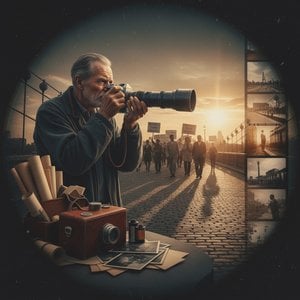
Witnessing History Through Lens & Light: Documentary Photography's Enduring Legacy
Explore the powerful history of documentary photography – from its origins to contemporary masters like Gordon Parks & W. Eugene Smith. Discover how this art form shapes our understanding of society and witness pivotal moments in time.

Albert Kretschmer: Capturing 19th-Century Costume & the Seeds of Expressionism
Explore the exquisite costume studies of Albert Kretschmer (1825-1891). Discover his detailed illustrations, influence on art history & connection to early Expressionism. Learn about collecting this remarkable artist's work.

Charles Le Brun: Master of French Baroque Classicism & His Enduring Legacy
Explore the life & art of Charles Le Brun, master of French Baroque Classicism. Discover his royal commissions, influence on Versailles, and enduring legacy through detailed analysis & stunning artworks.
