

 Megtekintés
 Küldés
 Megosztás
 Részletek
 Útmutató

 Letöltés
 Hasonló darabok
 X-ray felvétel
 Diavetítés
 Kérdések és válaszok
 Statisztika
The Baptism

- 122.0 x 150.0 cm


 Összes részlet megjelenítése
Az ezen az oldalon megjelenített műalkotások szerzői jogi védelem alatt állnak, ami azt jelenti, hogy törvényileg nem készíthetünk és nem adhatunk el belőlük pontos másolatokat. Ez a védelem olyan nemzetközi megállapodások alapján érvényesül, mint például a Berni Egyezmény és a nemzeti jogszabályok által, beleértve azokat is, amelyeket meghatározott Az USA szerzői jogi törvénye – 17. cím.
Ez a módszer teljes mértékben megfelel a szerzői jogi szabályozásnak, mivel nem tartalmazza a védett műalkotás másolását vagy duplikálását. Ehelyett ez egy kreatív újinterpretáció – egy új festmény, amely az eredetivel való összefüggései miatt hatással van rá, de nem az az.
Giclée / Műnyomat
Múzeumi minőségű giclée vagy vászonnyomat, gyors gyártással és rugalmas finomítási lehetőségekkel. ( Kézzel festett másolat rendelése Áttérés digitális képre)




P118B Ft10

P118H Ft10

P118W Ft10

P438Z Ft10

P508JH Ft12

P508YH Ft12

P805H Ft10

P805Z Ft10

P919BZ Ft10

P919G Ft10

P919XJ Ft10

P959ZH Ft10

P968JZ Ft12

W106C Ft8

W218G Ft10

W218JH Ft8

W218Y Ft10

W307PJ Ft10

W316G Ft10

W316PJ Ft8

W316Y Ft10

W398PJ Ft8

W4111J Ft10

W500HY Ft15

W500JH Ft15

W692G Ft12

W849H Ft8

W940BG Ft15

W953PJ Ft8




Válasszon előre meghatározott méreteink közül, amelyek megfelelnek a műalkotás eredeti arányainak.

Írja be a keretének vagy a falának megfelelő szélességet és magasságot. A nyomatot csak le lehet vágni, soha nem tehető nagyobbá, mint az eredeti kép, így egy eltérő alakú méretnél a kép egy része elveszik. Mielőtt bármit kinyatintanánk, küldünk egy digitális próbamodellt jóváhagyásra. Az oldalon látható kép nem tartalmazza a valós levágást — ezt csak a próbamodell mutatja meg.
Világszerte történő kiszállítás területére mindössze 2 hét alatt, a szokásos 4-5 hét helyett. (3 november)

Ingyenes globális expressz szállítás

Prémium minőségű len vászon

Teljes körű szállítási biztosítás

Vámvisszatérítési Garancia

Hiteles színarányosság garancia

100 napos visszaküldési lehetőség (csak hibás termékek esetén)

100% pénzvisszatérítési garancia

Több darab vásárlásakor kedvezmény
 Az üvegkeretes opció csak 110 cm alatti méretben érhető el

The Baptism
Giclée / Műnyomat
Reprodukció mérete
-


Összesített ár
Ft 20641
A Moment Frozen in Time
In The Baptism, Antonio Donghi achieves something truly extraordinary: he captures a fragment of middle-class life and suspends it in a state of eternal, quietude. The painting presents a family scene featuring three central figures, where a man in a suit and tie and a woman cradling a baby are set within a space that feels simultaneously real and profoundly abstract. There is a haunting quality to the composition; the individuals appear almost as immobile wax statues on a podium, their expressions neutral and strangely detached from the joyous occasion they are celebrating. This sense of emotional distance creates a tension between the sacred nature of the ritual and the stoic, almost frozen presence of the participants, as if they are waiting for a ritual photograph that will never quite capture their true essence.
< p>The atmosphere is charged with an unreal lack of familiarity, driven by an adamant painting style and a fixed, absorbed light that illuminates the scene with surgical precision. Donghi’s mastery lies in his ability to use light not just to reveal form, but to create a sense of mystery. The figures are set in a minimal environment that strips away the distractions of the modern world, leaving only the essential elements of the event. This deliberate reduction of detail allows the viewer to focus on the subtle interplay of texture and shadow, making the painting feel less like a mere depiction of an event and more like a dreamlike meditation on existence itself.The Artistry of Neoclassical Precision
Technically, The Baptism is a triumph of the Neoclassical movement, showcasing Donghi’s refined ability to marry meticulous detail with a powerful, structured composition. His attention to the clothing of the subjects—a skill perhaps inherited from his father, a fabric dealer—serves a deeper purpose than mere ornamentation; it functions as a way to socially characterize the roles of those portrayed. Every fold in the fabric and every sharp line in the attire contributes to the painting's sense of social order and permanence. The spatial clarity is remarkable, with each element occupying its place with absolute certainty, reminiscent of the architectural stability found in the works of Renaissance masters like Piero della Francesca.
For the discerning collector or interior designer, this work offers a unique aesthetic value. It possesses a Magical Realism that avoids the chaotic energy of much modern art, offering instead a sense of profound, meditative calm. The painting’s ability to evoke both the mundane and the monumental makes it a captivating centerpiece for any sophisticated space. Whether one is drawn to its smooth, polished surfaces or its enigmatic, quiet dignity, The Baptism stands as a testament to the power of stillness. It invites the observer to pause, to look closely, and to find beauty in the silent resonance of a single, captured moment.
Kérdések és válaszok
Mely korszakból származik a "The Baptism"?
A "The Baptism" a Modern korszak alkotása.
Hogyan egyensúlyozza a fényt és a sötétséget a "The Baptism"?
A „The Baptism”, Antonio Donghi alkotása fényerősége shadow, luminanciája pedig Dark.
Milyen kontraszt jellemzi a „The Baptism”, Antonio Donghi alkotása alkotást?
A „The Baptism”, Antonio Donghi alkotása kontrasztját Balanced teszi.
Hasonló műalkotások


A művész életrajza
Antonio Donghi: The Quiet Master of Neoclassicism
Antonio Donghi (March 16, 1897 – July 16, 1963) was an Italian painter who achieved renown for his meticulous depictions of everyday life and landscapes rendered in a distinctly neoclassical style. Born in Rome, he embarked on a formative artistic journey at the Instituto di Belle Arti before serving during World War I, experiences that profoundly shaped his worldview and artistic sensibilities. Donghi’s distinctive approach—characterized by serene compositions, precise spatial representation, and an understated elegance—established him as one of Italy's foremost figures within the neoclassical movement that flourished in the 1920s.Early Life and Artistic Training
Donghi’s formal education began at the Instituto di Belle Arti in Rome where he honed his skills in drawing and painting under influential instructors. This foundational training instilled a disciplined technique and an appreciation for classical ideals—traits that would permeate throughout his oeuvre. He demonstrated exceptional talent from a young age, displaying a remarkable aptitude for capturing light and form with unwavering accuracy. Following the exigencies of military service during World War I, Donghi continued his artistic pursuits in Florence and Venice, immersing himself in the vibrant intellectual atmosphere of these cities and absorbing inspiration from masters like Piero della Francesca and Henri Rousseau. These formative years cultivated a sensitivity to form and color that would become hallmarks of his later work—a profound understanding of how subtle tonal variations could convey emotion and atmosphere.The Neoclassical Movement and Artistic Style
Donghi’s artistic career gained momentum during the neoclassical movement, which sought to revive the grandeur and clarity of antiquity while retaining a modern sensibility. Critics noted striking parallels between Donghi's paintings and those of Seurat, praising his ability to capture subtle nuances of emotion and atmosphere—a characteristic that distinguished him from many of his contemporaries. He achieved remarkable spatial depth and tonal gradation through meticulous brushwork, mirroring the techniques employed by luminist painters like Seurat. Donghi’s subjects often revolved around scenes of rural life – laundresses, circus performers, musicians – depicted with a quiet dignity and understated realism. Notably, Donghi's still lifes—particularly those featuring vases of flowers—were imbued with the serene symmetry of naive art, reflecting his fascination with simplicity and natural beauty. This stylistic choice underscored his belief in conveying emotion through restrained visual language.Major Achievements and Recognition
Donghi’s artistic talent garnered considerable acclaim during his lifetime. He secured First Prize at an International Exhibit held at Carnegie Institute in Pittsburgh in 1927, cementing his reputation as a significant contributor to the Italian art scene. This recognition propelled him into the spotlight of European avant-garde circles and solidified his position within the burgeoning magic realism trend championed by Franz Roh. Donghi’s unwavering dedication to artistic excellence ensured that he remained active throughout his career, consistently exhibiting his work and engaging with fellow artists—a testament to his enduring passion for capturing the essence of both tradition and modernity. His paintings reside primarily in Italian collections, notably the Museo di Roma, where they serve as enduring reminders of a masterful artist who captured the essence of both tradition and modernity.Legacy and Influence
Donghi’s influence extended beyond his own artistic output; he mentored younger artists and fostered a dialogue about stylistic innovation within the neoclassical framework. His meticulous attention to detail—particularly in rendering landscapes and portraying human figures—became an inspiration for subsequent generations of painters. Donghi's quiet mastery of technique and his unwavering commitment to capturing the beauty of everyday life continue to resonate with art historians and collectors alike, securing his place as one of Italy’s most respected artists of the 20th century. Explore Antonio Donghi's page at ArtsDot to learn more about his life and work.
Antonio Donghi
1897 - 1963 , Olaszország
Rövid információk
- Artistic Movement Or Style: Neoclassicism
- Artists Or Movements Influenced By This Artist: ['Naive Art']
- Artists Who Influenced This Artist:
- Henri Rousseau
- Georges Seurat
- Date Of Birth: March 16, 1897
- Full Name: Antonio Donghi
- Nationality: Italian
- Notable Artworks:
- The Baptism
- Woman in a Cafe
- Place Of Birth: Rome, Italy
Kapcsolódó cikkek

The Enduring Legacy of Family Portraiture: A Historical & Artistic Exploration
Explore the rich history of family portraiture with ArtsDot. Discover artistic styles, symbolism & collecting insights. Commission a custom oil painting or appraise your existing artwork today!

Raphael 25 Mesterműve: A Reneszánsz Zsenialitása – Vásároljon Kiváló Minőségű Reprodukciókat!
Fedezze fel Raphael 25 legpárásabb műalkotását! Olvasson a reneszánsz zsenialitásáról, festészeti technikáiról és ikonikus képeiről. Vásároljon exkluzív olajfestmény reprodukciókat otthona díszítésére a ArtsDot.com-on!
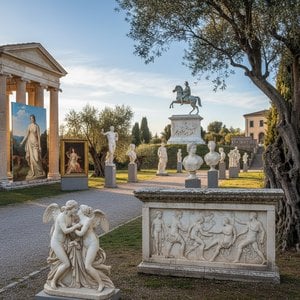
A Neoklasszicizmus 10 Mesterműve: A Történelem Legikonikusabb Festményei és Szobrai
Fedezze fel a neoklasszicizmus 10 legikonikusabb műalkotását! Jacques-Louis David, Ingres és Canova remekművei elmesélnek egy korszakot. Múzeumi minőségű reprodukciók otthonába a ArtsDot.com kínálatából – inspirációt és eleganciát nyújtunk. Böngésszen online!

Claude Monet 25 Mesterműve: A Fény és a Szín Zsenialitása – ArtsDot.com
Fedezze fel Claude Monet 25 legikonikusabb mesterművét! Ismerje meg az impresszionizmus zseniális festőjének történetét, a fény és szín varázsát. Vásároljon exkluzív reprodukciókat otthona dekorációjához a ArtsDot.com-on!

Evolving Portraits: Personalized Art as a Chronicle of Family Life Across Generations
Create a timeless family legacy with custom portraits! ArtsDot connects you with skilled artists for heirloom-quality paintings & prints. Explore styles, commission your unique artwork today.