


 Megtekintés
 Küldés
 Megosztás
 Részletek

 Letöltés
 Hasonló darabok
 X-ray felvétel
 Diavetítés
 Statisztika
The Mandarin's Procession


 Összes részlet megjelenítése
Giclée / Műnyomat
Múzeumi minőségű giclée vagy vászonnyomat, gyors gyártással és rugalmas finomítási lehetőségekkel. ( Kézzel festett másolat rendelése Áttérés digitális képre)




P118B $10

P118H $10

P118W $10

P438Z $10

P508JH $12

P508YH $12

P805H $10

P805Z $10

P919BZ $10

P919G $10

P919XJ $10

P959ZH $10

P968JZ $12

W106C $8

W218G $10

W218JH $8

W218Y $10

W307PJ $10

W316G $10

W316PJ $8

W316Y $10

W398PJ $8

W4111J $10

W500HY $15

W500JH $15

W692G $12

W849H $8

W940BG $15

W953PJ $8




Válasszon előre meghatározott méreteink közül, amelyek megfelelnek a műalkotás eredeti arányainak.

Megadhat saját méreteket is egy konkrét kerethez vagy helyszínhez igazítva. Amennyiben a kiválasztott méret nem egyezik az eredeti kép arányokkal, a műalkotást le fogjuk vágni, vagy kiegészítjük a képet tükrözött vagy egyszínű szélekkel. A gyártás megkezdése előtt egy digitális tervezetet küldünk jóváhagyásra.
Kérjük, vegye figyelembe, hogy a képernyőn látható előnézet nem tükrözi a tényleges levágást vagy kiegészítést. Csak a tervezet mutatja pontosan a végső kompozíciót.
Bár az egyedi méretek is elérhetőek, az eredeti arányok megőrzése érdekében azt javasoljuk, hogy válasszon a előre meghatározott listából származó méretet.
Világszerte történő kiszállítás területére mindössze 2 hét alatt, a szokásos 4-5 hét helyett. (9 szeptember)

Ingyenes globális expressz szállítás

Prémium minőségű len vászon

Teljes körű szállítási biztosítás

Vámvisszatérítési Garancia

Hiteles színpontosság garancia

100 napos visszaküldési lehetőség (csak hibás termékek esetén)

100% pénzvisszatérítési garancia

Több darab vásárlása esetén kedvezmény
 Az üvegkeretes opció csak 110 cm alatti méretben érhető el

The Mandarin's Procession
Giclée / Műnyomat
Reprodukció mérete
-


Összesített ár
$ 62
Hasonló műalkotások


A művész életrajza
Andrea Urbani: A Master of Serene Landscapes and Architectural Detail
Andrea Urbani (1711-1798) stands as a quietly significant figure in 18th-century Italian art, particularly renowned for his meticulously rendered landscapes and architectural studies. Born in Mantua, Italy, Urbani’s career unfolded primarily within the Gonzaga court, where he served as a court painter for over six decades, shaping the visual identity of the region's most powerful family. Unlike some of his more flamboyant contemporaries, Urbani cultivated a style characterized by restraint, precision, and an almost photographic eye for detail – qualities that earned him considerable respect and established him as a master of capturing the subtle nuances of light, texture, and form.
Urbani’s early artistic training remains somewhat shrouded in mystery. While he undoubtedly studied under the influence of the classical traditions prevalent in Mantua, his work demonstrates a unique synthesis of influences. The meticulous draftsmanship of Canaletto is evident in his cityscapes, while the atmospheric perspective and tonal subtlety of Piranesi are discernible in his landscapes. However, Urbani’s style possesses an inherent Italian sensibility – a deep appreciation for the beauty of the natural world and a profound understanding of architectural design. His compositions often feature a sense of calm and order, reflecting the Gonzaga court's commitment to refined taste and intellectual pursuits.
The Gonzaga Court and Architectural Patronage
Urbani’s career was inextricably linked to the Gonzaga family and their magnificent palace in Mantua. He began as a mere assistant to Giovanni Paolo Pannini, a renowned architectural painter, but quickly established himself as a valued artist in his own right. The Gonzagas were avid collectors of art and architecture, commissioning numerous works that adorned their palaces and villas. Urbani’s role extended beyond simply painting; he was also tasked with documenting the palace's interiors and exteriors, creating detailed drawings and watercolors that served as architectural guides for future renovations and expansions.
His most significant commissions included elaborate ceiling frescoes within Palazzo Ducale (Ducal Palace) in Mantua, such as “The Mandarin’s Procession” (1764), a vibrant fresco depicting an opulent procession of figures on elephants – a testament to the Gonzaga's wealth and influence. He also produced numerous views of the surrounding countryside, capturing the rolling hills, vineyards, and picturesque villages that defined the region’s landscape. The “Ceiling fresco” (1764) is particularly noteworthy for its intricate detail and masterful use of perspective, showcasing Urbani’s technical skill and artistic vision.
Technique and Artistic Style
Urbani's distinctive style hinges on a remarkable ability to render surfaces with astonishing realism. He employed a meticulous technique, often working from life or using highly detailed sketches as guides. His watercolors, like “The Swan Attacked by Dogs” (1764), demonstrate an exceptional command of color and texture, capturing the delicate plumage of the swan and the rough bark of the trees with remarkable accuracy. He was particularly adept at depicting architectural details – windows, doors, columns, and facades – with a precision that borders on photographic.
Unlike many artists of his time who favored dramatic lighting and bold brushstrokes, Urbani preferred a more subdued palette and subtle gradations of tone. He skillfully used atmospheric perspective to create a sense of depth and distance in his landscapes, while carefully rendering the textures of stone, wood, and foliage. His compositions are often characterized by a balanced arrangement of elements, creating a harmonious and visually pleasing effect. His work is not about grand gestures; it’s about quiet observation and faithful representation.
Legacy and Historical Significance
Andrea Urbani's contribution to Italian art is often overlooked in favor of more flamboyant contemporaries, but his meticulous style and dedication to architectural documentation have secured his place as a significant figure in 18th-century painting. His work provides invaluable insights into the Gonzaga court’s patronage and the artistic tastes of the era.
Beyond his individual achievements, Urbani's legacy lies in his influence on subsequent generations of artists. His emphasis on observation, detail, and tonal subtlety paved the way for later landscape painters who sought to capture the beauty of the natural world with scientific accuracy. His meticulous architectural drawings served as models for architects and designers, shaping the visual language of Italian architecture for decades to come. Today, his works can be found in major museums throughout Italy and beyond, offering a glimpse into the serene landscapes and architectural masterpieces created by this quietly influential artist. The Chiesa dei Santi Andrea e Stefano in Marciano della Chiana, where many of his frescoes remain, and Palazzo del Principe in Genoa, showcase his enduring impact on Italian art and architecture.

andrea urbani
1711 - 1798
A művészről röviden
- Artistic Movement Or Style: Baroque, Landscape
- Date Of Death: 1798
- Full Name: Andrea Urbani
- Nationality: Italian
- Notable Artworks:
- The Mandarin’s Procession
- Ceiling fresco
- The Swan Attacked by Dogs
- Place Of Birth: Mantua, Italy
Kapcsolódó cikkek

The Enduring Legacy of Fresco: Technique, History & Artistic Expression Across Cultures
Explore the rich history & enduring legacy of fresco painting! Discover ancient techniques, Giotto's masterpieces, and modern applications. Expert insights for art lovers & professionals.

A személyes történetek, a kulturális gyökerek és a spirituális szimbólumok tükre: Egyedi falfestmények az otthon mélyebb értelméért
Egyedi falfestményekkel teremtsen otthona egyedülálló hangulatát! Szakértői segítség, prémium minőségű anyagok és személyre szabott tervezés. Fedezze fel kulturális gyökereit és spirituális értékeit falainkon!

The Enduring Legacy of Fresco Painting: Techniques, History & Contemporary Relevance
Explore the rich history & enduring artistry of fresco painting – from Giotto to Michelangelo! Discover techniques, conservation efforts, & modern applications. Learn how ArtsDot brings this timeless art form to your home.

The Enduring Legacy of Fresco: Technique, History & Artistic Expression
Explore the rich history & enduring artistry of fresco painting. Discover techniques from Giotto to Michelangelo, conservation efforts, & modern applications. Learn how ArtsDot brings this timeless art form to your home.
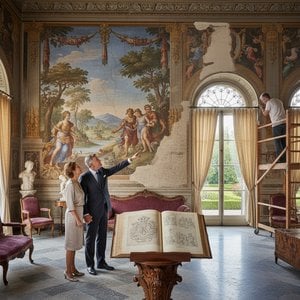
A családi örökség festői világa: Hogyan őrizzük meg a múltat a falakon?
Őrizze meg családja történetét festményekkel! Egyedi portrék, régi fényképek restaurálása és családi címer tervezése profi művészek által. Fedezze fel a kínálatát!