


The picture follows your choices: , .
A gyűjtemény leírása
Experience Andrea Mantegna’s ‘ceiling oculus,’ a Renaissance masterpiece featuring angels surrounding a central oculus with intricate details and symbolic birds. This captivating artwork evokes classical antiquity and offers a unique opportunity to own a piece of art history.
 Összes részlet megjelenítése
A művész életrajza
Andrea Mantegna (1431-1506): A reneszánsz mester a perspektívában és szoborszerű részletességgel. Fedezd fel ikonikus műveit, mint a 'Lelkiasztás' és a 'Főépület'! – Andrea Mantegna, reneszánszi festő, a perspektíva és szoborszerű részletesség mestere.
Kézzel készített olajfestmény reprodukció
Kézzel festett olajvastú vászon, az Ön által választott méretben és keretben, művészeink készítik meglévőre. ( Váltás nyomtatványra Áttérés digitális képre)
More about this painting
 Megtekintés
 Küldés
 Megosztás
 Részletek
 Útmutató

 Letöltés
 Hasonló darabok
 X-ray felvétel
 Diavetítés
 Q&A
Q&A Statisztika
Order your painting in four simple steps
Take your time. You can change any answer; the price in your order card follows each choice.
1 Step one of four
Which size would you like?
These sizes keep the proportions of the original painting. The drawing shows your choice on a wall, above a two-metre sofa.
Or give your own measurements
Válasszon előre meghatározott méreteink közül, amelyek megfelelnek a műalkotás eredeti arányainak.

Írja be a kívánt szélességet és magasságot, hogy illeszkedjen a keretéhez vagy a falához. Mivel ez kézzel festett alkotás, egy eltérő formájú méret esetén a művész akár festhet is valamivel többet a kép körül, vagy korolathat is belőle — az Ön döntésének megfelelően. A festés megkezdése előtt küldünk egy digitális tervezetet jóváhagyásra. Az oldalon látható kép nem tartalmazza a végeredményt — csak a tervezet mutatja meg a valódi eredményt.
2 Step two of four
How should it be prepared: rolled, stretched or framed?
The prices below are for the size you chose in step one.
Choose the edges of the stretched canvas
Choose your frame

White Ft1

Blurside Ft1

Extended Ft1

P118B Ft10

P118H Ft10

P118W Ft10

P438Z Ft10

P508JH Ft12

P508YH Ft12

P805H Ft10

P805Z Ft10

P919BZ Ft10

P919G Ft10

P919XJ Ft10

P959ZH Ft10

P968JZ Ft12

W106C Ft8

W218G Ft10

W218JH Ft8

W218Y Ft10

W307PJ Ft10

W316G Ft10

W316PJ Ft8

W316Y Ft10

W398PJ Ft8

W4111J Ft10

W500HY Ft15

W500JH Ft15

W692G Ft12

W849H Ft8

W940BG Ft15

W953PJ Ft8

H24-GOLD Ft30

H24-SILVER Ft30

H36-GOLD Ft45

H36-SILVER Ft45
Keretezett
Moulding: . Overall size with the frame: .
3 Step three of four
Would you like anything changed in the painting?
Most people answer no. Because each painting is made by hand, our artist can also adapt it for you.
After order, ArtsDot.com team will email client for instructions and provide a mockup preview
4 Step four of four
A few finishing options
All of them are optional. The answers already selected cost nothing extra.
Who paints it?
Világszerte elérhető szállítás () 3-4 hét alatt a szokásos 5 hét helyett. (29 október). A minőség nem kérdőjelezhető.
A nameplate, as in a museum?
A gravírozott bronztábla részletei
This elegant plaque features the artist's name and the title of the artwork, finely engraved for a timeless presentation.
It is made from bronze with a refined, elegant finish. The text is precisely laser-engraved for a sharp and permanent result. Measuring 9x2 cm, the plaque is compact yet easy to read. It's built to be durable and scratch-resistant, offering a professional, museum-quality look. Mounting is simple thanks to the included adhesive backing.
Átlátszó akril tábla részletei
The plaque includes essential engraved details such as the artist's name, the title of the artwork, the date it was created, the type of media used-like oil on canvas or watercolor-a brief description of the piece, and a QR code that links to the complete artwork information.
It is crafted from clear acrylic, offering a sleek, modern appearance. The text is UV-engraved in black to ensure strong visual contrast. With a size of 10x15 cm, it ensures optimal readability. It comes equipped with two metal hooks for secure wall mounting. The plaque is designed to be weather-resistant, making it suitable for various environments, and it includes interactive features that work seamlessly with smartphone scanning.
Fekete akril tábla részletei
This elegant plaque includes engraved information such as the artist's name, the title of the artwork, the date it was created, the type of media used (like oil on canvas or watercolor), a short description of the artwork, and a QR code for quick access to more information.
The plaque itself is made from refined black acrylic with a premium finish. The text is laser-engraved in white for high contrast and readability. Its size is 10x15 cm, designed to be easy to read. It comes with two metal hooks for professional mounting. The design is sleek and fits any interior style. It is also weather-resistant and durable, with built-in digital integration for mobile compatibility.
A protective varnish?
When do you need it?
✓ Check and order
Your painting, as you ordered it

ceiling oculus
Reprodukciós technika
Reprodukció mérete
-

Kiváló mesterművész
Nagyobb részletesség, finomság és bővített gyártási idő
-

Reprodukció keretezése
-
-
A bármely oldalsó méretét túlszálaló 105 cm (kb. 41 hüvelyk) meghaladó műalkotások vagy reprodukciók esetében a keret összeszerelhető készletként, szétszerelve kerül szállításra. Ez a módszer biztosítja a biztonságos szállítást, és megakadályozza a szállítás során fellépő sérüléseket.
Szakmész összeszerelést igényel – ez nem DIY (önösszeszerelhető) termék.
A készletet egy tapasztalt keretező szakembernek kell összeszerelnie és a vásznat feszítenie kell, fa ragasztó (nem tartalmazza a csomag), vásznfeszítő fogó és szorítók használatával, amelyek a ragasztó száradásáig a keretrészeket egymáshoz vuôngjba tartják. A helytelen összeszerelés vagy a nem egyenletes vásznfeszítés maradandó károsíthatja a műalkotást, és ez nem része a garanciánknak.
 A bármely oldalsó méretét túlszálaló 105 cm (kb. 41 hüvelyk) meghaladó műalkotások vagy reprodukciók esetében a keret összeszerelhető készletként, szétszerelve kerül szállításra. Ez a módszer biztosítja a biztonságos szállítást, és megakadályozza a szállítás során fellépő sérüléseket.
A készlet tartalmazza az összes tömörfa rudat, pontosan méretre vágva.
A mellékelt csavarokkal, valamint a sarokszerekhez szükséges faütő ragasztóval kell összeszerelnie (ez nem tartalmazható a csomagban), így a keretrendezőnek külön kell beszereznie.
A csomag nem tartalmazza a szükséges professzionális eszközöket: egy vászonfeszítőt és klipseket a rácsok vízszintes tartásához a ragasztó megszáradásáig.
Fontos:
A sarokcsatlakozásokhoz fánylagra van szükség, a keretrudakat szorítókapcsokkal kell rögzíteni, amíg a rag teljesen meg nem szárad, a kész keretre feszített vászonhoz pedig vászonfeszítő fogat szükséges. Ezek egyike sem található meg a készletben. Kérjük, rendelés előtt győződjön meg róla, hogy rendelkezik tapasztalt keretező szakemberrel.

Névtábla
-
-

Védőréteg (Lakk)
Fényes lakk (intenzívabb színek, védelem a fény és a nedvesség hatása ellen)
-

Műalkotásom egyedi igényre szabása
Példák a módosíthatóságra: az arc kicserélése az ügyfél fotójára; háziállat hozzáadása (pl. macska helyett kutya); rejtett üzenet elhelyezése a háttérben; a háttér tájainak vagy elemeinek megváltoztatása.
-

Sürgős
Világszerte szóló szállítás () mindössze 3-4 hét alatt, a szokásos 5 hét helyett. (29 október). A minőség nem kérdőjelezhető.
-
Express szállítás
Világszerte elérhető szállítás területre 5 héten belül. (5 november).
A szállítás díja tartalmazza
Összesített ár
Ft 84973
Az üvegkeretes opció csak 110 cm alatti méretben érhető el
Included with every order
- Ingyenes globális expressz szállítás
- Prémium minőségű len vászon
- Teljes körű szállítási biztosítás
- Vámvisszatérítési Garancia
- Hiteles színarányosság garancia
- 100 napos visszaküldési lehetőség (csak hibás termékek esetén)
- 100% pénzvisszatérítési garancia
- Több darab vásárlásakor kedvezmény


A Celestial Embrace: Exploring Andrea Mantegna’s “Ceiling Oculus”
Andrea Mantegna's "Ceiling Oculus" is not merely a depiction of a painted ceiling; it’s a meticulously crafted window into the heart of Renaissance thought, a testament to the artist’s profound reverence for antiquity. Executed around 1495-1500, this remarkable work, likely commissioned for a private chapel, immediately captivates with its central oculus – a circular aperture that invites the viewer to contemplate the heavens and the divine presence within. The scene unfolds as a carefully orchestrated tableau of angels, each imbued with a sense of serene authority and classical grace, surrounding the luminous circle. Mantegna’s genius lies not just in his technical mastery but in his ability to evoke a palpable atmosphere of solemnity and spiritual contemplation.
- Renaissance Revival: Mantegna's work represents a crucial moment in the Renaissance, marking a shift away from purely Gothic conventions towards a renewed interest in classical antiquity. He wasn’t simply copying Roman art; he was actively seeking to understand its principles and apply them to his own artistic endeavors.
- Sculptural Perspective: The figures within the painting are rendered with an almost sculptural quality, reflecting Mantegna's fascination with Roman sculpture. His use of linear perspective, though still developing at this time, creates a powerful illusion of depth and space, drawing the viewer into the scene.
Technique and Materials: A Masterclass in Detail
Mantegna’s technique is characterized by its meticulous detail and precise execution. He employed oil paint on plaster, a medium that allowed for layering and glazing – essential techniques for achieving the luminous effects so characteristic of his work. Observe the subtle gradations of color, particularly in the drapery of the angels, where light plays across the fabric with remarkable realism. The artist’s attention to texture is equally impressive; from the smooth surfaces of the figures' skin to the rougher details of their garments, every element contributes to the overall sense of tangible presence. The use of gold leaf, likely applied in areas such as the oculus and certain decorative elements, would have further enhanced the painting’s splendor and symbolic significance.
Symbolism and Narrative: Angels and Divine Light
The central oculus serves as a powerful symbol of divine illumination – a direct link between the earthly realm and the celestial sphere. The angels surrounding it are not simply decorative figures; they represent messengers of God, intermediaries between humanity and the divine. The inclusion of the bowl and book held by some of the angels further reinforces this religious narrative, referencing traditional symbols of charity and knowledge. The two birds, subtly placed within the composition, may have represented hope or resurrection – common motifs in Renaissance art. Mantegna’s careful arrangement of these elements creates a complex symbolic language that invites contemplation on themes of faith, redemption, and the nature of divine grace.
Emotional Impact and Legacy
"Ceiling Oculus" possesses a profound emotional impact, transporting the viewer to a realm of serenity and spiritual awe. Mantegna’s masterful use of light and shadow, combined with his carefully crafted figures, evokes a sense of reverence and wonder. This painting stands as a testament to Mantegna's artistic genius and his enduring legacy as one of the most important artists of the Renaissance. A hand-painted reproduction offers an unparalleled opportunity to experience the beauty and power of this iconic work firsthand, bringing its timeless message of faith and contemplation into your home or studio.
Kérdések és válaszok
Milyen hangulat és érzelem ötvöződik a "ceiling oculus" alkotásban?
A „ceiling oculus”, Andrea Mantegna alkotása egy Calm érzést közvetít, egy összonosan Elegant hangulatban.
A „ceiling oculus”, Andrea Mantegna alkotása a keresett Early Renaissance művészeti alkotások közé tartozik?
A „ceiling oculus”, Andrea Mantegna alkotása a Iconic kategóriába tartozik, és a Early Renaissance irányzat részeként tekinthető.
Mely művészeti irányba tartozik a „ceiling oculus”, Andrea Mantegna alkotása?
A "ceiling oculus" a Early Renaissance egyik alkotása. A művészeti irány meghatározza azt a művészeti hagyományt, amelybe a mű beágyazódik.
Hasonló műalkotások


Andrea Mantegna
1431 - 1506, Olaszország
A művész életrajza
A Renaissance Forged in Antiquity: The Life and Art of Andrea Mantegna
Andrea Mantegna, born near Padua around 1431, stands as a pivotal figure bridging the Early and High Renaissances. His artistic journey wasn’t merely about adopting classical forms; it was an immersive excavation of antiquity, a passionate attempt to resurrect the spirit of Rome within the burgeoning Italian Renaissance. Unlike many contemporaries who drew inspiration from classical models, Mantegna possessed a unique fervor for archaeological accuracy. This obsession stemmed from his formative years under Francesco Squarcione, a painter and collector whose workshop functioned less as a traditional studio and more as an academy dedicated to the study of Roman ruins, sculptures, and inscriptions. It was within these walls, surrounded by fragments of a lost empire, that Mantegna’s artistic vision began to take shape—a vision characterized by sculptural forms, dramatic perspective, and an almost obsessive attention to detail. His early life remains somewhat shrouded in mystery; accounts suggest he was discovered as a promising apprentice, his innate talent recognized and nurtured by Squarcione despite humble origins. This unconventional beginning perhaps fueled Mantegna’s relentless pursuit of artistic mastery and his determination to forge a style distinctly his own.The Gonzaga Court and the Illusion of Reality
Mantegna's career truly blossomed when he entered the service of the Gonzaga family in Mantua, becoming court painter in 1488. This patronage provided him with an unprecedented level of artistic freedom and a platform to realize his most ambitious projects. The Gonzaga’s were not simply patrons; they were collaborators, commissioning works that pushed the boundaries of artistic innovation. It was during this period that Mantegna created what is arguably his masterpiece: the *Camera degli Sposi* (Bridal Chamber) frescoes in the Palazzo Ducale. This groundbreaking work transcends mere decoration; it's a complete illusionistic environment, seamlessly integrating architecture and painting to create an extended sense of space. The frescoes depict scenes from the life of the Gonzaga family, portraits that are remarkably lifelike and engaging, and a breathtaking *di sotto in sù* (seen from below) ceiling panel that creates the illusion of an open sky. This masterful manipulation of perspective wasn’t simply about technical skill; it was about creating a world within a room, blurring the lines between reality and representation. The *Camera degli Sposi* is considered one of the most important achievements in Renaissance art, demonstrating Mantegna's unparalleled ability to create convincing illusions and transform a simple chamber into a monumental space. Beyond the *Camera degli Sposi*, Mantegna continued to produce works of exceptional quality for the Gonzaga court, including the monumental series *Triumphs of Caesar*. These paintings, inspired by Roman triumphal processions, are not merely historical depictions; they are elaborate allegories celebrating the power and prestige of the Gonzaga family, presented with a grandeur that rivals the imperial ambitions of ancient Rome.A Master of Perspective and Anatomical Precision
Mantegna’s artistic innovations extended far beyond illusionistic environments. He was a pioneer in the use of perspective, frequently adjusting the horizon line to create dramatic effects and a sense of monumentality. His meticulous attention to anatomical detail was equally revolutionary for his time. He wasn't content with simply representing the human form; he dissected it, studied its musculature, and rendered it with a precision that was unparalleled. This dedication to anatomical accuracy wasn’t merely an exercise in technical skill; it reflected Mantegna’s deep engagement with classical sculpture and his desire to emulate the idealized forms of antiquity. He sought not just to depict the human body but to capture its inherent dignity and power. His influence on subsequent generations of artists, including Raphael and Michelangelo, is undeniable, as they built upon his foundations in perspective, anatomy, and composition. Mantegna’s use of *trompe-l'oeil* – creating illusions so convincing they deceive the eye – further enhanced this effect, blurring the boundaries between painting and reality.Early Works and Influences
Mantegna’s early career was shaped significantly by his apprenticeship with Francesco Squarcione. Squarcione’s workshop served as a unique training ground, exposing Mantegna to Roman ruins, sculptures, and inscriptions – a direct connection to antiquity that profoundly influenced his artistic vision. This immersion in the past instilled in him a deep respect for classical art and a desire to emulate its grandeur and realism. His early works, such as the *Agony in the Garden* (c. 1460-65), demonstrate this influence vividly. The composition, with its dramatic lighting and sculptural figures, echoes the style of ancient Roman sculpture, while the meticulous detail and precise perspective are hallmarks of Mantegna’s distinctive approach. He also drew inspiration from other artists, including Donatello, whose dynamic sculptures influenced his depiction of human form, and Giovanni Bellini, whose use of color and atmospheric effects contributed to his evolving artistic style.Legacy and Enduring Influence
Andrea Mantegna died in Mantua in 1506, leaving behind a legacy that continues to resonate with art historians and enthusiasts alike. His work represents a crucial turning point in the history of Renaissance art, bridging the gap between the Early and High Renaissance styles. He wasn’t simply an imitator of classical forms; he was an interpreter, adapting ancient motifs and techniques to create something entirely new and uniquely his own. His meticulous attention to detail, his mastery of perspective, and his profound engagement with classical antiquity established him as a leading figure of his time. Mantegna’s exploration of classical themes helped revive interest in ancient art and culture, paving the way for the artistic achievements of the High Renaissance. His influence can be seen in the works of countless artists who followed, from Raphael's graceful compositions to Michelangelo's powerful figures. Today, his paintings are housed in major museums around the world, including The National Gallery in London and the Pinacoteca di Brera in Milan, where they continue to inspire awe and admiration.


Kapcsolódó cikkek
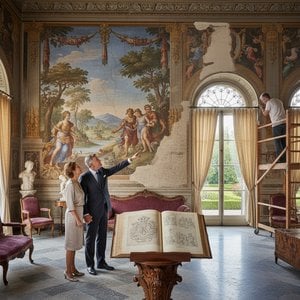
A családi örökség festői világa: Hogyan őrizzük meg a múltat a falakon?
Őrizze meg családja történetét festményekkel! Egyedi portrék, régi fényképek restaurálása és családi címer tervezése profi művészek által. Fedezze fel a kínálatát!

The Enduring Legacy of Fresco Painting: Techniques, History & Contemporary Relevance
Explore the rich history & enduring artistry of fresco painting – from Giotto to Michelangelo! Discover techniques, conservation efforts, & modern applications. Learn how ArtsDot brings this timeless art form to your home.

Celestial Messengers: Angels in Painting – A Historical & Artistic Exploration
Explore the captivating history of angels in painting! Discover symbolism, iconic Renaissance & Byzantine masterpieces, and renowned artists. Expert insights for art lovers & collectors at ArtsDot.