

 Megtekintés
 Küldés
 Megosztás
 Részletek
 Útmutató

 Letöltés
 Hasonló darabok
 X-ray felvétel
 Diavetítés
 Q&A
Q&A Statisztika
(82)


 Összes részlet megjelenítése
Giclée / Műnyomat
Múzeumi minőségű giclée vagy vászonnyomat, gyors gyártással és rugalmas finomítási lehetőségekkel. ( Kézzel festett másolat rendelése Áttérés digitális képre)




P118B Ft10

P118H Ft10

P118W Ft10

P438Z Ft10

P508JH Ft12

P508YH Ft12

P805H Ft10

P805Z Ft10

P919BZ Ft10

P919G Ft10

P919XJ Ft10

P959ZH Ft10

P968JZ Ft12

W106C Ft8

W218G Ft10

W218JH Ft8

W218Y Ft10

W307PJ Ft10

W316G Ft10

W316PJ Ft8

W316Y Ft10

W398PJ Ft8

W4111J Ft10

W500HY Ft15

W500JH Ft15

W692G Ft12

W849H Ft8

W940BG Ft15

W953PJ Ft8




Válasszon előre meghatározott méreteink közül, amelyek megfelelnek a műalkotás eredeti arányainak.

Írja be a keretének vagy a falának megfelelő szélességet és magasságot. A nyomatot csak le lehet vágni, soha nem tehető nagyobbá, mint az eredeti kép, így egy eltérő alakú méretnél a kép egy része elveszik. Mielőtt bármit kinyatintanánk, küldünk egy digitális próbamodellt jóváhagyásra. Az oldalon látható kép nem tartalmazza a valós levágást — ezt csak a próbamodell mutatja meg.
Világszerte történő kiszállítás területére mindössze 2 hét alatt, a szokásos 4-5 hét helyett. (2 november)

Ingyenes globális expressz szállítás

Prémium minőségű len vászon

Teljes körű szállítási biztosítás

Vámvisszatérítési Garancia

Hiteles színarányosság garancia

100 napos visszaküldési lehetőség (csak hibás termékek esetén)

100% pénzvisszatérítési garancia

Több darab vásárlásakor kedvezmény
 Az üvegkeretes opció csak 110 cm alatti méretben érhető el

(82)
Giclée / Műnyomat
Reprodukció mérete
-


Összesített ár
Ft 20306
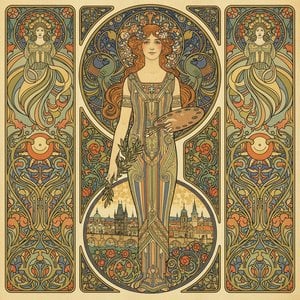
Alphonse Mucha’s *The Seasons*: A Symphony of Art Nouveau
Alphonse Mucha's *The Seasons*, created between 1896 and 1900, isn’t merely a decorative series of posters; it is a crystallized moment in the burgeoning aesthetic revolution known as Art Nouveau. Commissioned by the Parisian printer F. Champenois, these vibrant panels represent far more than just depictions of spring, summer, autumn, and winter. They embody Mucha's singular vision – a world infused with organic beauty, flowing lines, and an idealized femininity that would profoundly influence artistic trends across Europe and beyond. The sheer scale of the work—each season rendered in meticulously detailed color lithographs—demands attention, inviting viewers into a realm where nature and art coalesce seamlessly.
A Style Defined: The Essence of Art Nouveau
Mucha’s style is immediately recognizable as the cornerstone of what became known as ‘the Mucha style,’ or indeed, Art Nouveau. Rejecting the rigid academic traditions of the time, he embraced a fluid aesthetic inspired by Japanese woodblock prints and the natural world. Notice the sinuous curves of the figures' hair, the delicate rendering of floral motifs – poppies in Summer’s hair, chrysanthemums adorning Autumn’s wreath – and the overall sense of movement. The use of rich, saturated colors—deep reds, vibrant greens, and shimmering golds—further enhances this impression of luxuriousness and ethereal beauty. The influence of Gustave Moreau is evident in the fantastical elements, yet Mucha elevates these influences into a distinctly personal and powerfully romantic vision.
Symbolism Woven Within the Imagery
Each season isn’t simply a representation of a time of year; it's imbued with symbolic meaning. Spring, depicted as a young woman in white, embodies innocence and renewal – her lyre representing harmony and artistic expression. Summer, with her fiery red hair and bathing pose, evokes sensuality and abundance. Autumn, adorned with grapes, symbolizes fertility and the harvest, while Winter, cloaked in pale greens, represents contemplation and resilience. The careful selection of flora—poppies, chrysanthemums, vines, snowdrops – adds layers of meaning, connecting each figure to the natural world and reinforcing the overarching theme of cyclical beauty. The figures themselves are not just beautiful; they represent archetypes of feminine grace and power.
A Legacy of Decorative Art
*The Seasons* quickly became a sensation in Paris, establishing Mucha’s reputation as one of the foremost artists of his generation. Its influence extended far beyond the realm of decorative art, impacting fashion, jewelry design, and even architecture. The series demonstrated the commercial potential of high-quality artistic production, paving the way for the rise of Art Nouveau as a dominant aesthetic force. Today, these panels remain iconic examples of this movement, offering a captivating glimpse into a world where beauty was elevated to an art form—a testament to Mucha’s genius and his enduring contribution to the history of decorative art.
Kérdések és válaszok
Mely művészeti irányba és mely korszakba sorolható a „(82)”, Alphonse Mucha alkotása?
„(82)”, Alphonse Mucha alkotása alkotásművében a Art Nouveau irányzat találkozik a 19. század korszakkal.
„(82)”, Alphonse Mucha alkotása erős kontrasztokat vagy lágy harmóniákat használ?
A „(82)”, Alphonse Mucha alkotása színes kompozíció egy Statement kontrasztot és egy Unified Palette harmóniát ötvöz.
Hogyan építhető be „(82)”, Alphonse Mucha alkotása a lakberendezésbe?
A „(82)”, Alphonse Mucha alkotása ajánlott Statement célokra, lehetőleg egy Living Room helyiségbe. A felhasználás módja és a tér kialakítása együtt segít eldönteni, hogy melyik reprodukció illik bele.


A művész életrajza
Early Life and Artistic Beginnings
Alphonse Maria Mucha, a name synonymous with the opulent beauty of Art Nouveau, was born on July 15, 1860, in the small Moravian town of Ivanačice. His early life, steeped in the traditions of his Czech homeland, laid the foundation for an artistic vision that would soon captivate Europe. From a young age, Alphonse displayed a remarkable talent for drawing – a gift nurtured by his family’s modest circumstances and a supportive local merchant who provided him with paper, a luxury at the time. This nascent skill blossomed into a passionate pursuit, leading him to study at the Academy of Fine Arts in Prague, though he quickly grew disillusioned with the academy's rigid adherence to classical conventions.
Seeking a more expressive and personal style, Mucha embarked on a journey to Paris in 1887. This move marked a pivotal moment, as it propelled him into the heart of the burgeoning Art Nouveau movement – a period characterized by its celebration of natural forms, flowing lines, and intricate ornamentation. Paris offered a vibrant artistic landscape, influenced by artists like Pierre-Auguste Renoir and Gustave Moreau, whose works subtly shaped Mucha’s developing aesthetic.
The Rise to Fame: Sarah Bernhardt and the “Mucha Style”
Alphonse Mucha's career took an extraordinary turn in 1894 when he was unexpectedly commissioned to design a poster for the play Gismonda, starring the legendary actress Sarah Bernhardt. This seemingly simple task ignited a phenomenal success that catapulted him to international fame. The poster, a masterpiece of Art Nouveau elegance featuring Bernhardt’s captivating image surrounded by swirling floral motifs, became an instant sensation and established what would become known as the “Mucha Style” – a distinctive blend of decorative beauty, stylized femininity, and graceful movement.
This collaboration with Bernhardt proved to be transformative. It launched a prolific period of poster design, magazine illustrations, and theatrical set designs, solidifying Mucha’s reputation as one of the foremost artists of his time. He continued to create stunning visuals for Bernhardt throughout the 1890s, further cementing his signature style.
The Universal Exhibition and International Recognition
The pinnacle of Mucha's early career arrived in 1900 with the invitation to decorate the Bosnia and Herzegovina Pavilion at the Universal Exposition in Paris. This prestigious commission brought him unprecedented international recognition. Alongside his work on the Bosnian pavilion, he collaborated on the Austrian Pavilion, showcasing his artistic versatility and expanding his influence across Europe. The sheer scale of these projects demonstrated Mucha’s ability to translate his distinctive style into grand, public displays – a testament to his growing reputation as a leading figure in the Art Nouveau movement.
The Slav Epic: A Monumental Undertaking
Following his success in Paris, Charles Richard Crane, an American industrialist and passionate supporter of Slavic culture, recognized Mucha’s unique talent and provided him with substantial financial backing. This generous patronage enabled Mucha to embark on a monumental project – The Slav Epic (1912-1930) – a series of twenty large-scale paintings depicting the history and mythology of all the Slavic peoples. This ambitious undertaking, spanning nearly two decades, became Mucha’s magnum opus and remains one of the most significant works in his oeuvre. The *Slav Epic* is not merely a historical chronicle; it's a vibrant tapestry of cultural identity, rendered with Mucha’s signature elegance and symbolic richness.
Legacy and Influence
Alphonse Mucha’s impact on art and design extends far beyond his individual creations. His distinctive Art Nouveau style profoundly influenced generations of artists, designers, and illustrators. His emphasis on decorative beauty, flowing lines, and idealized female figures continues to resonate today, evident in everything from graphic design to fashion. Furthermore, his work served as a powerful symbol of Czech national identity, particularly during the period of Czechoslovakia’s independence. Alphonse Mucha's legacy is not simply one of artistic brilliance; it’s a testament to the enduring power of beauty, symbolism, and cultural expression.

Alphonse Mucha
1860 - 1939 , Csehország
Rövid információk
- Artistic Movement Or Style: Art Nouveau
- Artists Or Movements Influenced By This Artist: ['Prokopcová']
- Artists Who Influenced This Artist:
- Renoir
- Moreau
- Date Of Birth: 1860. 7. 15.
- Date Of Death: 1939. 7. 14.
- Full Name: Alphonse Maria Mucha
- Nationality: Cseh
- Notable Artworks:
- Slav Epic
- Salon des Cent
- A Slavonic Uprising
- Place Of Birth: Brno, Cseh Köztársaság
Kapcsolódó cikkek

The Enduring Muse: Women as Subject & Symbol in Art History
Explore the rich history of women in art – from iconic muses to groundbreaking artists. Discover feminist movements, global perspectives & reclaim female narratives with ArtsDot.

The Enduring Muse: Women as Subject & Symbol in Art History
Explore the rich history of women in art – from archetypal representations to contemporary voices challenging norms. Discover iconic artists & movements, and learn about reclaiming female narratives through painting and beyond.

Art Nouveau Mesterek: A 10 Legikonikusabb Műalkotás, Amelyek Meghatározták a Stílust
Fedezze fel a 10 legikonikusabb Art Nouveau műalkotást! Ismerje meg Alphonse Mucha, Gustav Klimt és más mesterek történetét. Szecessziós festmények, plakátok és dekorációk – inspirálódjon otthona számára a ArtsDot.com-on!

The Flowing Line & Flourishing Form: Exploring Art Nouveau's Aesthetic Legacy
Explore the captivating world of Art Nouveau! Discover its origins, key artists like Horta & Mucha, regional styles, innovative techniques, and lasting influence on architecture & design. A comprehensive guide for art enthusiasts.
Alphonse Mucha: A Comprehensive Exploration of Art Nouveau's Master of Decorative Symbolism
Explore the life & art of Alphonse Mucha, master of Art Nouveau! Discover his iconic posters, stunning illustrations, and the monumental Slav Epic. A comprehensive guide for collectors & enthusiasts.