
- Főoldal

- Digitális kép
- Jawlenszky
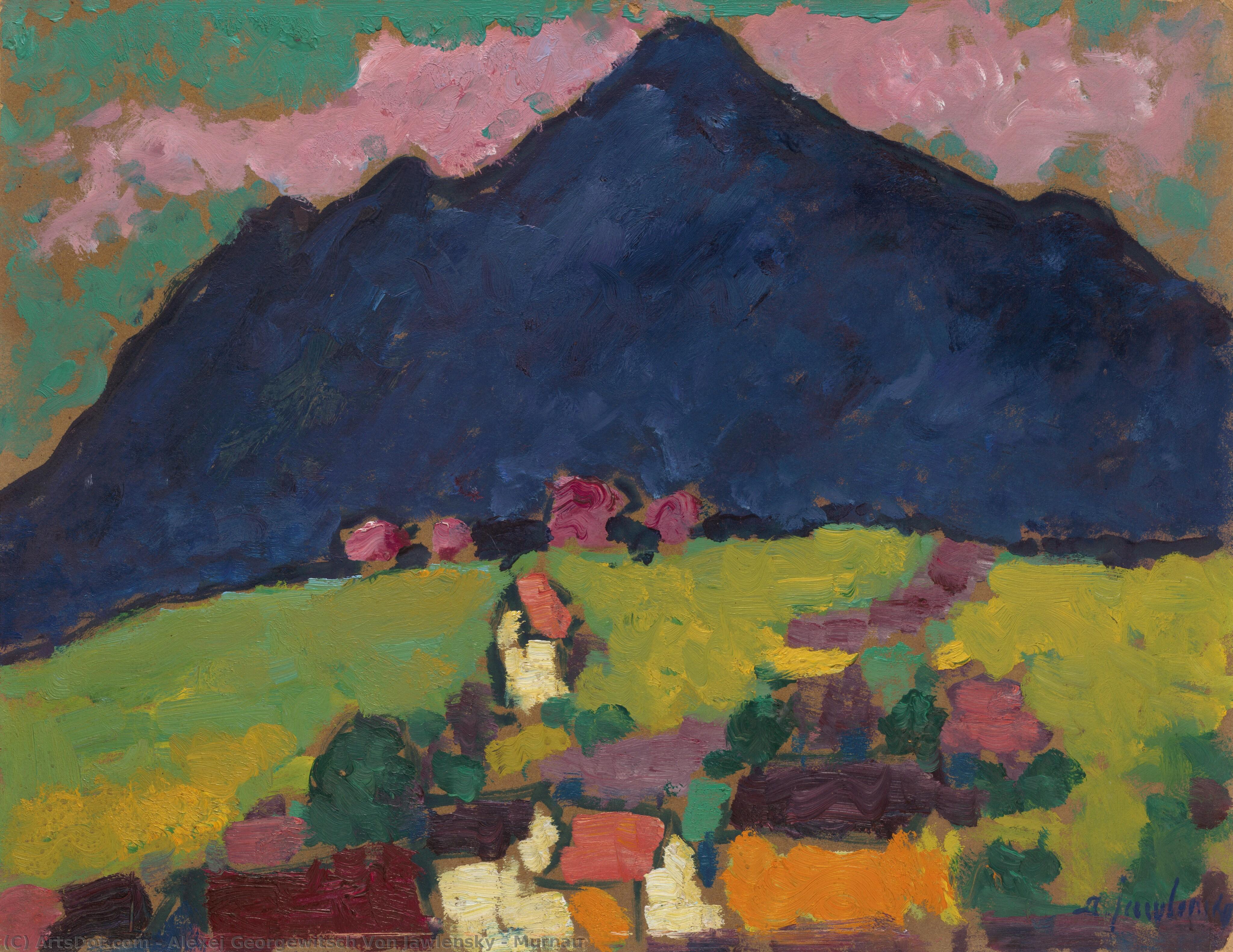
- Murnau
 Nyomat vásárlása Készíttetnék festményként
 Megosztás
 Megosztás
 Details
 Kedvencekhez ad

 Letöltés
 Hasonló alkotások
 X-Ray
X-Ray
 Diavetítés
Murnau
 Expressionism
 1910
1910 47.0 x 56.0 cm
Vásároljon egy nagy felbontású, javított digitális képet, amely sokkal jobb minőségű, mint az online előnézet.
Minden fájlt szakembereink a legmodernebb eszközök és precíz, kézi retusálás segítségével készítenek el aprólékosan. Gondoskodunk arról, hogy minden kép kivételes tisztasággal, pontos színhelyességgel és részletgazdag finomsággal rendelkezzen.
A végleges fájl 72 órán belül e-mailben megérkezik, professzionális, szerkesztői és nyomtatási környezetbe optimalizálva az azonnali használathoz. Ez ugyanaz a minőség, amelyben a legmeghatározóbb tervezőstúdiók, kiadók és galériák is megbízhatnak.
 Olvasson tovább
Digitális alkotás
Töltsön le nagy felbontású fájlt személyes kiállításokhoz, nyomtatáshoz és kreatív projektekhez.
Minden digitális kép rendeléséhez tartozó extrák
Szakértői digitális kézbesítés, garantáltan
Amikor a ArtsDot.com weboldalt választja, nem csupán egy képet kap – professzionálisan felmagasított digitális műalkotást kap, amely precizitással készült, és amelyet megelégsedési gwarancia tesz biztoslássá. Az alábbiakban automatikusan minden benne 】

Gyors e-mail teslimítés
A nagy felbontású digitális képmásolatát a megrendelést követő 72 órán belül e-mailben elküldjük Önnek – azonnal használható formátumban.

MI-alapú digitális feldolgozású fájl
Műve professzionális módon kerül optimalizálásra fejlett mesterséges intelligencia eszközök és manuális szerkesztés segítségével, biztosítva a maximális részletességet, tisztaságot és színpontosságot.

Örök életű ingyenes újradelivery
Véletlenül törölted vagy elvesztetted a fájlodat? Ne aggódj – bármikor ingyenesen újra megküldjük neked.

Nincs importköltség – soha
Élvezze műalkotásait azonnal, vám, illeték vagy szállítási költség nélkül – a digitális letöltések mindig adamentesek.

Színpontosság Garancia
Professzionális eszközök és színkezelés segítségével garantáljuk, hogy digitális képe a lehető legpontosabban tükrözze az eredeti színeket.

60 napos elégedettségi garancia
Ha nemມີ elégedett a digitális képpel, 60 napon belül átmunkáljuk azt, vagy 100% visszatérítjük az amountot – kérdés nélkül.

100% Pénzvisszatérítési garancia
Nem érheted el a teljes elégedettséget? 60 napon belül teljes visszatérítést kapsz a digitális fájlod megérkezése után – kérdés बिना.

Tömegrendelési kedvezmények
Vásároljon 3 képet, spóroljon 10%-et - Vásároljon 5-öt, spóroljon 15%-et - Vásároljon 10+ képet, spóroljon 20%-at. Kiváló kreatív projektekhez, galériákhoz és ügynökségekhez.
Hasonló műalkotások


Művész életrajza
A Life Painted in Emotion: The Journey of Alexej von Jawlensky
Alexej von Jawlensky, born Alexej Georgewitsch von Jawlensky on March 13, 1864, in the Russian town of Torzhok, embarked on a path that would firmly establish him as a pivotal figure within early twentieth-century Expressionism. His formative years were characterized by frequent relocations, culminating in a settling within Moscow at the age of ten—an experience that likely instilled a sense of displacement and perhaps, a yearning for deeper connection, themes subtly woven into the emotional core of his later artistic explorations. Initially drawn to a military career, Jawlensky’s encounter with the vibrant world of art during the 1880 Moscow World Exposition proved transformative. This exposure ignited within him a passion that would ultimately supersede any sense of duty, leading him down a path dedicated to visual expression. Securing a posting in St. Petersburg through his social connections allowed Jawlensky to formally study at the Art Academy from 1889 to 1896, balancing artistic pursuits with military obligations. It was during this period that he crossed paths with Ilya Repin, a prominent Russian realist painter, and more importantly, met Marianne von Werefkin. Werefkin, herself an accomplished artist of considerable means, became not only his mentor but also a crucial benefactor, providing him the financial stability to fully dedicate himself to his craft. Their relationship was complex, deeply intertwined with artistic ambition and mutual support, shaping the trajectory of both their careers.Munich and the Seeds of Expressionist Innovation
The move to Munich in 1894 marked a turning point for Jawlensky. He enrolled at Anton Ažbe’s private school, immersing himself in an environment that encouraged experimentation and challenged conventional academic approaches. This period witnessed his growing engagement with avant-garde ideas circulating within the European art world. The influence of artists like Ferdinand Hodler, Jan Verkade, and Paul Sérusier proved particularly significant, exposing him to principles of symbolism and synthetism—movements that prioritized subjective experience and emotional resonance over strict representational accuracy. Jawlensky’s artistic style began to evolve, moving away from the realism he had initially studied. He became increasingly interested in exploring the expressive potential of color and form, simplifying compositions and intensifying hues to convey inner states rather than merely depicting external appearances. This exploration led him towards abstraction, a path that would define much of his later work. His involvement with groups like the Neue Künstlervereinigung München (NKvM) further solidified his commitment to artistic innovation, placing him at the heart of a burgeoning Expressionist movement. The NKvM, though short-lived, was a crucible for radical ideas, and Jawlensky’s participation demonstrated his willingness to challenge established norms and embrace new modes of visual language.The Mystical Heads: A Descent into Spiritual Essence
Around 1909, Jawlensky embarked on what would become his most iconic series—the “Mystical Heads.” These intensely colored portraits, often depicting faces reduced to essential forms, are not merely representations of individuals but rather explorations of spiritual essence and inner life. The heads possess a haunting quality, their simplified features and vibrant palettes conveying a sense of profound emotion and psychological depth. Works like Schokko with Red Hat (1909) and Portrait of Alexander Sakharoff (1909) exemplify this period, showcasing his mastery of color and composition. These weren’t portraits in the traditional sense; they were attempts to capture something beyond physical likeness—the soul, the inner landscape of the sitter. He distilled faces into geometric shapes, emphasizing the power of color to evoke emotion and spiritual resonance. Throughout the 1910s, Jawlensky continued to refine his style, moving towards an even greater degree of abstraction. His compositions became increasingly geometric, with forms distilled to their most fundamental elements. He developed a formulaic approach, often employing a limited range of colors arranged in carefully balanced configurations. Violet Turban (1911) demonstrates this stylistic evolution, showcasing his ability to create powerful visual statements through the interplay of color and shape.Exile, Resilience, and Lasting Legacy
The outbreak of World War I brought upheaval to Jawlensky’s life. Expelled from Germany in 1914 due to his Russian origins, he sought refuge in Switzerland, where he encountered Emmy Scheyer. Scheyer became a devoted champion of his work, tirelessly promoting it in the United States and securing him recognition on an international stage. Despite facing increasing health challenges—including severe arthritis that progressively limited his ability to paint—Jawlensky continued to create until his death in Wiesbaden, Germany, on March 15, 1941. His later works, created under immense physical hardship, are a testament to his unwavering dedication to artistic expression. Today, Alexej von Jawlensky is celebrated as a key figure in the development of Expressionism. His paintings are held in prominent museum collections worldwide, including the Museum Ostwall in Dortmund and the Städtische Galerie im Lenbachhaus in Munich. His exploration of color, form, and spiritual themes continues to resonate with audiences, solidifying his place as one of the most important artists of the early twentieth century. He left behind a body of work that is both visually striking and emotionally profound, offering a glimpse into the inner world of an artist who dared to challenge conventions and embrace the power of subjective expression.Influences and Artistic Associations
Jawlensky’s artistic journey was shaped by a network of influential figures and movements:- Ilya Repin: Early mentor providing foundational training in realist techniques.
- Marianne von Werefkin: Crucial benefactor, mentor, and artistic partner who supported his development.
- Ferdinand Hodler: Influenced Jawlensky’s use of simplified forms and symbolic imagery.
- Jan Verkade & Paul Sérusier: Introduced him to the principles of symbolism and synthetism, shaping his approach to color and composition.
- Wassily Kandinsky & Franz Marc: Collaborators within Der Blaue Reiter, fostering a shared commitment to artistic innovation.

Jawlenszky
1864 - 1941 , Oroszország
Rövid tények
- Artistic Movement Or Style: Expressionizmus
- Artists Or Movements Influenced By This Artist:
- Hodler Ferdinánd
- Blaue Reiter
- Artists Who Influenced This Artist:
- Repin Ilja Jefimovics
- Werefkin Marianna von
- Date Of Birth: 1864. március 13.
- Date Of Death: 1941. március 15.
- Full Name: Alexej Georgewitsch von Jawlensky
- Nationality: Orosz
- Notable Artworks:
- Schokko feketepapucs
- Lila kalap
- Öngyűjthető portré
- Place Of Birth: Torzhok, Oroszország

