
- Főoldal

- Vászonra nyomtatás
- Albrecht Dürer
- A négy apostol

 Készíttetnék festményként Kép letöltése
 Megosztás
 Megosztás
 Részletek
 Kedvencekhez ad

 Letöltés
 Hasonló alkotások
 X-ray felvétel
 Diavetítés
A négy apostol
 Akril vászonon
- Falfeldísz
- Német reneszánsz
 1526
1526 215.0 x 76.0 cm
 Alte Pinakothek
 Tovább olvasom
Giclée / Műnyomat
Múzeumi minőségű giclée vagy vászonnyomat, gyors gyártással és rugalmas finomítási lehetőségekkel.




P118B $10

P118H $10

P118W $10

P438Z $10

P508JH $12

P508YH $12

P805H $10

P805Z $10

P919BZ $10

P919G $10

P919XJ $10

P959ZH $10

P968JZ $12

W106C $8

W218G $10

W218JH $8

W218Y $10

W307PJ $10

W316G $10

W316PJ $8

W316Y $10

W398PJ $8

W4111J $10

W500HY $15

W500JH $15

W692G $12

W849H $8

W940BG $15

W953PJ $8




Válasszon előre meghatározott méreteink közül, amelyek megfelelnek a műalkotás eredeti arányainak.

Megadhat saját méreteket is egy konkrét kerethez vagy helyszínhez igazítva. Amennyiben a kiválasztott méret nem egyezik az eredeti kép arányokkal, a műalkotást le fogjuk vágni, vagy kiegészítjük a képet tükrözött vagy egyszínű szélekkel. A gyártás megkezdése előtt egy digitális tervezetet küldünk jóváhagyásra.
Kérjük, vegye figyelembe, hogy a képernyőn látható előnézet nem tükrözi a tényleges levágást vagy kiegészítést. Csak a tervezet mutatja pontosan a végső kompozíciót.
Bár az egyedi méretek is elérhetőek, az eredeti arányok megőrzése érdekében azt javasoljuk, hogy válasszon a előre meghatározott listából származó méretet.
Világszerte történő kiszállítás területére 2 hét alatt, a szokásos 4-5 hét helyett. 2 július

Ingyenes globális expressz szállítás

Prémium minőségű len vászon

Teljes szállítási biztosítás

Vámvisszatérítési Garancia

Tökéletes színpontosság garancia

60 napos visszaküldési lehetőség (csak gyártási hibák esetén)

100%-os pénzvisszatérítési garancia

Kedvezmény több termény esetén
 Az üvegkeretes opció csak 110 cm alatti méretben érhető el

A négy apostol
Giclée / Műnyomat
A reprodukció mérete
-


Összesített ár
-
Termékinformációk
A négy apostol: Ablak a hit és a reneszánsz mesterségre
Albrecht Dürer „A négy apostol” című alkotása, amely 1526-ban készült, és ma a müncheni tekintélyes Alte Pinakothek múzeum collections részeként otthontart, sokkal több, mint egy egyszerű portré; ez a hit, a tudás és az emberi ábrázolás lényegének mély meditációja. Ez a monumentális mű, amely jelentős 215 x 7álló 76 cm-es méretre terül, Dürer páratlan készségének bizonyítékaként áll: a színek, az összetétel és a szimbolikus mélység mesterosztályaként, amely évszázadokkal alkotása után is tovább visszhangzik a nézőkben.
A festmény tekintetét azonnal két egymás mellett álló alakra vonja, akiket gazdag, sötétvörös köntösök ölik körül. Ezek az öltözékek nem csupán díszítőfunktionúak; mély vallási jelentéssel teli rétegeik azonnal súlyosságot és tekintélyt sugallnak. Az egyik apostol egy nyitott könyvet tart, melynek csatos záródása egy őrzött titkot vagy egy gondosan megőrzött igazságot sejtet – ez közvetlen utalás arra a szerepére, mint a bibliai írások őrzőjére. Testtartása a kontemplatív tanulmányozást tükrözi, míg a másik alak, akit markáns szakáll jellemz, inkább a földi bölcsességet testesít meg, talán a hit és a hagyomány megtestesülését képviselve. A finom részletek – a köntösök ráncaiban, a bőr textúrájában, az egyes ujjak aprék ábrázolásában – Dürer részlet megszállott figyelmét tárják fel, ami művészeti filozófiájának egyik legfőbb jelzője.
Színök és szimbolika szimfóniája
Dürer színek mesteri manipulációja a festmény hatásának központjában áll. A mély vörös drámai kontrasztot alkot a háttér visszafogott tónusaival, erőteljes mélységérzetet és háromdimenziós hatást keltve. Ez nem csupán a vizuális vonzerőről szól; ez egy tudatos stratégia a néző bevonására a jelenbe, hangsúlyozva a figurák fontosságát. A színen túl minden elem szimbolikus súlyt hordoz. A könyv nemcsak írott szavakat reprezentál, hanem a keresztény hit alapvető elveit is. A szakáll a tapasztalatot és a bölcsességet jelképezi, míg a könyv nyitott csatorjai a szent tudás gondos megőrzésére utalnak. A háttér – egy egyszerű fal, amelyet egy másik könyv szakít meg – megalapozó elemként szolgál, azt sugallva, hogy a hit és a tanulás elválaszthatatlanul összekapán a emberi létezés szélesebb kontextusában.
Reneszánsz ideálok és Dürer víziója
„A négy apostol” mélyen gyökerezik a német reneszánsz idealaiban. A klasszikus művészet iránti megújuló érdeklődést és a filozófia iránti vágyat tükrözi, ugyanakkor megőrzi egyértelmű keresztény érzékiséget is. Dürer lenyűgözte az emberi proportionok és az anatómián ábrázolása, ami az apostolok testének aprék ábrázolásában is érezhető. Nem csupán fizikai hasonmóságot akart megörökíteni, hanem belső esszéjüket is: devóciójukat, intellektusukat és kapcsolatukat valaminél nagyobb valamivel. A festmény a harmónia kutatásaként értelmezhető – egy egyensúlyként a hit által képzett szellemi világ és a tudás által testbedősített intellektuális világ között. Ez a reneszánsz humanista hit vizuális megfogalmazása, miszerint az ember képes eléri egyszerre a spirituális felvilágosodást és a világi megértést.
Az innováció öröksége
Albrecht Dürer „A négy apostol” egyik legjelentősebb eredményének tekinthető, amely megerősítette hírnevét aÉszak-Reneszánsz meghatározó alakjaként. A metszet művészetének innovatív alkalmazása – egy technika, amelyet a határaiig vitt – lehetővé tette számára, hogy elérijen egy példátlan részletgazdagságot és tónusvariációt. A festmény kompozíciója, a figurák egyensúlyozott elrendezésével és a gondosan felépített háttérrel, példaként szolgál Düréren a perspektíva mesterének és a térbeli realizmus megteremtésének képességének. Ma e szimbolikus mű reproduktumai továbbra is awe-t és csodálatot ébresztenek, bepillantást engedve a történelem egyik legünnepeltebb mesterének művészi zsenialitásába. Azok számára, akik szeretnék átélni „A négy apostol” teljes hatását, meghívjuk, hogy fedezzék fel a ArtsDot gondosan kidolgozott, kézzel festett reproduktumait – tökéletes módja ennek a reneszánsz remekműnek otthonába vagy irodájába behozni.
Hasonló műalkotások


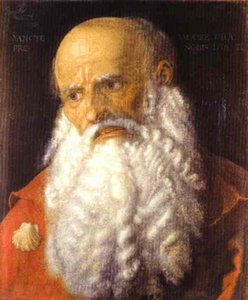
A művész életrajza
A Life Forged in Nuremberg: The Early Years and Apprenticeship
Albrecht Dürer, a name synonymous with the German Renaissance, emerged from the bustling artisan city of Nuremberg in 1471. His father, Albrecht Dürer the Elder, was a successful goldsmith who had immigrated from Hungary, bringing with him a lineage steeped in craftsmanship. It was within this environment—the scent of metal and the meticulous precision of handiwork—that young Albrecht’s artistic inclinations first took root. Though his father envisioned a similar path for him, apprenticing him initially in the family trade, it soon became undeniable that Albrecht possessed an exceptional gift for drawing. At thirteen, he transitioned to the workshop of Michael Wolgemut, Nuremberg's leading artist at the time. This was no mere technical training; it was immersion into a world of illuminated manuscripts, painted panels, and—crucially—the burgeoning art of woodcut illustration. The sheer volume of work produced by Wolgemut’s workshop, including the extensive illustrations for the *Nuremberg Chronicle*, provided Dürer with an unparalleled foundation in design, composition, and the mechanics of image-making. A remarkable silverpoint self-portrait from 1484, created when he was barely a teenager, stands as astonishing evidence of his precocious talent—a testament to a burgeoning artistic identity already taking shape. This early work demonstrates a keen eye for detail, an understanding of perspective, and a nascent desire to capture the essence of human form – qualities that would define his entire career.The Italian Influence and Artistic Maturation
Dürer’s ambition extended far beyond the confines of Nuremberg. Driven by an insatiable curiosity and a desire to master the art of painting, he embarked on his first journey to Italy in 1494. This was not simply a sightseeing trip; it was a pilgrimage to the heart of the Renaissance. He encountered the works of masters like Raphael, Giovanni Bellini, and Leonardo da Vinci—artists who were redefining the possibilities of form, perspective, and human expression. The impact of this exposure was profound. Dürer absorbed the classical motifs, harmonious compositions, and subtle sfumato techniques that characterized Italian art, yet he never abandoned his Northern European sensibility for meticulous detail and symbolic depth. He was particularly fascinated by the use of light and shadow in Venetian painting, which would later influence his own work. A second sojourn to Italy between 1505 and 1507 further solidified these influences, allowing him to study ancient Roman ruins and refine his understanding of anatomy and proportion. This synthesis of Northern precision and Italian grace became the hallmark of Dürer’s unique artistic style. He returned from Italy not just with new techniques but also with a renewed sense of purpose – to synthesize the best elements of both traditions into a distinctly German Renaissance art.Mastering the Mediums: Painting, Engraving, and Woodcut
Dürer was a master of multiple mediums, each offering him distinct avenues for creative expression. His paintings, though fewer in number than his prints, demonstrate a remarkable command of oil paint and an ability to capture both physical likeness and psychological depth. Works like the *Feast of the Rose Garlands* (1506) reveal a vibrant palette influenced by Venetian colorism, showcasing his growing mastery of layering pigments and creating luminous effects. However, it was in the realm of printmaking—particularly engraving and woodcut—that Dürer truly revolutionized artistic practice. He elevated these techniques from mere reproductive methods to independent art forms, capable of conveying complex narratives and profound emotions. The *Apocalypse* series (1498), a collection of fourteen woodcuts illustrating the Book of Revelation, showcased his mastery of this medium despite its inherent limitations – he skillfully used hatching and cross-hatching to create dramatic contrasts of light and shadow. Later engravings like *Melencolia I* (1514) and *Saint Jerome in His Study* (1514) are testaments to his unparalleled skill—intricate compositions filled with symbolic meaning and executed with breathtaking precision. He didn’t just depict reality; he imbued it with layers of intellectual and spiritual significance, transforming the printed image into a powerful vehicle for artistic expression.A Theorist and Innovator: The Legacy of Albrecht Dürer
Dürer was not merely an artist; he was a scholar, a theorist, and an innovator who sought to understand the underlying principles governing artistic creation. He believed in the mathematical foundations of art and dedicated himself to establishing a scientific approach to representation. His treatises on geometry, proportion, and human anatomy—most notably *Four Books of Human Proportion* (1528)—were groundbreaking for their time, demonstrating his commitment to rigorous observation and rational analysis. These writings were not simply academic exercises; they were intended to elevate the status of artists from mere craftsmen to intellectual practitioners. Dürer’s work on perspective, in particular, laid the groundwork for future generations of artists and architects. He meticulously documented the rules of linear perspective, providing a systematic approach to creating realistic spatial illusions. His theoretical writings, combined with his artistic achievements, cemented his reputation as one of the most influential figures in the history of Northern Renaissance art. He remains, to this day, one of the most important figures in the history of Western art.Influences and Enduring Impact
- Michael Wolgemut: Dürer’s initial mentor, providing foundational skills in drawing, painting, and woodcut techniques.
- Leonardo da Vinci: Inspired Dürer’s exploration of anatomy, perspective, and sfumato—the subtle blending of tones.
- Raphael: Influenced Dürer’s compositional harmony and idealized forms.
- Giovanni Bellini: Contributed to Dürer's understanding of color and Venetian painting traditions.
Dürer’s influence reverberates through centuries of art history. His meticulous realism, his innovative use of printmaking, and his theoretical writings continue to inspire artists and scholars alike. He demonstrated that art could be both technically masterful and intellectually rigorous—a legacy that continues to shape the artistic landscape today.

Albrecht Dürer
1471 - 1528 , Olaszország
Rövid tények
- Artistic Movement Or Style: német reneszánszi
- Artists Or Movements Influenced By This Artist:
- Nördlingeni iskola
- olasz reneszánszi
- Artists Who Influenced This Artist:
- Leonardo da Vinci
- Raffaello
- Giovanni Bellini
- Date Of Birth: 1471. máj 21.
- Date Of Death: 1528. ápr. 6.
- Full Name: Albrecht Dürer
- Nationality: német
- Notable Artworks:
- Apokalipszis
- Melencolia I
- Szent Jéremy
- Place Of Birth: Nürnberget, Németország
Kapcsolódó cikkek

Jan van Eyck: Innovation, Symbolism & the Dawn of Early Netherlandish Painting
Explore the revolutionary art of Jan van Eyck! Discover his groundbreaking oil painting techniques, hidden symbolism, and lasting impact on the Early Netherlandish Renaissance. A deep dive for art enthusiasts.
Crimson Threads of Narrative: Exploring Symbolism & Representation in Artworks Featuring the Red Dress
Explore the rich symbolism of the red dress in art history! From ancient power displays to iconic portraits like Cézanne’s 'Madame Cezanne', discover the cultural and artistic significance behind this captivating color. Expert analysis & insights.

A digitális portré reneszánszának művészete: személyes emlékek időtálló olajfestményékké alakítva
Alakítsa át kedvenc fényképeit időtálló olajfestményékké! Kézműves festők gondos munkája, klasszikus technikák és egyedi stílusok. Prémium minőség, személyre szabott alkotások – örök emlékek a legmagasabb színvonalon.

The Patron's Gaze: Art Collectors in Western Painting – A Renaissance to Modern History
Explore the fascinating history of art collectors in Western painting, from Renaissance patrons to modern museum founders. Discover how portraits revealed status, shaped artistic movements & built lasting legacies. Expert insights at ArtsDot.
A Reneszánsz Észak csodái: 10 mestermű, melyek meghatározták a művészetet – ArtsDot.com
Fedezze fel a reneszánsz Észak legpálcásabb művészeti remekműveit! Ismerje meg Jan van Eyck, Dürer és Bosch festményeinek történetét. Vászonképek, reprodukciók – ArtsDot.com.



