

 Pregledaj u realnoj veličini
 Pošalji
 Podijeli
 Detalji o umjetničkom djelu
 Vodič
Vodič

 Preuzmi umjetničko djelo
 Slični predmeti
 Rentgenska snimka
 Slide show
 Pitanja i odgovori
 Statistika
CALLIGRAPHY IN RUNNING SCRIPT

- 180.0 x 46.0 cm

 Prikaži više
Giclée / Umjetnički otisak
Giclée tisak muzejske kvalitete ili otisak na platnu uz brzu izradu i raznolike opcije završne obrade. ( Kupi ručno oslikano djelo Prebacite na digitalnu sliku)




P118B €10

P118H €10

P118W €10

P438Z €10

P508JH €12

P508YH €12

P805H €10

P805Z €10

P919BZ €10

P919G €10

P919XJ €10

P959ZH €10

P968JZ €12

W106C €8

W218G €10

W218JH €8

W218Y €10

W307PJ €10

W316G €10

W316PJ €8

W316Y €10

W398PJ €8

W4111J €10

W500HY €15

W500JH €15

W692G €12

W849H €8

W940BG €15

W953PJ €8




Odaberite jednu od naših unaprijed definiranih veličina koje odgovaraju izvornim proporcijama umjetničkog djela.

Unesite potrebnu širinu i visinu kako bi odgovarali vašem okviru ili zidu. Print se može samo izrezati, nikada ne može biti veći od slike, stoga format s drugačijim omjerom stranica uzrokuje gubitak dijela slike. Prije bilo kakve štampe šaljemo vam digitalni prikaz (mockup) na odobrenje. Slika prikazana na ovoj stranici ne prikazuje stvarni rez — to prikazuje isključivo digitalni prikaz.
Dostava širom svijeta () u roku od 2 tjedna umjesto standardnih 4/5 tjedana. (6 Studeni)

Besplatna ekspresna dostava širom svijeta

Visokokvalitetno laneno platno

Potpuno osiguranje dostave

Jamstvo povrata carine i uvoznih poreza

Jamstvo vjernosti boja

Politika povrata u roku od 100 dana (samo u slučaju nedostataka)

Jamstvo povrata 100% novca

Popust na više proizvoda
 Opcija stakla dostupna je samo za dimenzije manje od 110 cm

CALLIGRAPHY IN RUNNING SCRIPT
Giclée / Umjetnički otisak
Veličina reprodukcije
-


Ukupna cijena
€ 56
Srodna umjetnička djela


Biografija umjetnika
Wu Xizai: The Poet Painter of Serene Landscapes
Wu Xizai (1799-1870), a name often whispered in the halls of Chinese art history, was more than just a painter; he was a scholar, a calligrapher, and a connoisseur deeply immersed in the traditions of literati painting. Born during the Qing Dynasty, his life coincided with a period of significant artistic evolution, marked by a shift away from grand imperial commissions towards smaller-scale, intensely personal works reflecting individual taste and intellectual pursuits. His legacy rests primarily on his exquisite fan paintings – delicate, intimate landscapes rendered in meticulous detail and imbued with a profound sense of tranquility – but his influence extended far beyond this singular medium.
Wu’s early life was shaped by rigorous academic training. He initially studied under Bao Shichen, a prominent scholar known for his expertise in bronze inscriptions and ancient texts. This foundational education instilled in him a deep appreciation for the past and a meticulous approach to observation – qualities that would become hallmarks of his artistic style. Later, he apprenticed with Wu Changshi, another influential painter who further refined his technique and introduced him to the principles of seal carving, an art form closely linked to literati painting’s emphasis on simplicity and directness.
The Art of the Fan: A World Within a Frame
Wu Xizai is most celebrated for his fan paintings – small, portable works that captured the essence of nature in miniature. Unlike the large-scale landscape scrolls favored by court painters, these fan paintings were intended to be enjoyed privately, often during scholarly gatherings or solitary contemplation. The format itself—a rectangular frame holding a loose sheet of paper—created an immediate sense of intimacy and immediacy. He typically depicted scenes of spring landscapes – blossoming plum trees, graceful birds in flight, and serene waters reflecting the sky – but also explored themes of calligraphy and seal carving, seamlessly integrating these disciplines into his artistic practice.
What distinguishes Wu’s fan paintings is not merely their subject matter, but the way he rendered it. He employed a technique known as “shanshui” (mountain-water painting), characterized by subtle gradations of ink washes and delicate brushstrokes. He avoided dramatic contrasts or elaborate details, instead focusing on capturing the ephemeral qualities of light, shadow, and atmosphere. His compositions are often asymmetrical and deliberately understated, reflecting a preference for quiet contemplation over overt display.
Calligraphy as Integral Part
Wu Xizai’s artistic practice wasn't limited to painting alone; he was also a skilled calligrapher and seal carver. He frequently incorporated his own calligraphy into his fan paintings, often using the same brushstrokes and ink washes that defined his landscapes. This integration of disciplines—painting, calligraphy, and seal carving—was a defining characteristic of literati painting, reflecting the scholar-official’s pursuit of holistic knowledge and artistic mastery. The seals he applied to his works were not merely decorative; they served as personal signatures and expressions of his aesthetic judgment.
The influence of Wu Changshi is evident in Wu Xizai's approach to seal carving, particularly the use of bold, expressive strokes that mimic the appearance of natural forms. This connection between painting and seal carving further underscores the interconnectedness of Wu’s artistic pursuits – he viewed them as complementary expressions of a single aesthetic sensibility.
Legacy and Historical Significance
Wu Xizai's work represents a pivotal moment in the evolution of Chinese landscape painting. He moved away from the formal conventions of court art, embracing a more personal and introspective style that resonated with the tastes of the literati class – scholars, officials, and connoisseurs who valued intellectual pursuits alongside artistic appreciation.
His fan paintings are prized for their exquisite detail, serene atmosphere, and profound sense of tranquility. They offer a glimpse into the inner world of a scholar-artist deeply attuned to the beauty of nature and the power of calligraphy. Wu Xizai’s legacy continues to inspire artists today, reminding us that true art is not merely about technical skill but also about conveying a personal vision and engaging with the deeper mysteries of existence.
His works are frequently found in major museums worldwide, including The Metropolitan Museum of Art in New York, where they serve as enduring testaments to his artistic genius and the rich traditions of Chinese painting.

Wu Xizai
1799 - 1870
Osnovne informacije
- Artistic Movement Or Style: Fan painting, Calligraphy
- Artists Or Movements Influenced By This Artist: ['Literati tradition']
- Artists Who Influenced This Artist: ['Zhao Zhiqian']
- Date Of Birth: 1799
- Date Of Death: 1870
- Full Name: Wu Xizai
- Nationality: Chinese
- Notable Artworks:
- Landscape
- Lotus
- Place Of Birth: Wuxi, Jiangsu
Srodni članci

Cy Twombly: Scribbles of Emotion – Deconstructing Post-War Expressionism Through Calligraphy & Abstraction
Explore the captivating world of Cy Twombly with ArtsDot. Discover the emotional depth & artistic significance behind his abstract calligraphy. Expert insights for collectors.

Ink & Inspiration: Discovering Timeless Artworks That Celebrate the Magic of the Written Word
Explore the enchanting intersection of literature and fine art. From ancient manuscripts to Japanese Shodo, discover exquisite hand-painted reproductions that celebrate the magic of writing. Elevate your home with meaningful, museum-quality pieces curated for every history lover.

Xie Zhiliu: A Legacy of Ink Wash Painting & Modern Chinese Literati Tradition
Explore the legacy of Xie Zhiliu, a master of Chinese ink wash painting & prominent figure in modern art. Discover his techniques, influences, and contributions to literati tradition. A guide for discerning collectors.

Timeless Elegance: Discovering the Soulful Beauty of Chinese Calligraphy for Sophisticated Home Interiors
Elevate your home with the serene beauty of Chinese calligraphy art. Explore our collection of hand-painted ink wash reproductions and bespoke commissions at ArtsDot.com. Discover museum-quality pieces designed to bring cultural elegance and tranquility to your modern interior.
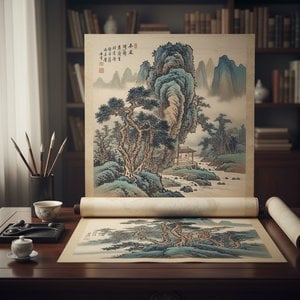
Pu Xinyu's 'Puru': A Legacy of Literati Painting & Emotional Resonance
Explore the captivating world of Pu Xinyu (Puru), the last great literati painter. Discover his imperial heritage, masterful ink wash techniques & enduring legacy – a valuable addition to any discerning art collection.