


The picture follows your choices: , .
Opis kolekcionarskog predmeta
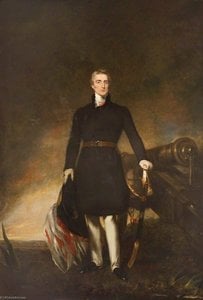
A formal portrait of Arthur Wellesley, Duke of Wellington by Robert Home. Explore this neoclassical masterpiece featuring chiaroscuro lighting & military regalia. #Wellington #PortraitArt
Biografija umjetnika
Discover Robert Home (1826-1869), a British artist renowned for his evocative portraits of Indian life & figures. Explore his detailed works capturing 18th/19th century India.
 Prikaži više
Ručno rađena uljana reprodukcija
Ručno oslikano uljanim bojama na platnu u dimenzijama i okviru po vašem izboru, izrađeno po narudžbi od strane naših umjetnika. ( Prebacite na printove Prebacite na digitalnu sliku)
More about this painting
 Pregledaj u realnoj veličini
 Pošalji
 Podijeli
 Detalji o umjetničkom djelu
 Vodič
Vodič

 Preuzmi umjetničko djelo
 Slični predmeti
 Rentgenska snimka
 Slide show
 Q&A
Q&A Statistika
Order your painting in four simple steps
Take your time. You can change any answer; the price in your order card follows each choice.
1 Step one of four
Which size would you like?
These sizes keep the proportions of the original painting. The drawing shows your choice on a wall, above a two-metre sofa.
Or give your own measurements
Odaberite jednu od naših unaprijed definiranih veličina koje odgovaraju izvornim proporcijama umjetničkog djela.

Unesite potrebnu širinu i visinu kako bi dimenzije odgovarale vašem okviru ili zidu. Budući da je riječ o ručno oslikanom djelu, umjetnik može malo proširiti rubove slike ili ih skratiti kako bi postigao drugačiji oblik — izbor je vaš. Prije početka slikanja poslat ćemo vam digitalni prikaz (mockup) radi potvrde. Slika prikazana na ovoj stranici ne predstavlja stvarni rezultat — samo digitalni prikaz to čini.
2 Step two of four
How should it be prepared: rolled, stretched or framed?
The prices below are for the size you chose in step one.
Choose the edges of the stretched canvas
Choose your frame

White €1

Blurside €1

Extended €1

P118B €10

P118H €10

P118W €10

P438Z €10

P508JH €12

P508YH €12

P805H €10

P805Z €10

P919BZ €10

P919G €10

P919XJ €10

P959ZH €10

P968JZ €12

W106C €8

W218G €10

W218JH €8

W218Y €10

W307PJ €10

W316G €10

W316PJ €8

W316Y €10

W398PJ €8

W4111J €10

W500HY €15

W500JH €15

W692G €12

W849H €8

W940BG €15

W953PJ €8

H24-GOLD €30

H24-SILVER €30

H36-GOLD €45

H36-SILVER €45
Uokvireno
Moulding: . Overall size with the frame: .
3 Step three of four
Would you like anything changed in the painting?
Most people answer no. Because each painting is made by hand, our artist can also adapt it for you.
After order, ArtsDot.com team will email client for instructions and provide a mockup preview
4 Step four of four
A few finishing options
All of them are optional. The answers already selected cost nothing extra.
Who paints it?
Isporuka širom svijeta () u roku od 3-4 tjedna umjesto standardnih 5 tjedana. (31 Listopad). Bez kompromisa u kvaliteti.
A nameplate, as in a museum?
Detalji gravirane brončane pločice
This elegant plaque features the artist's name and the title of the artwork, finely engraved for a timeless presentation.
It is made from bronze with a refined, elegant finish. The text is precisely laser-engraved for a sharp and permanent result. Measuring 9x2 cm, the plaque is compact yet easy to read. It's built to be durable and scratch-resistant, offering a professional, museum-quality look. Mounting is simple thanks to the included adhesive backing.
Detalji prozirne akrilne pločice
The plaque includes essential engraved details such as the artist's name, the title of the artwork, the date it was created, the type of media used-like oil on canvas or watercolor-a brief description of the piece, and a QR code that links to the complete artwork information.
It is crafted from clear acrylic, offering a sleek, modern appearance. The text is UV-engraved in black to ensure strong visual contrast. With a size of 10x15 cm, it ensures optimal readability. It comes equipped with two metal hooks for secure wall mounting. The plaque is designed to be weather-resistant, making it suitable for various environments, and it includes interactive features that work seamlessly with smartphone scanning.
Detalji crne akrilne pločice
This elegant plaque includes engraved information such as the artist's name, the title of the artwork, the date it was created, the type of media used (like oil on canvas or watercolor), a short description of the artwork, and a QR code for quick access to more information.
The plaque itself is made from refined black acrylic with a premium finish. The text is laser-engraved in white for high contrast and readability. Its size is 10x15 cm, designed to be easy to read. It comes with two metal hooks for professional mounting. The design is sleek and fits any interior style. It is also weather-resistant and durable, with built-in digital integration for mobile compatibility.
A protective varnish?
When do you need it?
✓ Check and order
Your painting, as you ordered it

Arthur Wellesley
Tehnika reprodukcije
Veličina reprodukcije
-

Odabrani vrhunski umjetnik
Više detalja, profinjenosti i dodatnog vremena za izradu
-

Okvir za reprodukciju
-
-
Za umjetnička djela ili reprodukcije veće od 105 cm (približno 41 inč) na bilo kojoj strani, okvir će biti isporučen u obliku rastavljenog seta za montažu. Ovaj način osigurava sigurnu dostavu i sprječava oštećenja tijekom transporta.
Potrebna je profesionalna montaža – ovo nije proizvod za samostalnu izradu.
Set mora sastaviti i platno zategnuti iskusni profesionalni uokvirivač, koristeći drvno ljepilo (nije uključeno u set), kljeste za zatezanje platna i stege kako bi se održao pravilan kut letvica dok se ljepilo suši. Nepravilna montaža ili neravnomjerno zategnuto platno mogu trajno oštetiti umjetničko djelo, a takva oštećenja nisu pokrivena našim jamstvom.
 Za umjetnička djela ili reprodukcije veće od 105 cm (približno 41 inč) na bilo kojoj strani, okvir će biti isporučen u obliku rastavljenog seta za montažu. Ovaj način osigurava sigurnu dostavu i sprječava oštećenja tijekom transporta.
Sve letvice od punog drveta su uključene, precizno izrezane po mjeri.
Montira se pomoću priloženih vijaka, uz dodatak ljepila za drvo za spojeve u kutovima, koje nije uključeno u set i koje vaš okviraš mora vlastito nabaviti.
Potrebni su profesionalni alati koji nisu uključeni: škripc za zatezanje platna (zatezač) i stezaljke za održavanje pravokonačnosti letvica tijekom sušenja ljepila.
Važno:
Za spojeve u kutovima potrebno je ljepilo za drvo, letvice se moraju pričvrstiti stezgama dok se ljepilo potpuno ne osuši, a za zatezanje platna na sastavljenom okviru potreban je alat za zatezanje platna. Nijedan od ovih alata nije uključen u set. Molimo vas da prije narudžbe ove veličine osigurate uslugu iskusnog profesionalnog uokvirivača.

Natpisna pločica
-
-

Zaštitni lak
Sjajni lak (pojačava intenzitet boja, štiti od svjetlosti i vlage)
-

Prilagodite svoje umjetničko djelo
Primjeri mogućnosti prilagodbe: Zamijenite lice fotografijom kupca; Dodajte ljubimca (npr. zamijenite mačku psom); Uključite skrivenu poruku u pozadinu; Promijenite pejzaž ili elemente pozadine.
-

Hitna dostava
Globalna dostava () u roku od 3-4 tjedna umjesto standardnih 5 tjedana. (31 Listopad). Bez kompromisa u kvaliteti.
-
Brza dostava
Dostava širom svijeta () u roku od 5 tjedana. (7 Studeni).
Uključeno u cijenu
Ukupna cijena
€ 234
Opcija stakla dostupna je samo za dimenzije manje od 110 cm
Included with every order
- Besplatna ekspresna dostava širom svijeta
- Visokokvalitetno laneno platno
- Potpuno osiguranje dostave
- Jamstvo povrata carine i uvoznih poreza
- Jamstvo vjernosti boja
- Politika povrata u roku od 100 dana (samo u slučaju nedostataka)
- Jamstvo povrata 100% novca
- Popust na više proizvoda


Srodna umjetnička djela




Robert Home
1826 - 1869, United Kingdom
Biografija umjetnika
The Visionary Brush of Robert Home
In the grand tapestry of British art history, few threads are as vibrant or as culturally significant as those woven by Robert Home. A master of oil portraiture and a keen observer of the human condition, Home’s life was defined by a profound connection to the Indian subcontinent. While his roots were firmly planted in the traditions of London, his artistic soul found its true expression amidst the sweeping landscapes and diverse faces of India. His journey, which saw him traveling to the subcontinent as early as 1791, allowed him to transcend the boundaries of typical European portraiture, moving beyond mere likeness to capture the very essence of a colonial era in transition.
Home’s work serves as a luminous window into the late eighteenth and early nineteenth centuries. He was not merely a painter of people, but a chronicler of history. Through his meticulous use of oil on canvas, he documented everything from the dignified presence of high-ranking officials to the intimate, everyday moments of Indian life. His ability to blend the formal requirements of British portraiture with the exotic, breathtaking reality of the Indian landscape created a unique aesthetic language—one that combined the structured elegance of Neoclassicism with a burgeoning Romantic fascination for the distant and the unknown.
A Journey Through Light and Landscape
The development of Home’s style was inextricably linked to his travels. As he moved through the Indian subcontinent, his palette expanded to accommodate the intense light and rich textures of the region. His technique often involved a sophisticated command of glazing, applying translucent layers of pigment to achieve a depth of color that seemed to glow from within. This method was particularly effective in his depictions of flora and fauna, where he could render the subtle sheen of a leaf or the powerful musculature of an animal with startling anatomical accuracy.
Beyond the formal portraits of notable figures, Home’s oeuvre is celebrated for its historical and topographical significance. He possessed a rare talent for capturing "historic scenes," painting moments that felt both monumental and deeply personal. His landscapes were never mere backdrops; they were living, breathing entities that provided context to his subjects. Whether depicting the architectural grandeur of a courthouse in Kolkata or the serene beauty of a garden in Bhowanipore, Home’s brushwork conveyed a sense of atmosphere that invited the viewer to step directly into the scene.
Legacy and Artistic Significance
The enduring legacy of Robert Home lies in his ability to bridge two worlds. At a time when much of European art focused inward on the domestic and the classical, Home looked outward, bringing the sights, sounds, and spirits of India to the forefront of the British consciousness. His works are more than just beautiful objects; they are vital historical documents that offer insights into the social hierarchies, cultural intersections, and natural wonders of the period.
Today, collectors and historians look to Home’s paintings to understand the complexities of the era. His contributions can be summarized through several key artistic pillars:
- Cultural Documentation: His portraits provide an unparalleled visual record of the diverse individuals inhabiting the Indian subcontinent during the height of British influence.
- Technical Mastery: The use of light, texture, and glazing in his oil paintings set a standard for topographical and portrait art of his time.
- Narrative Depth: His ability to weave historical events into landscape and portraiture created a narrative power that remains captivating centuries later.
Though the era he depicted has long since passed, the vitality of Robert Home’s vision remains undiminished. Each stroke of his brush continues to pulse with the energy of a world caught in the beautiful, turbulent dance of history.
Srodni članci

Édouard Manet: 25 Remek-djela Impresionizma za Vaš Dom | ArtsDot
Uronite u svijet Édouarda Maneta! Otkrijte 25 remek-djela impresionizma, priče iza slika poput 'Le Déjeuner' i 'Olympie', te pronađite inspiraciju za luksuzni interijer. Reprodukcije vrhunske kvalitete na ArtsDot.com.

Iconic Art of the 18th & 19th Centuries: Masterpieces for Your Home | ArtsDot
Journey through 18th & 19th century art! Explore iconic masterpieces by Monet, Van Gogh & more. Discover the stories behind these timeless paintings and find museum-quality reproductions for your home at ArtsDot.com.

19th Century Masterpieces: 10 Paintings That Defined an Era | ArtsDot
Journey through 19th century art with ArtsDot! Explore 10 iconic paintings – from Monet & Renoir to Courbet – and discover the stories behind Romanticism, Realism & Impressionism. Find museum-quality reproductions for your home decor. Explore the full collection online!