


Slika prati vaše izbore: , .
Opis kolekcionarskog predmeta
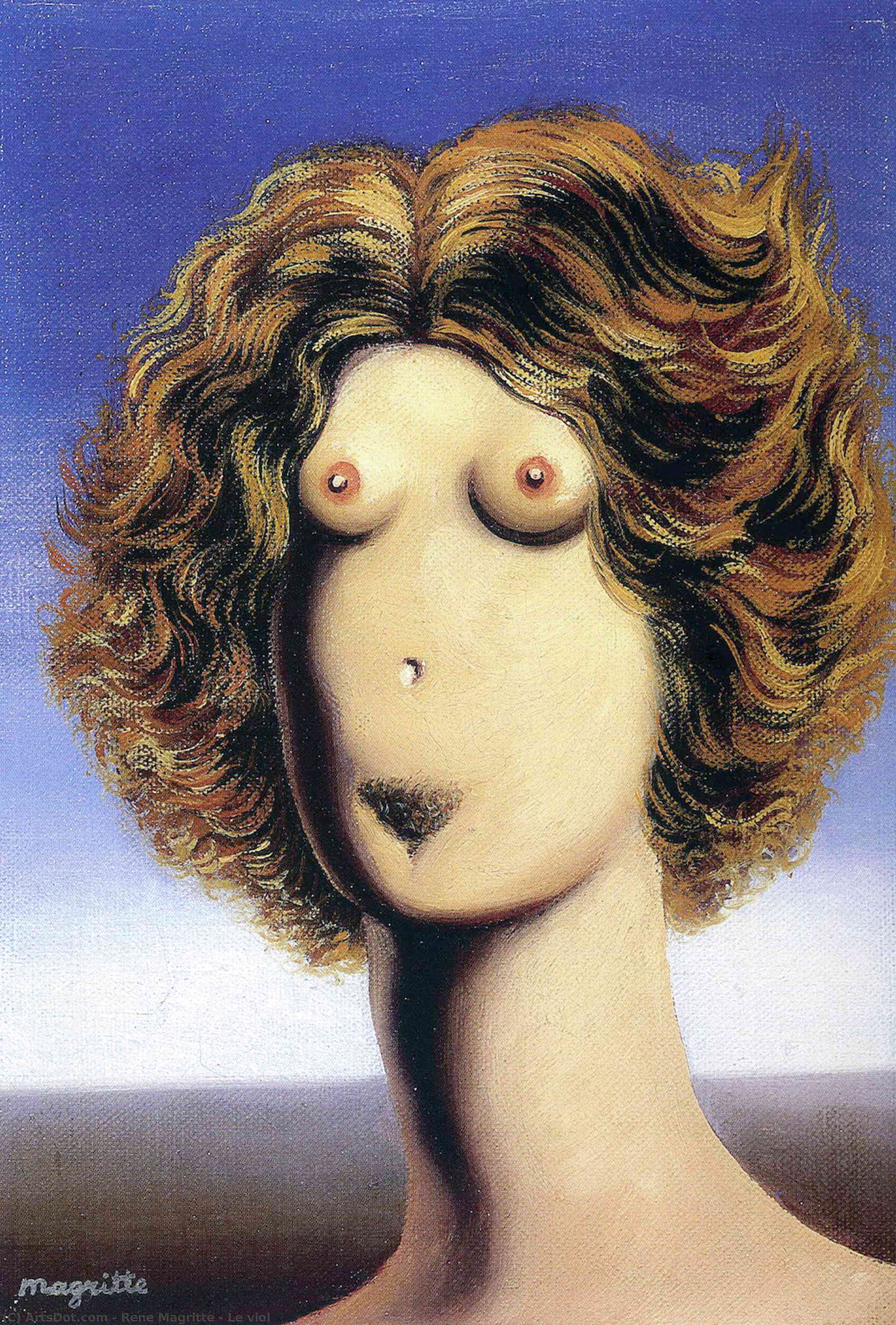
A surrealist visual paradox featuring a nude female figure with two breasts by René Magritte from 1935 invites you to explore the unsettling depths of perception and find your place within this enigmatic masterpiece.
 Prikaži više
Biografija umjetnika
René Magritte (1898-1967): Belgijski nadrealista poznat po ikoničnim djelima poput "Ljudi ljubavi", izazivanju stvarnosti i percepcije.
Ručno rađena uljana reprodukcija
Ručno oslikano uljanim bojama na platnu u dimenzijama i okviru po vašem izboru, izrađeno po narudžbi od strane naših umjetnika. ( Prebacite na printove Prebacite na digitalnu sliku)
Ovo djelo je zaštićeno autorskim pravima
Djelo prikazano na ovoj stranici zaštićeno je autorskim pravima, što znači da zakonski ne možemo izraditi niti prodati identičnu reprodukciju. Ova se zaštita provodi u skladu s međunarodnim sporazumima kao što su Bernska konvencija i nacionalnim zakonima, uključujući i one koji su utvrđeni u Američki zakon o autorskom pravu – Title 17.
Kao poštovana i legalna alternativa, nudimo prilagođena, ručno oslikana umjetnička djela inspirirana originalom. Naši vješti i profesionalni umjetnici pažljivo proučavaju stil, raspoloženje i umjetničku bit originala kako bi stvorili novo, jedinstveno djelo koje izaziva isti osjećaj – ostajući pritom vlastito, originalno stvaralaštvo.
Ova metoda u potpunosti je usklađena s autorskim pravima jer ne uključuje kopiranje ili dupliciranje zaštićenih umjetničkih djela. Umjesto toga, riječ je o kreativnoj reinterpretaciji – novoj slici koja je dobila utjecaj na izvornik, ali nije identična njemu.
Više o ovoj slici
 Pregledaj u realnoj veličini
 Pošalji
 Podijeli
 Detalji o umjetničkom djelu
 Vodič
Vodič

 Preuzmi umjetničko djelo
 Slični predmeti
 Rentgenska snimka
 Slide show
 Pitanja i odgovori
 Statistika
Naručite svoju sliku u četiri jednostavna koraka
Nemojte žuriti. Svoje odgovore možete promijeniti u bilo kojem trenutku; cijena u vašoj košarici ažurira se prema svakom odabiru.
1 Prvi od četiri koraka
Koju veličinu želite?
Ove dimenzije zadržavaju proporcije izvornog slikopisa. Crtež prikazuje vaš odabir na zidu, iznad dvometarskog kauča.
Ili unesite vlastite dimenzije
Odaberite jednu od naših unaprijed definiranih veličina koje odgovaraju izvornim proporcijama umjetničkog djela.

Unesite potrebnu širinu i visinu kako bi dimenzije odgovarale vašem okviru ili zidu. Budući da je riječ o ručno oslikanom djelu, umjetnik može malo proširiti rubove slike ili ih skratiti kako bi postigao drugačiji oblik — izbor je vaš. Prije početka slikanja poslat ćemo vam digitalni prikaz (mockup) radi potvrde. Slika prikazana na ovoj stranici ne predstavlja stvarni rezultat — samo digitalni prikaz to čini.
2 Drugi od četiri koraka
Kako želite da bude pripremljeno: u roli, na platnu ili u okviru?
Cijene u nastavku odnose se na dimenziju koju ste odabrali u prvom koraku.
Odaberite rubove platna
Odaberite svoj okvir

Bijela rubna traka €1

Zamućeni rubovi €1

Prošireno €1

P118B €10

P118H €10

P118W €10

P438Z €10

P508JH €12

P508YH €12

P805H €10

P805Z €10

P919BZ €10

P919G €10

P919XJ €10

P959ZH €10

P968JZ €12

W106C €8

W218G €10

W218JH €8

W218Y €10

W307PJ €10

W316G €10

W316PJ €8

W316Y €10

W398PJ €8

W4111J €10

W500HY €15

W500JH €15

W692G €12

W849H €8

W940BG €15

W953PJ €8

H24-GOLD €30

H24-SILVER €30

H36-GOLD €45

H36-SILVER €45
Uokvireno
Profil: . Ukupna veličina s okvirom: .
3 Treći od četiri koraka
Želite li nešto promijeniti na slici?
Većina ljudi odgovara s ne. Budući da je svaka slika ručni rad, naš umjetnik je može i prilagoditi vašim željama.
Nakon narudžbe, tim ArtsDot.com kontaktirat će klijenta putem e-pošte radi uputa te dostaviti pregledni prikaz (mockup)
4 Četvrti od četiri koraka
Nekoliko završnih opcija
Sve su opcije neobvezne. Odgovori koji su već odabrani ne podrazumijevaju dodatni trošak.
Tko je autor?
Isporuka širom svijeta () u roku od 3-4 tjedna umjesto standardnih 5 tjedana. (3 Studeni). Bez kompromisa u kvaliteti.
Pločica s natpisom, kao u muzeju?
Detalji gravirane brončane pločice
This elegant plaque features the artist's name and the title of the artwork, finely engraved for a timeless presentation.
It is made from bronze with a refined, elegant finish. The text is precisely laser-engraved for a sharp and permanent result. Measuring 9x2 cm, the plaque is compact yet easy to read. It's built to be durable and scratch-resistant, offering a professional, museum-quality look. Mounting is simple thanks to the included adhesive backing.
Detalji prozirne akrilne pločice
The plaque includes essential engraved details such as the artist's name, the title of the artwork, the date it was created, the type of media used-like oil on canvas or watercolor-a brief description of the piece, and a QR code that links to the complete artwork information.
It is crafted from clear acrylic, offering a sleek, modern appearance. The text is UV-engraved in black to ensure strong visual contrast. With a size of 10x15 cm, it ensures optimal readability. It comes equipped with two metal hooks for secure wall mounting. The plaque is designed to be weather-resistant, making it suitable for various environments, and it includes interactive features that work seamlessly with smartphone scanning.
Detalji crne akrilne pločice
This elegant plaque includes engraved information such as the artist's name, the title of the artwork, the date it was created, the type of media used (like oil on canvas or watercolor), a short description of the artwork, and a QR code for quick access to more information.
The plaque itself is made from refined black acrylic with a premium finish. The text is laser-engraved in white for high contrast and readability. Its size is 10x15 cm, designed to be easy to read. It comes with two metal hooks for professional mounting. The design is sleek and fits any interior style. It is also weather-resistant and durable, with built-in digital integration for mobile compatibility.
Zaštitni lak?
Kada vam je potrebno?
✓ Provjerite i naručite
Vaša slika, prema vašoj narudžbi

Le viol
Tehnika reprodukcije
Veličina reprodukcije
-

Odabrani vrhunski umjetnik
Više detalja, profinjenosti i dodatnog vremena za izradu
-

Okvir za reprodukciju
-
-
Za umjetnička djela ili reprodukcije veće od 105 cm (približno 41 inč) na bilo kojoj strani, okvir će biti isporučen u obliku rastavljenog seta za montažu. Ovaj način osigurava sigurnu dostavu i sprječava oštećenja tijekom transporta.
Potrebna je profesionalna montaža – ovo nije proizvod za samostalnu izradu.
Set mora sastaviti i platno zategnuti iskusni profesionalni uokvirivač, koristeći drvno ljepilo (nije uključeno u set), kljeste za zatezanje platna i stege kako bi se održao pravilan kut letvica dok se ljepilo suši. Nepravilna montaža ili neravnomjerno zategnuto platno mogu trajno oštetiti umjetničko djelo, a takva oštećenja nisu pokrivena našim jamstvom.
 Za umjetnička djela ili reprodukcije veće od 105 cm (približno 41 inč) na bilo kojoj strani, okvir će biti isporučen u obliku rastavljenog seta za montažu. Ovaj način osigurava sigurnu dostavu i sprječava oštećenja tijekom transporta.
Sve letvice od punog drveta su uključene, precizno izrezane po mjeri.
Montira se pomoću priloženih vijaka, uz dodatak ljepila za drvo za spojeve u kutovima, koje nije uključeno u set i koje vaš okviraš mora vlastito nabaviti.
Potrebni su profesionalni alati koji nisu uključeni: škripc za zatezanje platna (zatezač) i stezaljke za održavanje pravokonačnosti letvica tijekom sušenja ljepila.
Važno:
Za spojeve u kutovima potrebno je ljepilo za drvo, letvice se moraju pričvrstiti stezgama dok se ljepilo potpuno ne osuši, a za zatezanje platna na sastavljenom okviru potreban je alat za zatezanje platna. Nijedan od ovih alata nije uključen u set. Molimo vas da prije narudžbe ove veličine osigurate uslugu iskusnog profesionalnog uokvirivača.

Natpisna pločica
-
-

Zaštitni lak
Sjajni lak (pojačava intenzitet boja, štiti od svjetlosti i vlage)
-

Prilagodite svoje umjetničko djelo
Primjeri mogućnosti prilagodbe: Zamijenite lice fotografijom kupca; Dodajte ljubimca (npr. zamijenite mačku psom); Uključite skrivenu poruku u pozadinu; Promijenite pejzaž ili elemente pozadine.
-

Hitna dostava
Globalna dostava () u roku od 3-4 tjedna umjesto standardnih 5 tjedana. (3 Studeni). Bez kompromisa u kvaliteti.
-
Brza dostava
Dostava širom svijeta () u roku od 5 tjedana. (10 Studeni).
Uključeno u cijenu
Ukupna cijena
€ 235
Opcija stakla dostupna je samo za dimenzije manje od 110 cm
Uključeno uz svaku narudžbu
- Besplatna ekspresna dostava širom svijeta
- Visokokvalitetno laneno platno
- Potpuno osiguranje dostave
- Jamstvo povrata carine i uvoznih poreza
- Jamstvo vjernosti boja
- Politika povrata u roku od 100 dana (samo u slučaju nedostataka)
- Jamstvo povrata 100% novca
- Popust na više proizvoda


A Surrealist Riddle: Exploring René Magritte’s “Le Viol”
René Magritte's "Le Viol," painted in 1935, isn’t merely a depiction of a woman; it’s an invitation to confront the unsettling core of perception itself. This deceptively simple image—a nude female figure with two breasts—immediately arrests the viewer’s gaze and compels contemplation beyond its surface appearance. Magritte, deeply influenced by the burgeoning Surrealist movement, skillfully employs visual paradox to unsettle conventional notions of beauty and reality.The Style and Technique of Illusion
Magritte's approach aligns perfectly with Surrealism’s manifesto championed by André Breton—a deliberate rejection of rational thought in favor of accessing the subconscious mind. He achieves this effect through meticulous realism rendered in oil paint on canvas, a technique that contrasts sharply with the dreamlike distortions characteristic of other Surrealist artists. The artist employs precise shading and tonal gradations to create an illusionistic depth, grounding the fantastical element—the doubled breast—within a believable space. This careful craftsmanship underscores Magritte’s commitment to portraying the world as it *feels*, rather than simply how it looks.Historical Context: Surrealism's Challenge to Convention
The 1930s witnessed a fervent debate regarding artistic expression and societal values. Surrealism arose from disillusionment with the horrors of World War I and a desire to liberate thought from the constraints of logic. Breton argued that art should bypass conscious control, tapping into primal instincts and repressed desires—a radical departure from academic painting’s focus on idealized representations. “Le Viol” embodies this spirit, mirroring the movement's preoccupation with exploring hidden anxieties and questioning accepted standards of femininity. It reflects a broader cultural fascination with psychoanalysis and its exploration of unconscious motivations.Symbolism: Beyond Anatomy – A Meditation on Desire
The doubled breast is arguably the painting’s most potent symbol—a deliberate provocation designed to disrupt our ingrained understanding of female anatomy. While seemingly straightforward, Magritte avoids explicit eroticism; instead, he presents a visual enigma that invites interpretation. Some scholars suggest it represents fertility and motherhood, while others interpret it as a commentary on societal pressures surrounding female sexuality. The woman’s gaze is averted, furthering the sense of mystery and emphasizing the difficulty of accessing inner thoughts and emotions. Magritte's masterful use of symbolism elevates “Le Viol” beyond mere visual representation, transforming it into a profound meditation on desire and vulnerability.Emotional Resonance: Unease and Intellectual Engagement
“Le Viol” lingers in the viewer’s mind long after initial observation—a testament to its ability to evoke feelings of unease and stimulate intellectual curiosity. Magritte doesn't offer answers; he poses questions, forcing us to confront our assumptions about beauty, sexuality, and the nature of reality. Like many Surrealist artworks, it operates on multiple levels, stimulating contemplation and prompting viewers to consider alternative perspectives. Its enduring appeal lies in its refusal to succumb to easy interpretations—a characteristic that secures its place as a cornerstone of 20th-century art history.Pitanja i odgovori
Kako mogu pregledati reprodukciju djela "Le viol" autora René Magritte?
Stranica Pregled u prostoru za "Le viol" omogućuje vam pregled umjetničkog djela prije narudžbe.
U kojoj je godini nastalo djelo "Le viol" autora René Magritte?
Djelo "Le viol" datira iz 1935 godine. Taj datum smješta rad unutar karijere René Magritte i pripadajućeg mu razdoblja.
Gdje se u povijesti umjetnosti smješta "Le viol" autora René Magritte?
Povijesno gledano, "Le viol" je Surrealism rad iz šire ere Modern.
Srodna umjetnička djela


René Magritte
1898 - 1967, Belgija
Biografija umjetnika
Early Life and the Seeds of Surrealism
René Magritte, born René François Ghislain Magritte on November 21, 1898, in Lessines, Belgium, emerged into a world that would profoundly shape his enigmatic artistic vision. His early years were marked by an unsettling event – the suicide of his mother when he was just thirteen. The image of her body being recovered from the River Sambre, with her dress obscuring her face, became a haunting motif that would subtly permeate his later work, manifesting in veiled figures and a persistent exploration of hidden realities. This early trauma instilled within him a fascination with mystery, loss, and the unsettling power of what remains unseen. While details of his childhood remain somewhat elusive, it’s clear this formative experience laid the groundwork for his lifelong questioning of perception and representation. He began drawing lessons at age ten, revealing an innate inclination towards visual expression, but initially explored Impressionism before embarking on a path that would lead him to become one of the most significant figures in Surrealist art.
Artistic Development and Influences
Magritte’s artistic journey was not immediate or straightforward. He studied at the Académie Royale des Beaux-Arts in Brussels, yet found its traditional methods stifling. His early work experimented with Futurism and Cubism, absorbing elements of these avant-garde movements but ultimately rejecting their purely formal concerns. It wasn't until encountering Giorgio de Chirico’s painting *The Song of Love* in 1922 that Magritte discovered a resonance that would irrevocably alter his artistic course. De Chirico’s dreamlike landscapes and unsettling juxtapositions unlocked within Magritte a new way of seeing – a world where the familiar could be rendered strange, and the ordinary imbued with profound mystery. This encounter sparked his commitment to Surrealism, though he often maintained a unique distance from its more overtly psychological or automatic approaches. He preferred a meticulous, almost clinical precision in his painting, using realistic techniques to depict illogical scenarios.
The Heart of Surrealism: Challenging Reality
By 1926, Magritte had fully embraced the tenets of Surrealism, producing *Le Jockey Perdu (The Lost Jockey)*, widely considered his first truly surrealist work. However, his brand of Surrealism was distinct. He wasn’t interested in exploring the subconscious through free association or dream imagery in the manner of some of his contemporaries. Instead, Magritte sought to challenge viewers' perceptions of reality by presenting ordinary objects in unexpected contexts, forcing them to question their assumptions about the world around them. Iconic works like *The Treachery of Images (This is not a pipe)* (1929) brilliantly deconstructs the relationship between image and object, reminding us that a representation is never the thing itself. *Les Amants (The Lovers)* (1927-1928), with its shrouded figures, echoes the trauma of his mother’s death while simultaneously exploring themes of concealment and intimacy. *Time Transfixed* (1938) presents a locomotive bursting through a brick wall, disrupting our sense of space and time. And *The Human Condition* (1933), a canvas within a canvas, blurs the boundaries between representation and reality, prompting us to consider how we perceive and interpret the world.
Later Life, Recognition, and Enduring Legacy
Despite initial struggles for recognition, Magritte’s work gradually gained prominence, particularly in the United States with exhibitions in 1936 and later retrospective shows at the Museum of Modern Art (1965) and the Metropolitan Museum of Art (1992). He continued to refine his signature style, exploring themes of repetition, illusion, and the power of language in paintings that are both intellectually stimulating and visually arresting. Magritte died on August 15, 1967, leaving behind a body of work that continues to captivate and challenge audiences worldwide. His influence extends far beyond the realm of painting, impacting pop art, minimalist art, conceptual art, and even advertising and film. Today, his paintings are held in major museum collections around the globe, including the Musées royaux des beaux-arts de Belgique in Brussels, which houses the Magritte Museum – dedicated entirely to his work and boasting the world’s largest collection of his creations.


Srodni članci

The Eloquent Form: A Historical & Aesthetic Exploration of the Nude in Art
Explore the captivating history of the nude in art! From ancient Greece to modern masters, discover its evolving symbolism, techniques & enduring beauty. Expert insights for collectors and enthusiasts.

Surrealizam: 10 Remek-djela koja su definirala umjetnički pokret
Otkrijte 10 remek-djela koja su definirala surrealizam! Uronite u svijet Salvadora Dalija, René Magritta i drugih. Istaknute umjetničke slike, simbolizam i snovi čekaju vas. Istražite inspirativne ideje za dekoraciju interijera na ArtsDot.com!

Surrealist Painting Masterpieces: 10 Artworks That Redefined Reality | ArtsDot
Journey into the dreamlike world of Surrealism! Explore 10 masterpieces by Dali, Magritte & Miró that redefined art. Discover their stories & find museum-quality reproductions to elevate your home decor on ArtsDot.com.