

- 40.0 x 53.0 cm


Slika prati vaše izbore: , .
Opis kolekcionarskog predmeta
Pieter Jacobsz Codde's 'The Dancing Lesson' (1627) captures a lively domestic scene with a woman teaching dance, showcasing Dutch Golden Age genre painting’s realism and detail.
 Prikaži više
Biografija umjetnika
Pieter Jacobsz Codde (1599-1678) was a Dutch Golden Age painter known for genre scenes, musical companies & guardroom paintings. Discover his technically skilled style and notable works like 'Dancing Lesson' at the Louvre.
Ručno rađena uljana reprodukcija
Ručno oslikano uljanim bojama na platnu u dimenzijama i okviru po vašem izboru, izrađeno po narudžbi od strane naših umjetnika. ( Prebacite na printove Prebacite na digitalnu sliku)
Više o ovoj slici
 Pregledaj u realnoj veličini
 Pošalji
 Podijeli
 Detalji o umjetničkom djelu
 Vodič
Vodič

 Preuzmi umjetničko djelo
 Slični predmeti
 Rentgenska snimka
 Slide show
 Pitanja i odgovori
 Statistika
Naručite svoju sliku u četiri jednostavna koraka
Nemojte žuriti. Svoje odgovore možete promijeniti u bilo kojem trenutku; cijena u vašoj košarici ažurira se prema svakom odabiru.
1 Prvi od četiri koraka
Koju veličinu želite?
Ove dimenzije zadržavaju proporcije izvornog slikopisa. Crtež prikazuje vaš odabir na zidu, iznad dvometarskog kauča.
Ili unesite vlastite dimenzije
Odaberite jednu od naših unaprijed definiranih veličina koje odgovaraju izvornim proporcijama umjetničkog djela.

Unesite potrebnu širinu i visinu kako bi dimenzije odgovarale vašem okviru ili zidu. Budući da je riječ o ručno oslikanom djelu, umjetnik može malo proširiti rubove slike ili ih skratiti kako bi postigao drugačiji oblik — izbor je vaš. Prije početka slikanja poslat ćemo vam digitalni prikaz (mockup) radi potvrde. Slika prikazana na ovoj stranici ne predstavlja stvarni rezultat — samo digitalni prikaz to čini.
2 Drugi od četiri koraka
Kako želite da bude pripremljeno: u roli, na platnu ili u okviru?
Cijene u nastavku odnose se na dimenziju koju ste odabrali u prvom koraku.
Odaberite rubove platna
Odaberite svoj okvir

Bijela rubna traka €1

Zamućeni rubovi €1

Prošireno €1

P118B €10

P118H €10

P118W €10

P438Z €10

P508JH €12

P508YH €12

P805H €10

P805Z €10

P919BZ €10

P919G €10

P919XJ €10

P959ZH €10

P968JZ €12

W106C €8

W218G €10

W218JH €8

W218Y €10

W307PJ €10

W316G €10

W316PJ €8

W316Y €10

W398PJ €8

W4111J €10

W500HY €15

W500JH €15

W692G €12

W849H €8

W940BG €15

W953PJ €8

H24-GOLD €30

H24-SILVER €30

H36-GOLD €45

H36-SILVER €45
Uokvireno
Profil: . Ukupna veličina s okvirom: .
3 Treći od četiri koraka
Želite li nešto promijeniti na slici?
Većina ljudi odgovara s ne. Budući da je svaka slika ručni rad, naš umjetnik je može i prilagoditi vašim željama.
Nakon narudžbe, tim ArtsDot.com kontaktirat će klijenta putem e-pošte radi uputa te dostaviti pregledni prikaz (mockup)
4 Četvrti od četiri koraka
Nekoliko završnih opcija
Sve su opcije neobvezne. Odgovori koji su već odabrani ne podrazumijevaju dodatni trošak.
Tko je autor?
Isporuka širom svijeta () u roku od 3-4 tjedna umjesto standardnih 5 tjedana. (9 Studeni). Bez kompromisa u kvaliteti.
Pločica s natpisom, kao u muzeju?
Detalji gravirane brončane pločice
This elegant plaque features the artist's name and the title of the artwork, finely engraved for a timeless presentation.
It is made from bronze with a refined, elegant finish. The text is precisely laser-engraved for a sharp and permanent result. Measuring 9x2 cm, the plaque is compact yet easy to read. It's built to be durable and scratch-resistant, offering a professional, museum-quality look. Mounting is simple thanks to the included adhesive backing.
Detalji prozirne akrilne pločice
The plaque includes essential engraved details such as the artist's name, the title of the artwork, the date it was created, the type of media used-like oil on canvas or watercolor-a brief description of the piece, and a QR code that links to the complete artwork information.
It is crafted from clear acrylic, offering a sleek, modern appearance. The text is UV-engraved in black to ensure strong visual contrast. With a size of 10x15 cm, it ensures optimal readability. It comes equipped with two metal hooks for secure wall mounting. The plaque is designed to be weather-resistant, making it suitable for various environments, and it includes interactive features that work seamlessly with smartphone scanning.
Detalji crne akrilne pločice
This elegant plaque includes engraved information such as the artist's name, the title of the artwork, the date it was created, the type of media used (like oil on canvas or watercolor), a short description of the artwork, and a QR code for quick access to more information.
The plaque itself is made from refined black acrylic with a premium finish. The text is laser-engraved in white for high contrast and readability. Its size is 10x15 cm, designed to be easy to read. It comes with two metal hooks for professional mounting. The design is sleek and fits any interior style. It is also weather-resistant and durable, with built-in digital integration for mobile compatibility.
Zaštitni lak?
Kada vam je potrebno?
✓ Provjerite i naručite
Vaša slika, prema vašoj narudžbi

The Dancing Lesson
Tehnika reprodukcije
Veličina reprodukcije
-

Odabrani vrhunski umjetnik
Više detalja, profinjenosti i dodatnog vremena za izradu
-

Okvir za reprodukciju
-
-
Za umjetnička djela ili reprodukcije veće od 105 cm (približno 41 inč) na bilo kojoj strani, okvir će biti isporučen u obliku rastavljenog seta za montažu. Ovaj način osigurava sigurnu dostavu i sprječava oštećenja tijekom transporta.
Potrebna je profesionalna montaža – ovo nije proizvod za samostalnu izradu.
Set mora sastaviti i platno zategnuti iskusni profesionalni uokvirivač, koristeći drvno ljepilo (nije uključeno u set), kljeste za zatezanje platna i stege kako bi se održao pravilan kut letvica dok se ljepilo suši. Nepravilna montaža ili neravnomjerno zategnuto platno mogu trajno oštetiti umjetničko djelo, a takva oštećenja nisu pokrivena našim jamstvom.
 Za umjetnička djela ili reprodukcije veće od 105 cm (približno 41 inč) na bilo kojoj strani, okvir će biti isporučen u obliku rastavljenog seta za montažu. Ovaj način osigurava sigurnu dostavu i sprječava oštećenja tijekom transporta.
Sve letvice od punog drveta su uključene, precizno izrezane po mjeri.
Montira se pomoću priloženih vijaka, uz dodatak ljepila za drvo za spojeve u kutovima, koje nije uključeno u set i koje vaš okviraš mora vlastito nabaviti.
Potrebni su profesionalni alati koji nisu uključeni: škripc za zatezanje platna (zatezač) i stezaljke za održavanje pravokonačnosti letvica tijekom sušenja ljepila.
Važno:
Za spojeve u kutovima potrebno je ljepilo za drvo, letvice se moraju pričvrstiti stezgama dok se ljepilo potpuno ne osuši, a za zatezanje platna na sastavljenom okviru potreban je alat za zatezanje platna. Nijedan od ovih alata nije uključen u set. Molimo vas da prije narudžbe ove veličine osigurate uslugu iskusnog profesionalnog uokvirivača.

Natpisna pločica
-
-

Zaštitni lak
Sjajni lak (pojačava intenzitet boja, štiti od svjetlosti i vlage)
-

Prilagodite svoje umjetničko djelo
Primjeri mogućnosti prilagodbe: Zamijenite lice fotografijom kupca; Dodajte ljubimca (npr. zamijenite mačku psom); Uključite skrivenu poruku u pozadinu; Promijenite pejzaž ili elemente pozadine.
-

Hitna dostava
Globalna dostava () u roku od 3-4 tjedna umjesto standardnih 5 tjedana. (9 Studeni). Bez kompromisa u kvaliteti.
-
Brza dostava
Dostava širom svijeta () u roku od 5 tjedana. (16 Studeni).
Uključeno u cijenu
Ukupna cijena
€ 235
Opcija stakla dostupna je samo za dimenzije manje od 110 cm
Uključeno uz svaku narudžbu
- Besplatna ekspresna dostava širom svijeta
- Visokokvalitetno laneno platno
- Potpuno osiguranje dostave
- Jamstvo povrata carine i uvoznih poreza
- Jamstvo vjernosti boja
- Politika povrata u roku od 100 dana (samo u slučaju nedostataka)
- Jamstvo povrata 100% novca
- Popust na više proizvoda


A Glimpse into the Golden Age: The Elegance of Motion
In the quiet, sun-drenched interiors of the seventeenth-century Netherlands, moments of domestic grace were often captured with profound reverence. Pieter Jacobsz Codde’s "The Dancing Lesson," painted in 1627, serves as a breathtaking window into this era of refined social ritual. At the heart of this composition stands a woman, her presence commanding yet graceful, draped in a striking black dress that anchors the scene's visual weight. As she guides her pupils through the rhythmic steps of a dance, the painting transcends a mere instructional moment, becoming a poetic meditation on poise, etiquette, and the structured beauty of Dutch social life. The room around her is alive with the subtle energy of a gathering, where the soft interplay of light and shadow breathes life into every figure and object.
The mastery of Codde lies in his ability to weave a complex narrative through meticulous detail and a sophisticated use of chiaroscuro. Influenced by the legendary Frans Hals, Codde employs a technique that emphasizes naturalism and psychological depth. Notice how the light falls upon the ruffled collar of the central figure, creating a brilliant contrast against the dark fabric of her gown, drawing the eye immediately to the focal point of the lesson. The surrounding figures, though partially obscured in the periphery, contribute to a sense of atmospheric depth, their positions suggesting a layered, bustling environment. Every element, from the heavy wooden chair to the books resting upon the dining table, is rendered with such precision that one can almost feel the stillness of the room punctuated by the soft shuffling of feet.
Technical Brilliance and the Dutch Aesthetic
For the discerning collector or interior designer, this piece offers a masterclass in the silvery-gray tonalities that defined the Dutch Golden Age. Codde’s brushwork captures the tactile reality of the era—the crispness of linen, the weight of dark wool, and the smooth surface of polished wood. The composition is balanced yet dynamic; while the central figure provides a stable vertical axis, the scattered arrangement of people and objects creates a rhythmic flow that mimics the dance itself. This careful orchestration of space makes the artwork an exceptional choice for creating a focal point in a room, offering both a sense of historical gravity and a light, airy sophistication.
Beyond its technical brilliance, "The Dancing Lesson" carries a profound emotional resonance. There is a sense of nostalgic tranquility in the scene—a celebration of a world where time moved to the tempo of music and social interaction was governed by a graceful, shared decorum. It invites the viewer to step back into a period of burgeoning prosperity and cultural refinement. Whether placed in a formal study or a contemporary living space, this reproduction serves as more than mere decoration; it is an invitation to contemplate the enduring beauty of human connection and the quiet elegance found in life's most simple, choreographed moments.
Pitanja i odgovori
Postoji li prezentacija u obliku slajdova za "The Dancing Lesson" autora Pieter Jacobsz Codde?
Diaporama djela "The Dancing Lesson" možete pogledati na stranici Galerija slika tog umjetničkog djela.
U kojoj je godini i u kojem je umjetničkom pravcu nastalo djelo "The Dancing Lesson"?
"The Dancing Lesson" nastalo je 1627. godine, u sklopu pokreta Dutch Golden Age.
Koja je tehnika i dimenzija originalnog djela "The Dancing Lesson" autora Pieter Jacobsz Codde?
Originalno djelo "The Dancing Lesson" autora Pieter Jacobsz Codde je rad u tehnici Oil dimenzija 40 x 53 cm. Tehnika i dimenzije opisuju izvorni predmet.
Srodna umjetnička djela


Pieter Jacobsz Codde
1599 - 1678
Biografija umjetnika
The Silvery Light of the Dutch Golden Age
Pieter Jacobsz Codde, a name synonymous with the refined elegance of the seventeenth-century Dutch Golden Age, lived a life as textured and layered as the canvases he produced. Born in Amsterdam in 1599 to a family of modest means—his father serving as a city official responsible for port fees—Codde emerged from an environment steeped in the maritime commerce and burgeoning prosperity of the Netherlands. While historical records regarding his early training remain somewhat enigmatic, whispers of an apprenticeship under the legendary Frans Hals have long circulated among art historians. However, more recent scholarship suggests he may have refined his technical prowess under Barent van Someren or Cornelis van der Voort. Regardless of his specific master, Codde’s development was marked by a profound ability to capture the quiet, often silvery-gray tonalities that would become his aesthetic signature.
His early years were not merely defined by the brush, but also by a literary sensibility that added depth to his visual narratives. In the early decades of the 1600s, Codde was known to engage with the poetic and dramatic arts, appearing in publications such as Hollande Nachtegaelken. This intersection of word and image allowed him to approach genre painting not just as a recorder of reality, but as a storyteller capable of weaving classical and amorous themes into the fabric of everyday life. His move to the fashionable Sint Antoniesbreestraat in Amsterdam placed him at the very heart of the artistic community, surrounded by the vibrant energy of a city defining its cultural identity.
Mastery of the Genre and the Guardroom
As his career matured, Codde became a master of several distinct genres, most notably the guardroom scene, the musical company, and the intimate portrait. His work is celebrated for its meticulous attention to detail and a sophisticated use of chiaroscibility—the dramatic interplay of light and shadow that breathes life into inanimate objects and human subjects alike. In his guardroom paintings, he captured the rugged, often tense atmosphere of military life, yet he infused these scenes with a technical grace that elevated them beyond mere reportage. His ability to render the cold glint of steel, the heavy texture of fabric, and the soft glow of candlelight created an immersive experience for the viewer.
Beyond the martial themes, Codde found immense success in depicting the social harmonies of his era. His musical compositions are particularly evocative, capturing moments of shared leisure and artistic devotion. In works such as Dancing Lesson and The Lute Player, one can sense the rhythmic pulse of the music through his precise brushwork. These paintings often feature a delicate, silvery palette that lends a dreamlike, nostalgic quality to the scenes, making them feel both immediate and timeless. Through these small-scale masterpieces, Codde invited the viewer into the private, harmonious corners of Dutch domesticity, where melody and movement converged.
A Legacy Etched in Light and Shadow
The life of Pieter Codde was not without its shadows, mirroring the darker tones found in his more somber compositions. His personal history was marked by turbulence, including a high-profile legal accusation and a divorce that saw his wife move into the home of the painter Paulus Potter. Yet, even amidst personal upheaval, his professional trajectory remained one of significant achievement. By 1657, he had secured a prestigious residence on the Keizersgracht, a testament to the stability and success his talent had afforded him. His later years were spent in the very heart of Amsterdam's grandeur, continuing to refine the techniques that would influence generations of Dutch painters.
The historical significance of Codde lies in his role as a bridge between the raw naturalism of the early Golden Age and the more refined, polished aesthetics of the mid-seventeenth century. His contributions to the development of genre painting provided a blueprint for how light could be used to sculpt emotion and atmosphere. Today, his works reside in some of the world's most esteemed institutions, including:
- The Louvre, where his Dancing Lesson serves as a pinnacle of his musical genre.
- The Rijksmuseum, housing his profound religious works like the Adoration of the Shepherds.
- The Uffizi Gallery, which preserves his delicate conversational scenes.
- The Philadelphia Museum of Art, home to his evocative Lute Player.
Ultimately, Pieter Jacobsz Codde remains a vital figure in the canon of Western art, remembered not just for his technical skill, but for his ability to capture the fleeting, luminous essence of human connection and the quiet dignity of everyday existence.
Srodni članci

Genre Painting: A Window into Daily Life & Societal Values of the Dutch Golden Age
Explore the captivating world of Dutch Golden Age genre painting! Discover realistic depictions of daily life, masterful artists like Ostade & Metsu, and hidden symbolism. Learn about this influential art movement with ArtsDot.

Pieter de Hooch: Illuminating Dutch Domestic Life & Golden Age Charm
Explore the captivating world of Pieter de Hooch, a master of Dutch Golden Age painting. Discover his innovative use of light, intimate domestic scenes, and lasting influence on art history. Learn more at ArtsDot.
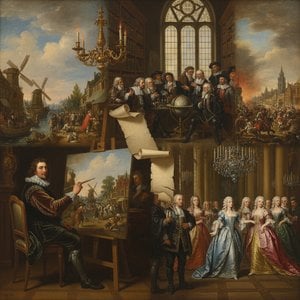
Illuminating a Century of Change: Artistic Expression & Societal Shifts in 17th-Century Europe
Explore the artistic brilliance of the 17th-century Dutch Golden Age & Baroque period. Discover Rembrandt, genre painting, and chiaroscuro techniques. Expert insights for art lovers & collectors.