


 Pregledaj u stvarnoj veličini
 Pošalji
 Podijeli
 Detalji o umjetničkom djelu

 Preuzmi
 Slični predmeti
 Rentgenska snimka
 Automatska prezentacija
Triptych


 Prikaži više
Giclée / Umjetnički otisak
Giclée tisak muzejske kvalitete ili otisak na platnu uz brzu proizvodnju i fleksibilne opcije završne obrade. ( Kupi ručno naslikanu sliku Kupi digitalnu sliku)




P118B $10

P118H $10

P118W $10

P438Z $10

P508JH $12

P508YH $12

P805H $10

P805Z $10

P919BZ $10

P919G $10

P919XJ $10

P959ZH $10

P968JZ $12

W106C $8

W218G $10

W218JH $8

W218Y $10

W307PJ $10

W316G $10

W316PJ $8

W316Y $10

W398PJ $8

W4111J $10

W500HY $15

W500JH $15

W692G $12

W849H $8

W940BG $15

W953PJ $8




Odaberite jednu od naših unaprijed definiranih veličina koje odgovaraju izvornim proporcijama umjetničkog djela.

Možete unijeti vlastite dimenzije kako biste umjetničko djelo prilagodili specifičnom okviru ili prostoru. Ako odabrana veličina ne odgovara proporcijama izvornog rada, izrezat ćemo dio slike ili je proširiti pomoću ogledalnog efekta ili jednobojne rubne površine. Digitalni prikaz (mockup) bit će vam poslan na odobrenje prije početka proizvodnje.
Imajte na umu da pregled na zaslonu ne odražava stvarno izrezivanje ili proširivanje. Samo će mockup točno prikazati konačnu kompoziciju.
Iako su dostupne prilagođene veličine, preporučujemo odabir dimenzije iz unaprijed definirane liste kako biste očuvali izvorne proporcije.
Dostava širom svijeta () u roku od 2 tjedna umjesto standardnih 4/5 tjedana. (26 Kolovoz)

Besplatna ekspresna dostava širom svijeta

Visokokvalitetno laneno platno

Potpuno osiguranje dostave

Jamstvo povrata carine i uvoznih poreza

Garancija vjernog podudaranja boja

Politika povrata u roku od 60 dana (samo u slučaju nedostataka)

Jamstvo povrata 100% novca

Popust na više proizvoda
 Opcija stakla dostupna je samo za dimenzije manje od 110 cm

Triptych
Giclée / Umjetnički otisak
Veličina reprodukcije
-


Ukupna cijena
$ 62
Opis djela
A Window into the Northern Renaissance
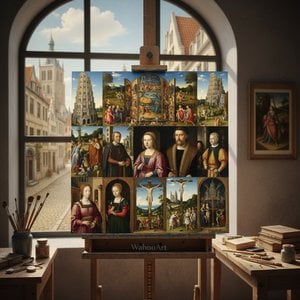
In the vast tapestry of the Northern Renaissance, few works capture the rhythmic pulse of human existence as intimately as Pieter Bruegel the Elder’s Triptych. This masterful three-paneled composition serves not merely as a painting, but as a profound narrative journey through the social and spiritual fabric of the sixteenth-century Low Countries. As one gazes upon the intricate details, there is an immediate sense of being transported to a world where the sacred and the profane exist in a delicate, intertwined dance. Bruegel, a titan of Flemish art, moves away from the idealized grandeur of the Italian Renaissance to embrace a more grounded, observational realism that celebrates the textures of everyday life—the weight of a scholar's book, the communal warmth of a feast, and the ruggedness of a rocky landscape.
The brilliance of this work lies in its ability to weave complex iconography into scenes that feel startlingly alive. In the left panel, figures perched upon rocky outcrops suggest a moment of intellectual or spiritual contemplation, perhaps representing the pursuit of knowledge or the arduous climb toward enlightenment. The middle panel shifts the energy toward the communal; here, a bountiful table laden with food and drink invites the viewer to partake in a celebration reminiscent of the Feast of Saint Nicholas. This central focus on shared humanity is balanced by the right panel, where the bustling movement of an urban gathering creates a sense of kinetic vitality. Through these shifting perspectives, Bruegel captures the multifaceted nature of the human experience—from solitary reflection to the exuberant chaos of the crowd.
Mastery of Technique and Visual Splendor
Technically, the Triptych is a triumph of oil painting, showcasing the medium's capacity for unparalleled depth and luminosity. Bruegel utilizes a palette that breathes with life, ranging from deep, earthy ochres and forest greens to sudden, piercing accents of crimson and azure. The artist’s command over light allows him to create uncanny illusions of reality, where the sheen on a ceramic cup or the heavy fold of a woolen tunic feels almost tactile. This meticulous attention to detail is a hallmark of the Northern tradition, where every brushstroke serves to reinforce the authenticity of the scene.
For the discerning collector or interior designer, this piece offers an extraordinary opportunity to introduce a sense of historical gravity and narrative depth into a space. A high-quality reproduction of this triptych does more than decorate a wall; it anchors a room with its complex composition and rich tonal range. The work’s ability to harmonize diverse themes—history, faith, and the simple joys of life—makes it a versatile centerpiece that can inspire conversation and evoke a sense of timelessness. Whether placed in a quiet study or a grand living hall, Bruegel’s vision remains an enduring testament to the beauty found in the intricate details of our shared world.
Biografija umjetnika
Pieter Bruegel the Elder (c. 1525–1569): Renaissance Master of Landscapes & Peasant Life
Pieter Bruegel the Elder emerged during a period of profound change, a time when the artistic landscape of Europe was shifting from the High Renaissance ideals of Italy towards the burgeoning complexities of Northern European expression. Born sometime between 1525 and 1530, likely in Breda – though details surrounding his early life remain somewhat elusive – Bruegel’s formative years unfolded amidst religious upheaval and a flourishing merchant culture. He began his artistic journey around 1545 as an apprentice to Pieter Coecke van Aelst, a respected Antwerp painter known for both his artistry and his designs for tapestries. This apprenticeship provided Bruegel with a solid grounding in the technical skills of oil painting and drawing, but perhaps more importantly, it exposed him to the humanist currents that were beginning to permeate intellectual circles. Van Aelst’s workshop was not merely a place of artistic instruction; it was a crucible where traditional techniques met new ideas, shaping Bruegel's future vision.Early Life & Artistic Training
Bruegel’s initial artistic training took place in Antwerp, the undisputed center of Flemish art and commerce during his time. He studied under Pieter Coecke van Aelst, absorbing the master’s meticulous attention to detail and mastering the techniques of oil painting – a medium that was gaining prominence in Northern Europe as artists sought to emulate the luminous effects achieved by Italian Renaissance painters. However, Bruegel's artistic sensibilities were distinctly rooted in the traditions of Flemish art, characterized by a focus on realism, expressive color palettes, and a profound understanding of human psychology. This early exposure to humanist thought would profoundly influence his subsequent artistic endeavors, shaping his worldview and informing his creative choices.Travels & Artistic Transformation
Following his apprenticeship, Bruegel embarked on extensive travels that would indelibly mark his artistic development. Between 1551 and 1553, he journeyed through France, Switzerland, and Italy – a daring undertaking for a young artist venturing into unfamiliar cultural landscapes. These expeditions were not merely sightseeing trips; they were deliberate explorations of artistic inspiration. While in Italy, Bruegel encountered the monumental works of Renaissance masters—Leonardo da Vinci, Michelangelo, Raphael—and absorbed their stylistic innovations. Yet, crucially, he resisted the temptation to adopt Italianate conventions wholesale. Instead, he internalized their influence and filtered it through his own unique temperament, resulting in a distinctive artistic style that blended Northern European realism with elements of Italian grandeur. The Alps, with their dramatic peaks and valleys, captivated Bruegel’s imagination and profoundly impacted the compositional structure and atmospheric perspective found in many of his later landscapes.The Birth of a Unique Vision: Landscapes & Peasant Life
Bruegel's artistic breakthrough occurred when he turned his gaze inward—towards the everyday lives of Flemish peasants and villagers. Unlike many of his contemporaries who favored mythological narratives or religious iconography, Bruegel chose to depict scenes from rural existence with remarkable honesty and psychological insight. His landscapes were not merely decorative backgrounds; they were active participants in the narrative, imbued with symbolic meaning and reflecting a deep understanding of nature’s power and beauty. Paintings like *The Hunters in the Snow* exemplify his masterful command of atmospheric perspective—creating depth and realism through subtle gradations of color and tone—while *Peasant Wedding* captures the vibrant energy and social customs of a Flemish village with astonishing detail. Bruegel's artistic vision was characterized by a humanist impulse to portray humanity as it truly is—with its joys, sorrows, triumphs, and failures—without resorting to idealized representations or moralizing judgments.Iconic Works & Lasting Influence
Pieter Bruegel the Elder’s legacy extends far beyond his individual paintings. He established himself as one of the foremost artists of his era, influencing generations of painters who followed him. His innovative approach to landscape painting paved the way for developments in the genre that would resonate throughout the Baroque period and beyond. Furthermore, Bruegel's unflinching portrayal of peasant life challenged prevailing artistic conventions and contributed to a broader cultural shift towards valuing vernacular culture and depicting human experience with psychological realism. Paintings like *The Tower of Babel*, *Landscape with the Fall of Icarus*, and *The Peasant Wedding* remain among the most celebrated works of art in history—testaments to Bruegel’s artistic genius and enduring influence on Western art. He died in Brussels in 1569 at the relatively young age of forty-three, leaving behind a body of work that continues to captivate audiences worldwide and cementing his place as one of the most important figures in the history of art.
Pieter Bruegel Stariji
1525 - 1569 , Nizozemska
Osnovne informacije
- Artistic Movement Or Style: Renaissance painting
- Artists Or Movements Influenced By This Artist: ['Dutch Golden Age painting']
- Artists Who Influenced This Artist: ['Hieronymus Bosch']
- Date Of Birth: c. 1525
- Date Of Death: 1569
- Full Name: Pieter Bruegel the Elder
- Nationality: Flemish
- Notable Artworks:
- Landscape with the Flight into Egypt
- The Triumph of Death
- Peasant Wedding
- Hunters in the Snow
- Place Of Birth: Breda, Netherlands
Srodni članci
Deset Remek-djela Sjeverne Renesanse: Umetnička Baština Za Vaš Dom
Otkrijte 10 remek-djela sjeverne renesanse! Jan van Eyck, Dürer i drugi majstori – istražite priče iza ovih ikoničnih djela. Inspirirajte se za svoj dom s reprodukcijama vrhunske kvalitete na ArtsDot.com!

Oil on Panel Masters: 10 Paintings That Revolutionized Art |
Journey through 10 legendary 'Oil on Panel' masterpieces by Van Eyck, Bosch & Bruegel. Explore the stories behind these iconic Renaissance & Baroque paintings and find museum-quality art reproductions to elevate your home decor. Discover all masterpieces on !

Pieter Bruegel the Elder: A Master of Genre, Landscape & Social Commentary
Explore the life & art of Pieter Bruegel the Elder, a pivotal figure of the Renaissance. Discover his groundbreaking genre scenes, symbolic landscapes, and lasting influence on art history. Learn more at ArtsDot.

The Enduring Legacy of Oil on Canvas: Technique, History & Aesthetic Impact
Explore the rich history & techniques of oil painting – from Renaissance masters to Impressionism. Discover pigments, layering methods, and why this timeless medium endures. Expert insights for artists & art enthusiasts.

The Enduring Power of Painting: A Historical & Contemporary Exploration of Form and Emotion
Explore the rich history & enduring techniques of oil painting with ArtsDot. Discover masterpieces, learn about art collecting, and find authentic handmade reproductions crafted by skilled artists.



