


 Pregledaj u stvarnoj veličini
 Pošalji
 Podijeli
 Detalji o umjetničkom djelu

 Preuzmi
 Slični predmeti
 Rentgenska snimka
 Automatska prezentacija
 Statistika
King Karl XIV Johan


 Prikaži više
Giclée / Umjetnički otisak
Giclée tisak muzejske kvalitete ili otisak na platnu uz brzu proizvodnju i fleksibilne opcije završne obrade. ( Kupi ručno naslikanu sliku Prebacite na digitalnu sliku)




































Odaberite jednu od naših unaprijed definiranih veličina koje odgovaraju izvornim proporcijama umjetničkog djela.

Možete unijeti vlastite dimenzije kako biste umjetničko djelo prilagodili specifičnom okviru ili prostoru. Ako odabrana veličina ne odgovara proporcijama izvornog rada, izrezat ćemo dio slike ili je proširiti pomoću ogledalnog efekta ili jednobojne rubne površine. Digitalni prikaz (mockup) bit će vam poslan na odobrenje prije početka proizvodnje.
Imajte na umu da pregled na zaslonu ne odražava stvarno izrezivanje ili proširivanje. Samo će mockup točno prikazati konačnu kompoziciju.
Iako su dostupne prilagođene veličine, preporučujemo odabir dimenzije iz unaprijed definirane liste kako biste očuvali izvorne proporcije.
Dostava širom svijeta () u roku od 2 tjedna umjesto standardnih 4/5 tjedana. (9 Rujan)

Besplatna ekspresna dostava širom svijeta

Visokokvalitetno laneno platno

Potpuno osiguranje dostave

Jamstvo povrata carine i uvoznih poreza

Garancija vjernog podudaranja boja

Politika povrata u roku od 100 dana (samo u slučaju nedostataka)

Jamstvo povrata 100% novca

Popust na više proizvoda
 Opcija stakla dostupna je samo za dimenzije manje od 110 cm

King Karl XIV Johan
Giclée / Umjetnički otisak
Veličina reprodukcije
-


Ukupna cijena
$ 62
Srodna umjetnička djela


Biografija umjetnika
The Precision of the Cartographer’s Eye
Olof Johan Södermark was a man whose life was defined by the striking duality of the sword and the brush. Born in Landskrona, Sweden, in 1790, his early years were shaped by the rigorous discipline of military service, a path that began when he entered the fortification corps at the tender age of thirteen. This formative period as a cadet instilled in him a profound respect for accuracy and observation—traits that would later become the hallmark of his artistic style. As he ascended through the ranks to become a lieutenant within the Field Measurement Corps, Södermark dedicated himself to the science of cartography. The meticulous nature of mapping landscapes and recording topographical details provided him with a unique visual vocabulary; the same eye that traced the contours of the Swedish terrain would eventually be used to trace the delicate nuances of the human face.From the Battlefield to the Roman Studio
The trajectory of Södermark’s life was irrevocably altered by the tremors of the Napoleonic Wars. His service took him to the heart of Europe's most pivotal conflicts, including the intense battles of Grossbeeren and Leipzig in 1813. These experiences of chaos and courage, alongside his time serving as an adjutant to Lieutenant General Sixtance David Sparre, infused his character with a certain Romanticist intensity. However, it was his transition from the battlefield to the artistic studio that would define his historical significance. Seeking to expand his creative horizons, Södermark traveled to Rome, where he immersed himself in the classical traditions of the era. Under the guidance of renowned sculptors such as Johan Niclas Byström and Bengt Erland Fogelberg, he initially sought to master the permanence of stone. Yet, as his travels took him through the cultural epicenters of Paris, Munich, and London, he found that his true passion lay not in the static weight of sculpture, but in the fluid, expressive potential of portrait painting.A Legacy of Neoclassical Grandeur
As Södermark matured as an artist, his work became a sophisticated bridge between Neoclassical discipline and the burgeoning emotional depth of Romanticism. His ability to marry scientific precision with an evocative sense of character allowed him to ascend to the highest levels of Swedish society. By the early 1830s, he had earned the prestigious opportunity to paint members of the Royal Family, creating portraits that captured both their sovereign authority and their individual humanity. One of his most notable achievements remains his depiction of King Karl XIV Johan, a work that exemplifies his ability to render texture, light, and royal dignity with unparalleled clarity. Though his life was cut short in 1848, Södermark left behind a legacy of profound influence, passing his artistic torch to his son, Per Södermark, and ensuring that the meticulous, soulful vision of the soldier-artist would endure within the annals of Swedish art history.
olof johan södermark
1790 - 1848 , Sweden
Osnovne informacije
- Artistic Movement Or Style: Neoclassical
- Artists Or Movements Influenced By This Artist: ['Classical Art']
- Artists Who Influenced This Artist: ['Jean-Auguste Dominique Ingres']
- Date Of Birth: 1790
- Date Of Death: 1848
- Full Name: Olof Johan Södermark
- Nationality: Swedish
- Notable Artworks:
- King Karl XIV Johan
- henri beyle
- Place Of Birth: Landskrona, Sweden
Srodni članci

19th Century Masterpieces: 10 Paintings That Defined an Era | ArtsDot
Journey through 19th century art with ArtsDot! Explore 10 iconic paintings – from Monet & Renoir to Courbet – and discover the stories behind Romanticism, Realism & Impressionism. Find museum-quality reproductions for your home decor. Explore the full collection online!

Johan Krouthén: Navigating Swedish Romanticism Through Landscape & Light
Explore the captivating landscapes of Johan Krouthén, a Swedish artist who broke from tradition to embrace realism & idealism. Discover his technique, influences, and legacy with ArtsDot.

Thomas George Webster: Navigating Genre Boundaries & American Identity in 19th-Century Landscape Painting
Explore the captivating genre scenes of Thomas George Webster, a Victorian painter bridging British traditions with American themes. Discover his style, influences & legacy in 19th-century art history.

William Henry Pyne: A Topographical Vision of Early 19th-Century England – Art, Society & Watercolour's Rise
Explore the captivating world of William Henry Pyne (1769-1843), a key figure in early 19th-century English art. Discover his stunning watercolours, architectural studies & contribution to the rise of watercolour painting. Learn about this fascinating artist's life and legacy.
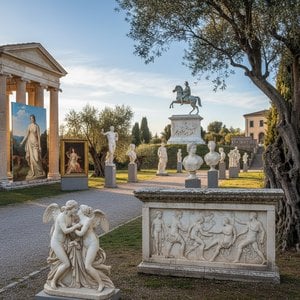
Desetak remek-djela neoklasicizma: Vrhunsko umjetničko naslijeđe za vaš dom
Otkrijte 10 remek-djela neoklasicizma! David, Raffaello i drugi majstori definirali su ovaj stil. Istražite priče iza umjetnosti i pronađite inspiraciju za svoj dom. Kvalitetne reprodukcije na ArtsDot.com – istražite cijelu kolekciju online!