


 Pregledaj u stvarnoj veličini
 Podijeli
 Podijeli
 Detalji
 Vodič
Vodič

 Preuzmi datoteku
 Slični predmeti
 Rentgenska snimka
 Slide show
 Statistika
Eve


 Pročitajte više
Giclée / Umjetnički otisak
Giclée tisak muzejske kvalitete ili otisak na platnu uz brzu proizvodnju i fleksibilne opcije završne obrade. ( Naručite ručno oslikano reprodukciju Prebacite na digitalnu prodaju slika)




P118B €10

P118H €10

P118W €10

P438Z €10

P508JH €12

P508YH €12

P805H €10

P805Z €10

P919BZ €10

P919G €10

P919XJ €10

P959ZH €10

P968JZ €12

W106C €8

W218G €10

W218JH €8

W218Y €10

W307PJ €10

W316G €10

W316PJ €8

W316Y €10

W398PJ €8

W4111J €10

W500HY €15

W500JH €15

W692G €12

W849H €8

W940BG €15

W953PJ €8




Odaberite jednu od naših unaprijed definiranih veličina koje odgovaraju izvornim proporcijama umjetničkog djela.

Unesite širinu i visinu koja vam je potrebna, kako bi odgovarali vašem okviru ili zidu. Print se može samo izrezati, nikada ne može biti veći od slike, stoga veličina s drugačijim oblikom gubi dio slike. Šaljemo vam digitalni prikaz (mockup) na odobrenje prije bilo kakve štampe. Slika prikazana na ovoj stranici ne prikazuje stvarni rez — to čini samo digitalni prikaz.
Dostava širom svijeta () u roku od 2 tjedna umjesto standardnih 4/5 tjedana. (19 Listopad)

Besplatna ekspresna dostava širom svijeta

Visokokvalitetno laneno platno

Potpuno osiguranje transporta

Jamstvo povrata carine i uvoznih poreza

Jamstvo vjernosti boja

Politika povrata u roku od 100 dana (samo u slučaju nedostataka)

Jamstvo povrata 100% novca

Popust na više proizvoda
 Opcija stakla dostupna je samo za dimenzije manje od 110 cm

Eve
Giclée / Umjetnički otisak
Veličina reprodukcije
-


Ukupna cijena
€ 54
A Descent into Imagination: The Enigmatic World of Odilon Redon’s Eve
In the quiet, evocative depths of Odilon Redon’s 1904 masterpiece, "Eve," viewers are invited to step away from the tangible world and enter a realm where the boundaries between dream and reality dissolve. As a cornerstone of the Symbolist movement, this painting transcends mere visual representation, offering instead a psychological landscape that mirrors the complexities of the human subconscious. Currently housed within the prestigious Musée du Orsay in Paris, the work serves as a profound testament to Redon’s ability to translate unseen emotions into tangible form. Unlike the rigid realism that dominated much of the era, Redon utilizes a soft, almost ethereal approach to depict the biblical first woman, creating an atmosphere that is simultaneously intimate and infinitely mysterious.
The subject matter, while rooted in religious lore, is stripped of traditional didacticism. Instead, we encounter a solitary figure bathed in a warm, yet melancholic, tonal palette. Redon employs a masterful use of color—predominantly earthy browns, deep reds, and muted oranges—to evoke a sense of primordial existence. The stark red wall in the background acts as a dramatic, visceral counterpoint to the woman's subdued features, perhaps symbolizing the heat of passion or the looming shadow of temptation and impending doom. As her gaze is fixed downward upon the textured surface beneath her feet, the viewer is drawn into her introspective state, sharing in a moment of profound solitude that feels both ancient and deeply personal.
The Artistry of Shadow, Texture, and Symbol
Technically, "Eve" is a triumph of texture and light. Redon’s command over oil on canvas allows for a palpable sense of materiality; the brushwork possesses a rhythmic depth that draws inspiration from the dreamlike qualities of artists like Gustave Moreau. There is a deliberate ambiguity in his execution—the figures flanking Eve remain indistinct, shrouded in a soft-focus haze that prevents the eye from settling on any single literal detail. This technique forces the observer to engage with the painting not as a story to be read, but as an emotion to be felt. The interplay of light and shadow creates a sense of movement within the stillness, suggesting that beneath the surface of this quiet scene, much more is occurring in the spiritual realm.
For the discerning collector or interior designer, "Eve" offers an unparalleled opportunity to introduce a piece of profound intellectual and emotional depth into a space. A high-quality reproduction of this work does more than decorate a wall; it provides a focal point for contemplation. The painting’s ability to harmonize warm, earthy tones with dramatic accents makes it a versatile choice for sophisticated environments, ranging from classical studies to modern, minimalist galleries. To possess a piece of Redon's vision is to hold a fragment of the Symbolist soul—a window into a world where every shadow holds a secret and every color tells a story of the human spirit.
Pitanja i odgovori
Kolika je percepcija svjetline djela "Eve" autora Odilon Redon?
U pogledu percepcija svjetline, "Eve" autora Odilon Redon je bright.
Postoji li vodič za "Eve" autora Odilon Redon?
Vodič za "Eve" je stranica Vodič umjetničkog djela – isprintani informativni list koji prikazuje umjetničko djelo s njegovim opisom, izvorom i tablicom podataka (umjetnik, datumi, tehnika, izvorni dimenzije, kolekcija).
Mogu li naručiti uljanu reprodukciju djela "Eve"?
"Eve" je dostupan kao ručno oslikana uljana reprodukcija na lanenom platnu. Narudžbu možete izvršiti na njegovoj Ručno oslikana reprodukcija stranici, uz mogućnost odabira veličina.
Srodna umjetnička djela


Biografija umjetnika
Odilon Redon (1840-1916): Between Shadow and Light
Odilon Redon, born Bertrand Jean Redon in Bordeaux, France, on April 20, 1840, was an artist whose profound engagement with the unseen realms of imagination solidified his place as a pivotal figure in Symbolism. His artistic journey began not with grand ambition but with quiet observation; at just ten years old he won a drawing prize—a foreshadowing of the visual sensitivity that would define his life’s work. Though initially steered towards architecture by familial expectations, Redon's true calling lay elsewhere, illuminated by instruction from Jean-Léon Gérôme and, crucially, Rodolphe Bresdin, who guided him in the intricate arts of etching and lithography. These techniques became foundational to his early explorations, allowing him to delve into a world of shadowy figures and ambiguous forms that would soon captivate those seeking an alternative to academic realism. The interruption of the Franco-Prussian War saw Redon briefly serving in the military, but it was upon his return to Paris that his artistic vision truly began to coalesce.Early Life & Artistic Training
Redon’s childhood was marked by a peculiar blend of solitude and fascination with nature—a formative experience that would profoundly shape his artistic sensibilities. Living primarily with his uncle in Bordeaux's countryside, he cultivated an intimate connection with the landscape, meticulously studying trees and undergrowth. This early immersion in natural beauty instilled within him a deep appreciation for observation and detail, qualities that would permeate his entire oeuvre. At age 15, he began formal study in drawing but on the insistence of his father he switched to architecture—a decision ultimately thwarted by his failure to pass the École des Beaux-Arts entrance examinations. Despite this setback, Redon continued to pursue artistic development, studying under Jean-Léon Gérôme and honing his skills in watercolor and charcoal. His encounter with Rodolphe Bresdin proved particularly influential; Bresdin instructed him in etching and lithography—techniques that would become indispensable tools for exploring the expressive potential of monochrome prints.The Birth of Symbolism & The “Noirs”
Redon’s artistic trajectory diverged sharply from prevailing trends during his time, rejecting the pursuit of realistic representation in favor of conveying emotional depth and spiritual resonance. This conviction led him to create his celebrated series of “noirs”—monochromatic works executed primarily in charcoal and lithography—a stylistic choice that would become synonymous with Symbolism itself. These weren’t merely studies in darkness; they were explorations of the subconscious, populated by unsettling creatures, disembodied eyes, and haunting figures emerging from swirling mists. The influence of writers like Edgar Allan Poe and Charles Baudelaire is palpable here—a shared fascination with the macabre, the mysterious, and the power of suggestion. Critics initially dismissed Redon’s “noirs” as morbid and unsettling, yet they nonetheless captured the essence of Symbolist aesthetics: a deliberate rejection of naturalism in favor of conveying inner psychological states.Lithography & Artistic Innovation
Redon's mastery of lithography was instrumental to his artistic success. He recognized its capacity to achieve remarkable tonal effects—particularly the subtle gradations of black and gray—that surpassed those attainable with watercolor or oil paint alone. Bresdin’s guidance ensured that Redon possessed the technical skills necessary to exploit this medium’s expressive potential, allowing him to produce prints that conveyed a sense of atmosphere and psychological complexity. His early lithographs, such as *Le Gué* (The Ford), demonstrated his ability to capture the mood of a scene with remarkable precision—a characteristic that would persist throughout his career. Redon's innovative approach to printmaking established him as a pioneer in modern art, anticipating developments in Expressionism and abstraction decades later.Later Years & Legacy
Redon’s artistic vision matured during the 1890s, marked by a gradual embrace of color—first pastel, then oil—which infused his paintings with vibrancy and luminosity. This stylistic shift reflected an evolving inner landscape within the artist himself—a move away from the melancholic introspection of his early works toward a more optimistic engagement with mythology, Buddhism, and Japanese art (*Japonism*). The influence of *Japonism* is evident in numerous compositions featuring flattened planes and decorative ensembles—a testament to Redon’s openness to new artistic ideas. His paintings gained considerable acclaim during the Armory Show of 1913, attracting international attention and cementing his reputation as a visionary artist. Odilon Redon died peacefully in Paris on July 6, 1916, leaving behind an enduring legacy—one characterized by courage, imagination, and a profound belief in art’s capacity to illuminate the hidden dimensions of human experience. His work continues to inspire artists today, serving as a reminder that true artistic expression lies beyond the confines of conventional realism.
Odilon Redon
1840 - 1916 , Francuska
Brzi pregled
- Artistic Movement Or Style: Simbolizam
- Artists Or Movements Influenced By This Artist:
- Surrealizm
- Marcel Duchamp
- Artists Who Influenced This Artist:
- Jean-Léon Gérôme
- Rodolphe Bresdin
- Date Of Birth: 1840
- Full Name: Odilon Redon
- Nationality: Francuski
- Notable Artworks:
- Centaurs
- Onnes
- Portrait of Ari Redon
- Place Of Death: Paris
Povezani članci

Mark Rothko: 25 Remek-djela Apstraktne Ekspresije za Vaš Dom | ArtsDot
Istražite 25 najpoznatijih djela Marka Rothka, majstora apstraktne ekspresije. Otkrijte priče iza njegovih platna, bogatih bojama i emocijama. Reprodukcije vrhunske kvalitete dostupne na ArtsDot.com – inspiracija za vaš dom!
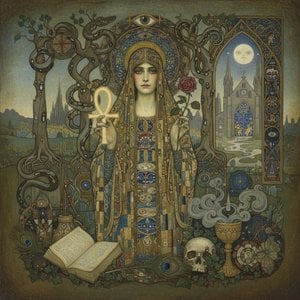
The Evocative Realm of Symbolism: Exploring Meaning & Mysticism in Late 19th-Century Art
Explore the captivating world of Symbolism art! Discover key artists, defining themes & its lasting influence on modern movements. A deep dive into late 19th-century masterpieces.

Crimson Threads of Narrative: Exploring Symbolism & Representation in Artworks Featuring the Red Dress
Explore the rich symbolism of the red dress in art history! From ancient power displays to iconic portraits like Cézanne’s 'Madame Cezanne', discover the cultural and artistic significance behind this captivating color. Expert analysis & insights.

Reginald Grenville Eves: Bridging Portraiture & Modern British Landscape Painting
Explore the life & work of Reginald Grenville Eves, a leading British portraitist who transitioned to captivating landscape painting. Discover his legacy and prominent works at ArtsDot.
25 Remek-djela Muzeja lijepih umjetnosti u Bostonu: Inspiracija za vaš dom | ArtsDot
Uronite u svijet 25 remek-djela Muzeja lijepih umjetnosti u Bostonu! Otkrijte priče Claude Moneta, Degasa i drugih majstora. Inspirirajte se za dekoraciju doma s ArtsDot.com - luksuzne reprodukcije slika i umjetnine po narudžbi.
