

- 44.0 x 36.0 cm


Slika prati vaše izbore: , .
Opis kolekcionarskog predmeta
Intriguing Odilon Redon painting "Closed Eyes" captures a woman in deep introspection against a serene blue backdrop with scattered flowers, showcasing the artist's evocative style from 1890. Discover this captivating artwork and bring its dreamlike beauty into your space.
 Prikaži više
Biografija umjetnika
Meta Description: Odilon Redon (1840-1916) bio je francuski simbolista poznat po svojim zaboravljajućim crtežima u crno bijelu tehniku i velikom utjecaju na Surrealizam, oslanjajući se na svijet sna i fantazije kako bi prikazao dublje psihološke teme.
Ručno rađena uljana reprodukcija
Ručno oslikano uljanim bojama na platnu u dimenzijama i okviru po vašem izboru, izrađeno po narudžbi od strane naših umjetnika. ( Prebacite na printove Prebacite na digitalnu sliku)
Više o ovoj slici
 Pregledaj u realnoj veličini
 Pošalji
 Podijeli
 Detalji o umjetničkom djelu
 Vodič
Vodič

 Preuzmi umjetničko djelo
 Slični predmeti
 Rentgenska snimka
 Slide show
 Pitanja i odgovori
 Statistika
Naručite svoju sliku u četiri jednostavna koraka
Nemojte žuriti. Svoje odgovore možete promijeniti u bilo kojem trenutku; cijena u vašoj košarici ažurira se prema svakom odabiru.
1 Prvi od četiri koraka
Koju veličinu želite?
Ove dimenzije zadržavaju proporcije izvornog slikopisa. Crtež prikazuje vaš odabir na zidu, iznad dvometarskog kauča.
Ili unesite vlastite dimenzije
Odaberite jednu od naših unaprijed definiranih veličina koje odgovaraju izvornim proporcijama umjetničkog djela.

Unesite potrebnu širinu i visinu kako bi dimenzije odgovarale vašem okviru ili zidu. Budući da je riječ o ručno oslikanom djelu, umjetnik može malo proširiti rubove slike ili ih skratiti kako bi postigao drugačiji oblik — izbor je vaš. Prije početka slikanja poslat ćemo vam digitalni prikaz (mockup) radi potvrde. Slika prikazana na ovoj stranici ne predstavlja stvarni rezultat — samo digitalni prikaz to čini.
2 Drugi od četiri koraka
Kako želite da bude pripremljeno: u roli, na platnu ili u okviru?
Cijene u nastavku odnose se na dimenziju koju ste odabrali u prvom koraku.
Odaberite rubove platna
Odaberite svoj okvir

Bijela rubna traka €1

Zamućeni rubovi €1

Prošireno €1

P118B €10

P118H €10

P118W €10

P438Z €10

P508JH €12

P508YH €12

P805H €10

P805Z €10

P919BZ €10

P919G €10

P919XJ €10

P959ZH €10

P968JZ €12

W106C €8

W218G €10

W218JH €8

W218Y €10

W307PJ €10

W316G €10

W316PJ €8

W316Y €10

W398PJ €8

W4111J €10

W500HY €15

W500JH €15

W692G €12

W849H €8

W940BG €15

W953PJ €8

H24-GOLD €30

H24-SILVER €30

H36-GOLD €45

H36-SILVER €45
Uokvireno
Profil: . Ukupna veličina s okvirom: .
3 Treći od četiri koraka
Želite li nešto promijeniti na slici?
Većina ljudi odgovara s ne. Budući da je svaka slika ručni rad, naš umjetnik je može i prilagoditi vašim željama.
Nakon narudžbe, tim ArtsDot.com kontaktirat će klijenta putem e-pošte radi uputa te dostaviti pregledni prikaz (mockup)
4 Četvrti od četiri koraka
Nekoliko završnih opcija
Sve su opcije neobvezne. Odgovori koji su već odabrani ne podrazumijevaju dodatni trošak.
Tko je autor?
Isporuka širom svijeta () u roku od 3-4 tjedna umjesto standardnih 5 tjedana. (9 Studeni). Bez kompromisa u kvaliteti.
Pločica s natpisom, kao u muzeju?
Detalji gravirane brončane pločice
This elegant plaque features the artist's name and the title of the artwork, finely engraved for a timeless presentation.
It is made from bronze with a refined, elegant finish. The text is precisely laser-engraved for a sharp and permanent result. Measuring 9x2 cm, the plaque is compact yet easy to read. It's built to be durable and scratch-resistant, offering a professional, museum-quality look. Mounting is simple thanks to the included adhesive backing.
Detalji prozirne akrilne pločice
The plaque includes essential engraved details such as the artist's name, the title of the artwork, the date it was created, the type of media used-like oil on canvas or watercolor-a brief description of the piece, and a QR code that links to the complete artwork information.
It is crafted from clear acrylic, offering a sleek, modern appearance. The text is UV-engraved in black to ensure strong visual contrast. With a size of 10x15 cm, it ensures optimal readability. It comes equipped with two metal hooks for secure wall mounting. The plaque is designed to be weather-resistant, making it suitable for various environments, and it includes interactive features that work seamlessly with smartphone scanning.
Detalji crne akrilne pločice
This elegant plaque includes engraved information such as the artist's name, the title of the artwork, the date it was created, the type of media used (like oil on canvas or watercolor), a short description of the artwork, and a QR code for quick access to more information.
The plaque itself is made from refined black acrylic with a premium finish. The text is laser-engraved in white for high contrast and readability. Its size is 10x15 cm, designed to be easy to read. It comes with two metal hooks for professional mounting. The design is sleek and fits any interior style. It is also weather-resistant and durable, with built-in digital integration for mobile compatibility.
Zaštitni lak?
Kada vam je potrebno?
✓ Provjerite i naručite
Vaša slika, prema vašoj narudžbi

Closed Eyes
Tehnika reprodukcije
Veličina reprodukcije
-

Odabrani vrhunski umjetnik
Više detalja, profinjenosti i dodatnog vremena za izradu
-

Okvir za reprodukciju
-
-
Za umjetnička djela ili reprodukcije veće od 105 cm (približno 41 inč) na bilo kojoj strani, okvir će biti isporučen u obliku rastavljenog seta za montažu. Ovaj način osigurava sigurnu dostavu i sprječava oštećenja tijekom transporta.
Potrebna je profesionalna montaža – ovo nije proizvod za samostalnu izradu.
Set mora sastaviti i platno zategnuti iskusni profesionalni uokvirivač, koristeći drvno ljepilo (nije uključeno u set), kljeste za zatezanje platna i stege kako bi se održao pravilan kut letvica dok se ljepilo suši. Nepravilna montaža ili neravnomjerno zategnuto platno mogu trajno oštetiti umjetničko djelo, a takva oštećenja nisu pokrivena našim jamstvom.
 Za umjetnička djela ili reprodukcije veće od 105 cm (približno 41 inč) na bilo kojoj strani, okvir će biti isporučen u obliku rastavljenog seta za montažu. Ovaj način osigurava sigurnu dostavu i sprječava oštećenja tijekom transporta.
Sve letvice od punog drveta su uključene, precizno izrezane po mjeri.
Montira se pomoću priloženih vijaka, uz dodatak ljepila za drvo za spojeve u kutovima, koje nije uključeno u set i koje vaš okviraš mora vlastito nabaviti.
Potrebni su profesionalni alati koji nisu uključeni: škripc za zatezanje platna (zatezač) i stezaljke za održavanje pravokonačnosti letvica tijekom sušenja ljepila.
Važno:
Za spojeve u kutovima potrebno je ljepilo za drvo, letvice se moraju pričvrstiti stezgama dok se ljepilo potpuno ne osuši, a za zatezanje platna na sastavljenom okviru potreban je alat za zatezanje platna. Nijedan od ovih alata nije uključen u set. Molimo vas da prije narudžbe ove veličine osigurate uslugu iskusnog profesionalnog uokvirivača.

Natpisna pločica
-
-

Zaštitni lak
Sjajni lak (pojačava intenzitet boja, štiti od svjetlosti i vlage)
-

Prilagodite svoje umjetničko djelo
Primjeri mogućnosti prilagodbe: Zamijenite lice fotografijom kupca; Dodajte ljubimca (npr. zamijenite mačku psom); Uključite skrivenu poruku u pozadinu; Promijenite pejzaž ili elemente pozadine.
-

Hitna dostava
Globalna dostava () u roku od 3-4 tjedna umjesto standardnih 5 tjedana. (9 Studeni). Bez kompromisa u kvaliteti.
-
Brza dostava
Dostava širom svijeta () u roku od 5 tjedana. (16 Studeni).
Uključeno u cijenu
Ukupna cijena
€ 235
Opcija stakla dostupna je samo za dimenzije manje od 110 cm
Uključeno uz svaku narudžbu
- Besplatna ekspresna dostava širom svijeta
- Visokokvalitetno laneno platno
- Potpuno osiguranje dostave
- Jamstvo povrata carine i uvoznih poreza
- Jamstvo vjernosti boja
- Politika povrata u roku od 100 dana (samo u slučaju nedostataka)
- Jamstvo povrata 100% novca
- Popust na više proizvoda


A Portrait of Introspection: Odilon Redon’s “Closed Eyes”
Odilon Redon's "Closed Eyes," painted in 1890, is more than just a depiction of a woman; it’s a profound meditation on the subconscious and the elusive nature of perception. Executed during a pivotal period in Redon’s career – a time when he was increasingly concerned with exploring the realms of dreams and nightmares – this work exemplifies his signature style: a haunting blend of realism and Symbolism, rendered with meticulous detail and imbued with an unsettling atmosphere.
- Subject & Composition: The central figure, a woman seated with her eyes closed, immediately draws the viewer into a state of quiet contemplation. Her posture is relaxed yet alert, suggesting a vulnerability and openness to inner experience. The scattering of flowers – likely lilies or poppies given Redon’s penchant for floral motifs – adds a layer of delicate beauty that contrasts sharply with the overall mood of melancholy.
- Technique & Materials: Redon's mastery of etching and lithography, honed during his early training, is evident in the subtle gradations of tone and the precise rendering of form. The painting likely employs oil paints on canvas, applied with a delicate brushwork that builds up layers of color to create depth and luminosity. The use of blue as the dominant background color contributes significantly to the artwork's somber and dreamlike quality.
The Symbolism of Silence
“Closed Eyes” is rich in symbolic meaning, reflecting Redon’s fascination with the hidden aspects of human psychology. The closed eyes represent a retreat from the external world, an immersion in the realm of dreams and fantasies. This motif was particularly prevalent in late 19th-century Symbolism, where artists sought to express subjective experience rather than objective reality. The flowers, often associated with mourning or remembrance, could symbolize lost innocence or the fragility of beauty. Redon frequently used floral imagery to evoke a sense of decay and transience – themes that resonate powerfully within this piece.
- Historical Context: Painted in 1890, “Closed Eyes” sits firmly within the Symbolist movement, which was reacting against the perceived materialism and rationalism of the Victorian era. Redon’s work aligns with a broader artistic trend toward exploring psychological states and spiritual themes.
- Redon's Vision: Redon believed in accessing visions beyond the visible world, often depicting figures that seemed to exist on the periphery of reality – spectral, ambiguous, and deeply evocative.
A Masterpiece of Mood and Atmosphere
The emotional impact of “Closed Eyes” is undeniable. The painting evokes a sense of quiet sadness, mystery, and introspection. It’s a work that invites the viewer to engage in their own contemplation, prompting questions about identity, perception, and the nature of consciousness. Redon's ability to capture such profound emotion through seemingly simple imagery is a testament to his artistic genius.
- Size & Presentation: This edition, measuring 44 x 36 cm, offers an intimate scale that allows for a deeply personal connection with the artwork.
- ArtsDot Reproduction: ArtsDot is proud to offer a meticulously crafted hand-painted reproduction of “Closed Eyes,” ensuring the highest level of quality and authenticity. Each reproduction captures the nuances of Redon’s original technique, bringing this evocative masterpiece into your home or office.
Perfect for Interior Design & Art Collection
"Closed Eyes" would be a stunning addition to any art collection or interior design scheme. Its melancholic beauty and symbolic depth make it ideal for spaces where contemplation and reflection are valued. Consider displaying this piece in a study, bedroom, or living room – wherever you wish to create an atmosphere of quiet serenity and artistic intrigue.
Pitanja i odgovori
Je li dostupna digitalna datoteka visoke rezolucije za "Closed Eyes"?
Kako biste dobili digitalnu datoteku djela "Closed Eyes" autora Odilon Redon, naručite preuzimanje digitalne slike visoke rezolucije na njegovoj stranici Digitalna umjetnina.
Kako "Closed Eyes" uspostavlja ravnotežu između svjetla i tame?
Za djelo "Closed Eyes" autora Odilon Redon zabilježena je svjetlina od balanced, uz luminancu od Soft Shadow.
Kako mogu pregledati reprodukciju djela "Closed Eyes" autora Odilon Redon?
Pregled djela "Closed Eyes" autora Odilon Redon možete pogledati na stranici Pregled u prostoru za to umjetničko djelo.
Srodna umjetnička djela


Odilon Redon
1840 - 1916, Francuska
Biografija umjetnika
Odilon Redon (1840-1916): Between Shadow and Light
Odilon Redon, born Bertrand Jean Redon in Bordeaux, France, on April 20, 1840, was an artist whose profound engagement with the unseen realms of imagination solidified his place as a pivotal figure in Symbolism. His artistic journey began not with grand ambition but with quiet observation; at just ten years old he won a drawing prize—a foreshadowing of the visual sensitivity that would define his life’s work. Though initially steered towards architecture by familial expectations, Redon's true calling lay elsewhere, illuminated by instruction from Jean-Léon Gérôme and, crucially, Rodolphe Bresdin, who guided him in the intricate arts of etching and lithography. These techniques became foundational to his early explorations, allowing him to delve into a world of shadowy figures and ambiguous forms that would soon captivate those seeking an alternative to academic realism. The interruption of the Franco-Prussian War saw Redon briefly serving in the military, but it was upon his return to Paris that his artistic vision truly began to coalesce.Early Life & Artistic Training
Redon’s childhood was marked by a peculiar blend of solitude and fascination with nature—a formative experience that would profoundly shape his artistic sensibilities. Living primarily with his uncle in Bordeaux's countryside, he cultivated an intimate connection with the landscape, meticulously studying trees and undergrowth. This early immersion in natural beauty instilled within him a deep appreciation for observation and detail, qualities that would permeate his entire oeuvre. At age 15, he began formal study in drawing but on the insistence of his father he switched to architecture—a decision ultimately thwarted by his failure to pass the École des Beaux-Arts entrance examinations. Despite this setback, Redon continued to pursue artistic development, studying under Jean-Léon Gérôme and honing his skills in watercolor and charcoal. His encounter with Rodolphe Bresdin proved particularly influential; Bresdin instructed him in etching and lithography—techniques that would become indispensable tools for exploring the expressive potential of monochrome prints.The Birth of Symbolism & The “Noirs”
Redon’s artistic trajectory diverged sharply from prevailing trends during his time, rejecting the pursuit of realistic representation in favor of conveying emotional depth and spiritual resonance. This conviction led him to create his celebrated series of “noirs”—monochromatic works executed primarily in charcoal and lithography—a stylistic choice that would become synonymous with Symbolism itself. These weren’t merely studies in darkness; they were explorations of the subconscious, populated by unsettling creatures, disembodied eyes, and haunting figures emerging from swirling mists. The influence of writers like Edgar Allan Poe and Charles Baudelaire is palpable here—a shared fascination with the macabre, the mysterious, and the power of suggestion. Critics initially dismissed Redon’s “noirs” as morbid and unsettling, yet they nonetheless captured the essence of Symbolist aesthetics: a deliberate rejection of naturalism in favor of conveying inner psychological states.Lithography & Artistic Innovation
Redon's mastery of lithography was instrumental to his artistic success. He recognized its capacity to achieve remarkable tonal effects—particularly the subtle gradations of black and gray—that surpassed those attainable with watercolor or oil paint alone. Bresdin’s guidance ensured that Redon possessed the technical skills necessary to exploit this medium’s expressive potential, allowing him to produce prints that conveyed a sense of atmosphere and psychological complexity. His early lithographs, such as *Le Gué* (The Ford), demonstrated his ability to capture the mood of a scene with remarkable precision—a characteristic that would persist throughout his career. Redon's innovative approach to printmaking established him as a pioneer in modern art, anticipating developments in Expressionism and abstraction decades later.Later Years & Legacy
Redon’s artistic vision matured during the 1890s, marked by a gradual embrace of color—first pastel, then oil—which infused his paintings with vibrancy and luminosity. This stylistic shift reflected an evolving inner landscape within the artist himself—a move away from the melancholic introspection of his early works toward a more optimistic engagement with mythology, Buddhism, and Japanese art (*Japonism*). The influence of *Japonism* is evident in numerous compositions featuring flattened planes and decorative ensembles—a testament to Redon’s openness to new artistic ideas. His paintings gained considerable acclaim during the Armory Show of 1913, attracting international attention and cementing his reputation as a visionary artist. Odilon Redon died peacefully in Paris on July 6, 1916, leaving behind an enduring legacy—one characterized by courage, imagination, and a profound belief in art’s capacity to illuminate the hidden dimensions of human experience. His work continues to inspire artists today, serving as a reminder that true artistic expression lies beyond the confines of conventional realism.
Srodni članci

Giclée Prints: Archival Quality & Aesthetic Nuances for the Discerning Collector
Explore the world of giclée prints with ArtsDot. Learn about archival quality, aesthetic nuances & investment potential. Expert guidance for discerning art collectors seeking museum-quality reproductions and lasting value.
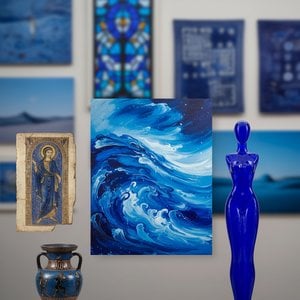
The Allure of Azure: Exploring the Symbolic & Aesthetic Depths of Blue in Art History
Explore the rich history of blue in art! Discover its symbolism, from ancient pigments to modern masterpieces by Kandinsky & Seurat. Uncover the psychological impact and cultural meanings behind this captivating hue.

Slate Blue Masterpieces: 10 Iconic Paintings & Timeless Home Decor Ideas
Immerse yourself in the captivating world of slate blue! Explore 10 iconic paintings by Monet, Van Gogh & Renoir. Discover their stories, techniques & find museum-quality art reproductions for your home at .