


 Pregledaj u stvarnoj veličini
 Podijeli
 Podijeli
 Detalji
 Vodič
Vodič

 Preuzmi datoteku
 Slični predmeti
 Rentgenska snimka
 Slide show
 Statistika
Thomas Jefferson
 Acrylic On Canvas
- WallArt
- Neoclassicism
 1786
1786 90.0 x 72.0 cm
 National Portrait Gallery
 Pročitajte više
Giclée / Umjetnički otisak
Giclée tisak muzejske kvalitete ili otisak na platnu uz brzu proizvodnju i fleksibilne opcije završne obrade. ( Naručite ručno oslikano reprodukciju Prebacite na digitalnu prodaju slika)




P118B €10

P118H €10

P118W €10

P438Z €10

P508JH €12

P508YH €12

P805H €10

P805Z €10

P919BZ €10

P919G €10

P919XJ €10

P959ZH €10

P968JZ €12

W106C €8

W218G €10

W218JH €8

W218Y €10

W307PJ €10

W316G €10

W316PJ €8

W316Y €10

W398PJ €8

W4111J €10

W500HY €15

W500JH €15

W692G €12

W849H €8

W940BG €15

W953PJ €8




Odaberite jednu od naših unaprijed definiranih veličina koje odgovaraju izvornim proporcijama umjetničkog djela.

Možete unijeti vlastite dimenzije kako biste umjetničko djelo prilagodili specifičnom okviru ili prostoru. Ako odabrana veličina ne odgovara proporcijama izvornog rada, izrezat ćemo dio slike ili je proširiti pomoću ogledalnog efekta ili jednobojne rubne površine. Digitalni prikaz (mockup) bit će vam poslan na odobrenje prije početka proizvodnje.
Imajte na umu da pregled na zaslonu ne odražava stvarno izrezivanje ili proširivanje. Samo će mockup točno prikazati konačnu kompoziciju.
Iako su dostupne prilagođene veličine, preporučujemo odabir dimenzije iz unaprijed definirane liste kako biste očuvali izvorne proporcije.
Dostava širom svijeta () u roku od 2 tjedna umjesto standardnih 4/5 tjedana. (10 Listopad)

Besplatna ekspresna dostava širom svijeta

Visokokvalitetno laneno platno

Potpuno osiguranje transporta

Jamstvo povrata carine i uvoznih poreza

Jamstvo vjernosti boja

Politika povrata u roku od 100 dana (samo u slučaju nedostataka)

Jamstvo povrata 100% novca

Popust na više proizvoda
 Opcija stakla dostupna je samo za dimenzije manje od 110 cm

Thomas Jefferson
Giclée / Umjetnički otisak
Veličina reprodukcije
-


Ukupna cijena
€ 53
A Portrait of Enlightenment: Mather Brown’s Likeness of Thomas Jefferson
The portrait of Thomas Jefferson by Mather Brown, completed in 1786, stands as an arresting emblem of the burgeoning neoclassical aesthetic within Britain during the late Enlightenment. More than simply a likeness—though remarkably accurate for its time—it embodies the intellectual currents that shaped America’s founding ideals and continues to resonate with collectors and art historians alike. Painted on canvas using oil paints, Brown's masterful technique captures Jefferson’s dignified countenance against a backdrop of rich crimson, skillfully employing linear perspective and textural brushstrokes to convey both physical presence and psychological depth.The Artist & His Context
Mather Brown (1761-1831), born in Boston, Massachusetts, represents a pivotal figure bridging the stylistic divide between Neoclassicism and Romanticism. Trained under John Singleton Copley—Boston’s foremost artist—Brown absorbed the meticulous precision of classical artistic principles, prioritizing order and balance as hallmarks of his oeuvre. His decision to relocate to London in 1790 solidified his position within the British art landscape, where he gained membership to the Royal Academy, securing a prominent role in shaping artistic discourse and production. The portrait reflects Brown’s engagement with European intellectual traditions—particularly the influence of Greek sculpture—demonstrating an awareness of the broader philosophical debates concerning reason versus emotion that characterized the era.Style & Technique: Neoclassical Precision
Brown's approach to Jefferson’s depiction exemplifies neoclassical ideals. Linear perspective dominates, creating a convincing illusion of three-dimensionality and anchoring Jefferson’s figure within a carefully constructed space. Geometric shapes—squares and rectangles defining Jefferson’s attire—underscore the compositional stability characteristic of the style. Texture is achieved through deliberate brushstrokes that imbue the fabric of Jefferson's coat and wig with palpable volume, mirroring the monumental grandeur favored by neoclassical painters. The dramatic lighting—originating from an unseen source above—casts strong shadows across Jefferson’s face, highlighting his features and conveying a subtle sense of introspection. These meticulous details underscore Brown’s commitment to capturing not merely appearance but also character—a testament to the artist's skill in translating philosophical concepts into visual form.Symbolism & Emotional Resonance
Beyond its technical brilliance, the portrait is laden with symbolic significance. The inclusion of a classical statue in the background serves as an explicit reference to reason and knowledge—values central to Enlightenment thought. Jefferson’s attire—reflecting his connection to European intellectual traditions—further reinforces this thematic dimension. However, Brown's portrayal transcends mere stylistic convention; it conveys a palpable emotional resonance. The gaze of Jefferson—direct yet contemplative—suggests a profound engagement with internal reflection, hinting at the complexities inherent in reconciling philosophical convictions with personal realities. This subtle melancholy contributes to the portrait’s enduring appeal, inviting viewers to contemplate themes of intellectuality, morality, and the burdens of leadership.A Legacy Enduring Through Reproduction
Today, reproductions of Brown's Jefferson offer art lovers and interior designers alike a captivating glimpse into a pivotal moment in American history and artistic innovation. The painting’s masterful technique—characterized by its luminous color palette and nuanced textural rendering—continues to inspire artists and collectors globally. Its enduring emotional impact—rooted in the portrayal of an intellectual titan wrestling with moral dilemmas—remains profoundly relevant, prompting contemplation on the intersection of reason and emotion within the human experience.Pitanja i odgovori
Koji je datum nastanka djela "Thomas Jefferson" autora Mather Brown?
Izrada djela "Thomas Jefferson" autora Mather Brown datira iz 1786. godine.
Koliko je godina Mather Brown imao/la kada je stvorio/la "Thomas Jefferson"?
Kada je "Thomas Jefferson" nastalo 1786. godine, Mather Brown – rođen/a 1761. – imao/la je 25 godina.
Tko je stvorio "Thomas Jefferson"?
"Thomas Jefferson" je djelo koje je stvorio/la Mather Brown. Informacije na ovoj stranici opisuju izvornu umjetničku temu autora/ice Mather Brown.
Što prikazuje "Thomas Jefferson" autora Mather Brown?
Teme prisutne u djelu "Thomas Jefferson" autora Mather Brown uključuju portrait, enlightenment, american history, jefferson, neoclassicism, philosophy, dignified, intellectual. Zajedno one sažimaju temu umjetničkog djela.
Tko je stvorio "Thomas Jefferson" i u kojem je stilu izvedeno?
Iza djela "Thomas Jefferson" stoje Mather Brown i pokret Neoclassicism.
Mogu li vidjeti rentgenski prikaz djela "Thomas Jefferson" autora Mather Brown?
Djelo "Thomas Jefferson" možete istraživati sloj po sloj na stranici Rentgenska snimka, koja predstavlja interaktivni preglednik inspiriran restauratorskim svjetlosnim stolom s jedanaest optičkih prikaza slike.
Je li "Thomas Jefferson" u zemlji svog tvorca?
Ne – umjetničko djelo se nalazi u inozemstvu. Autor je rođen u Sjedinjene Američke Države, dok se izvornom djelu može pristupiti u United Kingdom.
Srodna umjetnička djela


Biografija umjetnika
Transatlantsko naslijeđe Mathera Browna
Mather Brown stoji kao fascinantan most između dvije ere, slikar čiji su život i rad utjelovili promjenjive tide kasnog 18. i ranog 19. stoljeća. Rođen u Bostonu 1761. godine, njegov je umjetnički identitet kovano u intelektualnom žaru kolonijalne Amerike prije nego što je pronašao svoj vrhunski izraz u veličanstvenim londonskim studijima. Njegovo putovanje predstavlja mnogo više od samo osobne karijere; ono odražava kretanje umjetničkih ideala od strogih, strukturiranih principa neoklasicizma prema emotivnom, dramatičnom duhu romantizma. Ova tranzicija omogućila je Brownu da postane svestran pripovjedač, sposoban uhvatiti kako tiho dostojanstvo individualnog portreta, tako i kaotičnu veličinu povijesnog sukoba.
Temelj Brownove majstorstva može se pratiti do njegovog ranog mentorstva pod legendarnim Johnom Singletonom Copleyem. Pod Copleyevim pažljivim okom, Brown je naučio važnost pedantnog detalja i dubokog razumijevanja klasične forme. Ova obuka pružila mu je tehničku disciplinu potrebnu za kretanje kroz kompetitivno europsko tržište umjetnina. Kada se preselio u London 1790. godine, nije stigao tek kao stranac, već kao pripremljeni profesionalac, brzo osvojivši svoje mjesto unutar prestižne Kraljevske akademije. Ovo članstvo bilo je presudno postignuće, signalizirajući njegov prihvaćeni status u najvišim krugovima britanske umjetničke ustanove i pružajući mu platformu za interakciju s najutjecajnijim figurama svog doba.
Majstor portretne slike i povijesnog narativa
Brownov opus odlikuje izvanredna sposobnost prilagodbe tehnike potrebama njegove tematske materije. U svom portretnom stvaralaštvu posjedovao je nevjerojatan dar za prikazivanje suptilnih nijansi karaktera i društvenog statusa. Njegovi portreti znamenitosti poput Thomasa Jeffersona i Benjamina Westa pokazuju oštro oko za političke i društvene struje tog doba, prožimajući svoje subjekte osjećajem postojanosti i gravitacije. Bilo da je dočaravao profinjenu eleganciju u djelu Gospa s psom ili dostojanstveno prisustvo u portretu Thomasa Lowtona, Brown je koristio svjetlost i teksturu kako bi na platnu stvorio živopisna, gotovo disajuća prisustva.
Izvan intimne razmjere portretiranja, Brown je težio uhvatiti epske trenutke. Bio je slikar velike ambicije, često usmjeravajući pažnju na povijesna platna koja su zahtijevala vladanje složenom kompoziciju i dramatičnim pokretom. Njegovo djelo Bitka kod Nila služi kao vrhunac tog pristupa, gdje se udaljio od statičnih klasičnih formi kako bi priabrao vrtoglavu energiju i visceralnu intenzitet pomorske bitke. U tim širim djelima može se uočiti pojavljivanje romantičarskog senzibiliteta — fokusa na uzvišeno, moćno i transformativnu prirodu povijesnih događaja.
Umjetnička važnost i trajni dojam
Značaj Mathera Browna leži u njegovoj ulozi kulturnog posrednika. Spajanjem preciznosti svoje američke obuke sa stilskim inovacijama londonske umjetničke scene, pomogao je oblikovati vizualni jezik ere definirane revolucijom i tranzicijom. Njegova sposobnost navigacije između formalnih zahtjeva naručenog portretiranja i narativnih zahtjeva povijesne slike omogućila mu je da ostavi neizbrisiv trag u britanskoj i američkoj umjetničkoj svijesti.
Danas njegova djela ostaju vitalna mjerila za razumijevanje evolucije zapadne umjetnosti. Kroz njegova platna svjedočimo:
- Presjeku stilova: neprimjetnom stapanju neoklasične strukture s romantičarskim emocijama.
- Povijesnoj dokumentaciji: očuvanju lika i naslijeđa najvažnijih figura prosvjetiteljstva.
- Tehničkoj majstorstvu: trajnoj izvrsnosti u prikazivanju tkanine, svjetlosti i ljudskog izraza koja i danas fascinira moderne gledatelje.

Mather Brown
1761 - 1831 , Sjedinjene Američke Države
Brzi pregled
- Artistic Movement Or Style: Neoklasicizam/Romantizam
- Artists Or Movements Influenced By This Artist: ['Royal Academy']
- Artists Who Influenced This Artist: ['Benjamin West']
- Date Of Birth: 1761
- Full Name: Mather Brown
- Nationality: Američka
- Notable Artworks:
- Romeo i Julija
- Rev. Alban Thomas Gwynne
- Place Of Birth: Boston, Sjedinjene Američke Države
Povezani članci

American Realism's Defining Works: 10 Masterpieces for Your Home
Explore 10 defining American Realism masterpieces – Hopper, Homer & more. Discover the stories behind these iconic paintings and bring timeless art to your home with ArtsDot's museum-quality reproductions. Explore the full collection online.

American Regionalism: A Crucible of Identity – Exploring Themes of Place, Labor & Social Commentary
Explore American Regionalism's powerful depiction of the American heartland during the Great Depression. Discover Grant Wood, Thomas Hart Benton & more. Expert analysis & high-quality art reproductions at ArtsDot.

Asher Brown Durand: Luminism, Landscape & the American Ideal – A Comprehensive Exploration
Explore the life & art of Asher Brown Durand, a founding member of the Hudson River School. Discover his masterful landscapes, Luminist techniques, and lasting impact on American painting. Learn about key works like 'Kindred Spirits' & collecting Durand today.

Grant Wood & American Regionalism: Identity, Myth & the Rural Landscape
Explore the world of Grant Wood & American Regionalism with ArtsDot. Discover the symbolism behind 'American Gothic', recurring themes, and the movement's lasting impact on art history. High-quality reproductions available.
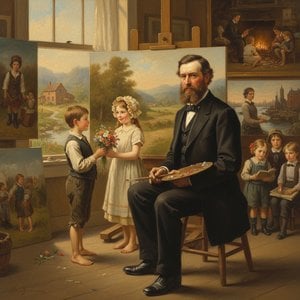
John George Brown: Capturing American Life & Sentiment in 19th-Century Genre Painting
Explore the captivating genre paintings of John George Brown, celebrated for his realistic depictions of 19th-century American life. Discover his legacy & find museum-quality reproductions at ArtsDot.