


 Pregledaj u stvarnoj veličini
 Podijeli
 Podijeli
 Detalji
 Vodič
Vodič

 Preuzmi datoteku
 Slični predmeti
 Rentgenska snimka
 Slide show
 Statistika
Canticle

 Pročitajte više
Djelo prikazano na ovoj stranici zaštićeno je autorskim pravima, što znači da zakonski ne možemo izraditi niti prodati identičnu reprodukciju. Ova se zaštita provodi u skladu s međunarodnim sporazumima kao što su Bernska konvencija i nacionalnim zakonima, uključujući i one koji su utvrđeni u Američki zakon o autorskom pravu – Title 17.
Ova metoda u potpunosti je usklađena s autorskim pravima jer ne uključuje kopiranje ili dupliciranje zaštićenih umjetničkih djela. Umjesto toga, riječ je o kreativnoj reinterpretaciji – novoj slici koja je dobila utjecaj na izvornik, ali nije identična njemu.
Giclée / Umjetnički otisak
Giclée tisak muzejske kvalitete ili otisak na platnu uz brzu proizvodnju i fleksibilne opcije završne obrade. ( Naručite ručno oslikano reprodukciju Prebacite na digitalnu prodaju slika)




P118B €10

P118H €10

P118W €10

P438Z €10

P508JH €12

P508YH €12

P805H €10

P805Z €10

P919BZ €10

P919G €10

P919XJ €10

P959ZH €10

P968JZ €12

W106C €8

W218G €10

W218JH €8

W218Y €10

W307PJ €10

W316G €10

W316PJ €8

W316Y €10

W398PJ €8

W4111J €10

W500HY €15

W500JH €15

W692G €12

W849H €8

W940BG €15

W953PJ €8




Odaberite jednu od naših unaprijed definiranih veličina koje odgovaraju izvornim proporcijama umjetničkog djela.

Unesite širinu i visinu koja vam je potrebna, kako bi odgovarali vašem okviru ili zidu. Print se može samo izrezati, nikada ne može biti veći od slike, stoga veličina s drugačijim oblikom gubi dio slike. Šaljemo vam digitalni prikaz (mockup) na odobrenje prije bilo kakve štampe. Slika prikazana na ovoj stranici ne prikazuje stvarni rez — to čini samo digitalni prikaz.
Dostava širom svijeta () u roku od 2 tjedna umjesto standardnih 4/5 tjedana. (20 Listopad)

Besplatna ekspresna dostava širom svijeta

Visokokvalitetno laneno platno

Potpuno osiguranje transporta

Jamstvo povrata carine i uvoznih poreza

Jamstvo vjernosti boja

Politika povrata u roku od 100 dana (samo u slučaju nedostataka)

Jamstvo povrata 100% novca

Popust na više proizvoda
 Opcija stakla dostupna je samo za dimenzije manje od 110 cm

Canticle
Giclée / Umjetnički otisak
Veličina reprodukcije
-


Ukupna cijena
€ 54
Srodna umjetnička djela


Biografija umjetnika
A Life Woven in Light and Calligraphy
Mark George Tobey, born in Centerville, Wisconsin, in 1890, was more than just a painter; he was a spiritual seeker whose artistic journey mirrored his lifelong exploration of faith, philosophy, and the delicate balance between Eastern and Western aesthetics. His early life, steeped in the Congregationalist traditions of his parents – George Tobey, a carpenter with a penchant for carving animal figures, and Emma Cleveland Tobey – instilled within him an appreciation for craftsmanship and observation. The family’s move to Chicago in 1893 exposed young Mark to a burgeoning urban landscape and, crucially, to the Art Institute of Chicago, where he received his initial formal training. However, it was a path largely self-directed that truly shaped his artistic vision. Tobey's formative years were marked by a restless spirit, leading him to New York City in 1911 where he honed his skills as a fashion illustrator for McCall’s – a practical pursuit that nonetheless provided a foundation in draftsmanship and composition. His first solo exhibition at Knoedler & Company in 1917 signaled the emergence of an artist poised to break from convention, but it was a pivotal encounter in 1918 with Juliet Thompson, a portrait artist and devoted follower of the Baháʼí Faith, that irrevocably altered his trajectory.The Embrace of Eastern Thought and Artistic Transformation
Thompson introduced Tobey to the tenets of the Baháʼí Faith, a religion emphasizing the unity of all religions and humanity’s spiritual evolution. This newfound belief system profoundly impacted his artistic philosophy, shifting his focus from mere representation to an exploration of the spiritual essence underlying reality. He began delving into Arabian literature and the profound wisdom of East Asian philosophies, seeking ways to translate these abstract concepts onto canvas. A move to Seattle in 1921, prompted by personal circumstances, proved serendipitous. There, he encountered Teng Kuei, a Chinese painter who initiated him into the art of Eastern penmanship – a revelation that would become central to his artistic identity. Tobey’s travels became increasingly frequent and purposeful, taking him across Europe, Palestine, Turkey, Lebanon, China, and Japan. Each journey was not merely geographical but an immersion into different cultures and spiritual traditions, enriching his understanding of form, space, and the expressive power of line. He founded the art department at the Cornish School in Seattle, nurturing a new generation of artists while continuing to refine his own unique style.The Northwest School and the Birth of “White Writing”
Tobey’s influence extended far beyond his students; he became a leading figure in the Northwest School, alongside Guy Anderson, Kenneth Callahan, Morris Graves, and William Cumming. This group, united by their shared interest in philosophy, Eastern religions, and a rejection of traditional artistic norms, forged a distinctly American style of abstract art. While influenced by Abstract Expressionism, Tobey’s work differed fundamentally in its intent. Where Pollock sought to express raw emotion through gestural action, Tobey aimed for a more contemplative and spiritual resonance. This led to the development of his signature “white writing” technique – delicate, interwoven lines of white paint applied over dark backgrounds, evoking the calligraphic brushstrokes of East Asian art. These compositions weren’t intended as depictions of anything specific but rather as visual meditations, inviting viewers to lose themselves in the intricate patterns and experience a sense of transcendence. His work from this period is characterized by an all-over composition, lacking a central focal point, encouraging the eye to wander and discover new nuances within the complex network of lines.International Recognition and Lasting Legacy
By the 1950s, Tobey had achieved international acclaim. His work was exhibited widely in Europe and the United States, earning him numerous awards and accolades. He represented the United States at the Venice Biennale in 1958, further solidifying his position as a major figure in the art world. In the early 1960s, Tobey relocated to Basel, Switzerland, with his companion Pehr Hallsten, continuing to paint and explore new artistic avenues until his death in 1976. The question of whether Tobey’s work directly influenced Jackson Pollock's drip paintings remains a subject of debate, but there is no denying the profound impact he had on the development of abstract art. Tobey’s legacy lies not only in his distinctive visual style, but also in his unwavering commitment to spiritual exploration and his ability to synthesize Eastern and Western artistic traditions into a uniquely American voice. He demonstrated that abstraction could be more than just an aesthetic exercise; it could be a pathway to deeper understanding, contemplation, and connection with the divine. His paintings continue to resonate today as testaments to the power of art to transcend boundaries and illuminate the human spirit.Key Characteristics & Influences
- Asian Calligraphy: A foundational influence, evident in his use of line, space, and composition. He studied Chinese and Japanese calligraphy extensively.
- Baháʼí Faith: Provided a spiritual framework for his art, emphasizing unity, harmony, and the search for truth.
- Abstract Expressionism: While distinct from Pollock’s action painting, Tobey shared an interest in non-representational forms and expressive gesture.
- Northwest School Aesthetic: A regional style characterized by a focus on nature, spirituality, and experimentation with materials.
- Travel & Cultural Immersion: His extensive travels throughout Asia and Europe broadened his artistic horizons and informed his unique visual language.

Mark Tobey
1890 - 1976 , United States of America
Brzi pregled
- Full Name: Mark George Tobey
- Nationality: American
- Date Of Birth: 1890
- Date Of Death: 1976
- Place Of Birth: Centerville, United States of America
- Notable Artworks:
- Toward the West
- Winter Leaves
- White Journey
- Artistic Movement Or Style: Abstract Expressionism
- Artists Or Movements Influenced By This Artist:
- Jackson Pollock
- Northwest School
Povezani članci

The Enduring Legacy of Oil on Canvas: Technique, History & Aesthetic Impact
Explore the rich history & techniques of oil painting – from Renaissance masters to Impressionism. Discover pigments, layering methods, and why this timeless medium endures. Expert insights for artists & art enthusiasts.

Kandinsky's Masterpieces: 25 Paintings That Define Abstract Art | ArtsDot
Journey through Wassily Kandinsky's 25 most iconic abstract paintings. Explore his revolutionary use of color, form & spiritual expressionism. Find museum-quality Kandinsky reproductions and elevate your home decor with ArtsDot.com. Discover all masterpieces on ArtsDot.com!

Desetak Remek-djela koja su Definirala Apstraktni Ekspresionizam: Uljane Slike i Moderna Dekoracija
Otkrijte 10 remek-djela koja su definirala apstraktni ekspresionizam! Jackson Pollock, Mark Rothko i drugi majstori uljane umjetnosti. Ispričajte priču svojim zidovima uz ArtsDot - vrhunske reprodukcije za vaš dom.
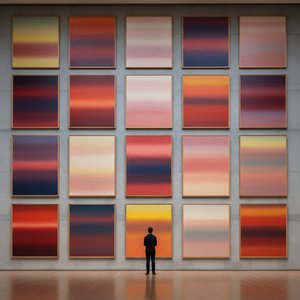
Mark Rothko: 25 Remek-djela Apstraktne Ekspresije za Vaš Dom | ArtsDot
Istražite 25 najpoznatijih djela Marka Rothka, majstora apstraktne ekspresije. Otkrijte priče iza njegovih platna, bogatih bojama i emocijama. Reprodukcije vrhunske kvalitete dostupne na ArtsDot.com – inspiracija za vaš dom!

Geometrijska Apstrakcija: 10 Remek-djela Koja Su Promijenila Umjetnost | ArtsDot
Istražite 10 remek-djela geometrijske apstrakcije! Otkrijte priče Kandinskog, Mondriana i drugih majstora. Inspirirajte se za svoj interijer s vrhunskim reprodukcijama slika na ArtsDot.com