


 Pregledaj u stvarnoj veličini
 Podijeli
 Podijeli
 Detalji
 Vodič
Vodič

 Preuzmi datoteku
 Slični predmeti
 Rentgenska snimka
 Slide show
 Statistika
(Difficult)
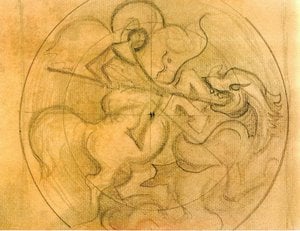
 Dada
Dada 1943
1943 80.0 x 61.0 cm
 Buffalo AKG Art Museum
 Pročitajte više
Ručno rađena uljana reprodukcija
Ručno oslikano uljanim bojama na platnu u dimenzijama i okviru po vašem izboru, izrađeno po narudžbi od strane naših umjetnika. ( Prebacite na prodaju printova Prebacite na digitalnu prodaju slika)




































Odaberite jednu od naših unaprijed definiranih veličina koje odgovaraju izvornim proporcijama umjetničkog djela.

Unesite širinu i visinu koja vam je potrebna, kako bi odgovarali vašem okviru ili zidu. Budući da je ovo ručno oslikano djelo, umjetnik može malo proširiti rubove slike ili ih skratiti kako bi postigao željeni oblik — izbor je vaš. Prije početka slikanja poslat ćemo vam digitalni prikaz (mockup) radi potvrde. Slika prikazana na ovoj stranici ne predstavlja stvarni rezultat — samo digitalni prikaz to čini.
Nakon narudžbe, tim ArtsDot.com kontaktirat će klijenta putem e-pošte radi dobivanja uputa te dostaviti probni prikaz (mockup)
Isporuka širom svijeta () u roku od 3-4 tjedna umjesto standardnih 5 tjedana. (21 Listopad). Bez kompromisa u kvaliteti.

Besplatna ekspresna dostava širom svijeta

Visokokvalitetno laneno platno

Potpuno osiguranje transporta

Jamstvo povrata carine i uvoznih poreza

Jamstvo vjernosti boja

Politika povrata u roku od 100 dana (samo u slučaju nedostataka)

Jamstvo povrata 100% novca

Popust na više proizvoda
 Opcija stakla dostupna je samo za dimenzije manje od 110 cm

(Difficult)
Tehnika izrade
Veličina reprodukcije
-


Ukupna cijena
€ 230
Srodna umjetnička djela


Biografija umjetnika
Kurt Schwitters: A Life in Merz
Early Life and Education
- Born: June 20, 1887, in Hanover, Germany.
- Schwitters was the only child of Eduard and Henriette Schwitters. His father co-owned a ladies' clothing shop.
- The family’s financial situation improved after selling the business in 1898, allowing them to live off rental income from properties they acquired.
- He studied art at the Dresden Academy from 1909-1915 alongside artists like Otto Dix and George Grosz, though he seemingly remained unaware of their work at the time.
- Schwitters suffered his first epileptic seizure in 1901, which later exempted him from military service for a period during World War I.
Artistic Development and the Birth of Merz
- Initially, Schwitters worked in a post-impressionist style. His early work reflected this influence.
- The devastation of World War I profoundly impacted his artistic direction. He felt traditional academic training was irrelevant in the face of societal collapse.
- “In the war, things were in terrible turmoil…everything had broken down and new things had to be made out of the fragments; and this is Merz.”
- Around 1918, he began creating abstract collages using found objects – scraps of paper, tickets, and other discarded materials.
- The term “Merz” itself came from a fragment of text (“Commerz und Privatbank”) cut from an advertisement and incorporated into one of his early works, *Das Merzbild* (1918-19).
Key Works and Artistic Styles
- Merz Pictures: These collages are arguably Schwitters’ most famous contribution. They represent a radical departure from traditional art, embracing chance and the aesthetics of everyday life.
- Merzbau: A monumental architectural construction within his home in Hanover, continuously evolving over decades. It was a three-dimensional embodiment of Merz principles – a labyrinthine space filled with niches, grottoes, and found objects.
- Assemblage & Installation Art: Schwitters pioneered these forms, blurring the boundaries between painting, sculpture, and architecture.
- He also worked in poetry, sound, graphic design, and typography, exploring a wide range of artistic media.
Influences and Connections
- Early influences included post-impressionism, but he quickly moved beyond these conventions.
- He came into contact with members of the Berlin avant-garde – Raoul Hausmann, Hannah Höch, and Hans Arp – through Herwarth Walden’s *Der Sturm* gallery.
- While associated with Dadaism, Schwitters maintained a distinct artistic identity. He was initially rejected by some Dadaists for his ties to expressionism.
Later Life and Legacy
- Facing increasing persecution under the Nazi regime due to his “degenerate art,” Schwitters fled Germany in 1937.
- He spent time in Norway and England, continuing to create Merz works despite challenging circumstances. He was briefly interned as an enemy alien during World War II.
- Died: January 8, 1948, in Ambleside, England.
- Kurt Schwitters’ work profoundly influenced subsequent generations of artists, particularly those involved in Pop Art, Minimalism, and Conceptual Art.
- His innovative use of found objects and his exploration of the relationship between art and everyday life continue to resonate with contemporary audiences.
Historical Significance
- Schwitters’ Merz aesthetic challenged traditional notions of artistic beauty and authorship.
- He expanded the definition of art by incorporating non-art materials and blurring the lines between different disciplines.
- His work remains a powerful testament to the creative potential of fragmentation, reconstruction, and the embrace of chance.

Kurt Schwitters
1887 - 1948
Brzi pregled
- Name: Kurt Schwitters
- Movement:
- Dadaism
- Constructivism
- Surrealism
- Merz
- Birth Date: June 20, 1887
- Death Date: 1948
- Birth Place: Hanover, Germany
- Nationality: German
- Date Of Birth: 1887
- Date Of Death: 1948
- Notable Works:
- Merz pictures
- Merzbau