

 Pošalji
 Podijeli
 Detalji o umjetničkom djelu
 Vodič
Vodič

 Preuzmi umjetničko djelo
 Slični predmeti
 Slide show
 Pitanja i odgovori
 Statistika
Fancy

- 133.0 x 114.0 cm


 Prikaži više
Djelo prikazano na ovoj stranici zaštićeno je autorskim pravima, što znači da zakonski ne možemo izraditi niti prodati identičnu reprodukciju. Ova se zaštita provodi u skladu s međunarodnim sporazumima kao što su Bernska konvencija i nacionalnim zakonima, uključujući i one koji su utvrđeni u Američki zakon o autorskom pravu – Title 17.
Ova metoda u potpunosti je usklađena s autorskim pravima jer ne uključuje kopiranje ili dupliciranje zaštićenih umjetničkih djela. Umjesto toga, riječ je o kreativnoj reinterpretaciji – novoj slici koja je dobila utjecaj na izvornik, ali nije identična njemu.
Giclée / Umjetnički otisak
Giclée tisak muzejske kvalitete ili otisak na platnu uz brzu izradu i raznolike opcije završne obrade. ( Kupi ručno oslikano djelo Prebacite na digitalnu sliku)




































Odaberite jednu od naših unaprijed definiranih veličina koje odgovaraju izvornim proporcijama umjetničkog djela.

Unesite potrebnu širinu i visinu kako bi odgovarali vašem okviru ili zidu. Print se može samo izrezati, nikada ne može biti veći od slike, stoga format s drugačijim omjerom stranica uzrokuje gubitak dijela slike. Prije bilo kakve štampe šaljemo vam digitalni prikaz (mockup) na odobrenje. Slika prikazana na ovoj stranici ne prikazuje stvarni rez — to prikazuje isključivo digitalni prikaz.
Dostava širom svijeta () u roku od 2 tjedna umjesto standardnih 4/5 tjedana. (8 Studeni)

Besplatna ekspresna dostava širom svijeta

Visokokvalitetno laneno platno

Potpuno osiguranje dostave

Jamstvo povrata carine i uvoznih poreza

Jamstvo vjernosti boja

Politika povrata u roku od 100 dana (samo u slučaju nedostataka)

Jamstvo povrata 100% novca

Popust na više proizvoda
 Opcija stakla dostupna je samo za dimenzije manje od 110 cm

Fancy
Giclée / Umjetnički otisak
Veličina reprodukcije
-


Ukupna cijena
€ 56
Fancy That
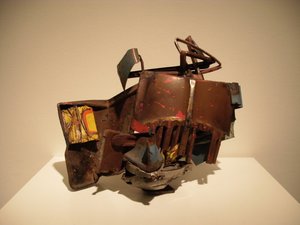
John Angus Chamberlain’s sculpture *Fancy That* represents a pivotal moment in American art history—a daring fusion of Abstract Expressionism and assemblage that irrevocably altered perceptions of sculptural form. Created around 1965, this piece exemplifies Chamberlain's singular approach to transforming discarded automobile parts into monumental artworks imbued with profound emotional resonance.The Material Transformation
Chamberlain’s genius lay in his ability to elevate the mundane—rusted metal sheets and crushed car bodies—into objects of breathtaking beauty and intellectual complexity. Unlike traditional sculptors who meticulously craft forms from marble or bronze, Chamberlain embraced a radically different technique: crushing automobile parts with hydraulic presses. This process wasn't merely destructive; it was transformative, liberating the inherent textures and colors hidden within these discarded materials. The resulting sculptures are characterized by their rough surfaces, irregular shapes, and vibrant hues—a deliberate rejection of polished perfection in favor of an honest confrontation with materiality.Echoes of Abstract Expressionism
The influence of Abstract Expressionist painters like Jackson Pollock and Willem de Kooning is undeniable in Chamberlain’s work. Just as Pollock splashed paint onto canvases to capture spontaneous gesture and emotion, Chamberlain manipulated crushed metal to achieve similar effects. The sculptures aren't intended to represent recognizable objects or landscapes; instead, they aim to evoke feelings of anxiety, disorientation, and primal energy—themes central to the Abstract Expressionist movement’s exploration of psychological states.Symbolism Within Ruin
The use of automobile parts carries symbolic weight beyond their literal materiality. They represent decay, obsolescence, and the relentless march of time—concepts explored extensively by philosophers like Heidegger and Sartre during Chamberlain's era. However, Chamberlain doesn’t present ruin as merely negative; it becomes a catalyst for creativity, revealing hidden beauty within what is considered worthless. The sculpture invites contemplation on themes of loss, transformation, and the enduring power of art to confront uncomfortable truths.A Legacy of Innovation
John Angus Chamberlain's *Fancy That* stands as a testament to his unwavering commitment to artistic experimentation and pushing boundaries. He solidified his place as a pioneer of Neo-Dada and profoundly impacted subsequent generations of sculptors who sought to redefine sculptural practice. Its enduring appeal lies in its ability to capture the spirit of an era—a time marked by disillusionment, intellectual ferment, and a yearning for authentic expression—making it a captivating subject for art historians, collectors, and anyone interested in exploring the transformative potential of unexpected materials.Pitanja i odgovori
Tko je autor djela "Fancy" i u kojem je umjetničkom pravcu?
"Fancy" stvorio/la je John Angus Chamberlain u stilu Neo-Dada. Umjetnik i umjetnički pravac definiraju tradiciju ovog djela.
Koji su oblik i dimenzije djela "Fancy" autora John Angus Chamberlain?
"Fancy" autora John Angus Chamberlain ima proporcije Portret djela dimenzija 133 x 114 cm.
Dopušuju autorska prava za "Fancy" autora John Angus Chamberlain izradu reprodukcija?
Status autorskih prava za djelo "Fancy" autora John Angus Chamberlain je jasan: rad pripada i dalje je zaštićeno autorskim pravima. Njegovo prisustvo u muzeju Chrysler Museum of Art ne mijenja taj status.
Srodna umjetnička djela


Biografija umjetnika
The Alchemist of Automobilia: The Life and Legacy of John Angus Chamberlain
In the intersection of industrial decay and high art, few figures loom as large or as provocatively as John Angus Chamberlain. Born in 1927 in Rochester, Indiana, Chamberlain did not merely create sculpture; he orchestrated a metamorphosis of the discarded. To look upon his work is to witness a violent yet poetic dialogue between the mechanical past and the abstract present. He possessed a singular vision that allowed him to see not just rusted scrap, but a vocabulary of form, color, and texture. His journey from the son of a saloonkeeper in the American Midwest to a titan of the Neo-Dada movement is a testament to an unyielding creative impulse that sought to find beauty within the crushed and the broken.
Chamberlain’s artistic consciousness was forged through a diverse and rigorous educational odyssey. After serving in the United States Navy during the pivotal years of World War II, he utilized the GI Bill to immerse himself in the burgeoning avant-garde scenes of America. His time at the Art Institute of of Chicago provided him with a foundational mastery of form, but it was his tenure at the legendary Black Mountain College that truly expanded his intellectual horizons. At Black Mountain, he moved beyond the purely visual, studying under influential poets such as Charles Olson and Robert Creeley. This literary immersion profoundly shaped his sculptural language; he famously viewed his collection of automotive fragments as a reservoir of words, where the act of welding was akin to composing a stanza, seeking the perfect placement of one jagged edge against another to achieve a rhythmic, poetic resonance.
A Symphony of Steel and Spontaneity
The hallmark of Chamberlain’s oeuvre lies in his revolutionary technique of assemblage. While many of his contemporaries were exploring the flat planes of Abstract Expressionist painting, Chamberlain sought to bring that same gestural energy into three-dimensional space. He became a master of the "crushed" aesthetic, meticulously dismantling abandoned automobiles and extracting their vibrant, enamel-coated metal components. Through the intense processes of welding, bending, and compressing, he transformed these industrial remnants into monumental forms that pulsed with an almost organic vitality.
His work defies easy categorization, existing in a fluid state between several major movements:
- Abstract Expressionism: He translated the spontaneous, emotional brushstrokes of painters like Pollock into the physical manipulation of steel and chrome.
- Neo-Dada: By utilizing found objects and "readymades" from the industrial age, he challenged the sanctity of traditional sculptural materials like marble or bronze.
- Pop Art: His use of consumerist detritus—the very skin of the American automobile—connected his high-art ambitions to the burgeoning mass culture of the mid-20th century.
There is a palpable tension in his sculptures, a sense of captured motion and compressed energy. The bright flashes of Cadillac red or Chevrolet blue, often peeking through layers of rust and grime, create a chromatic intensity that mirrors the dynamism of urban life. He did not seek to represent the car, but rather to capture the spirit of its movement and the inevitable entropy of its decay.
Historical Significance and the Enduring Pulse of Art
Throughout his prolific career, Chamberlain’s presence was felt across the most significant art hubs of the world, from Manhattan and Los Angeles to Shelter Island and even Belgium. His ability to disrupt the boundaries between sculpture and painting left an indelible mark on the trajectory of modern art. He proved that the debris of the industrial revolution could serve as the medium for a profound spiritual and aesthetic inquiry. Critics often noted that while his materials were cold and hard, the emotional impact of his work was deeply visceral, aiming—as he himself desired—to "make the viewer’s heart beat."
As we reflect on his life, which concluded in 2011, Chamberlain remains a pivotal figure who bridged the gap between the mechanical and the lyrical. He taught us that art is not merely about the creation of something new, but about the radical reimagining of what already exists. His legacy lives on in every artist who looks at the wreckage of the world and sees the potential for a masterpiece, reminding us that even in the crushed and the discarded, there is an eternal, unyielding beauty waiting to be welded back together.
John Angus Chamberlain
1927 - 2011 , United States of America
Osnovne informacije
- Full Name: John Angus Chamberlain
- Nationality: American
- Date Of Birth: 1927
- Date Of Death: 2011
- Place Of Birth: Rochester, United States of America
- Notable Artworks:
- Fancy
- Sleeping Giant
- Artistic Movement Or Style: Abstract Expressionism
- Artists Who Influenced This Artist:
- Robert Delaunay
- Jean Dubuffet
- Artists Or Movements Influenced By This Artist: ['Neo-Dada']
Srodni članci

John Constable: 25 Remek-djela Engleskog Majstora Krajolika | ArtsDot
Uronite u svijet John Constabla! Otkrijte 25 remek-djela engleskog romantizma i pejzaža. Ekskluzivne reprodukcije slika, zidna dekoracija & inspiracija za dizajn interijera na ArtsDot.com. Istražite cijelu kolekciju online!

Bronze Sculptures That Defined Art History | ArtsDot
Journey through art history with our Top 10 bronze sculptures! Explore masterpieces by Rodin, Michelangelo & more. Discover stories behind iconic statues and find museum-quality reproductions for your home decor at ArtsDot.com.

Desetak Remek-djela koja su Definirala Apstraktni Ekspresionizam: Uljane Slike i Moderna Dekoracija
Otkrijte 10 remek-djela koja su definirala apstraktni ekspresionizam! Jackson Pollock, Mark Rothko i drugi majstori uljane umjetnosti. Ispričajte priču svojim zidovima uz ArtsDot - vrhunske reprodukcije za vaš dom.

The Enduring Form: Exploring Themes & Techniques in Sculpture Across Historical Periods
Explore the rich history of sculpture from ancient masterpieces to contemporary innovations. Discover key techniques, influential artists & investment potential for discerning art collectors.

John Singer Sargent: 25 Remek-djela Portreta i Impresionizma | ArtsDot
Uronite u svijet John Singera Sargenta! Otkrijte 25 remek-djela portreta i impresionizma, priče iza slika te tehničku genijalnost američkog slikara. Reprodukcije vrhunske kvalitete za luksuzni dekor interijera na ArtsDot.com.
