

 Pregledaj u realnoj veličini
 Pošalji
 Podijeli
 Detalji o umjetničkom djelu
 Vodič
Vodič

 Preuzmi umjetničko djelo
 Slični predmeti
 Rentgenska snimka
 Slide show
 Pitanja i odgovori
 Statistika
Vessel


 Prikaži više
Giclée / Umjetnički otisak
Giclée tisak muzejske kvalitete ili otisak na platnu uz brzu izradu i raznolike opcije završne obrade. ( Kupi ručno oslikano djelo Prebacite na digitalnu sliku)




P118B €10

P118H €10

P118W €10

P438Z €10

P508JH €12

P508YH €12

P805H €10

P805Z €10

P919BZ €10

P919G €10

P919XJ €10

P959ZH €10

P968JZ €12

W106C €8

W218G €10

W218JH €8

W218Y €10

W307PJ €10

W316G €10

W316PJ €8

W316Y €10

W398PJ €8

W4111J €10

W500HY €15

W500JH €15

W692G €12

W849H €8

W940BG €15

W953PJ €8




Odaberite jednu od naših unaprijed definiranih veličina koje odgovaraju izvornim proporcijama umjetničkog djela.

Unesite potrebnu širinu i visinu kako bi odgovarali vašem okviru ili zidu. Print se može samo izrezati, nikada ne može biti veći od slike, stoga format s drugačijim omjerom stranica uzrokuje gubitak dijela slike. Prije bilo kakve štampe šaljemo vam digitalni prikaz (mockup) na odobrenje. Slika prikazana na ovoj stranici ne prikazuje stvarni rez — to prikazuje isključivo digitalni prikaz.
Dostava širom svijeta () u roku od 2 tjedna umjesto standardnih 4/5 tjedana. (7 Studeni)

Besplatna ekspresna dostava širom svijeta

Visokokvalitetno laneno platno

Potpuno osiguranje dostave

Jamstvo povrata carine i uvoznih poreza

Jamstvo vjernosti boja

Politika povrata u roku od 100 dana (samo u slučaju nedostataka)

Jamstvo povrata 100% novca

Popust na više proizvoda
 Opcija stakla dostupna je samo za dimenzije manje od 110 cm

Vessel
Giclée / Umjetnički otisak
Veličina reprodukcije
-


Ukupna cijena
€ 56
Jean Cousin the Elder: A Renaissance Master of Anatomy and Perspective
Jean Cousin the Elder (ca. 1490–ca. 1560) occupies a unique position in French Renaissance art—a figure largely eclipsed by his son, Jean Cousin the Younger, yet undeniably recognized for his profound influence on humanist ideals and artistic innovation. Born in Sens, France, he emerged from a family deeply rooted in artistic tradition; his father, Jean Cousin the Elder, was himself a celebrated sculptor and painter who forged an enduring connection with Albrecht Dürer, cementing him as one of the foremost artists of his era.
This familial legacy instilled within Jean Cousin the Younger an unwavering dedication to mastering both disegno (drawing) and geometria (mathematics)—disciplines considered paramount for achieving artistic excellence during the Renaissance. His formative years were spent meticulously crafting stained-glass windows at Sens Cathedral, where he painstakingly rendered intricate depictions of biblical narratives with remarkable precision.
Early Life & Training: Cousin’s artistic journey began in Sens Cathedral, where he honed his skills under the tutelage of master craftsmen, absorbing the principles of sculptural technique and mastering the art of transferring three-dimensional forms onto two-dimensional surfaces. This formative experience instilled within him a meticulous attention to detail—a characteristic that would permeate throughout his subsequent oeuvre.
- Sens Cathedral served as an incubator for artistic talent, fostering a collaborative environment where aspiring artists learned from established masters.
- The cathedral’s architectural grandeur demanded exceptional craftsmanship, pushing Cousin and his peers to refine their skills in sculpting and painting with unparalleled accuracy.
Style & Technique: Cousin's artistic style is characterized by a masterful command of anatomy and perspective—elements that were rigorously studied during the Renaissance as tools for representing the human form realistically. He employed a technique known as disegno, prioritizing careful observation and meticulous sketching to capture the subtleties of musculature and skeletal structure.
- Disegno demanded an exhaustive understanding of anatomical proportions and spatial relationships—a testament to Cousin’s intellectual curiosity and artistic rigor.
- He skillfully utilized linear perspective to create illusionistic depth, convincingly portraying architectural spaces and figures within them.
Historical Context & Symbolism: Cousin's work emerged during a period of fervent humanist inquiry—a movement that championed reason and observation as pathways to knowledge. His depictions of biblical scenes reflect the prevailing intellectual climate of the time, conveying moral lessons through symbolic imagery and carefully crafted compositions.
- The Renaissance fascination with classical antiquity influenced Cousin’s artistic sensibilities, prompting him to emulate sculptural forms and decorative motifs derived from ancient Greece and Rome.
- Symbolic gestures and postures conveyed profound spiritual meaning—underscoring the importance of allegory and erudition in conveying complex ideas.
Emotional Impact & Legacy: Cousin’s paintings evoke a sense of serene contemplation—capturing fleeting moments of grace and beauty with understated elegance. His enduring legacy resides not merely in his technical prowess but also in his unwavering commitment to humanist ideals—a testament to the transformative power of art as a vehicle for intellectual and spiritual enrichment.
Despite facing challenges during his lifetime, Jean Cousin the Elder’s artistic achievements continue to inspire admiration and scholarly debate. His meticulous craftsmanship and profound understanding of human anatomy and perspective solidify his place among the giants of Renaissance art—a figure whose work transcends time, resonating with audiences today who appreciate its beauty, intellect, and enduring significance.
Pitanja i odgovori
Gdje mogu pronaći statistiku o djelu "Vessel" autora Jean The Elder Cousin?
Postoji Statistika pregleda stranica za "Vessel". Ona prikazuje mjesečne posjete umjetničkom djelu i drugim djelima umjetnika, uz podelu prema zemljama i jezicima.
Je li "Vessel" autora Jean The Elder Cousin portret, pejzaž ili kvadratna kompozicija?
"Vessel" autora Jean The Elder Cousin je kompozicija u Portrait formatu. Razmjer je vrijedno provjeriti prije odabira veličine printa.
Je li "Vessel" autora Jean The Elder Cousin u javnom vlasništvu?
Status autorskih prava za "Vessel" autora Jean The Elder Cousin: djelo je u javnom vlasništvu – autorska prava su istekla. To određuje smiju li se slobodno izrađivati reprodukcije slike.
Srodna umjetnička djela


Srodni članci

The Enduring Form: Exploring Themes & Techniques in Sculpture Across Historical Periods
Explore the rich history of sculpture from ancient masterpieces to contemporary innovations. Discover key techniques, influential artists & investment potential for discerning art collectors.

Bronze Sculptures That Defined Art History | ArtsDot
Journey through art history with our Top 10 bronze sculptures! Explore masterpieces by Rodin, Michelangelo & more. Discover stories behind iconic statues and find museum-quality reproductions for your home decor at ArtsDot.com.
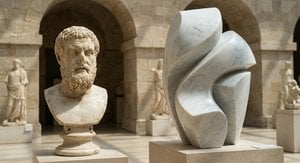
The Enduring Allure of Marble in Art History: From Classical Sculpture to Modern Abstraction
Explore the captivating history of marble sculpture from ancient Greece to modern art. Discover renowned artists like Canova & Michelangelo, carving techniques, and investment insights at ArtsDot.

Bronze Age to Modern Masters: 10 Sculptures That Redefined Art | ArtsDot
Journey through art history with 10 legendary bronze sculptures – from Michelangelo's David to Rodin’s Thinker. Explore the stories, techniques & timeless beauty of these masterpieces. Find museum-quality reproductions & elevate your home decor on ArtsDot.com.

The Enduring Form: Sculpture Across History, Technique & Emotional Resonance
Explore the rich history of sculpture with ArtsDot. Discover key techniques, influential artists & investment potential for discerning collectors. Expert insights into valuing and collecting timeless masterpieces.