


 Pregledaj u stvarnoj veličini
 Podijeli
 Podijeli
 Detalji
 Vodič
Vodič

 Preuzmi datoteku
 Slični predmeti
 Rentgenska snimka
 Slide show
 Statistika
White Collar
 Oil On Canvas
- WallArt
- Pop Art
 1969
1969- Modern
 157.0 x 157.0 cm
 McMichael Canadian Art Collection
 Pročitajte više
Djelo prikazano na ovoj stranici zaštićeno je autorskim pravima, što znači da zakonski ne možemo izraditi niti prodati identičnu reprodukciju. Ova se zaštita provodi u skladu s međunarodnim sporazumima kao što su Bernska konvencija i nacionalnim zakonima, uključujući i one koji su utvrđeni u Američki zakon o autorskom pravu – Title 17.
Ova metoda u potpunosti je usklađena s autorskim pravima jer ne uključuje kopiranje ili dupliciranje zaštićenih umjetničkih djela. Umjesto toga, riječ je o kreativnoj reinterpretaciji – novoj slici koja je dobila utjecaj na izvornik, ali nije identična njemu.
Giclée / Umjetnički otisak
Giclée tisak muzejske kvalitete ili otisak na platnu uz brzu proizvodnju i fleksibilne opcije završne obrade. ( Naručite ručno oslikano reprodukciju Prebacite na digitalnu prodaju slika)




P118B €10

P118H €10

P118W €10

P438Z €10

P508JH €12

P508YH €12

P805H €10

P805Z €10

P919BZ €10

P919G €10

P919XJ €10

P959ZH €10

P968JZ €12

W106C €8

W218G €10

W218JH €8

W218Y €10

W307PJ €10

W316G €10

W316PJ €8

W316Y €10

W398PJ €8

W4111J €10

W500HY €15

W500JH €15

W692G €12

W849H €8

W940BG €15

W953PJ €8




Odaberite jednu od naših unaprijed definiranih veličina koje odgovaraju izvornim proporcijama umjetničkog djela.

Unesite širinu i visinu koja vam je potrebna, kako bi odgovarali vašem okviru ili zidu. Print se može samo izrezati, nikada ne može biti veći od slike, stoga veličina s drugačijim oblikom gubi dio slike. Šaljemo vam digitalni prikaz (mockup) na odobrenje prije bilo kakve štampe. Slika prikazana na ovoj stranici ne prikazuje stvarni rez — to čini samo digitalni prikaz.
Dostava širom svijeta () u roku od 2 tjedna umjesto standardnih 4/5 tjedana. (23 Listopad)

Besplatna ekspresna dostava širom svijeta

Visokokvalitetno laneno platno

Potpuno osiguranje transporta

Jamstvo povrata carine i uvoznih poreza

Jamstvo vjernosti boja

Politika povrata u roku od 100 dana (samo u slučaju nedostataka)

Jamstvo povrata 100% novca

Popust na više proizvoda
 Opcija stakla dostupna je samo za dimenzije manje od 110 cm

White Collar
Giclée / Umjetnički otisak
Veličina reprodukcije
-


Ukupna cijena
€ 54
Ivan Eyre: A Prairie Visionary – Exploring Silence and Scale
Ivan Kenneth Eyre (1935–2022) stands as a monumental figure in Canadian art—a painter, sculptor, and educator whose work resonated with the vastness and subtle power of the prairie landscape. Born in Tullymet, Saskatchewan, in 1935, Eyre’s artistic journey wasn't merely about depicting what he saw; it was about translating a deeply felt connection to place into a visual language that explored existential themes and the complexities of human experience. His formative life, marked by moves across the prairies—from Red Deer, Alberta, to Saskatoon—instilled in him an intimate understanding of the land’s character: its solitude, its ever-changing light, and its capacity for both beauty and starkness. This profound awareness would become the bedrock of his artistic expression. From Representation to Abstracted Landscapes Eyre's formal training began in Saskatoon with lessons from Wynona Mulcaster and George Swinton at the University of Saskatchewan School of Art where he studied under Ernest Lindner for the duration of 1950–1953. Lindner’s influence instilled in Eyre a desire to eschew conventional artistic conventions, prioritizing instead an uncompromising exploration of inner experience. He moved to Winnipeg in 1957 and continued his studies at the University of Manitoba School of Art where he was mentored by Eli Bornstein. During this period, Eyre began experimenting with techniques that would define his distinctive style—a deliberate rejection of academic realism in favor of a more expressive approach. His early canvases captured the stark beauty of Saskatchewan’s wheat fields and expansive skies, but quickly moved toward increasingly abstracted forms. The Influence of European Modernism A pivotal moment arrived when Eyre undertook a year-long residency in Europe during which he immersed himself in the artistic currents of Paris and Berlin. This exposure to artists like Willem de Kooning, Arshile Gorky, Joan Miró, and Max Beckmann profoundly impacted his worldview and fueled his artistic experimentation. He embraced the principles of Abstract Expressionism and Cubism, incorporating geometric shapes and fragmented perspectives into his compositions—a stylistic shift that signaled a decisive break from traditional representational art. Eyre’s canvases became imbued with a palpable sense of tension and dynamism, reflecting the anxieties and uncertainties of the postwar era. Sculptural Reflections of Existential Concerns Beyond painting, Eyre developed an equally compelling sculptural practice. His monumental sculptures, often crafted from wood and stone, grapple with themes of isolation and contemplation—mirroring the quiet grandeur of the prairie landscape. He sought to convey a sense of timelessness and permanence through his materials and forms, inviting viewers to engage in a dialogue about humanity’s relationship with nature and its own inner life. Eyre's sculptures are prominently displayed at Assiniboine Park and the McMichael Sculpture Garden in Kleinburg, Ontario—testaments to his enduring legacy as a sculptor of considerable stature. A Legacy of Quiet Contemplation Ivan Eyre’s artistic output represents more than just skillful execution; it embodies a deeply considered philosophical stance. His paintings and sculptures are characterized by a remarkable stillness—a deliberate avoidance of dramatic gestures or flamboyant colors—that compels viewers to confront fundamental questions about existence. As Joan Murray eloquently described, “Eyre's art has, to a degree unusual in Canadian art: a pervading sense of stillness and calm.” Eyre’s work continues to inspire artists and collectors alike, reminding us that profound beauty can be found not in spectacle but in the quiet contemplation of form and texture—a testament to his singular vision as a prairie visionary.Pitanja i odgovori
Kada je nastalo "White Collar"?
"White Collar" autora Ivan Eyre nastalo je 1969.
Preporučena veličina ispisa za "White Collar" je?
Preporučena veličina tiska za "White Collar" je Large. Dostupne su i druge veličine istih proporcija.
Na koji je način izvedeno "White Collar" i koje su mu dimenzije?
Originalno djelo "White Collar" autora Ivan Eyre je rad u tehnici Oil On Canvas dimenzija 157 x 157 cm. Tehnika i veličina opisuju izvorni predmet.
Srodna umjetnička djela


Biografija umjetnika
A Prairie Visionary: The Life and Art of Ivan Eyre
Ivan Kenneth Eyre, who passed away in November 2022 at the age of 87, was a profoundly important figure in Canadian art—a painter, sculptor, and educator whose work resonated with the vastness and subtle power of the prairie landscape. Born in the small Saskatchewan community of Tulymétik in 1935, Eyre’s artistic journey wasn't simply about depicting what he saw, but about translating a deeply felt connection to place into a visual language that explored existential themes and the complexities of human experience. His early life, marked by moves across the prairies—from Red Deer, Alberta, to Saskatoon—instilled in him an intimate understanding of the land’s character: its solitude, its ever-changing light, and its capacity for both beauty and starkness. This formative connection would become the bedrock of his artistic expression.From Representation to Abstracted Landscapes
Eyre's formal training began in Saskatoon with lessons from Ernest Lindner, followed by studies at the University of Saskatchewan and later, the University of Manitoba, where he earned a Bachelor of Fine Arts degree in 1957. His artistic development wasn’t linear; it was a process of continual questioning and refinement. Initially drawn to representational forms, Eyre gradually moved towards abstraction, but never fully abandoning figuration. Instead, he masterfully blended the two, creating compositions where recognizable elements—human figures, fragments of landscapes—emerged from fields of color and texture. This unique approach allowed him to convey not just *what* things looked like, but *how they felt*. His paintings often evoke a sense of memory or dreamlike reverie, imbued with symbolic meaning that invites contemplation. He spent time in the United States, studying at the University of North Dakota, where he was exposed to the burgeoning Abstract Expressionist movement and artists such as Willem de Kooning, Arshile Gorky, Joan Miró, and Max Beckmann—influences that subtly informed his evolving style.A Professor’s Legacy & Sculptural Explorations
For thirty-three years, from 1959 to 1992, Eyre dedicated himself to teaching at the University of Manitoba School of Art, shaping generations of aspiring artists. He wasn't merely imparting technical skills; he was fostering a critical and philosophical approach to artmaking, encouraging his students to explore their own unique visions. His commitment to education earned him the title of Professor Emeritus, solidifying his role as a pivotal figure in Canada’s cultural landscape. Beyond painting, Eyre also made significant contributions to sculpture. These three-dimensional works—often large-scale bronzes—complement his paintings, extending his artistic vision into another realm. Notably, nine of his sculptures are prominently displayed in the McMichael Sculpture Garden in Kleinburg, Ontario, and others grace Assiniboine Park in Winnipeg, enriching public spaces with his distinctive aesthetic.Recognition & Enduring Significance
Throughout his career, Ivan Eyre received numerous accolades recognizing his artistic achievements. He was elected a member of the Royal Canadian Academy (RCA), awarded the Queen’s Silver and Golden Jubilee medals, and honored with the Order of Manitoba and the Order of Canada—testaments to his profound impact on Canadian art. His work has been exhibited extensively across Canada and internationally, finding its way into the collections of major museums including the National Gallery of Canada and the Winnipeg Art Gallery. But perhaps Eyre’s most lasting legacy lies in his ability to capture something essential about the Canadian identity—a sense of place, a quiet resilience, and a deep connection to the natural world. He was described as “a visual philosopher” and “a true outsider and visionary,” challenging conventional artistic boundaries and offering profound insights into the human condition. His paintings and sculptures continue to inspire artists and viewers alike, reminding us of the enduring power of art to illuminate our understanding of ourselves and the world around us.Key Influences & Artistic Themes
- The Canadian Landscape: The raw beauty and emotional resonance of the prairies were paramount in Eyre’s work, serving as both subject matter and a source of inspiration.
- Modernist Painting: He drew from Abstract Expressionism and other modernist movements, incorporating their techniques and philosophies into his own unique style.
- Philosophical Inquiry: Eyre’s work often reflects deep contemplation on existential themes—the nature of existence, the search for meaning, and the human condition.
- Existentialism: A recurring theme in his art is a sense of isolation and alienation, reflecting an exploration of individual freedom and responsibility.
- Personal Mythology: Eyre created a unique visual language rooted in personal experiences, memories, and symbolic imagery.

Ivan Eyre
1935 - 2022 , Canada
Brzi pregled
- Full Name: Ivan Kenneth Eyre
- Nationality: Canadian
- Date Of Birth: 1935
- Date Of Death: 2022
- Place Of Birth: Tulymétik, Canada
- Notable Artworks:
- Icon North
- Outskirts
- Dragon Head
- Artistic Movement Or Style: Abstract Figurative, Prairie Landscape
- Artists Who Influenced This Artist:
- Willem de Kooning
- Arshile Gorky
- Joan Miró
- Max Beckmann
Povezani članci

The Enduring Legacy of Fine Art Prints: Technique, History & Aesthetic Impact
Explore the rich history & techniques of fine art prints. Discover investment potential, assess authenticity, and learn how to preserve your collection with expert guidance. Trusted insights for discerning collectors.

Giclée Prints: Archival Quality & Aesthetic Nuances for the Discerning Collector
Explore the world of giclée prints with ArtsDot. Learn about archival quality, aesthetic nuances & investment potential. Expert guidance for discerning art collectors seeking museum-quality reproductions and lasting value.

Pop Art: 10 Remek-djela koja su definirala umjetnički pokret | ArtsDot
Otkrijte 10 remek-djela koja su definirala pop art! Andy Warhol, Roy Lichtenstein i drugi umjetnici promijenili su svijet. Istražite priče iza ikoničnih djela i pronađite inspiraciju za svoj interijer na ArtsDot.com. Explore the full collection online!

Echoes of Time: Exploring the Enduring Appeal & Historical Context of Vintage Art Prints
Explore the captivating world of vintage art prints! Discover their history, collecting tips & enduring appeal. Expert insights on chromolithography and building a legacy collection with ArtsDot.
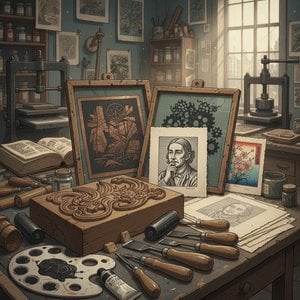
The Enduring Legacy of Printmaking: Techniques, Themes & Artistic Innovation Across Centuries
Explore the rich history of printmaking with ArtsDot. Discover techniques from intaglio to lithography, learn about collecting valuable prints & find museum-quality reproductions. Expert insights for art enthusiasts and collectors.