

 Pregledaj u realnoj veličini
 Pošalji
 Podijeli
 Detalji o umjetničkom djelu
 Vodič
Vodič

 Preuzmi umjetničko djelo
 Slični predmeti
 Rentgenska snimka
 Slide show
 Pitanja i odgovori
 Statistika
untitled (5545)


 Prikaži više
Djelo prikazano na ovoj stranici zaštićeno je autorskim pravima, što znači da zakonski ne možemo izraditi niti prodati identičnu reprodukciju. Ova se zaštita provodi u skladu s međunarodnim sporazumima kao što su Bernska konvencija i nacionalnim zakonima, uključujući i one koji su utvrđeni u Američki zakon o autorskom pravu – Title 17.
Ova metoda u potpunosti je usklađena s autorskim pravima jer ne uključuje kopiranje ili dupliciranje zaštićenih umjetničkih djela. Umjesto toga, riječ je o kreativnoj reinterpretaciji – novoj slici koja je dobila utjecaj na izvornik, ali nije identična njemu.
Giclée / Umjetnički otisak
Giclée tisak muzejske kvalitete ili otisak na platnu uz brzu izradu i raznolike opcije završne obrade. ( Kupi ručno oslikano djelo Prebacite na digitalnu sliku)




P118B €10

P118H €10

P118W €10

P438Z €10

P508JH €12

P508YH €12

P805H €10

P805Z €10

P919BZ €10

P919G €10

P919XJ €10

P959ZH €10

P968JZ €12

W106C €8

W218G €10

W218JH €8

W218Y €10

W307PJ €10

W316G €10

W316PJ €8

W316Y €10

W398PJ €8

W4111J €10

W500HY €15

W500JH €15

W692G €12

W849H €8

W940BG €15

W953PJ €8




Odaberite jednu od naših unaprijed definiranih veličina koje odgovaraju izvornim proporcijama umjetničkog djela.

Unesite potrebnu širinu i visinu kako bi odgovarali vašem okviru ili zidu. Print se može samo izrezati, nikada ne može biti veći od slike, stoga format s drugačijim omjerom stranica uzrokuje gubitak dijela slike. Prije bilo kakve štampe šaljemo vam digitalni prikaz (mockup) na odobrenje. Slika prikazana na ovoj stranici ne prikazuje stvarni rez — to prikazuje isključivo digitalni prikaz.
Dostava širom svijeta () u roku od 2 tjedna umjesto standardnih 4/5 tjedana. (9 Studeni)

Besplatna ekspresna dostava širom svijeta

Visokokvalitetno laneno platno

Potpuno osiguranje dostave

Jamstvo povrata carine i uvoznih poreza

Jamstvo vjernosti boja

Politika povrata u roku od 100 dana (samo u slučaju nedostataka)

Jamstvo povrata 100% novca

Popust na više proizvoda
 Opcija stakla dostupna je samo za dimenzije manje od 110 cm

untitled (5545)
Giclée / Umjetnički otisak
Veličina reprodukcije
-


Ukupna cijena
€ 56
A Threshold Between Reality and Illusion
In the hauntingly beautiful untitled (5545), Giorgio de Chirico invites us into a realm where the boundaries of the conscious mind dissolve into a dreamscape of profound mystery. Painted in 1968, this surrealist masterpiece presents a scene that feels both profoundly still and vibrantly alive, capturing a moment suspended between the tangible world and the depths of the subconscious. Two figures stand poised upon a weathered wooden floor, their presence anchored by the striking brilliance of vibrant crimson trousers. To the left, a man in a blue hat clutches a white mask, a gesture that immediately evokes themes of identity, concealment, and the masks we wear in life. Beside him, a companion wearing scarlet headwear carries a black bag, adding to the enigmatic narrative of a journey interrupted or perhaps just beginning. The focal point, a bold red door, stands as a silent sentinel against a dark, receding background, pulling the viewer’s gaze into a space that feels both intimate and infinitely vast.
The Architecture of the Subconscious
De Chirico’s technique is a masterclass in meticulous draftsmanship, where precise lines and deliberate shading create a sense of profound detachment and stillness. The artist employs an unsettling juxtaposition of familiar objects—a door, a hat, a mask—rendered with such clarity that they take on a dreamlike, illogical quality characteristic of the Surrealist movement. This interplay of light and shadow is central to the work's emotional weight; the dark, void-like background amplifies the luminosity of the figures, casting them into a spotlight of existential importance. This stylistic choice reflects the deeper intellectual currents that shaped De Chirico’s vision, drawing from the philosophical shadows of Nietzsche and Schopenhauer. Just as these thinkers explored the irrational forces and existential anxieties of human experience, De Chirico uses his brush to map the unsettling landscapes of the psyche, where every shadow holds a secret and every object carries a weight of symbolic meaning.
Symbolism and the Collector's Vision
For the discerning collector or interior designer, this piece offers far more than mere decoration; it provides a profound emotional anchor for any curated space. The red door serves as a potent symbol of transition and uncertainty, acting as a gateway to an unknown inner world that remains tantalizingly out of reach. Meanwhile, the mask embodies the layers of anonymity and the hidden anxieties that reside beneath the surface of our daily consciousness.
When considering this work for a high-quality reproduction in a modern interior, one must consider its dramatic impact:
- Visual Contrast: The sharp juxtaposition of vibrant reds against muted, dark tones creates a striking focal point that can transform the energy of a room.
- Narrative Depth: The painting invites continuous re-interpretation, making it a conversational centerpiece for those who appreciate art with intellectual substance.
- Atmospheric Weight: The sense of solitude and mystery inherent in the composition lends an air of sophisticated introspection to any gallery or living space.
Pitanja i odgovori
Gdje mogu vidjeti pregled za "untitled (5545)"?
Kako biste pregledali reprodukciju djela "untitled (5545)" autora Giorgio De Chirico, otvorite stranicu Pregled u prostoru tog umjetničkog djela.
Koje se raspoloženje i emocija prepliću u djelu "untitled (5545)"?
"untitled (5545)" autora Giorgio De Chirico prenosi Mysterious osjećaj unutar općenito Dramatic raspoloženja.
Jesu li boje djela "untitled (5545)" autora Giorgio De Chirico zasićene ili prigušene?
"untitled (5545)" autora Giorgio De Chirico prikazano je s Clear Color Presence zasićenjem.
Srodna umjetnička djela


Biografija umjetnika
Giorgio de Chirico (1888–1978): The Architect of Dreamlike Landscapes
Giorgio de Chirico, born in Volos, Greece, on July 10th, 1888, to Italian parents—a Genoese mother and a Sicilian father—was an artist whose life was inextricably linked with the intellectual currents of his time. From a young age, he demonstrated an exceptional talent for drawing and painting, nurtured by a formal education at Athens Polytechnic where he honed his skills in classical techniques. However, it was his relocation to Munich in 1906 that truly propelled him onto the artistic stage, immersing him in the vibrant atmosphere of German Symbolism and fostering connections with artists like Arnold Böcklin and Max Klinger—figures whose haunting landscapes and symbolic imagery profoundly shaped his aesthetic sensibilities. These encounters instilled within him a fascination for mythology and a preoccupation with exploring the hidden realities beneath the surface of perception.The Genesis of Metaphysical Art
Around 1909, de Chirico embarked on an unprecedented artistic endeavor: the creation of “Metaphysical” art—a style that defied conventional categorization and sought to capture the unsettling poetry residing within familiar spaces. Inspired by the philosophical writings of Friedrich Nietzsche, Arthur Schopenhauer, and Otto Weininger—who wrestled with questions of existentialism and the irrationality of human desire—he began to depict scenes populated by enigmatic figures and architectural elements rendered in jarring juxtapositions. His most iconic works, such as *The Vexations of the Thinker* and *The Enigma of an Autumn Afternoon*, exemplify this distinctive aesthetic: desolate cityscapes bathed in melancholic shadows, inhabited by mannequins and statues imbued with a palpable sense of loneliness—a visual language that resonated deeply with the anxieties of the era. This groundbreaking style quickly gained recognition within the artistic community, establishing him as a pioneer of Surrealism and influencing artists like René Magritte and Salvador Dalí.A Collaborative Spirit & Early Recognition
In 1919, de Chirico moved to Paris alongside his brother Alberto Savinio—a partnership that proved pivotal in shaping their artistic trajectory. Together, they founded the Scuola Metafisica, a collective dedicated to exploring the metaphysical principles of art and challenging established conventions. Their initial exhibitions at the Salon d’Autoumne and Salon des Indépendants garnered critical acclaim and cemented their connections with influential figures like Guillaume Apollinaire—who penned one of his earliest biographical texts—and Paul Guillaume—who secured him his first commercial contract. Notably, he befriended Mario Tozzi, Massimo Campigli, Alberto Magnelli and Gino Severini, all Italian artists who were operating in Paris during this period.Expanding Horizons & Embracing Surrealism
The Second World War interrupted de Chirico’s artistic pursuits but did not diminish his influence on the burgeoning Surrealist movement. He continued to paint prolifically, experimenting with diverse styles and subjects—from monumental sculptures inspired by classical mythology to intimate portraits reflecting a profound engagement with human psychology. His exploration of architectural spaces and enigmatic figures—recurring motifs in his oeuvre—became emblematic of Surrealism’s quest for dreamlike imagery and subconscious expression. Despite facing criticism from some quarters regarding the perceived decline in quality of his later works, de Chirico remained steadfast in his artistic convictions, revisiting themes from his formative years while maintaining a meticulous attention to craftsmanship and technical skill.Legacy & Enduring Influence
Giorgio de Chirico’s contribution to art history transcends stylistic innovation; it represents a fundamental rethinking of perception and representation—a challenge to the accepted norms of Western painting that continues to inspire artists today. His pioneering exploration of metaphysical principles paved the way for Surrealism, influencing generations of creatives who sought to capture the elusive realm of dreams and unconsciousness. Beyond his artistic achievements, de Chirico’s intellectual engagement with Nietzsche and Schopenhauer—and his unwavering commitment to humanist values—solidified his place as a visionary artist whose work embodies the spirit of an era marked by profound philosophical questioning and aesthetic experimentation. His paintings remain treasured artifacts of 20th-century art, inviting viewers to contemplate the mysteries of existence and the transformative power of imagination.
Giorgio De Chirico
1888 - 1978 , Грчка
Osnovne informacije
- Artistic Movement Or Style: Metafizička umjetnost
- Artists Who Influenced This Artist:
- Arnold Böcklin
- Max Klinger
- Friedrich Nietzsche
- Date Of Birth: 10 srpnja 1888.
- Date Of Death: 20. studenoga 1978.
- Full Name: Giorgio de Chirico
- Nationality: Talijan
- Notable Artworks:
- The Vexations of the Thinker
- The Enigma of an Autumn Afternoon
- Place Of Birth: Volos, Grčka
Srodni članci

Glavna 10 Remek-djela Romantizma: Uljepšajte Svoj Dom Umjetnošću
Otkrijte 10 remek-djela romantizma koja su definirala pejzažno slikarstvo! Uronite u svijet Friedricha, Turnera i Aivazovskog. Inspirirajte svoj interijer vrhunskim umjetničkim djelima. Kupujte reprodukcije na ArtsDot.com!

About Us
Discover our story! We bring world-class art into your life through expert curation, personalized creations, and free previews. Trusted by individuals and businesses since 2000.

Francisco Goya: 25 Remek-djela Španjolskog Majstora za Vaš Dom | ArtsDot
Uronite u svijet Francisca Goye! Otkrijte 25 remek-djela španjolskog majstora – od portreta do crnih slika. Povijest umjetnosti, tehnike i inspiracija za vaš dom. Kupite reprodukcije na ArtsDot.com!
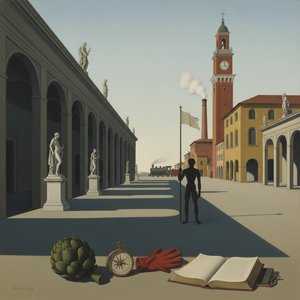
Giorgio de Chirico: Metaphysical Realities & the Poetics of Absence
Explore the captivating world of Giorgio de Chirico and his groundbreaking Metaphysical painting movement. Discover the philosophical depths & surreal imagery that influenced generations of artists. Learn more at ArtsDot.

Beyond Reality's Veil: Exploring the Enigmatic World of Metaphysical Art
Explore the captivating world of Metaphysical art with ArtsDot. Discover Giorgio de Chirico's iconic paintings, philosophical influences & lasting impact on Surrealism. Expert insights for collectors.


