
- Početna stranica

- Reprodukcija uljane slike
- Žorž De Lajur
- The Newborn
 Kupi otisak Kupi digitalnu sliku
 Pošalji
 Podijeli
 Details
 Dodaj u omiljene

 Preuzmi
 Slični predmeti
 X-Ray
X-Ray
 Automatska prezentacija
The Newborn


Ručno rađena uljana reprodukcija
Ručno oslikano uljanim bojama na platnu u dimenzijama i okviru po vašem izboru, izrađeno po narudžbi od strane naših umjetnika.




P118B $10

P118H $10

P118W $10

P438Z $10

P508JH $12

P508YH $12

P805H $10

P805Z $10

P919BZ $10

P919G $10

P919XJ $10

P959ZH $10

P968JZ $12

W106C $8

W218G $10

W218JH $8

W218Y $10

W307PJ $10

W316G $10

W316PJ $8

W316Y $10

W398PJ $8

W4111J $10

W500HY $15

W500JH $15

W692G $12

W849H $8

W940BG $15

W953PJ $8




 Pročitajte više
Odaberite jednu od naših unaprijed definiranih veličina koje odgovaraju izvornim proporcijama umjetničkog djela.

Možete unijeti vlastite dimenzije kako bi odgovarale određenom okviru ili prostoru. Ako odabrana veličina ne odgovara proporcijama izvorne slike, izrezat ćemo umjetničko djelo ili proširiti sliku dodatnim ručno oslikanim elementima. Digitalni nacrt bit će vam poslan na odobrenje prije početka proizvodnje.
Imajte na umu da pregled na ekranu ne prikazuje stvarno izrezivanje ili proširivanje. Samo će nacrt točno prikazati konačni sastav.
Iako su dostupne prilagođene veličine, preporučujemo odabir dimenzije s preddefiniranog popisa kako bismo očuvali izvorne proporcije.
Nakon narudžbe, tim ArtsDot.com kontaktirat će klijenta putem e-pošte radi dobivanja uputa te dostaviti probni prikaz (mockup).
Isporuka širom svijeta () u roku od 3-4 tjedna umjesto standardnih 5 tjedana. (1 Srpanj). Bez kompromisa u kvaliteti.

Besplatna ekspresna dostava širom svijeta

Visokokvalitetno laneno platno

Potpuno osiguranje dostave

Jamstvo povrata carine i uvoznih poreza

Garancija vjernog podudaranja boja

Politika povrata u roku od 60 dana (samo u slučaju nedostataka)

Jamstvo povrata 100% novca

Popust na više proizvoda
 Opcija stakla dostupna je samo za dimenzije manje od 110 cm

The Newborn
Tehnika reprodukcije
Veličina reprodukcije
-


Ukupna cijena
-
Opis umjetničkog djela
A Moment of Divine Intimacy: Georges de La Tour’s *The Newborn*
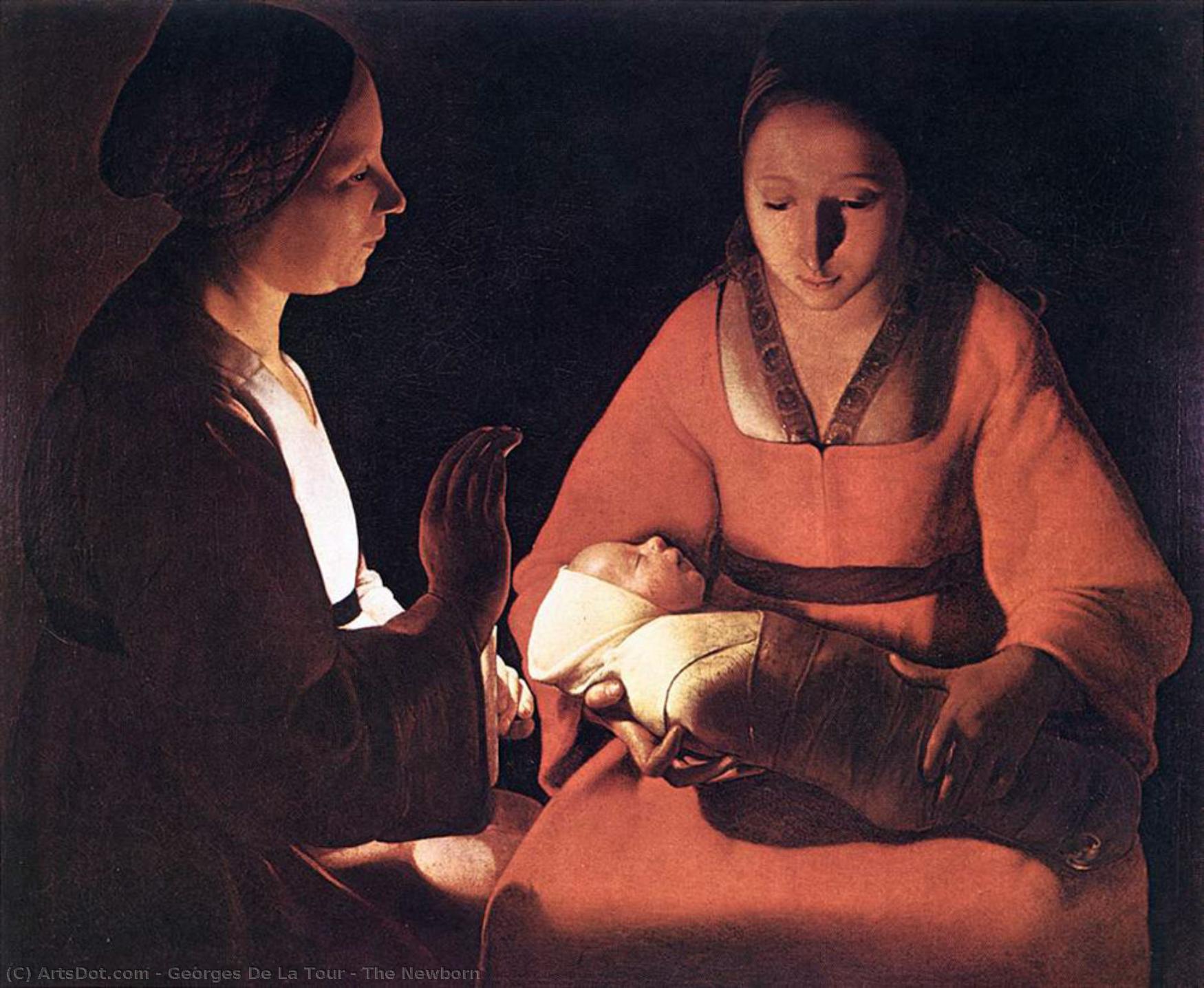
Georges de La Tour's 1649 masterpiece, *The Newborn*, is a profoundly moving depiction of the Virgin Mary cradling the infant Jesus. This Baroque painting exemplifies the artist’s signature style – a masterful use of chiaroscuro and an intimate portrayal of religious narrative. It offers a serene yet deeply emotional experience for the viewer, making it a captivating focal point for any collection or interior space.Style & Technique: The Essence of Baroque Tenebrism
De La Tour was a key figure in bringing Caravaggism to France, and *The Newborn* vividly demonstrates this influence. The painting is characterized by dramatic tenebrism, where stark contrasts between light and shadow sculpt the figures and heighten their emotional presence. Oil paints are applied with meticulous detail on canvas, creating smooth transitions of tone and rich color saturation. Notice how the light doesn’t simply illuminate; it *defines* form and directs our gaze to the central subjects. The brushstrokes, while visible upon close inspection, blend seamlessly to create a sense of realism and texture – from the soft skin of Mary and Jesus to the heavier fabrics draped around them.Subject & Composition: A Pyramidal Sanctuary
The composition is elegantly pyramidal, with Mary and the baby forming the apex, drawing the viewer’s eye upwards towards a sense of spiritual elevation. A second female figure leans in, observing this sacred moment – often identified as Saint Anne, mother of Mary. The scene unfolds within a dimly lit interior, creating an atmosphere of quiet reverence and intimacy. This isn't a grand public spectacle; it is a private, tender encounter.Historical Context: Faith & Artistic Innovation
Painted in 1649, *The Newborn* reflects the religious fervor prevalent during the Baroque period. De La Tour lived through turbulent times – France was engaged in conflicts and undergoing significant social change. His art offered a refuge, focusing on deeply personal faith and human connection. He served as “Painter to the King” yet maintained a strong connection to local patrons, reflecting his ability to bridge courtly sophistication with everyday devotion. Interestingly, De La Tour’s work experienced a period of obscurity after his death before being rediscovered in the 20th century.Symbolism & Emotional Resonance
The symbolism within *The Newborn* is rich and layered. The infant Jesus represents divinity incarnate, while Mary embodies motherhood, faith, and compassion. The attendant figure serves as a witness to this holy event, inviting the viewer to share in their contemplation. The painting evokes feelings of reverence, tenderness, and serenity. It’s not merely an illustration of a biblical story; it's an invitation to experience the profound emotional power of maternal love and spiritual devotion.Color Palette & Interior Design Considerations
The color palette is dominated by warm tones – reds, oranges, and browns – creating a sense of intimacy and spiritual warmth. These hues lend themselves beautifully to various interior design schemes, particularly those seeking a classic, elegant, or contemplative atmosphere. A reproduction of *The Newborn* would be stunning in a library, bedroom, or chapel-like space, adding depth and sophistication to the surroundings.- Ideal for: Traditional, Baroque, Eclectic interiors
- Color Harmony: Complements warm neutral palettes, rich wood tones, and jewel-toned accents.
- Placement Suggestions: Above a fireplace, in a reading nook, or as a focal point in a dining room.
Srodna umjetnička djela


Biografija umjetnika
Georges de La Tour (1593-1652): French Baroque Master of Dramatic Chiaroscuro & Tenebrism
Georges de La Tour, a name that resonates with the hushed reverence reserved for masters of light and shadow, remains one of the most compelling figures of the French Baroque. Born in 1593 in Vic-sur-Seille, a small town nestled within the Duchy of Lorraine, his life unfolded against a backdrop of religious fervor and political upheaval. While details surrounding his early training remain somewhat elusive—scholars speculate about potential journeys to Italy or apprenticeships with local artists like Jacques Bellange—the seeds of his artistic vision were undoubtedly sown in this environment. He wasn’t born into an artistically established family; his father was a baker, yet the circumstances of his mother's lineage hint at a possible connection to nobility, a subtle influence perhaps reflected in the dignity and quiet grace that permeate his work.
Early Life & Artistic Influences
Georges de La Tour’s formative years were marked by the turbulent political landscape of Lorraine under Habsburg rule. Despite limited formal education—he received instruction primarily from his father—his innate talent for drawing quickly emerged, demonstrating an exceptional sensitivity to visual perception. Like many artists of his era, he likely absorbed artistic ideas through observation and imitation, encountering works by Caravaggio and Hendrick Terbrugghen during his travels. These encounters profoundly shaped his stylistic sensibilities, instilling in him a fascination with dramatic chiaroscuro—the masterful manipulation of light and dark—a technique that would become synonymous with his oeuvre.
The Utrecht School & The Dawn of Tenebrism
De La Tour’s artistic development coincided with the flourishing of the Utrecht School, a Dutch Caravaggisti movement characterized by its uncompromising realism and expressive intensity. Artists like Terbrugghen championed a style that prioritized psychological depth over mere visual accuracy—a stylistic approach that De La Tour skillfully adopted, refining his technique to achieve an unprecedented level of tonal gradation. This pivotal influence gave birth to tenebrism—the extreme use of darkness punctuated by strategically placed highlights—a compositional device that would become the hallmark of his paintings and solidify his reputation as a pioneer of Baroque art.
Major Works & Recurring Themes
Georges de La Tour’s artistic output spanned several decades, producing an astonishing array of canvases that explore themes of faith, piety, and domestic tranquility. His most celebrated works—including The Fortune-Teller (circa 1630), Adoration of the Shepherds (circa 1640), Saint Joseph Carpenter (circa 1650)—are masterpieces of Baroque art, distinguished by their luminous chiaroscuro and profound emotional resonance. These paintings aren’t merely depictions of biblical narratives; they are meditations on human experience—expressions of humility, compassion, and spiritual yearning. De La Tour's meticulous attention to detail—captured with astonishing precision—reveals an artist who possessed a remarkable understanding of both visual perception and psychological nuance.
Legacy & Enduring Appeal
Despite achieving considerable renown during his lifetime—he was appointed “Painter to the King” by Louis XIII in 1638—Georges de La Tour’s work remained largely unrecognized for centuries following his death in 1652. Rediscovery efforts spearheaded by scholars like Hermann Voss brought De La Tour back into focus, revealing an artist of extraordinary originality and depth whose influence extended far beyond the confines of his own time. His innovative use of light and shadow—coupled with his profound psychological insight—continues to inspire artists today, cementing his place as a pivotal figure in European art history. His paintings stand as timeless reminders of the power of faith and human connection—expressions of spiritual contemplation that resonate across generations.

Žorž De Lajur
1593 - 1652 , Francuska
Osnovne informacije
- Artistic Movement Or Style: Tenebrism
- Artists Or Movements Influenced By This Artist: ['Francuski Klasicizam']
- Artists Who Influenced This Artist:
- Caravaggio
- Terbrugghen
- Date Of Birth: March 13, 1593
- Date Of Death: 1652
- Full Name: Georges de La Tour
- Nationality: Francuski
- Notable Artworks:
- Fortune Teller
- Adoration Shepherds
- Tears St Peter
- St Joseph Carpenter
- Place Of Birth: Vic-le-Comte, France
Srodni članci

Barokna Genijalnost: Top 10 Remekdjela Koja Su Definirala Umjetnički Pokret
Otkrijte 10 remekdjela barokne umjetnosti koja su obilježila epohu! Karavaggio, Bernini, Rubens i drugi majstori. Istražite priče iza slika, tehnike i vječne ljepote. Inspirirajte se za svoj interijer s ArtsDot.com - vrhunskim reprodukcijama i kuriranim idejama za dekoraciju doma.


The Golden Age Reforged: Dramatic Realism & Religious Zeal in Spanish Baroque Art
Explore the dramatic world of Spanish Baroque art! Discover masters like Zurbarán & the powerful influence of religious zeal on painting techniques – a guide for collectors and enthusiasts.

Baroque Painting's Greatest Hits: 10 Masterpieces for Your Home | ArtsDot
Journey through Baroque painting's glory! Explore 10 masterpieces by Caravaggio, Rembrandt & Vermeer. Discover dramatic lighting, rich colors & timeless stories. Find museum-quality art reproductions for your home at ArtsDot.com.

Georges de La Tour: Luminosity, Spirituality & Realism in Baroque Painting
Discover the captivating world of Georges de La Tour, a Baroque master renowned for his dramatic chiaroscuro & spiritual realism. Explore key works, influences, and his remarkable rediscovery. Learn more at ArtsDot.

From Snapshot to Canvas: The Art of Transforming Travel Photography into Timeless Oil Paintings
Transform your cherished travel photos into timeless oil paintings with expert artists at ArtsDot.com. Museum-quality reproductions & custom portraits – preserve your memories beautifully.



