


The picture follows your choices: , .
Opis kolekcionarskog predmeta
Experience Egon Schiele's haunting 'Untitled (4294)' – a raw expressionist portrait of a woman, exploring themes of mortality and the human form. Discover its story & Schiele’s legacy at ArtsDot.
 Prikaži više
Biografija umjetnika
Egon Schiele je austrijski ekspresionista koji je poznat po svojim intenzivnim psihološkim slikama i iskrenim prikazima ljudske prirode. Razvio je svoj vlastiti stil karakteriziran jednostavnom ljepotom i emocionalnom dubinom, oslanjajući se na teme smrti, seksualnosti i izolacije. otkriva reprodukcije sada!
Ručno rađena uljana reprodukcija
Ručno oslikano uljanim bojama na platnu u dimenzijama i okviru po vašem izboru, izrađeno po narudžbi od strane naših umjetnika. ( Prebacite na printove Prebacite na digitalnu sliku)
More about this painting
 Pregledaj u realnoj veličini
 Pošalji
 Podijeli
 Detalji o umjetničkom djelu
 Vodič
Vodič

 Preuzmi umjetničko djelo
 Slični predmeti
 Rentgenska snimka
 Slide show
 Q&A
Q&A Statistika
Order your painting in four simple steps
Take your time. You can change any answer; the price in your order card follows each choice.
1 Step one of four
Which size would you like?
These sizes keep the proportions of the original painting. The drawing shows your choice on a wall, above a two-metre sofa.
Or give your own measurements
Odaberite jednu od naših unaprijed definiranih veličina koje odgovaraju izvornim proporcijama umjetničkog djela.

Unesite potrebnu širinu i visinu kako bi dimenzije odgovarale vašem okviru ili zidu. Budući da je riječ o ručno oslikanom djelu, umjetnik može malo proširiti rubove slike ili ih skratiti kako bi postigao drugačiji oblik — izbor je vaš. Prije početka slikanja poslat ćemo vam digitalni prikaz (mockup) radi potvrde. Slika prikazana na ovoj stranici ne predstavlja stvarni rezultat — samo digitalni prikaz to čini.
2 Step two of four
How should it be prepared: rolled, stretched or framed?
The prices below are for the size you chose in step one.
Choose the edges of the stretched canvas
Choose your frame

White €1

Blurside €1

Extended €1

P118B €10

P118H €10

P118W €10

P438Z €10

P508JH €12

P508YH €12

P805H €10

P805Z €10

P919BZ €10

P919G €10

P919XJ €10

P959ZH €10

P968JZ €12

W106C €8

W218G €10

W218JH €8

W218Y €10

W307PJ €10

W316G €10

W316PJ €8

W316Y €10

W398PJ €8

W4111J €10

W500HY €15

W500JH €15

W692G €12

W849H €8

W940BG €15

W953PJ €8

H24-GOLD €30

H24-SILVER €30

H36-GOLD €45

H36-SILVER €45
Uokvireno
Moulding: . Overall size with the frame: .
3 Step three of four
Would you like anything changed in the painting?
Most people answer no. Because each painting is made by hand, our artist can also adapt it for you.
After order, ArtsDot.com team will email client for instructions and provide a mockup preview
4 Step four of four
A few finishing options
All of them are optional. The answers already selected cost nothing extra.
Who paints it?
Isporuka širom svijeta () u roku od 3-4 tjedna umjesto standardnih 5 tjedana. (3 Studeni). Bez kompromisa u kvaliteti.
A nameplate, as in a museum?
Detalji gravirane brončane pločice
This elegant plaque features the artist's name and the title of the artwork, finely engraved for a timeless presentation.
It is made from bronze with a refined, elegant finish. The text is precisely laser-engraved for a sharp and permanent result. Measuring 9x2 cm, the plaque is compact yet easy to read. It's built to be durable and scratch-resistant, offering a professional, museum-quality look. Mounting is simple thanks to the included adhesive backing.
Detalji prozirne akrilne pločice
The plaque includes essential engraved details such as the artist's name, the title of the artwork, the date it was created, the type of media used-like oil on canvas or watercolor-a brief description of the piece, and a QR code that links to the complete artwork information.
It is crafted from clear acrylic, offering a sleek, modern appearance. The text is UV-engraved in black to ensure strong visual contrast. With a size of 10x15 cm, it ensures optimal readability. It comes equipped with two metal hooks for secure wall mounting. The plaque is designed to be weather-resistant, making it suitable for various environments, and it includes interactive features that work seamlessly with smartphone scanning.
Detalji crne akrilne pločice
This elegant plaque includes engraved information such as the artist's name, the title of the artwork, the date it was created, the type of media used (like oil on canvas or watercolor), a short description of the artwork, and a QR code for quick access to more information.
The plaque itself is made from refined black acrylic with a premium finish. The text is laser-engraved in white for high contrast and readability. Its size is 10x15 cm, designed to be easy to read. It comes with two metal hooks for professional mounting. The design is sleek and fits any interior style. It is also weather-resistant and durable, with built-in digital integration for mobile compatibility.
A protective varnish?
When do you need it?
✓ Check and order
Your painting, as you ordered it

untitled (4294)
Tehnika reprodukcije
Veličina reprodukcije
-

Odabrani vrhunski umjetnik
Više detalja, profinjenosti i dodatnog vremena za izradu
-

Okvir za reprodukciju
-
-
Za umjetnička djela ili reprodukcije veće od 105 cm (približno 41 inč) na bilo kojoj strani, okvir će biti isporučen u obliku rastavljenog seta za montažu. Ovaj način osigurava sigurnu dostavu i sprječava oštećenja tijekom transporta.
Potrebna je profesionalna montaža – ovo nije proizvod za samostalnu izradu.
Set mora sastaviti i platno zategnuti iskusni profesionalni uokvirivač, koristeći drvno ljepilo (nije uključeno u set), kljeste za zatezanje platna i stege kako bi se održao pravilan kut letvica dok se ljepilo suši. Nepravilna montaža ili neravnomjerno zategnuto platno mogu trajno oštetiti umjetničko djelo, a takva oštećenja nisu pokrivena našim jamstvom.
 Za umjetnička djela ili reprodukcije veće od 105 cm (približno 41 inč) na bilo kojoj strani, okvir će biti isporučen u obliku rastavljenog seta za montažu. Ovaj način osigurava sigurnu dostavu i sprječava oštećenja tijekom transporta.
Sve letvice od punog drveta su uključene, precizno izrezane po mjeri.
Montira se pomoću priloženih vijaka, uz dodatak ljepila za drvo za spojeve u kutovima, koje nije uključeno u set i koje vaš okviraš mora vlastito nabaviti.
Potrebni su profesionalni alati koji nisu uključeni: škripc za zatezanje platna (zatezač) i stezaljke za održavanje pravokonačnosti letvica tijekom sušenja ljepila.
Važno:
Za spojeve u kutovima potrebno je ljepilo za drvo, letvice se moraju pričvrstiti stezgama dok se ljepilo potpuno ne osuši, a za zatezanje platna na sastavljenom okviru potreban je alat za zatezanje platna. Nijedan od ovih alata nije uključen u set. Molimo vas da prije narudžbe ove veličine osigurate uslugu iskusnog profesionalnog uokvirivača.

Natpisna pločica
-
-

Zaštitni lak
Sjajni lak (pojačava intenzitet boja, štiti od svjetlosti i vlage)
-

Prilagodite svoje umjetničko djelo
Primjeri mogućnosti prilagodbe: Zamijenite lice fotografijom kupca; Dodajte ljubimca (npr. zamijenite mačku psom); Uključite skrivenu poruku u pozadinu; Promijenite pejzaž ili elemente pozadine.
-

Hitna dostava
Globalna dostava () u roku od 3-4 tjedna umjesto standardnih 5 tjedana. (3 Studeni). Bez kompromisa u kvaliteti.
-
Brza dostava
Dostava širom svijeta () u roku od 5 tjedana. (10 Studeni).
Uključeno u cijenu
Ukupna cijena
€ 234
Opcija stakla dostupna je samo za dimenzije manje od 110 cm
Included with every order
- Besplatna ekspresna dostava širom svijeta
- Visokokvalitetno laneno platno
- Potpuno osiguranje dostave
- Jamstvo povrata carine i uvoznih poreza
- Jamstvo vjernosti boja
- Politika povrata u roku od 100 dana (samo u slučaju nedostataka)
- Jamstvo povrata 100% novca
- Popust na više proizvoda


A Portrait of Torment and Beauty
Egon Schiele's "Untitled (4294)" is not merely a depiction of a woman; it’s an unflinching exploration of the human condition, rendered with the raw intensity characteristic of the Expressionist movement. Painted in 1918, just months before his untimely death at the age of 28, this work embodies Schiele's preoccupation with mortality, sexuality, and the psychological complexities of existence – themes that resonated deeply within his intensely personal artistic vision.
The image presents a nude female figure, her form strikingly large and undeniably powerful. Her posture is both vulnerable and defiant, drawing the viewer into an intimate yet unsettling encounter. The artist’s signature elongated lines dominate the composition, creating a sense of dynamism and movement that seems to vibrate off the canvas. Notice how Schiele masterfully utilizes broken brushstrokes and a deliberately uneven surface – techniques designed to convey emotional turmoil rather than smooth realism.
The Language of Line and Form
Schiele’s technique is immediately recognizable. He eschewed traditional academic approaches, favoring instead a highly personal style characterized by distorted perspectives, exaggerated proportions, and an almost obsessive attention to line. The figure's body isn’t idealized; it’s rendered with a deliberate awkwardness, reflecting the artist’s own anxieties about physicality and vulnerability. The use of dark, somber colors – predominantly browns, blacks, and muted reds – further amplifies this sense of unease and impending doom.
Observe how Schiele employs negative space to great effect. The stark simplicity of the background—a bare wall and a chair—serves only to heighten the impact of the central figure. This deliberate reduction in visual information forces the viewer to confront the raw emotion conveyed by the woman’s pose and expression. The object she holds, tentatively identified as either a bird or a fish, adds another layer of ambiguity, perhaps symbolizing fleeting beauty, instinctual desires, or even the fragility of life itself.
Echoes of Mortality and Inner Turmoil
Schiele's life was marked by profound personal tragedy. His father’s death from syphilis at a young age cast a long shadow over his artistic output, fueling an obsession with themes of illness, decay, and the inevitability of mortality. This painting can be interpreted as a visual manifestation of these anxieties – a confrontation with the darker aspects of human existence. The woman's gaze is direct and challenging, suggesting a quiet resilience in the face of overwhelming despair.
Considering Schiele’s biography reveals a man grappling with his own demons, struggling to reconcile his artistic aspirations with the limitations imposed by his personal circumstances. His work often reflects this internal conflict – a tension between beauty and ugliness, life and death, vulnerability and strength. “Untitled (4294)” stands as a poignant testament to this struggle, offering a glimpse into the tormented soul of one of Expressionism’s most compelling figures.
Bringing Schiele's Vision Home
ArtsDot offers meticulously crafted hand-painted reproductions of "Untitled (4294)" that capture the essence of Schiele’s artistic genius. Each reproduction is created by skilled artists using traditional techniques, ensuring a faithful representation of the original while retaining its unique emotional power. Whether you're an art collector, interior designer seeking to infuse your space with a touch of dramatic intensity, or simply an admirer of Schiele’s evocative style, our reproductions provide a beautiful and authentic way to experience this iconic work.
Explore the full artwork details and available sizes on our website. Discover how you can bring Schiele’s haunting vision into your home today.
Pitanja i odgovori
Je li djelu "untitled (4294)" autora Egon Schiele svjetlija ili tamnija nota?
U pogledu percepcije svjetline, "untitled (4294)" autora Egon Schiele je brilliant.
Koje raspoloženje i emociju izražava "untitled (4294)" autora Egon Schiele?
"untitled (4294)" autora Egon Schiele prenosi Melancholic osjećaj unutar općenito Dramatic raspoloženja.
Postoji li prezentacija u obliku slajdova za "untitled (4294)" autora Egon Schiele?
Diaporama djela "untitled (4294)" možete pogledati na stranici Galerija slika tog umjetničkog djela.
Srodna umjetnička djela


Egon Schiele
1890 - 1918, Австрија
Biografija umjetnika
A Life Forged in Expression
Born in Tulln an der Donau, Austria, on June 12, 1890, Egon Schiele’s life was a turbulent journey marked by both extraordinary artistic vision and profound personal hardship. His early years were shadowed by illness and loss; his father succumbed to syphilis when Egon was just fourteen, a tragedy that would deeply resonate within his work, fueling an obsession with mortality and the fragility of existence. Raised initially by his mother and then under the somewhat controlling guardianship of his uncle Leopold Czihaczek, Schiele’s childhood lacked conventional stability but fostered a fiercely independent spirit. Even as a boy, he displayed an intense fascination with trains—a motif that subtly reappeared in later paintings—and a burgeoning talent for drawing, though this was initially met with disapproval from his father who saw it as a distraction from more practical pursuits. The early death of his sister Elvira also cast a long shadow over the young artist’s psyche. These formative experiences instilled within him a sensitivity and an emotional rawness that would become hallmarks of his artistic expression, a constant grappling with themes of life, death, and the human condition.
Early Influences & Artistic Training
Schiele's formal artistic training began at the Kunstgewerbeschule in Vienna, but he quickly found itself stifled by its conservative approach. He transferred to the Akademie der bildenden Künste (Academy of Fine Arts), only to become further disillusioned with its rigid academic traditions. This dissatisfaction led him to abandon formal training altogether, choosing instead to forge his own path—a testament to his unwavering artistic conviction. The influence of Gustav Klimt was pivotal during these early years; Schiele admired Klimt’s decorative style and exploration of symbolism, even receiving mentorship from the established artist. Klimt's bold use of color and stylized forms captivated Schiele, shaping his aesthetic sensibilities and inspiring him to experiment with innovative techniques. However, Schiele soon diverged from Klimt's path, developing a distinctive artistic voice characterized by its stark honesty and psychological intensity.
Vienna Secession & The Rise of Expressionism
Schiele joined the Viennese Secession in 1909 alongside fellow artists Anton Faistauer, Rudolf Kalvach, Franz Wiegele, Hans Ehrlich, and Löwenstein—a group that championed avant-garde artistic ideals and challenged the prevailing aesthetic conventions. This affiliation marked a crucial turning point in Schiele’s career, exposing him to new ideas and fostering collaborations with influential figures within Vienna's art world. The Secession’s exhibitions showcased groundbreaking works by artists like Klimt and Oskar Kokoschka, introducing Schiele to a wider audience and establishing him as a prominent voice in the burgeoning Expressionist movement.
Major Works & Artistic Style
Schiele’s artistic style is immediately recognizable for its raw honesty and psychological depth. He fearlessly confronted themes often considered taboo – sexuality, death, anxiety, isolation – with an unflinching gaze. His distinctive style features elongated figures, contorted poses, and expressive lines that convey a sense of unease and emotional intensity. The human form, particularly the nude, became his primary subject, not as an object of idealized beauty but as a vessel for exploring the complexities of human experience. Self-portraits constitute a significant portion of his oeuvre, offering intimate glimpses into his inner world—a world often marked by loneliness and self-doubt. He didn’t shy away from depicting himself in unflattering or vulnerable poses, revealing a profound level of self-awareness and introspection. Recurring motifs like the *Physalis plant* – symbolizing death and transience with its delicate, papery husk – further underscore this preoccupation with mortality.
Legacy & Influence
Despite facing censorship and legal challenges—including a brief imprisonment for allegedly corrupting minors with his art—Schiele gained recognition within Vienna’s avant-garde circles. His work challenged the conventions of the time, provoking both admiration and outrage. By the time of his untimely death during the Spanish flu pandemic in 1918 at the age of twenty-eight, he had established himself as a leading figure in Austrian Expressionism. Significant works such as Self-Portrait with Physalis, Couple Embracing, and Field Landscape (Kreuzberg near Krumau) stand as testaments to his artistic genius. Schiele’s influence on subsequent generations of artists is undeniable—particularly those interested in exploring psychological themes and challenging conventional artistic norms. His bold approach to form and subject matter continues to resonate with audiences today, making him one of the most important and influential figures in early 20th-century art. He left behind a body of work that is not merely aesthetically compelling but profoundly human—a testament to the power of art to confront the complexities of existence with honesty, courage, and unwavering vision.


Srodni članci
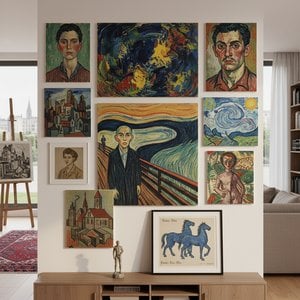
Glavnih 10 Ekspresionista: Remek-djela koja su definirala umjetnički pokret
Otkrijte 10 remek-djela ekspresionizma koja su obilježila umjetnički svijet! Uronite u priče Muncha, Kirchnera i drugih majstora. Inspirirajte se bojama i emocijama – pronađite savršenu reprodukciju za svoj dom na ArtsDot.com!

Egon Schiele: Expressionism, Anxiety & the Modern Condition – A Comprehensive Exploration
Explore the emotionally charged world of Egon Schiele (1890-1918). Discover his Expressionist masterpieces, psychological themes, and lasting impact on modern art. A comprehensive guide for collectors & enthusiasts.
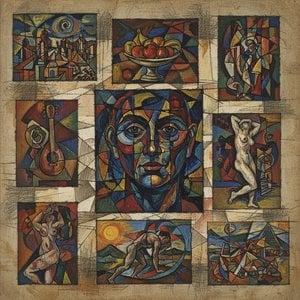
Cubist Expressionism's 10 Defining Masterpieces | Art for Your Home
Explore 10 defining Cubist Expressionism masterpieces by Picasso, Braque & more. Discover the stories behind these bold, geometric paintings and bring museum-quality art to your home with ArtsDot.com. Explore the full collection online.